





This year saw AI complete the change from show-off demos and novelty experiments to an ever-present aspect of technology and society, with both positive and negative opinions abounding.
But as 2025 answered the question of whether AI tools are flexible enough to adapt to the ways people might want to use them, 2026 will see if companies can convince people to open up their lives to the assistance and influence of AI. As OpenAI, Google, Meta, Apple, Amazon, and more keep pushing new ways to incorporate AI into everyday routines, we might see more announcements about people embracing or rejecting AI, even if there are fewer about true breakthroughs with the models.
Here are five of our predictions for how you might find AI changing your life in 2026.
1. ChatGPT grows into your household’s silent organizer

This year, we’ve seen ChatGPT shift, with some impressive tricks, from a glorified autocomplete to a far more nuanced imitator of humanity. The memory, multimodal understanding, and connections to third-party services and companies mean 2026 will allow OpenAI’s flagship AI platform to do much more than answer occasional questions. OpenAI has been hinting that the next step will see ChatGPT take the role Amazon Alexa and Google Assistant long jockeyed for, the digital butler.
Or at least, that seems to be how OpenAI is angling the more proactive aspects of ChatGPT as it uses "agents" and APIs to handle more than just isolated text prompts. You'll see it become your scheduler, nudging you about appointments you're about to be late for and suggesting weekend plans based on the weather, your comments about avoiding going out when it's too hot, and your spouse’s calendar. For those who give it permission, it will email, book, order, reschedule, and remind you about upcoming events, without even being asked.
The more frictionless the experience becomes, the more invisible the AI gets. You’ll speak out loud in your living room, and it will respond through your TV or smart speaker. You’ll text it about what some ice damage to your fence and send a photo, and it’ll file an insurance claim on your behalf. Or at least, you'll have the option. As with any other digital assistant, there will be plenty of people wary of using ChatGPT that often or sharing that much information with it. But, OpenAI will be keen to make ChatGPT the household hub tuned to individual preferences, the invisible butler tactfully planning for the things you haven't even thought of yet.
2. Google search fully transforms into AI-first
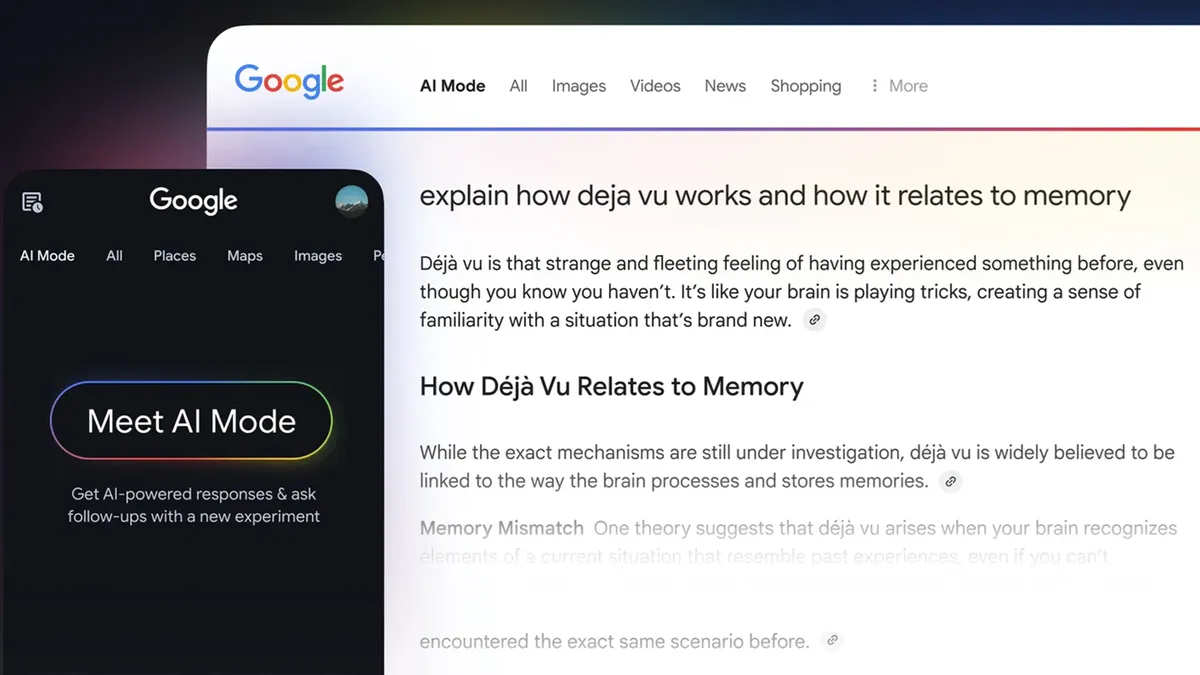
Google Search has been pushing AI into more and more of its results over the last year, but the classic approach of keywords is still the default for most people. 2026 will likely see the balance tip, at least if Google has its way. Gemini's quiet takeover will push AI Mode and its spinoffs into the central pillar of Google. You'll still have plenty of links available, but as an adjunct to the conversation with the AI.
Google has already begun swapping out Assistant for Gemini on Android phones, and Gemini’s responses are baked into Search via AI Overviews and the revamped result pages. You'll see more executive summaries than lists of online destinations. For many queries, you may not even spot that the answer compiled from half a dozen sources you never clicked, unless you're looking closely. That convenience will make Gemini feel indispensable even as it stirs up questions of trust and transparency, not to mention the rights of publishers.
3. Smart glasses will finally hit their stride with AI in the driver’s seat

The marketing problem freezing smart glasses for a decade has begun to thaw as the AI within them continues to show they can actually be useful. It helps that they are no longer quite the eyesore they once were.
Multimodal AI has arrived to solve the long-standing utility gap in wearables. The newest smart glasses, particularly those being developed through partnerships like Google and Meta with fashion brands like Warby Parker and Ray-Ban, respectively, are using AI models to make subtle, context-aware assistance actually work. The glasses will whisper a reminder, translate a sign you’re looking at, tell you who’s walking toward you, or explain the significance of a building without you asking.
All of this hinges on passive AI perceiving the world around you with proper context. And the hardware is catching up, with better battery life, lighter frames, and improved audio. The most successful versions in 2026 will enhance your surroundings without interrupting them.
4. The AI content theme park

If you’re scrolling Instagram or Facebook in early 2026, you’ll need to make peace with the idea that some of what you see wasn’t made by a person. By the end of the year, Meta will likely have flung open the floodgates of AI-generated content. The company’s new image and video generation models, currently being tested under code names like “Mango,” will soon power a massive share of what appears in Reels, Stories, and even ads.
What might arguably be called creativity will rely on AI to stylize videos and images. Brand will generate promo material with AI-enhanced visuals tailored to their style. Even casual users will use built-in tools to make their beach photos look like movie posters or turn a selfie into a 10-second animation.
But over time, the novelty will give way to sameness. When everything is optimized for engagement by the same kinds of algorithms, content starts to look eerily similar – crisp, eye-catching, and just a little too perfect. Expect a backlash to accompany every new AI image and video trend. Meta might be forced to add clearer labels, allow users to filter their feeds, or introduce toggles for “human-only” content modes. Creators, too, will have to rethink their strategy. Some will embrace AI to boost their reach; others will double down on raw, imperfect, human content as a way to stand out. Either way, the social media feed of 2026 will be shaped as much by machines as by people, even more than the algorithms already do.
5. “AI-free” as new luxury label

The backlash over AI content won't be limited to social media feeds. 2026 could see a real burst of interest in authentically human-produced creations. As AI tools continue to flood the web with attempts at writing, images, music, videos, and other media, people may well crave clarity and authenticity to the point of seeking out an “AI-free” label.
We’re already seeing hints of this. Writers are declaring the absence of AI assistance. Videos and images are showcased with captions and hashtags, with some creators insisting no AI was used in their productions. The idea of a handmade product will necessarily be translated into the more ethereal digital space. Perhaps it will be called "human brain-made" or "organically originated." Regardless, the “no AI used” sign will be a badge of honor (and perhaps worth a small markup). Perhaps it will seem pretentious or unnecessary for a while, a hipster-esque brag about something not worth bragging about. But the avalanche of AI slop will almost certainly send the trend to the mainstream.
Not that it will reject the use of digital tools outright. Manually manipulated (and acknowledged) digital editing tools are still going to be around. You will just have the option to seek out content free of what is colloquially known as AI. The synthetic production will still be there, you'll just be able to escape from it at least a little bit.
Invisible transformations
2026 won’t be the year AI shocks us with its presence in everything. You won't be amazed by huge strides toward true artificial general intelligence, no matter what the companies promise, but you will see the opportunity to embed AI throughout your life in ways you never expected.
AI is going to try to blend in this year, and the companies behind the technology will be eager to insinuate it into as many facets of your day as possible. That means enthusiastic adoption and frustrated rejection in equal measure. You may not be thrilled about AI in 2026, but it will be hard to avoid making choices about its place in your world.
Follow TechRadar on Google News and add us as a preferred source to get our expert news, reviews, and opinion in your feeds. Make sure to click the Follow button!
And of course you can also follow TechRadar on TikTok for news, reviews, unboxings in video form, and get regular updates from us on WhatsApp too.

➡️ Read our full guide to the best business laptops
1. Best overall:
Dell Precision 5690
2. Best on a budget:
Acer Aspire 5
3. Best MacBook:
Apple MacBook Pro 14-inch (M4)
