





Some people want a smartwatch that keeps messages and appointments within easy reach. Others want detailed running stats, a closer look at their sleep or the freedom to leave their phone behind. The best watch for a marathon runner won't necessarily suit someone who just wants to move more, and the priciest model isn't automatically the smartest buy.
We've spent time getting to know the latest smartwatches, separating the features that make a genuine difference from those that look better in a marketing pitch than on your wrist. Our recommendations span different budgets and priorities, with honest advice on what each watch does well, where it falls short and who will get the most out of it.
Your phone matters, too, as some watches work better with iPhones while others are designed for Android. If you mainly want to track your steps, sleep and workouts without a wrist full of apps and notifications, we suggest you hop, skip and over to our guide to the best fitness trackers.
Black Friday is coming up on November 27, 2026, so if you're thinking about buying a smartwatch, now's a good time to do your homework. Our guide will help you work out which features are worth paying for and which watches best suit your needs, so you're ready to spot a genuine bargain when the sales arrive. We'll keep an eye on prices from our retail partners below, so bookmark this page and check back before you buy.

Matt is TechRadar's Senior Fitness and Wearables Editor, which means he's an expert on workouts, smartwatches, and all things fitness tech. Matt tests smartwatches comprehensively, against competitor devices and industry-standard heart rate monitors, among other testing methodologies. Matt's spent years covering the health and fitness beat: a former staffer at Men's Health magazine, he's also written for publications like Runner's World, Women's Health, Men's Fitness, LiveScience and Fit&Well.
The best watch overall


The Apple Watch Series 12 is our best smartwatch for iPhone users, with a familiar interface, useful health features and tight integration with Apple's ecosystem. It handles notifications, calls and workout tracking with ease, but the biggest update is Readiness Score. This uses sleep and other health data to give you a score out of 10, offering a quick snapshot of how ready you might feel for the day.
Our reviewer, Jacob Krol, spent more than a month testing the Series 12 and found Readiness Score its most useful new feature. The redesigned sensors collect heart-rate and heart-rate variability data more frequently, helping power the score. It's also included without a subscription, so you can make more of your health data without paying for another service.
The S11 chip keeps performance snappy, and the always-on OLED display makes it easy to check your stats at a glance. Battery life is rated for up to 24 hours, with faster charging making it easier to top up between uses. Our reviewer did experience two overnight shutdowns, so it's worth charging before bed if you rely on sleep tracking.
The design will feel familiar to anyone with a recent Apple Watch, but the updated health features give Series 9 owners and those with older models a good reason to upgrade. For most iPhone users, the Series 12 gets the essentials right without the extra cost and rugged design of the Ultra 4, which is better suited to those who need longer battery life for outdoor adventures.
Read our full Apple Watch Series 12
The best cheap smartwatch


The Amazfit Active 2 is an unbelievable smartwatch considering its $99 price tag.
We loved its classic, stainless steel design that stands out against other wearables on the market and really punches above the weight of its price point. Our reviewer loved that it's light and comfortable to wear, and the screen quality is excellent with solid brightness.
It comes with an impressive feature set of 164 sport modes, AI coaching, and extensive health tracking including daily Readiness Score and all the usual health metrics you'd expect to find in a smartwatch.
There are a couple of quirks in the strength training feature, but the battery life is exceptional and we found it easily offers its rated 5 days of normal use, if not more.
We also like the AI assistant, and the fitness and health tracking can easily keep up with our top smartwatch, the Apple Watch Ultra 2. Plus, it works with both iOS and Android. You can score NFC and a more premium display for an extra $30 too.
Read our full Amazfit Active 2 review
The best Google watch


The Google Pixel Watch 4 is the best overall Wear OS watch, and well worth your time if you're a Pixel phone user. It's a great watch with substantial improvements made over the Pixel Watch 3, like the new domed display and repairability. The battery and screen can be replaced at home, in a first for watertight smartwatches - a great way to reduce e-waste.
The Pixel Watch 4 retains the sleek, modern, circular form factor that made the first three great, and comes with an added 45mm size option, but for the first time, it comes with a domed display, providing more surface area and a unique shape to that teardrop aesthetic. There are some fantastic optimizations built into Wear OS for the larger display, too, with the new Material 3 Expressive design language of Wear OS 6.
The charger even makes the watch into a little clock, positioning the crown where the snooze button would be. It's the perfect companion to the Pixel smartphone, and will even work well with other non-Samsung Android devices.
Read our full Google Pixel Watch 4 review
The best smartwatch for health tracking


The Samsung Galaxy Watch 9 builds on Samsung’s health tracking with new ways to make sense of your data. Its Fitness Index compares your fitness across several areas with other Samsung users. Sleep coaching offers practical pointers to help you improve your rest, and you can also measure body composition and antioxidant levels or get sweat-loss estimates after a run.
In testing, the watch tracked routes and heart rate accurately. Its slim, lightweight design makes it comfortable to wear during workouts and overnight. The bright 3,000-nit Super AMOLED display is easy to read in sunshine, and Samsung’s Energy Score gives you another way to assess your readiness for the day.
The Galaxy Watch 9 is a good fit for anyone who wants to understand their health data and find practical ways to act on it. FYI, some features, including ECG and blood pressure monitoring, require a Samsung phone, and you’ll need to charge it regularly if you track workouts and sleep.
Read our full Samsung Galaxy Watch 9 review
The best smartwatch for running


The Garmin Venu X1 is the best smartwatch for running in this guide, and it feels like a real shift for the brand. If you usually associate Garmin with chunky, ultra-rugged watches, this one says otherwise. It’s slim, lightweight, and genuinely comfortable to wear all day, whether you’re training, working, or sleeping, which isn’t always the case with more traditional Garmin models (Fenix lineup, I'm looking at you).
Despite the sleeker design, you’re still getting Garmin’s full suite of advanced training tools. During testing, it proved to be a seriously capable workout companion, handling everything from runs and gym sessions to a 12K trail race. Metrics like Training Readiness, Morning Report, and detailed recovery insights are all here, alongside full-color maps that look fantastic on the large AMOLED display. It’s the kind of watch that works just as well for structured training as it does for everyday health tracking.
The display really impressed us. It’s big, bright, and a joy to use, especially for maps and stats at a glance. The trade-off is battery life. With the always-on display enabled, it drops to just a few days, although in our testing, it comfortably lasted around a week with regular workouts when using raise-to-wake instead.
Read our full Garmin Venu X1 review
The best smartwatch for battery life
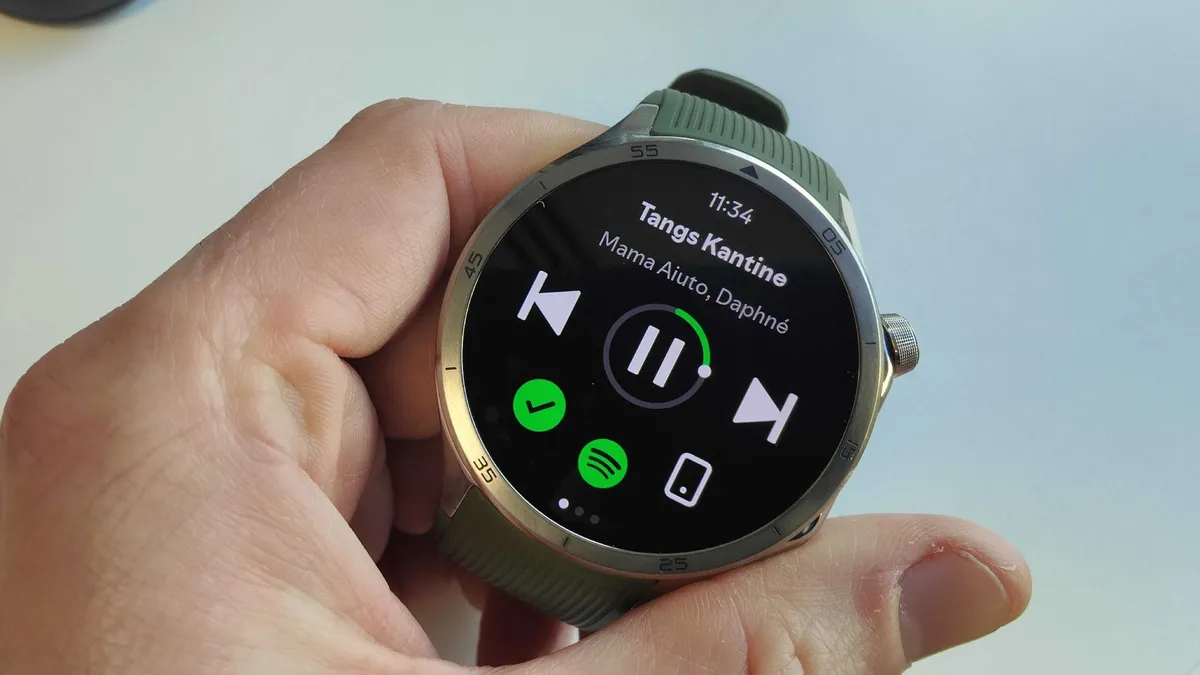

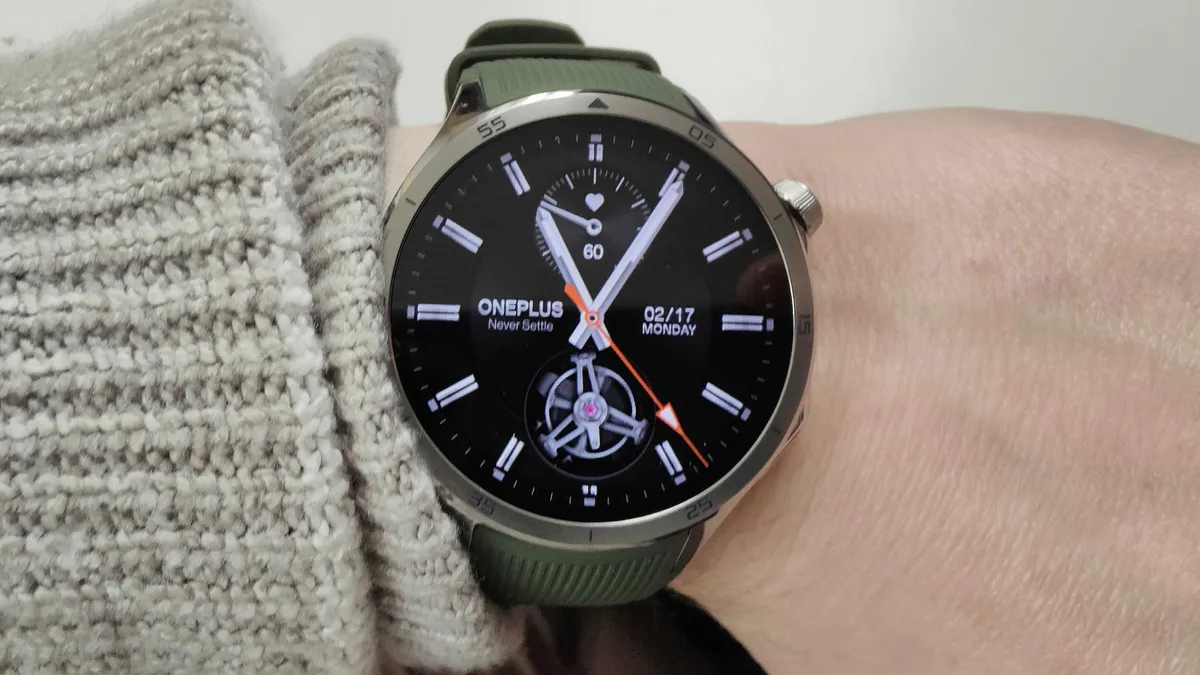


Following its launch in 2025, the OnePlus Watch 3 is an absolutely fantastic Wear OS smartwatch. It builds on the very successful formula of our previous pick, the OnePlus Watch 2, with its bold, chunky design, impressive AMOLED display, and leading battery life.
In our testing we found the OnePlus Watch 3 is definitely good for its 120 hour battery life claims, and loved its impressive suite of health and communications features.
The classic, round look stands out from other Wear OS options, but you'll still get Google's entire suite of apps and everything else you'd expect from a Wear OS smartwatch. It's cheaper than the Pixel Watch 3 (at least at list price), and comes with a rotating crown and a screen we described as "sumptuous."
There's good news too, a smaller version and LTE support is on the way later this year.
Read our full OnePlus Watch 3 review
Take a look at our OnePlus discount codes for the best OnePlus offers and savings.
Matt is TechRadar's Senior Fitness and Wearables Editor, which means he's an expert on workouts, smartwatches, and all things fitness tech. Matt tests smartwatches comprehensively, against competitor devices and industry-standard heart rate monitors, among other testing methodologies. Matt's spent years covering the health and fitness beat: a former staffer at Men's Health magazine, he's also written for publications like Runner's World, Women's Health, Men's Fitness, LiveScience and Fit&Well.
Component |
Apple Watch Series 12 (42mm) |
Amazfit Active 2 |
Samsung Galaxy Watch 9 (40mm) |
Google Pixel Watch 4 (41mm) |
Garmin Venu X1 |
OnePlus Watch 3 |
Price |
$399 / £369 / AU$679 |
$99/£99/AU(tbc) |
From $379.99 / £349.99 / AU$647 |
$399 / £349 / AU$579 |
$799 / £799 / AU$1,399 |
$329.99 / £319.99 / AU$TBC |
Dimensions |
46 x 40 x 9.7mm |
43.9 x 43.9x 9.9mm (W x H x D) |
42.7 x 40.4 x 8.6mm |
41 x 41 x 12.3 (mm) |
41 x 46 x 7.9 mm |
46.6mm x 47.6mm x 11mm |
Weight |
31.5g (without band) |
Premium version: 31.65g Standard version: 29.5g |
30g |
31g |
41g |
81g (including strap) |
Case/bezel |
Aluminum, Titanium, or Ceramic |
Stainless steel bezel Polymer middle frame |
Armor Aluminum |
Recycled aluminum |
Titanium/Polymer |
Titanium / Stainless steel |
Display |
Always-On Retina LTPO3 OLED display (up to 2,000 nits) |
AMOLED |
1.3-in super AMOLED |
Always-on AMOLED |
51.2 mm AMOLED Sapphire Glass display |
AMOLED |
GPS |
Precision L1 GPS (GPS, GLONASS, Galileo, QZSS, and BeiDou) |
GPS, Glonass, Beidou, Galileo |
GPS, Glonass, Beidou, Galileo |
Yes, 5 networks |
GPS, Galileo, GLONASS, Beidou, QZSS |
Yes, 5 networks |
Battery life |
Up to 24 hours with normal use |
Up to 30 hours |
30 hours |
36 hours |
Up to 8 days |
120 hours |
Connection |
4G LTE, Satellite SOS, Wi‑Fi 4 (802.11n), Bluetooth 5.3 |
Wi-Fi, NFC, Bluetooth 6.0 |
Bluetooth 5.3, Wi-Fi |
Bluetooth, WiFi, 4G LTE |
Bluetooth, Wi-Fi |
Bluetooth 5.2 |
Water resistant |
Water resistance 50m |
5 ATM |
Yes, 50 meters |
Yes, 50 meters |
Yes, 5ATM |
Yes, 50 meters |
Also tested
Here are some of the other smartwatches we've reviewed that don't make the cut:
- Samsung Galaxy Watch 7
- Samsung Galaxy Watch 6
- Apple Watch Series 10
- CMF Watch Pro by Nothing
- CMF Watch Pro 2 by Nothing
- Apple Watch Series 9
- Google Pixel Watch 2
- OnePlus Watch 2
- Ticwatch Pro 5
- Huawei Watch D2
- Ticwatch Atlas
- Withings ScanWatch 2
- Huawei Watch GT 5
- Huawei Watch Fit 3
Frequently Asked Questions
What's the best smartwatch for women?
We've got a more detailed entry on this topic below, but in short, for the most part there are no major differences between smartwatches for women and men.
That said, size may be a favor here, so you may prefer to look for a model that's designed for smaller wrists, such as Garmin's Lily range.
Some smartwatches also provide features specific to women's health, although in other cases these are options available within the platform you're using and are not restricted to particular models; Apple Watch Series 8 or later, including the Series 11 and Apple Watch Ultra models...
How do you charge a smartwatch?
Unlike smartphones, most smartwatches tend to use a proprietary charger, often a magnetic one. Though they are always included with the watch, this can be frustrating if you lose yours or it breaks.
Some chargers will work for multiple models – for instance many Garmins and most Apple Watches are capable of using the same charger, although some older chargers may not be as fast as newer ones. Some can also be charged wirelessly either using Wireless PowerShare from a phone or the Qi standard; check your specific model for details.
Which model you use, you should generally remove it from the charger once it’s full; though most devices will have built-in safety features to prevent overcharging, leaving your watch on charge for too long could still degrade the device's lithium-ion battery over time.
How to set the time on a smartwatch
Unlike with a non-smart watch, setting the time on a smartwatch is simply a matter of syncing the device to your phone via Bluetooth, using the relevant app. The smartwatch will then take the time from the phone.
What's the best military smartwatch?
Several of the best rugged smartwatches are also good choices for military use, and you can also buy plenty of non-smart watches from the likes of Casio that have many useful features for the military including top-notch weatherproofing, long battery life, night-vision backlighting and more.
Focusing solely on smart models, Garmin offers a range of ‘Tactical Edition’ watches with ‘stealth’ mode, ballistics information (like a compass/golf watch, that takes wind and weapon range into account) and a quick-wipe ‘kill switch’.
How does a smartwatch measure sleep?
Smartwatches are a great way to track the duration and quality of your sleep. Whatever the model, a smartwatch will use heart-rate variability information and motion detection to estimate sleep stages and quality – with varying degrees of accuracy.
Some smartwatches, such as the Samsung Galaxy Watch 9 and the latest Apple Watch models, including the Series 11 and Ultra 3, even have advanced features such as sleep apnea detection.
How do you set up a smartwatch?
How you set up your smartwatch will depend on which model you have, but all will follow a roughly similar process.
In almost all cases you'll follow instructions to sync the smartwatch to your phone – either by scanning the watch with your phone’s camera if using an Apple Watch, or by downloading an app – and will then follow instructions from there.
Every smartwatch will have its own app, whether Garmin, Pixel, Apple, Polar, Amazfit or any others.
How to choose the best smartwatch for you
Unfortunately, your choice of smartwatch often depends on your choice of phone, as not all wearables are compatible with competitor devices. Apple Watch only works with Apple iPhones. Samsung and Google watches, and other Wear OS devices, only work with Android devices, but you can use a Samsung watch with a Google phone and vice versa.
Dedicated fitness watches from Garmin, Coros and Polar generally offer much longer battery life than Wear OS or Apple watches, often lasting a week or more between charges. If training is your priority, they're worth considering even if they don't offer the same app ecosystem.
Most wearables will get about a day of battery life, which will be disappointing if you're converting from a Garmin watch that lasts weeks. You can find a few watches that last longer on this list.
Finally, smartwatches can be expensive, and frankly, they don't offer much value for what you pay. Before you spring for an Apple Watch Ultra, you might ask if you are really going Scuba diving this year, or if you're just going to check your text messages without disturbing your dinner mates.
The best smartwatch for women vs men: Is there a difference?
There are no specific differences when it comes to smartwatches for women or men, and choosing the right one usually comes down to personal preference.
One of the main considerations is making sure the watch size fits your wrist. Many smartwatches are quite large, which can feel bulky on slimmer wrists, so it’s worth checking the case size before buying. Many models come in multiple sizes, and when that’s the case, we list the options in our full reviews to help you choose the best fit.
Some smartwatches also include features focused on women's health. These can include menstrual cycle tracking, ovulation predictions, and symptom logging, often powered by data such as heart rate trends, sleep patterns, and skin temperature. These tools can help provide a broader picture of hormonal cycles and overall well-being.
This doesn't mean those watches are only designed for women, nor that these features must be used. Most are optional and can be enabled or ignored depending on your preferences.
If you do plan to use them, it's worth checking the privacy policy of the watch you've bought so you understand where your health data is stored and who can access it.
Can you use Apple Watch with an Android phone?
The first thing to check is whether your phone is compatible with the smartwatch you want. You can't use an Apple Watch with an Android phone, as all the functions of watchOS require iOS to interface with.
You can't use an Apple Watch with an Android phone, as Apple Watch requires an iPhone for setup and everyday use.
Likewise, Google Pixel Watch and Samsung Galaxy Watch models are designed for Android phones and don't support iPhone. If you regularly switch between Android and iOS, a Garmin, Amazfit or CMF smartwatch is usually a better choice because these work with both platforms.
How we test smartwatches
Every smartwatch on this list has been fully and extensively reviewed by the expert team at TechRadar, so we know exactly what makes them tick.
Our review process involves using the devices as if they were our own personal wearables, ensuring every smartwatch gets fully tested in the real world. A comprehensive sweep of features takes place, and usage is varied over a week to give us a clear idea of how battery life performs.
When testing in-house, we generally look at how accurate the GPS is on each smartwatch by testing it against an industry leader such as the Garmin Epix Pro. Likewise for workout metrics. We also rank how usable the watch's operating system is, whether it supports third-party apps, and where it sits in the market. For example, a cheap watch with fewer features is more likely to get four stars than a feature-stuffed premium watch that isn't worth the expensive price.
Using that knowledge we've then ranked them, factoring in their value, design, features, and performance to get an overall star verdict.
