
 Become a TechRadar Insider





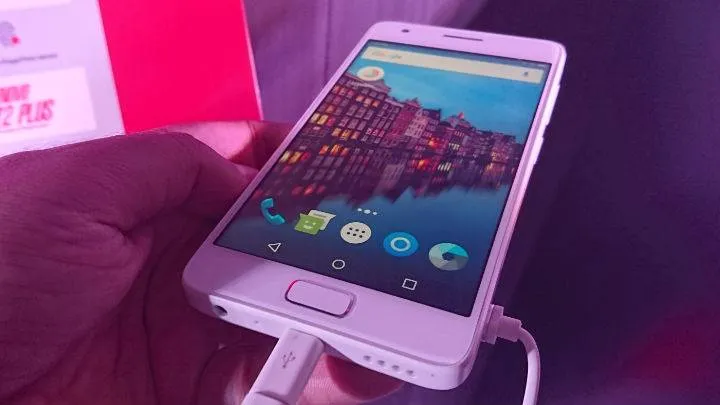
Lenovo has launched the Z2 Plus in India today at a launch event in New Delhi.
The Z2 Plus aims to be an affordable flagship and comes with the Qualcomm's Snapdragon 820 CPU, 4GB/3GB of RAM, 24/7 activity tracking via dedicated sensor processing unit and a body made of fibre glass.
The Z2 Plus is basically a rebranded Lenovo Zuk Z2, which was launched in China back in May. According to the company, the rebranding has been done in order to leverage the Lenovo brand name, which is much more popular and trusted in India than the Zuk brand name.

However, Zuk branding will exist on the box in the form of 'Powered by Zuk' as a nod to the work done by the Zuk team.
Let's take a look at the Z2 Plus in detail.
Design
This is where things get really interesting. The body of the Lenovo Z2 Plus is made of fibre glass, which Lenovo claims is lighter and stronger than metal.
The company also says the fibre glass body helps enhance cellular quality and provides for very efficient thermal management.

The smartphone has a reinforced rollcage design, which Lenovo claims makes it incredibly durable.
The problem is that inspite of all the gimmicks, the smartphone just doesn't look premium. The design comes across as very safe, boring and uninspiring.
CPU
The Z2 plus comes with the Qualcomm Snapdragon 820 SoC which has 4 custom Kyro cores - two high power cores and 2 energy efficient cores for less intensive tasks.
RAM
The Z2 Plus comes in two variants, one with 4GB of RAM and one with 3GB of RAM. Both units feature DDR4 RAM, which Lenovo claims is 2.61x faster than DDR3.
Graphics
The smartphone features the Adreno 530 GPU, which offers 40% improved graphic performance than the Adreno 510 GPU and is more power efficient as well.
Storage
The Z2 Plus comes in two variants, one with 32GB of internal storage and a higher-end variant with 64GB of internal storage.
What is special about the smartphone is that it features Sandisk's i7232 NAND flash storage chip which comes with a SmartSLC architecture that allows for much faster data transfer in situations such as continuous 4K capture.

What is extremely disappointing is the fact that the Z2 Plus lacks expandable storage of any kind.
Also read: Mi Air Purifier 2 review: An absolute game changer!
Cameras
The smartphone features a 13MP rear camera with a sensor size of 1.44 microns. Lenovo stressed during the event how they were not going for a higher megapixel camera but incorporated a larger sensor for better image reproduction.
The rear camera also comes with PDAF and Electronic Image stabilisation. It can also shoot 4K videos, 1080p timelapse and 120fps Slowmotion videos.
On the front, there's an 8MP camera with a sensor size of 1.4 microns.
Display
The smartphone has 5-inch fullHD display with a pixel density of 441ppi and a viewing angle of 178 degrees.

Lenovo claimed during the launch event that the 5-inch screen size was a deliberate move in this day and age of 5.7-6 inch screens in order to maximise one handed usability.
Software tweaks
The device runs on Android 6.0.1 Marshmallow out of the box.
Lenovo has also made other software tweaks in order to enhance one handed usability such as the redesigned quick switch panel which can be accessed by swiping up from the bottom of the display instead of swiping down from the top.
It has 17 shortcuts which are all user programmable.
U-Touch 2.0
A fingerprint sensor is integrated into the home button of the device.The company claims the fingerprint sensor is incredibly fast as well as self learning.
The home button can not only unlock your device using the fingerprint sensor, it can actually perform 7 different functions.
A single press takes you back to the home-screen, a long touch opens the notification centre, a double press brings up the app switcher, swiping left/right cycles between recent apps, a single touch acts as a back button and a long press invokes Google Now.
This multi function home button is dubbed by Lenovo as U-Touch 2.0.

U-Health
Lenovo claims that the Z2 Plus can replace your fitness tracker. And to back that claim, the device comes with a sensor processing unit that tracks your steps, calories, distance and so on 24/7, much like Apple's M9 processor in the iPhone 6S.
This is all paired with the U-Health application which displays all your activity stats and information on your smartphone.
Battery
It comes with a high density 3500 mAh battery with Intelligent Charge Cut-off that helps enhance the life of the battery.
Connectivity
The Lenovo Z2 Plus supports 4G LTE, VoLTE, 3G, GPRS-EDGE/ GPS/A-GPS, dualSIM and comes with USB Type-C for charging and data transfer.

Price and availability
The Lenovo Z2 Plus comes in two variants, one with 3GB of RAM and 32GB of internal storage for Rs 17,999 and a higher-end variant with 4GB of RAM and 64GB internal storage for a slightly more expensive Rs 19,999.
The two variants will go on sale from 25 September, 23:59:59 exclusively on Amazon and will be available via open sale. This is a great move from Lenovo as flash sales are inconvenient and gimmicky.
Accessories
Lenovo also showcased three accessories for the Z2 Plus, a Chronos case for Rs 1299, the Skullcandy Ando earphones for Rs 1299 and a stealth case for Rs 699.
A point to note is that the Lenovo Z2 Plus doesn't come with any earphones out of the box.
