





- Check out this tiny ereader you can build yourself
- The parts can be put together for less than $50
- It comes a small ereader display with 3D-printed parts
It may not make it into our best ereaders list, but the tiny ereader built by YouTuber Paul Lagier definitely has lots of appeal: it's small enough to fit in the palm of your hand, and it was custom made for less than $50.
Watch the full video (via Android Authority) to see how it was done. The device is battery powered and uses several 3D-printed parts, together with a 1,500 mAh battery and an 2.13-inch LoRa E-Ink Display Module sourced from Amazon.
Crucially, the affordable display that Lagier chose already has a microcontroller and charging circuitry built in, which means the only added hardware needed was a power source and a case. All in all, the estimated cost is under $50 (around £37 / AU$70).
Lagier says the pocket-friendly gadget is "designed to do just one thing, help me start reading again". He's hoping that the small size of his ereader means he can quickly grab a few minutes of reading time in between everything else going on each day.
From firmware to file uploads
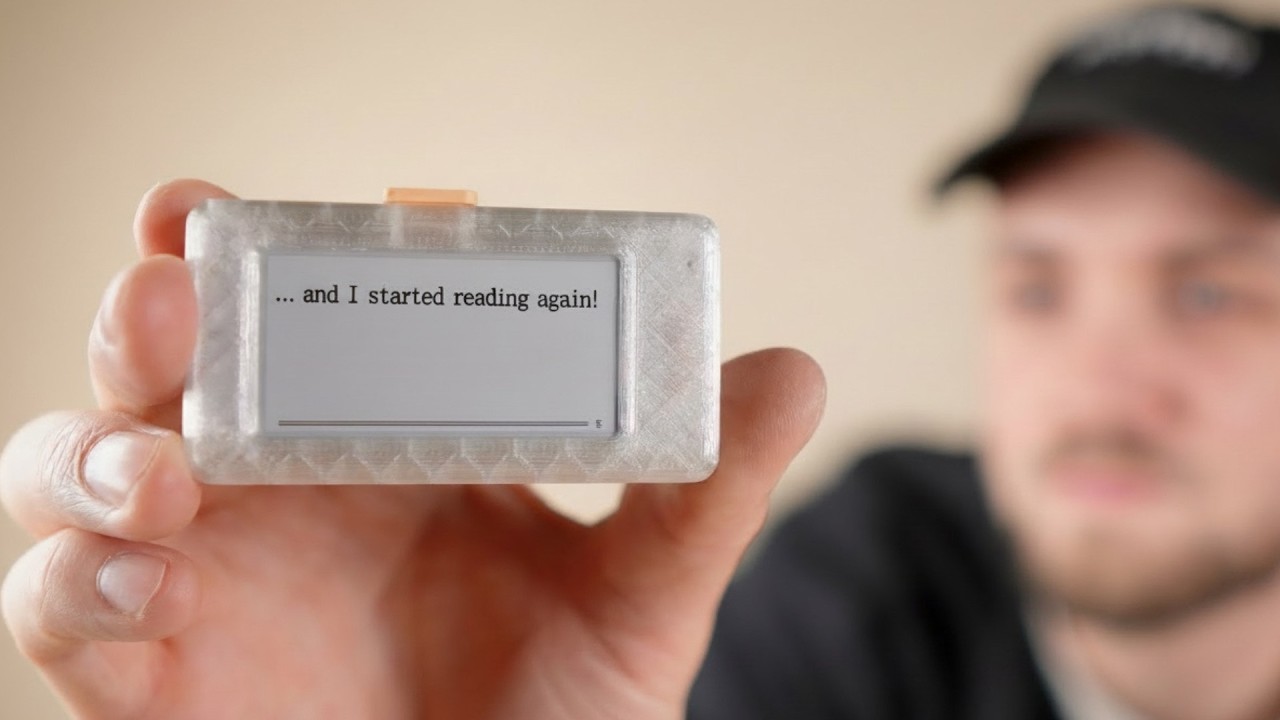
The video above offers a fascinating look at the construction of the small device, together with some context on Lagier's reading habits, the motivation for the project, and details of what makes an ereader an ereader.
Lagier made a custom shell for the ereader, together with a single button for controlling everything on screen, but he describes coding the firmware and navigation system as "the most complex part" of the build.
The ereader uses a USB-C port for charging, and is able to read plain, DRM-free text files that can be uploaded through a web browser — the gadget can actually create its own temporary Wi-Fi hotspot for file transfer purposes.
There's even a bookmark feature for pages you want to save, and Lagier says battery life works out at about two weeks between charges. If you're interested in building your own, check out the project page at Ko-fi, and Lagier's follow-up video too.
Follow TechRadar on Google News and add us as a preferred source to get our expert news, reviews, and opinion in your feeds. Make sure to click the Follow button!
And of course you can also follow TechRadar on TikTok for news, reviews, unboxings in video form, and get regular updates from us on WhatsApp too.
