- People keep arriving at a Reddit user’s house seeking their lost iPhones
- It may be down to a quirk with how Apple’s Find My system works
- It sounds similar to another case from ten years ago
If someone turned up at your door claiming their lost device was at your address — and you knew it definitely wasn’t — you might be a little confused, but not too bothered. But if it happened repeatedly over a period of years, you’d start to get concerned. That’s exactly what’s been happening to one long-suffering Reddit user, and the cause is still a mystery.
As recounted by the victim on their recent Reddit thread, “About 3-4 years ago, we had two men turn up to our door because one of them had an iPhone stolen the night before, and the Find My app brought them to our house.” The device wasn’t there, however, and the men left.
“Ever since, we’ve had at least four or five more instances or random guys, iPad, or friend’s phone in hand, saying ‘My phone is here,’” they continued. “It’s frustrating to have to explain to them that this has happened and we don’t have them.”
But aside from the mere confusion of the incidents, the original poster was also concerned about their safety. “We’re both women, and I don’t want one guy to be absolutely fuming about his phone missing and hurt us,” they worried.
Some people thought this might be more than a simple case of mistaken identity or Find My having a glitchy moment. “I’ve seen videos from Ring doorbells being posted saying that this is a common scam nowadays,” said one, with another adding that “I would call the police. It may be someone trying to gain access to your property, whatever you do don’t let them in.”
Can anything be done?
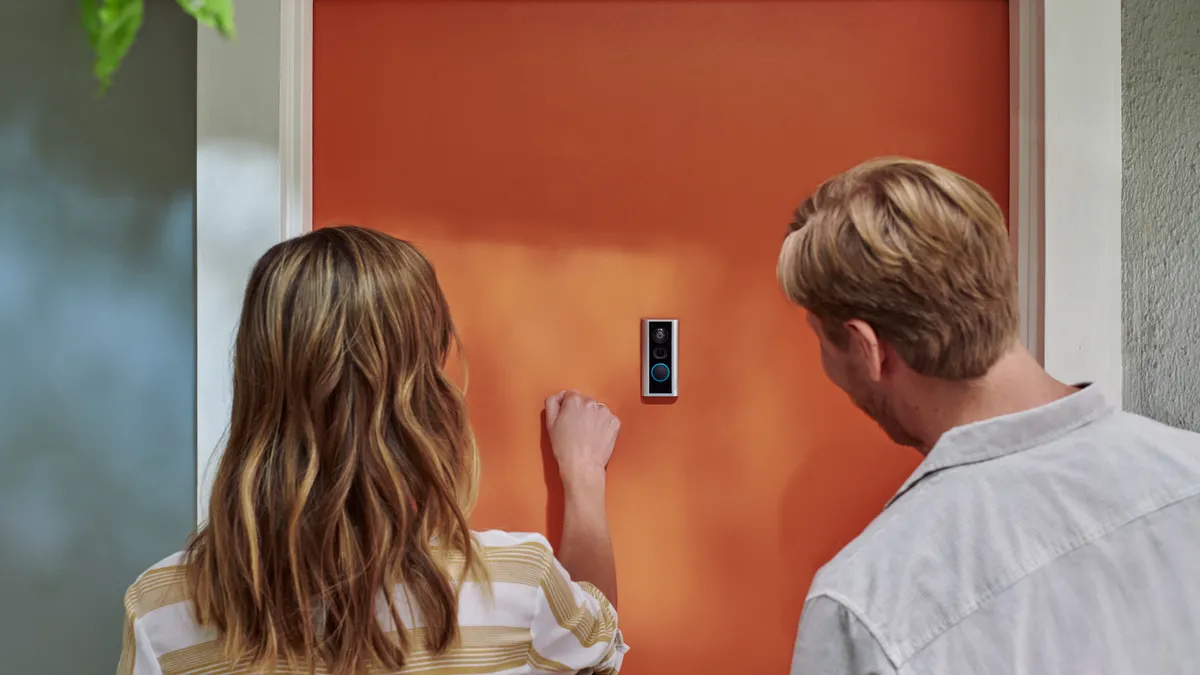
Situations like this can be concerning, especially if they keep happening with different people turning up on your doorstep. But this is not the first time Apple’s Find My feature has befuddled people in this way, with a similar case reported back in 2013, for example.
And back in 2016, the Reply All podcast investigated after a strikingly similar occurrence in Atlanta, GA. In the end, the podcast concluded that it was all to do with the “digital desert” present in the area, with the Atlanta victims being one of the few homes with a router in the area.
As the podcast explained, if a lost phone is trying to broadcast its location, it might do so by connecting to GPS. If that’s not feasible, it’ll next try to find the nearest IP addresses and Wi-Fi networks, triangulating itself based on the relative strengths of those networks.
If the center of that IP address area happens to be a person’s house, that’s where people seeking their lost device will end up. Moreover, considering how few routers were in the area, any lost phone that was relatively nearby and couldn’t connect to GPS might have found the victims’ router as a fallback, leading people straight to the home in question.
What's the answer?
Apple’s Find My feature uses Bluetooth to connect to a network of other devices, using them to pinpoint a lost phone’s location.
It’s therefore conceivable that the solution for the Reddit conundrum is slightly different to that suggested by Reply All. One alternative suggested on Reddit was that stolen devices are being handled nearby and send out a ‘ping’ before they’re disassembled or deactivated. That ping is an approximate location, but it happens to line up with the victims’ house, sending people to their door.
Another possibility relates to Wi-Fi networks, as in the 2016 case. This time, it was pointed out that Find My can log local Wi-Fi networks — if the victims’ home network strength is strong enough, lost devices nearby could show it as the phone’s last known location. The answer this time could be to add _nomap to the home network SSID name, as one user suggested.
But without a solid idea of what’s happening, solutions might not always be possible. As one commenter said, “depending on where you live it could be that your home happens to be the location that a lot of IP addresses default to on the map. Sadly there is very little you can do about it.”

Follow TechRadar on Google News and add us as a preferred source to get our expert news, reviews, and opinion in your feeds.