





Want to listen to your music without completely tuning out the world? That’s where bone conduction headphones come in. Instead of sitting in your ears, they use transducers that rest against your cheekbones to send sound vibrations through your skull, leaving your ear canals completely open. So you can listen to music or podcasts while still hearing traffic, conversation or other people around you.
That makes them particularly useful for running, cycling and outdoor workouts, as well as swimming if you choose a waterproof model. The latter usually relies on onboard storage rather than Bluetooth, since Bluetooth and swimming don't exactly get along. Some models work on land and in the water, which makes them particularly useful for multi-sport training.
They can work well in the office, too, thanks to the open-ear design, which lets you hear colleagues and what's happening around you. Just bear in mind that some models can leak sound at higher volumes, which is more noticeable in a quiet office. And, in general, bone conduction headphones can't match conventional earbuds for sound quality.
Below, you'll find the best bone conduction headphones we've tested for running, swimming, workouts and everyday use. We regularly update this guide as new models launch throughout 2026.

Matt is TechRadar's Senior Fitness and Wearables Editor which means he's an expert on workouts, sports headphones, and all things fitness tech. Matt's spent years covering the health and fitness beat, tested many of the headphones below, and has commissioned a small team of writers to help curate this guide.
The best bone conduction headphones in 2026
Why you can trust TechRadar We spend hours testing every product or service we review, so you can be sure you're buying the best. Find out more about how we test.
Below you'll find full write-ups for each of the best bone conduction headphones in our list. We've tested each one extensively, so you can be sure that our recommendations can be trusted.
The best bone conduction headphones overall


✅ You run long distances: The boosted 12 hours of battery life ensures all-day wear is possible, whether you're on a long trail or training multiple times a day.
✅ You want good sound: Satisfying bass, full mid-range sound and EQ options ensure a quality listening experience, even with your ears free.
✅ You're a last-minute planner: Fast charging ensures you can plug them in for just five minutes and run for over two hours.
❌ You're a casual jogger: It's likely you don't need the full weight of all the features if you just want a soundtrack for a 5K round your local park.
❌ You want amphibious headphones: These aren't pool-safe, so you're better off with the Tri 2 Pro or Nank Runner Diver headphones above if you want headphones fit for swimming and running.
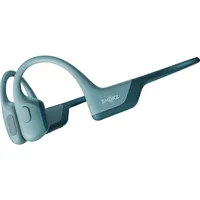
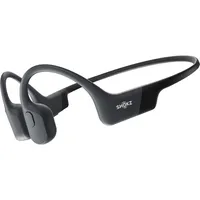
If you want bone conduction headphones for running, workouts and everyday listening, the Shokz OpenRun Pro 2 is the pair I'd put at the top of your list. They tackle one of the biggest weaknesses of this style of headphone: sound quality. Shokz combines its 10th-generation bone conduction technology with air conduction, giving you clearer highs and fuller mids than you typically get from bone conduction alone. Our reviewer found them enjoyable across a range of music, although the bass is still a little restrained compared with conventional earbuds.
They're also impressively comfortable and stable. At around 30g, they're light enough to wear for long runs without becoming distracting, while you can choose between standard and mini headband sizes for a more secure fit. Battery life is another highlight, with up to 12 hours of listening and around two-and-a-half hours from a five-minute quick charge. There’s also multipoint connectivity and six EQ presets, plus a five-band custom EQ if you like to tinker.
They aren't cheap, and there's no onboard storage for phone-free listening. They're also IP55-rated rather than fully waterproof, so they're not suitable for swimming. If that's what you're after, scroll down for our swim-friendly picks.
For us, though, the OpenRun Pro 2 gets the balance right. You get the comfort and awareness you want from bone conduction, without the feeling that you've had to make quite so much of a sacrifice on sound.
Read our full Shokz OpenRun Pro 2 review
The best bone conduction headphones for running and swimming


✅ You want adjustable sound quality: The Nank offers some customisation with multiple earplugs and pliable arms to provide better fits and sound.
✅ You want to connect multiple devices: Multipoint connectivity is really great for transitioning between phone and laptop.
✅ You have a ton of songs: 32GB is a wild amount of storage, honestly.
❌ You're on a budget: These are just as expensive as the H20 Tri 2 Pro.
❌ You don't have a big music library: Sacrificed owning all your music to streaming services? You'll have nothing to load these with.
The Nank Runner Diver2 Pro are exceptional bone conduction headphones for both runners and swimmers alike. They excel in every field and even come with premium earplugs to improve the sound quality you get.
Onboard storage of 32GB takes care of music, and an IP69 water rating ensures you can use them while swimming, not just in the rain.
I love their lightweight and comfortable fit, as well as the well-designed charger, although USB-C is a surprising omission. The noise-cancelling mode is decent, and there's multipoint connectivity to ensure reliability.
I enjoyed the clear, nicely balanced sound during testing, and the battery life definitely delivers the promised 10 hours. These are my top money-no-object bone conduction pick, making them a perfect candidate for a premium slot.
Read our full Nank Runner Diver2 Pro review
The best cheap bone conduction headphones


✅ You're on a budget: The 7Sevens are cheap and absolutely stuffed with features for the price.
✅ You're a swimmer: If you're looking for lots of music storage and good waterproofing, the 7Sevens are the best value pair you can get.
❌ You're an audiophile: The Jabees 7Seven's transducers tend to vibrate at higher volumes, hampering sound quality.
❌ You struggle with comfort: The fit adjustment is limited here compared to very adjustable headphones such as the Nank.
The Jabees 7Seven swimming headphones, despite the descriptor, are perfectly capable of operating above and below the water, and offer great value for the price. With Bluetooth 6.0, multi-point connectivity allowing you to connect with multiple devices, and 32GB storage, the 7Seven headphones are outstanding value.
They're especially good for swimming, with ample storage and waterproofing, excelling in pool swims. They're fine above ground too, although the secure fit loop needs fiddling with to ensure comfort as they're not particularly adjustable.
You do get bone conduction vibration at higher volumes, and call quality was a bit crackly – common problems on cheaper bone conduction headphones – but as a budget pick, they certainly do the trick. Especially for swimmers.
Read our full Jabees 7Seven swimming headphones review
The best bone conduction headphones for swimming


✅ You own your own music: A massive 32Gb onboard storage capacity allows you to load tons of songs right onto the headphones.
✅ You swim for hours: The IP68 waterproof rating means they can be submerged for two hours at a time without damage or leaks.
✅ You already use Shokz: If you're looking to upgrade from OpenRun or OpenSwim and are considering the H20 Tri 2 Pro or Nank RunnerDiver 2 Pro, the OpenSwim Pro are Shokz' version of those models.
❌ You use music streaming services: The H20 Tri 2 Pro has a crucial advantage, as Shokz can't save your Spotify playlists to its headphones like the Tri 2 Pro can.
❌ You're on a budget: The OpenSwim Pros aren't cheap, and casual enthusiasts may be better off getting the standard OpenSwim models.
The Shokz OpenSwim Pro come with Bluetooth connectivity for music streaming, alongside their existing support for MP3 playback. 32GB of onboard storage is enough for 8,000 songs, so you can swim without a phone in your vicinity.
They have IP68 waterproofing, which means they're rated for up to two hours at two meters of submersion, perfect for a quick triathlon or a pool session. Battery life is good for up to 9 hours of Bluetooth playback, or 6 hours of streaming music from the onboard storage. The only quirk here is that you'll need to own the music you want to play from your headphones, so if you rely on streaming services like Spotify or Apple Music, they might not be for you.
The over-ear design ensures a comfortable fit for a range of ear shapes, and at just 27 grams, you'll hardly notice them on your head. Sound is delivered via Shokz' PremiumPitch 2.0+, with clear audio and noise-cancelling to boot. Sadly, they miss out on the more recent Shokz ninth-gen bone conduction tech, but they're still absolutely brilliant in their field.
Read our full Shokz OpenSwim Pro review
The best for long workouts


✅ You're a triathlete: The H20 Tri 2 Pro packs features transitioning seamlessly from water to land.
✅ You want to stream music: The Playlist+ functionality works with streaming services like Spotify, so you can download music to play in the water.
✅ Money's no object: These bone conduction headphones are expensive, but they are the best around.
❌ You own all your own music: If you don't want to save your playlists from streaming services and you have a large digital library, you can save some money.
❌ You don't swim often: If you just want to hook a pair of Bluetooth headphones to your phone or watch, do yourself a favor and buy a pair of OpenRuns.
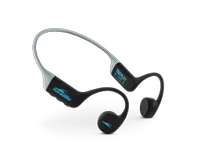
The H2O Audio Tri 2 Pro Multi-Sport bone conduction headphones may be among the pricier options on our list, but they're certainly more feature-rich than the others. They're a triathlete's dream, seamlessly transitioning from water to land for rich listening in any environment.
Best for swimming as well as for land-based workouts, they come with an MP3 player that stores 8GB worth of music and a save-your-playlist Playlist+ functionality to work with streaming, which means that you don't have to rely on Bluetooth connectivity when you're in the water. As a habitual Spotify user, this is so useful for me. Outside of the water, however, you still have that Bluetooth connectivity so you can stream any music or podcast you like.
During testing, they've also proven to be great for listening in general. Worn above water, both music and podcasts boast solid sound, regardless of whether you're using Bluetooth or internal storage. Underwater, podcasts’ sound quality was just as good.
They're quite expensive, but that doesn't take away from the fact that these are the best bone conduction headphones on the market right now. Sorry, Shokz.
Read our full H2O Audio Tri 2 Pro Multi-Sport review
If you can't find what you're looking for here, check out our best swimming headphones and best open-ear headphones guides for more headphones designed for spatial awareness. Just underneath here is our Also tested section, where we've included several bone conduction headphones that performed well but were beaten to a top spot by stronger all-rounders or more specialist picks.
Also tested
Bone conduction headphones compared
H20 Audio Tri 2 Pro |
Nank RunnerDiver 2 Pro |
Jabees 7Seven swimming headphones |
Shokz OpenRun 2 Pro |
Shokz OpenSwim Pro |
|
|---|---|---|---|---|---|
Weight |
32g |
32g |
28g |
30g |
27g |
Battery life |
9 hours |
10 hours |
5 hours |
12 hours |
9 hours |
Swimproof |
Yes |
Yes |
Yes |
No |
Yes |
Storage |
8GB |
32GB |
32GB |
8GB |
32GB |
FAQs
Below, we've answered some of the most commonly-asked questions about bone conduction headphones, so you can choose the best pair to fit your needs.
Are bone conduction headphones good for swimming?

- If you need completely swimproof bone conduction headphones, you'll need a pair rated IP68 or higher
- Water doesn't conduct Bluetooth signals well, so you'll also need onboard music storage
If you’re thinking about investing in a pair of bone conduction headphones for use while swimming, then be sure to check the IP (ingress protection) rating, which will provide an indication of how well they'll be able to fend off sweat and water.
Generally, an IP68 or higher rating ensures total protection in water. In the list above, that's the H20 Tri 2 Pro, Nank RunnerDiver 2 Pro, Jabees 7Seven and Shokz OpenSwim Pro. The Shokz OpenRun 2 Pro are not designed for the pool, although they are sweat- and rain-resistant.
Bluetooth signals also don't travel well underwater, which is why headphones designed for swimming feature built-in music storage. Our best swimming headphones guide can tell you more. It's also about charging method: plugs are tough to keep water out of, while magnetic chargers are easier.

Are bone conduction headphones safer?
- Bone conduction headphones keep you aware of your surroundings
- They leave your ears free so you can hear pedestrians, traffic and other athletes
Generally, yes. Similar to transparency modes on some ANC headphones, bone conduction headphones allow ambient sound to reach your ears. However, the difference here is that rather than use the built-in microphones in in-ear buds, bone conduction headphones don't plug up your ears at all.
This is why many organized race events prohibit the use of headphones other than bone conduction or open-ear headsets. Earbuds that leave your ears open are becoming more common too, and we have a dedicated guide to the best open earbuds.
Do bone conduction headphones sound good?
- Bone conduction headphones have reasonable-to-good sound quality
- Because your ears are exposed to external sound, you're never going to get sound quality comparable to the best in-ear or over-ear headphones
- Bone conduction headphones still sound great for running, with satisfying bass
All of the bone conduction headphones in this guide offer decent audio performance, but you're never going to get the same sound quality as you would from a pair of in-ear headphones or over-ear headphones.
If you do want to stay aware of your surroundings without sacrificing audio quality, there are plenty of true wireless earbuds out there with transparency modes, which feed in sound from the outside world to your ears.
Are there any health benefits to using bone conduction headphones?
- There is no evidence that bone conduction headphones are more or less damaging to your eardrums than in-ear headphones
- Bone conduction headphones do present a better safety prospect
- This is because you can also hear your surroundings while you listen to music or podcasts, increasing your spatial awareness in public
There's a theory that bone conduction headphones could be better for your hearing health than earbuds, over-ear, and on-ear headphones. That's because they're not driving air directly to your eardrum, which can lead to damage if you listen to music at loud volumes.
However, studies have shown there is no difference in pressure on the ear canal between bone conduction and in-ear headphones.
Which Shokz headphones have the best sound?
- The Shokz OpenRun Pro 2 feature updated DualPitch transducers to better conduct audio
- The OpenSwim Pro allows you to store your own audio too
While some other models might feel more comfortable to wear, the best-sounding Shokz headphones are the OpenRun Pro 2. As we mentioned in our guide above, these headphones contain a set of updated DualPitch bass transducers that deliver far richer sound than other bone conduction headsets we've tested.
You can even adjust the sound profile in the Shokz app using the EQ settings to further tailor the audio to your liking. However, the OpenSwim Pro can allow you to store and play your own music on the headphones, without a phone to hand.
How we test bone conduction headphones

We've tested dozens of bone conduction headphones over the years, which puts us in a great position to select our favorites for this guide.
We have reviewed every pair listed above. In each case, we give the product plenty of time to run before evaluating its sound quality across a variety of music genres, games, movies, and podcasts, from several sources, against known class leaders in the category. Sound quality is obviously a priority, but we understand bone conduction headphones aren't going to give the same listening experience as over-ear headphones or earbuds.
We also consider how comfortable it is to wear these headphones over extended periods, and how secure the fit is going to be, especially when exercising.
When it comes to additional features, we look at voice assistant integration, on-device touch controls, how comprehensive the companion app is, and anything else that each set of bone conduction headphones provides.
We also evaluate those battery life claims to ensure we can give an accurate opinion on how long they will last in normal use. Ultimately, we want you to have a product you'll be over the moon with. We hope we help you achieve that.
