





TechRadar Verdict
The Philips Baristina is an entry-level bean-to-cup espresso machine that's stylish, solidly made, and extremely simple to use. Its "one swipe" brewing means you never have to weigh anything; just insert the empty portafilter handle and the machine will do the rest, grinding and tamping the beans, then whisking them over to be extracted. During my tests, the coffee it produced was consistently well-extracted and flavorsome — although be aware that you can't adjust the grind size if yours tastes slightly under- or over-extracted.
Reasons to buy
- +
Simple to use, even for beginners
- +
Much easier to clean than most bean-to-cup coffee makers
- +
Smart, sleek design
- +
Very reasonably priced
Reasons to avoid
- -
Grind size can't be adjusted
- -
No steam wand (although there's an optional standalone milk frother)
Why you can trust TechRadar We spend hours testing every product or service we review, so you can be sure you're buying the best. Find out more about how we test.
Philips Baristina: one-minute review
With the Philips Baristina, brewing espresso using freshly roasted beans is as easy as using coffee pods. Unlike most of the best bean-to-cup coffee makers, where the entire brewing process takes place within the case, the Baristina uses a portafilter handle much like a manual espresso machine. Push the empty handle into place, select your drink, and the Baristina will grind the right dose of coffee into the filter basket, tamp it down, then move it to the brewing group automatically for the shot to be extracted.
It's a clever design that's unlike any other bean-to-cup machine I've tested, and because the Baristina uses a portafilter, cleaning up is a piece of cake. There's no need to take the side off the machine, empty messy internal bins, remove components, or wipe up stray coffee grounds that have escaped.
It's a good-looking little coffee maker as well. Although its case is plastic, its matt finish and choice of tasteful colors mean it doesn't look cheap or attract fingerprints. The portafilter handle even arrives in a choice of colors and natural wood finishes (the exact options available will depend on where you buy your machine).

During my tests, coffee was consistently well extracted using my usual freshly roasted beans, with the pressurized filter basket producing a thick layer of crema.
In my opinion, the biggest drawback is that the Philips Baristina doesn't allow you to adjust the grind size, which means you have no control over how quickly your coffee is extracted. You can adjust the volume of your brew, but that's all. If your coffee tastes over- or under-extracted, you'll need to try different beans until you find something that works well with the standard settings.
You should also be aware that the Baristina doesn't have a steam wand or any other means of foaming milk, although it's available bundled with a standalone milk frother if cappuccinos and lattes are your thing.
All in all, it's an excellent beginner-friendly espresso machine that's ideal if you're new to using fresh beans and want to keep things as simple as possible. It's remarkably affordable, too, with a list price of just $299.95 / £279.99 / AU$599.

Philips Baristina: price and availability
- Very cheap for a bean-to-cup coffee maker
- Sold in North America, Europe and Australia
- Often available at a discounted price
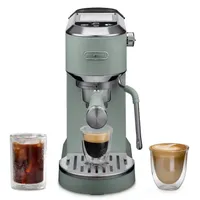
The Philips Baristina is the most affordable bean-to-cup coffee maker I've tested to date, with a list price of $449.99 / £299.99 / AU$599. You can pick up a good-quality manual espresso machine for around the same price — the five-star rated De'Longhi Dedica Duo for $299.95 / £279.99 (or less in Australia at AU$289), for example — but if you're after an automatic coffee maker, I haven't seen another model that delivers better in terms of value for money.
It's often available at a discount at major retailers, making it even better value. You'll find all today's best deals below.
The Baristina is available in North America, throughout Europe and has recently made its way to Australia.
- Value score: 5/5
Philips Baristina: specifications
Name |
Philips Baristina |
Type |
Bean-to-cup |
Dimensions (W x H x D) |
7 x 13.6 x 15 inches / 18 x 34.5 x 38cm |
Weight |
11lbs / 5kg |
Water reservoir capacity |
47oz / 1.2 liters |
Milk frother |
No |
Bars of pressure |
16 |
User profiles |
None |
Philips Baristina: design
- Sleek design with matt finish
- Clever "one swipe" portafilter design
- No steam wand (although separate milk frother is available)
The Philips Baristina is a compact coffee maker with a smart, minimalist design. It comes in two colors, black and white, with matching portafilter handles as standard. Some retailers also offer a selection of contrasting portafilter shades (including red, green, and yellow), plus light and dark wood options so you can pick something that suits your kitchen décor. Whichever color you choose, the portafilter is fitted with a non-removeable pressurized basket.
All in all, it's a good-looking machine, and although its case is made from plastic, its matt finish means it doesn't appear cheap or attract fingerprints like some more expensive coffee makers I've tested.

The Baristina is controlled using a simple set of three buttons: one for a single shot of espresso; one for a lungo (a longer drink with the same amount of coffee and twice as much water); and one to boost the intensity by increasing the dose of ground coffee.
The bean hopper is quite small, but that isn't a problem unless you're preparing coffee for a crowd; it's best to keep your coffee in a dark, cool, airtight place until you're ready to grind it and refill your coffee machine little and often.
The Baristina's water tank slides onto the back of the machine, and although I'd have liked to see a handle, its ridged surface makes it easy to grip when filling and replacing. It has a robust lid that fits firmly in place to avoid accidental spills, but do note that there's no water filter provided, so if you live in a hard water area then you might want to use a separate water filtration pitcher.

There's a removable plastic drip tray for your espresso cup, which slots into place below the groupset. It's nicely made — but, unfortunately, it isn't designed to accommodate a larger cup if you want to use your espresso as the foundation for a long drink.
The Baristina doesn't have a steam wand or automatic milk-frothing system. However, if you want to make milky drinks such as lattes and cappuccinos, it's available bundled with a standalone milk frother.
The standard Philips Baristina (which I tested here) has a single hopper, but there's also a model called the Baristina Variety, which has a larger dual hopper so you can choose between two different beans or roasts on-the-fly.
- Design score: 5/5
Philips Baristina: performance
- Super easy to use, with no need to weigh or measure
- Produced well-extracted espresso in tests
- Easier to keep clean than a typical bean-to-cup machine
- Grind size can't be changed
The Philips Baristina is a beginner-friendly espresso machine that combines the convenience of a bean-to-cup coffee maker with the easy cleanup of a manual one. To use it, just fill the water tank and bean hopper, gently push the empty portafilter handle into place, and slide it to the right under the coffee grinder. Choose your drink (espresso or lungo), hit the extra intensity button if you like, and the machine will get to work.
The appropriate dosage of coffee will be ground and dispensed directly into the filter basket, then tamped down evenly. Once it's ready, the machine will slide the handle to the left so it sits under the brew group, and extract your drink into your waiting espresso cup. You never touch the coffee grounds yourself, and there's no need to weigh or measure anything.

When the Baristina is done and your coffee is ready, the handle will be unlocked so you can pull it out, knock the puck of used coffee grounds into your food waste bin, and clean the basket. It's a lot easier than cleaning up a conventional bean-to-cup coffee maker, which involves pulling out the drip tray to clean out used coffee grounds, removing a side panel to take out and rinse the brew group, wiping up any stray coffee grounds inside the machine's casing, and leaving the whole thing open to dry so it doesn't grow mold.
The biggest drawback of the Baristina is that there's no way to change the grind size, so if your drink tastes under- or over-extracted (sour or bitter), you'll need to experiment with different types of coffee until you find something that works with the machine's default setup.

It's also worth noting that while manual coffee makers give you a choice of single and double filter baskets, with double (pressurized) and single walls, the Baristina's basket is integrated into the handle and can't be removed. Again, this limits customization, but it's unlikely to be a concern for those looking for their first espresso machine, or upgrading from a capsule coffee maker.
- Performance score: 4.5/5
Should you buy the Philips Baristina?
Attribute |
Notes |
Score |
|---|---|---|
Value |
The most affordable bean-to-cup coffee maker I've tested – and one that doesn't skimp on quality. |
5/5 |
Design |
Simple, compact and stylish, without the tricky clean-up associated with most automatic coffee makers – although it lacks a steam wand. |
4.5/5 |
Performance |
Quick and easy to use, even for beginners, and produces great results with the right beans. Grind size can't be adjusted, but at this price it's tough to complain. |
4.5/5 |
Buy it if
Don't buy it if
Philips Baristina: also consider
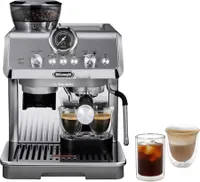
If the Philips Baristina doesn't sound like the right coffee maker for you, take a look at these two highly rated alternatives:
How I tested the Philips Baristina
I used the Philips Baristina for two weeks with my usual regular and decaffeinated coffee beans, freshly bought from a local coffee roaster. I used fresh tap water, and compared the taste of the coffee with that from my usual Gaggia Classic espresso machine. I used both the regular espresso and lungo options, with and without the "intensity boost" feature. I cleaned the portafilter between each drink, and flushed the brewing group with hot water by pressing and holding one of the control buttons.
Follow TechRadar on Google News and add us as a preferred source to get our expert news, reviews, and opinion in your feeds. Make sure to click the Follow button!
And of course, you can also follow TechRadar on YouTube and TikTok for news, reviews, unboxings in video form, and get regular updates from us on WhatsApp too.
