


If you love rich, café-style coffee but don't want to spend your morning timing espresso shots or measuring coffee ratios, a bean-to-cup machine is your best friend.
Simply fill the hoppers with water and whole beans, and the machine takes care of the hard work, grinding fresh and brewing a customized cup in seconds. They require a larger upfront investment than the standard best coffee makers, but the convenience and quality are tough to beat.
The real advantage here is peak freshness. Once coffee is ground, its delicate flavor compounds begin to fade rapidly. By grinding and extracting in one seamless step, bean-to-cup appliances preserve every bit of flavor.
Think of this guide as a casual chat with us over a fresh brew. We’ve tested top-tier models from De’Longhi, Gaggia, Breville (Sage), and Smeg right in our own kitchens, rating them on taste, design, consistency, and how easy they are to live with. Plus, we’ve included hands-on video footage so you can watch them in action.
International Coffee Day and get ready for deals
Why you can trust TechRadar We spend hours testing every product or service we review, so you can be sure you're buying the best. Find out more about how we test.
October 1st is International Coffee Day so now is a good time to hunt down a bean-to-cup coffee maker if you want to up your coffee game. It may even be a good time to snag a deal on coffee maker or just a nice bag of beans.
Speaking of deals, Amazon's Prime Big Deal Days runs October 6 to October 7 and is a good time to hunt down a cut-price coffee maker. On top of that, if you miss the Amazon sale, then we're entering a season of deals as Black Friday looms on the horizon. So do check out the widgets below to score a great price on a bean-to-cup coffee maker.
Meet the expert

Cat has been a tech journalist for over 10 years and is an SCA (Specialty Coffee Association) certified barista, so you can trust her to recommend the best coffee maker for your kitchen, whatever your budget and level of experience.
The best bean-to-cup coffee makers
The best bean-to-cup coffee maker overall


✅ You want help getting the best from your beans: The guided setup walks you through grind size and dose, helping you dial in espresso with less trial and error than a traditional semi-automatic machine.
✅ You enjoy both hot coffee and iced drinks: The cold extraction mode creates a smoother, less acidic cold coffee in minutes, giving you more flexibility than standard espresso machines.
❌ You mainly drink dairy-based lattes and cappuccinos: The AutoMilq system worked better with oat milk in testing, while dairy milk often produced less stable foam. For the best results, you'll likely need to use the steam wand manually.
❌ You want coffee as quickly and simply as possible: This machine rewards a little setup and experimentation. If you'd rather press one button and walk away, a fully automatic bean-to-cup machine will suit you better.
The Sage Barista Touch Impress with Cold Extraction has taken over what was previously the Barista Express Impress in this guide as our best overall bean-to-cup coffee machine. This decision is thanks to the former's more guided setup and added flexibility across hot and cold drinks.
From your first go of the machine, it guides you through grind size and dose calibration, helping you choose how finely the coffee is ground and how much is used for each shot of espresso. It then refines those settings as you adjust, using on-screen feedback to reduce the usual trial and error that comes with dialling in a bean-to-cup machine. As you can imagine, this makes it easier to reach a consistent espresso without repeatedly wasting coffee during the first few runs.
The Impress Puck System replaces traditional tamping, where you would normally press the ground coffee by hand, with a lever that compresses it inside the portafilter handle. This keeps the process cleaner and more consistent, while still leaving you in charge of grinding and loading the coffee.
Milk performance varies depending on what you use. The automatic system works better with plant-based milks like oat, while dairy milk tends to perform more reliably using the manual steam wand to build texture.
Cold extraction is the headline new guy (feature) on the street, using a faster brewing method designed to mimic cold brew coffee, which is normally steeped for hours. With the Sage Barista Touch Impress with Cold Extraction, it is produced in minutes, creating a smoother, less acidic iced-style coffee.
Read our full Sage Barista Touch Impress with Cold Extraction review
The best budget bean-to-cup coffee maker


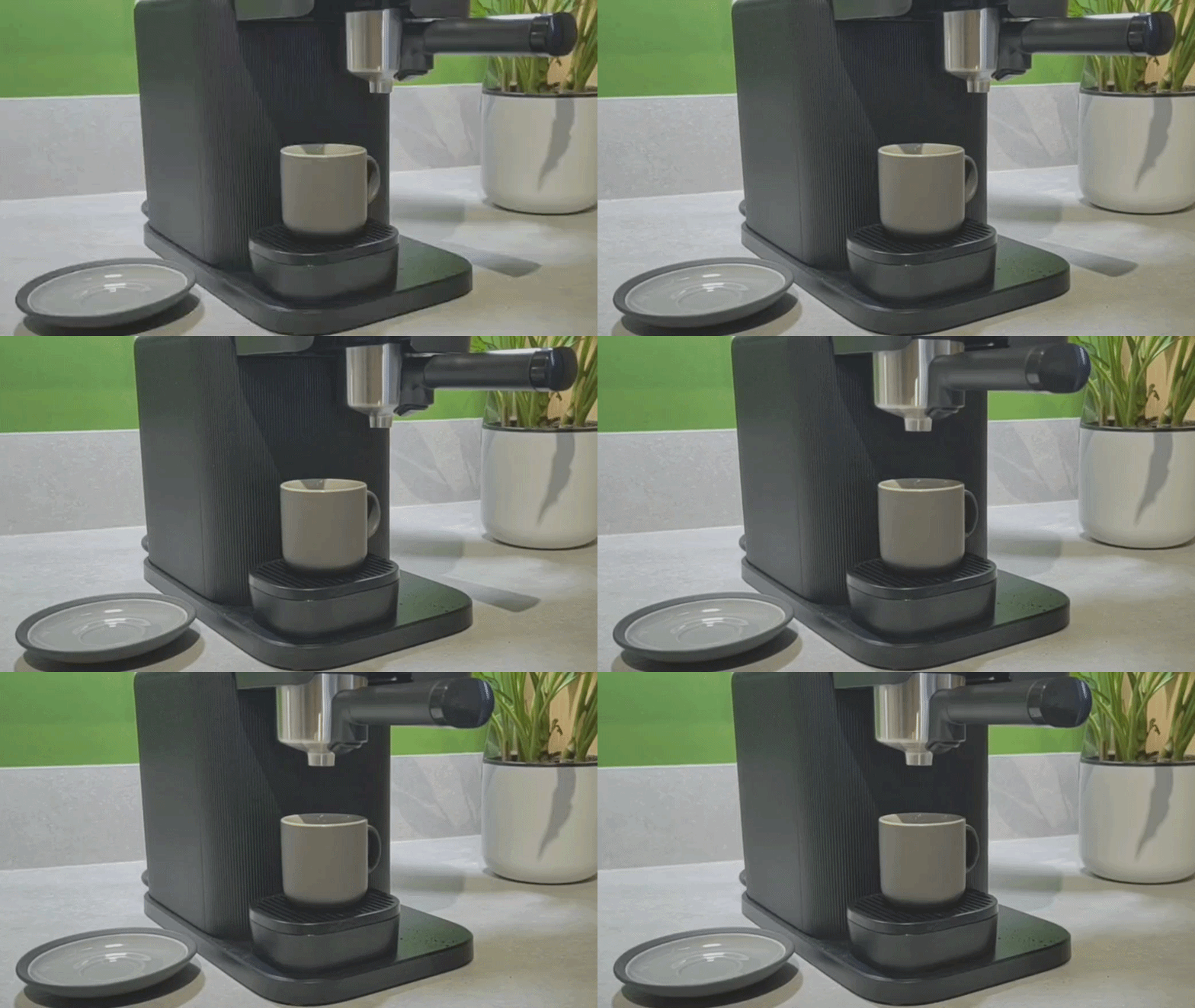


✅ You're on a budget: This is the most affordable bean-to-cup coffee maker I've tested, and Philips hasn't cut corners to achieve its affordable price tag.
✅ You want to upgrade from coffee capsules: The Philips Baristina is just as convenient as a capsule coffee maker, but without the hassle of having to recycle the pods (which can be difficult, depending on the facilities in your area).
❌ You want to experiment with different beans: The Baristina doesn't offer any way to customize the grind size, so you'll have to stick with coffees that work well with its default settings. There's nothing you can do to change the extraction rate.
❌ You love lattes: This coffee maker doesn't have an automatic milk system or a steam wand, though you can buy it bundled together with a separate Philips milk frother.
The Philips Baristina is the most affordable bean-to-cup coffee maker I've tested to date, but it doesn't skimp on style or performance. It takes care of the entire brewing process for you, so you never touch the ground coffee, but unlike other fully-automatic espresso machines I've reviewed, it uses a portafilter handle like a manual machine. That has one big advantage over machines that do all the brewing inside the case: it's much, much easier to keep clean. There's no need to spend time pulling the side off the case, removing and rinsing the brew unit, wiping up stray grounds, then leaving it open to dry overnight so it doesn't go moldy. Instead, just wash out the filter basket when you're done, flush the grouphead for a couple of seconds, and empty the drip tray.
It's a piece of cake to use, as well. Just gently push the handle into place, pick your drink, and the Baristina will grind the right dose of coffee into the filter basket, then slide it over to the brewing group automatically and extract your espresso. It's foolproof, even if you've only used a capsule coffee maker before.
For me, the biggest disadvantage of the Baristina is that you can't adjust the grind size. That means you can't adjust the rate at which your espresso is extracted, so if it's too fast or slow, you'll need to find a different coffee that works better with the machine's default settings. There's no steam wand either, though you can buy the Baristina bundled with a standalone Philips milk frother if lattes are your thing.
Overall though, it's an exceptional bean-to-cup espresso machine for the price, and comes highly recommended.
Read our full Philips Baristina review
The best bean-to-cup coffee maker for variety


✅ You want lots of choice without lots of effort: With 12 preset drinks covering everything from espresso and flat whites to cold brew and iced lattes, the AutoBarista Pro gives you plenty to play with without needing barista skills.
✅ You like to switch between different beans: The two bean hoppers let you keep two coffees loaded at once, while Grind iQ adjusts the grind and dose for the beans you're using. Handy if one person likes a dark roast and another prefers something lighter.
❌ You want coffee piping hot: The hot drinks come out at a comfortable drinking temperature rather than the sort of temperature that requires a few minutes of staring at your mug before taking a sip.
❌ You don't have much counter space: This is a big, heavy machine, so it's better suited to a permanent spot on your worktop than being hauled in and out of a cupboard every morning. It also needs regular cleaning and maintenance.
The Ninja AutoBarista Pro earns its place as our best bean-to-cup coffee maker for variety because it does far more than churn out the same espresso in different-sized cups. You get 12 presets spanning espresso, lungo, Americano, drip coffee, cold brew, cold-pressed espresso and a generous selection of milk-based drinks, plus iced options for warmer days.
There's plenty of flexibility beyond the presets, too. You can adjust the strength, temperature and size of your drink, and the machine's Grind iQ system automatically selects the grind size and dose based on the beans you're using. Better still, its two bean hoppers mean you can keep two different coffees ready to use, rather than emptying one hopper every time you fancy a change.
It's a sizeable investment and takes up a sizeable amount of counter space, but it's especially convenient if your household contains two very different coffee drinkers. One person can have their strong espresso beans and preferred settings, while the other can keep their own beans and milkier preferences saved, with no daily negotiations required. Add the sheer range of drinks and you can have an espresso on Monday, a flat white on Tuesday and an iced coffee by Wednesday. That's a lot of coffee options from one machine.
Read our full Ninja AutoBarista Pro review
The best manual bean-to-cup coffee maker


✅ You don't have a huge budget: With a list price of $699 / £549 / AU$699, this coffee maker isn't cheap, but is firmly in the mid-range price bracket.
✅ You have a small kitchen: The La Specialista Arte Evo is quite compact for a manual bean-to-cup coffee maker.
❌ You want your coffee quick: If you want a bean-to-cup coffee maker that will prepare your drink as fast as possible, look for a fully automatic model instead.
❌ You don't enjoy tinkering: This machine is built for experimentation, and lets you experiment not only with grind sizes, but also with different temperature profiles.
The De'Longhi La Specialista Arte Evo offers a small selection of drink presets, but really comes into its own when used as a manual bean-to-cup coffee maker, letting you select your preferred grind size, temperature profile, and brew time to suit your beans and your tastebuds.
Our reviewer Cesci Angell found it refreshingly simple to use, and quickly mastered its pleasingly tactile controls. The pressure gauge is particularly useful, letting you see in real time the effect of your grinding and tamping on your coffee's extraction, and the steam wand is excellent, maintaining good pressure so even those new to manual espresso machines will have no trouble texturizing their milk. She found the cold brew option required a little tweaking for optimal results, but was otherwise very impressed.
Thoughtful touches include a dosing and tamping guide that screws onto the top of the portafilter to help you achieve a perfect puck for even extraction, and a Softballs water softener, which is designed to help prevent limescale build-up without affecting the taste of your coffee.
The only significant downside we found was that the portafilter needed some elbow grease to remove from the machine after brewing, though it might loosen up with time.
Read our full De'Longhi La Specialista Arte Evo review
The best fully automatic bean-to-cup coffee maker


✅ You value ease of use: From automatic grinding and extraction to guided cleaning cycles and rinsing, it keeps the day-to-day process straightforward.
✅ You drink a mix of coffee styles at home: It handles espresso, cappuccinos, and lattes well, with enough control over strength, temperature, and volume to set preferences and reuse them.
✅ Crema quality is important to you: The KF6 delivers steady, well-balanced espresso with thick crema and very little variation between cups once it is set up.
❌ Coffee-making is your hobby: It prioritises repeatable results over hands-on control, so it will not suit users who like to fine-tune every stage of extraction.
❌ You prefer plant-based milk: While plant milk works with the machine, they are not supported with the same dedicated settings found on higher-end models like the KitchenAid KF8.
The KitchenAid KF6 is a fully automatic bean-to-cup coffee machine that proves its worth in the cup. In our review, the rich espresso it brewed earned particularly high praise, with our tester calling the crema “the best I’ve ever seen.”
That quality carries through to the wider day-to-day experience with the machine. Once your beans are loaded and preferences set, the KF6 settles into a predictable, fuss-free rhythm, handling grinding, dosing, and extraction with little to no tinkering required.
When it comes to milk, the KF6 performs best with dairy. It produces smooth, café-style foam for cappuccinos and lattes, but there’s no dedicated profile for plant-based milks, so results with the likes of oat or almond aren’t quite as refined. The KitchenAid KF8 model does include a dedicated plant-milk profile, but it comes in at around $800 more. If you can live without that extra optimisation for non-dairy milks, the KF6 lets you save a significant chunk of cash.
Where the KF6 is more limited on the milk front, it makes up for it with a few thoughtful extras that make everyday use more efficient. A bypass chute lets you drop in pre-ground coffee whenever you want to switch things up — or make a separate decaf for a roommate or partner who only drinks decaf, without having to swap out your main beans.
Cleaning is just as low-effort. The KF6 leans on automatic rinsing cycles and simple on-screen prompts that quietly keep everything ticking over in the background.
It’s also impressively quiet. Our tester found it to be one of the quieter coffee machines they’ve tested, averaging just 44dB during pumping, with noise levels briefly peaking at 66dB while grinding and 75dB during milk frothing.
Read our full KitchenAid KF6 review
The best bean-to-cup coffee maker for lattes


✅ You enjoy milky coffees: The EQ900 Plus can steam milk as well as a professional barista, and makes the best latte macchiato I've had from a bean-to-cup maker
✅ You have a large household: This coffee maker supports 10 user profiles, and you can even customize your own background color and set favorites.
❌ You're on a budget: The standard EQ900 is much better value if you don't mind losing the smart cleaning feature. It still offers the same excellent customization and milk texturizing.
❌ You favor one particular coffee bean: I love having the option to switch beans on the fly so I can change to decaf in the afternoon, but if you have one favorite then you won't get the most out of this machine's dual hopper system.
The most striking thing about the Siemens EQ900 Plus, other than its bold angular design, is its huge color touchscreen. This is a bean-to-cup coffee maker made with tinkering in mind, and it even offers a choice of two modes so you can decide how much control you want over your drinks (and how much time you have to dedicate to customizing them).
The EQ900 Plus is surprisingly quiet in use, with its airtight bean hopper doing an excellent job of blocking out noise from the grinder. Interestingly, the hopper is split in two, so you can load up two different beans and choose between them on the fly. Personally I prefer it to the design of some machines, which let you use a single scoop of pre-ground coffee if you want something different (like decaf in the evening) but can only grind one type for you. The only downside is that there's no easy way to empty the hoppers and purge the brew group.
The EQ900 Plus makes an excellent espresso, with very good crema, but milk texturizing is where this machine really excels. I love a good latte macchiato, and the EQ900 Plus can create stable, creamy microfoam that should have professional baristas worried.
It is, however, an extremely expensive coffee maker. If you want to save some cash, the standard EQ900 can be found much more cheaply. The only thing you're missing is the smart cleaning system, which can hold two tablets (one for cleaning and one for descaling) to make maintenance easier.
Read our full Siemens EQ900 Plus review
The best bean-to-cup coffee maker for variety


✅ You’re seriously short on worktop space: At just 19.5cm wide, the KF4 is unusually slim for a bean-to-cup machine, so you can get proper espresso without giving half your kitchen over to the coffee maker.
✅ You want excellent espresso without the faff: The KF4 handles the grinding, dosing and extraction for you, producing consistently excellent espresso at the press of a button. It also keeps noise to a minimum, so your morning coffee shouldn't wake the whole house.
❌ You are an iced coffee connoisseur: The KF4's iced drinks still come out fairly warm, so adding ice mostly gives you a diluted, lukewarm coffee rather than something properly refreshing.
❌ You want lots of room to customise your coffee: You can tweak and save your drinks, but the KF4 gives you less customisation than the KF6. It also lacks a dedicated setting for plant-based milk.
The KitchenAid KF4 is our pick for the best bean-to-cup coffee machine for small kitchens, and it manages to squeeze a lot of coffee-making ability into a surprisingly skinny frame. At just 19.5cm wide, it takes up far less worktop space than most machines in this guide, which could make all the difference if your kitchen is already fighting for counter space.
Despite its small footprint, the KF4 doesn't make you work for your coffee. It grinds, doses and brews automatically, producing consistently excellent espresso at the press of a button. Its automatic milk system also produces thick, silky foam for cappuccinos and lattes, while clear controls and straightforward cleaning mean there's very little faffing around between coffees.
It's essentially the more compact sibling to the KitchenAid KF6, but there are a few trade-offs for that smaller footprint. The KF4 gives you less room for customising drinks, and its iced coffee options are more lukewarm than properly chilled. There's no dedicated plant-milk setting either, although it still produces good foam with alternatives such as oat milk.
If you want excellent espresso without surrendering a sizeable chunk of your worktop to a coffee machine, the KF4 is a very appealing compromise. It's small enough to live with, but capable enough that you won't feel like you've bought the kitchen equivalent of a compromise.
Read our full KitchenAid KF4 review
The best value bean-to-cup coffee maker


✅ You like variety: This machine can brew single, double, and quad espressos, long coffees, cold brew, and milky drinks.
✅ You want a guiding hand: This bean-to-cup coffee maker isn't fully automatic like the Smeg BCC13, but it takes the guesswork out of making delicious coffee.
❌ You want a hot water line: You'll need a separate electric kettle to heat water for tea.
❌ You want a compact coffee maker: Bean-to-cup coffee makers are often quite big, and this is a no exception.
It looks like it belongs in the hands of a professional barista, but the Luxe Café is surprisingly easy to use, making it simple for even beginners to start making delicious, well extracted espresso drinks. Our reviewer found it easy to master, with consistently good results.
The price is impressive, too. Although bean-to-cup coffee makers are never cheap (take a look at our roundup of the best espresso machines for some more affordable manual options), the Ninja Café Luxe is one of the most affordable models we've tested, and offers the same build quality and features as alternatives costing several hundred dollars more.
We would have appreciated the ability to use the steam wand manually, though. Although there are dedicated settings for plant-based milks, we found that we generally got a better texture with silkier microfoam when using dairy,
Read our full Ninja Luxe Café review
The best bean-to-cup coffee maker for one person


✅ You're brewing coffee for one (or two): This compact coffee maker is a smart choice, and the LatteGo system helps you measure out only the milk you need.
✅ You have a small kitchen: This is a particularly narrow coffee maker, and you don't need to access the sides to remove the water tank, so you can push it up against a cabinet without any issues.
❌ You want cold-brewed coffee: The LatteGo 5500 Series makes cold drinks, but the espresso is extracted using hot water and cooled by pouring it over ice.
❌ You're on a tight budget: This isn't the cheapest bean-to-cup coffee maker, so you might prefer to pick a bulkier option to keep costs down.
If you're the only coffee-drinker in your household, a bulky coffee-maker that takes up half your kitchen counter might be overkill. That's where the Philips LatteGo 5500 Series comes in. This is a compact and lightweight bean-to-cup coffee maker that's ideally suited to single users or couples.
Its small bean hopper and water tank mean you won't have to worry about excess coffee and water going stale between brews (just fill up a little at a time), and the LatteGo system means you can pour in just the milk you need for the drink you're making, then quickly wash the two-part carafe as soon as you're done to keep everything clean and hygienic.
During my tests, espresso was very nicely extracted, and it was easy to tinker with the grind size by turning a dial inside the hopper (there are 12 size options), and brew settings using the on-screen prompts. The most popular drinks are given dedicated buttons on the front of the coffee maker, and you can access an extended menu by tapping 'more drinks' then selecting either hot or cold.
It's worth noting that the iced drinks here aren't actually brewed cold. Instead, you're prompted to add ice to your cup, and the machine pours hot espresso and cold milk (if desired) over the top. It works, but your iced cappuccino might taste a little diluted from the melted ice.
My other gripe with this coffee maker is that the LatteGo spout isn't adjustable so you have to position your cup very carefully to avoid milk spilling down the side, but that's quite a minor issue.
Read our full Philips LatteGo 5500 Series review
The easiest bean-to-cup coffee maker to use


✅ You like long milky drinks: Cappuccinos and lattes are prepared using the Trasparenza Collection Lavazza Mug, which is pretty huge. Great if you want to be able to wrap your hands around a big, warm drink for cozy nights in.
✅ You want simplicity, but don't like pods: If you like the idea of using fresh coffee beans, but don't want the hassle of setting up a coffee maker perfectly to use them, the Assoluta does the calculations for you.
❌ You love experimenting with speciality coffees: The Assoluta is designed to be used with Lavazza's own espresso beans, and although you can use your own, the machine only has two grind sizes, so you have very little control when dialling it in.
❌ You're attached to your own coffee cups: The Lavazza Assoluta's milk-frothing system only works with the large glass mug supplied.
The Lavazza Assoluta's key selling point is its ability to customize its own settings to suit your chosen coffee. Connect the Assoluta (which looks stylish with its burnished bronze finish) to the mobile app, then scan the barcode on a packet of Lavazza espresso beans, and it will change its own grind and brew settings for the optimum flavor.
In my tests it worked well (I tested it with the beans Lavazza supplied and bought some more myself to see how it fared with different roasts). You can use it with non-Lavazza coffee as well, but you'll only be able to choose between two grind sizes (most espresso machines offer 20 or more) so you might not be able to get the extraction time quite right.
Another interesting feature is its milk-frothing system. Rather than pouring foamed milk into your cup, the Lavazza Assoluta has a large glass mug with a special lid containing a steam tube and a whisk. Pour in your milk to the appropriate fill line on the side, push it into place, and the coffee maker will whip it into creamy froth before pouring a shot of espresso through the top. It works very well, though the fact that you need to use the special cup and lid combo means you can't make cappuccinos for yourself and a friend to enjoy together.
It's a quirky coffee maker, but definitely one to consider if you're looking for a coffee maker with the convenience of capsules, but none of the waste.
Read my full Lavazza Assoluta review
We also tested
We test dozens of coffee makers here at TechRadar. Here are some of the bean-to-cup machines we've tried that didn't quite make our shortlist.
How to choose a bean-to-cup coffee maker
What to consider when buying a bean-to-cup coffee machine
Bean-to-cup coffee makers are some of the most expensive home coffee machines you can buy, so if you’re considering investing in one of these pricey appliances, it’s worth getting it right.
First up, work out how hands-on you want to be. For example, if you need milky coffee delivered at the touch of a button while you butter your toast, then you should look for a fully automatic bean-to-cup coffee maker with texturized milk in your cup. But if you fancy playing barista and learning to steam milk and perfect the art of creating a smooth microfoam, then a machine with a manual steam wand is the way to go.
Consider how many different drinks you want to be able to create. All fully automatic bean-to-cup makers can deliver a basic espresso, cappuccino, and latte. Still, if you’re looking for more niche coffee shop favorites like a cortado or macchiato, you’ll need to check what drink options come on the standard menu.
If you’re very particular about things like coffee temperature and size of drink dispensed, it’s worth checking out what customizable settings are available. For example, some machines allow you to fine-tune things like grind size, aroma, strength, and temperature. These settings will enable you to personalize the machine to produce bespoke drinks.
Another critical factor is the size. Due to the additional grinding function, these coffee makers can be bigger than other coffee makers, such as espresso machines. So work out what space you have available on your counter and carefully check the dimensions of each coffee machine. Likewise, they all come equipped with different size water tanks, bean hoppers, and milk carafes, so if you need a big water tank, for example, check the specifications before buying.
How we test bean-to-cup coffee makers
When we test coffee makers, there’s more to it than drinking too much coffee and spending the day high on a caffeine buzz. It starts with the setup. We evaluate how easy it is to configure all the settings and get the coffee machine up and running.
Next, we assess its ability to make espresso. This includes noting how quickly it pours the drink and the temperature and amount of liquid dispensed. We’re also looking at the quality of the crema, its thickness, color, and how well it reforms when cut with a spoon. Then, of course, we taste it. Again, we’re looking for a balanced, rich flavor, not excessively bitter, burnt, or weak.
Cappuccino is one of the most popular frothy, milk-based coffees, so this is the drink we make when trying out milk texturizing. For coffee makers with manual steam wands, we steam the milk and evaluate how easily the steam wand creates fine microfoam and whether it’s noisy. If the milk texturizing is fully automatic, we dispense a cappuccino and check the quality of foam as well as the temperature of the milk, giving it a go with both dairy and non-dairy milk.
While using the coffee machine, we’re continually assessing general ease of use and checking what settings are customizable. We also try out different cup sizes to see what can fit under the dispenser, and if it can take two cups, we check to see if it fills both evenly. Finally, we clean it after use, hoping for easy-to-clean parts that aren’t too tricky to disassemble.
FAQs
Is a bean-to-cup coffee machine the right choice for me?
A bean-to-cup machine will be a welcome addition to your kitchen if you want fresh-ground espresso at home without buying and learning to use a separate grinder and espresso machine. The term covers fully automatic, semi-automatic and more manual-style machines that grind whole beans as part of making your drink. Fully automatic models suit people who prioritise speed and repeatable drinks, while semi-automatic and manual-style options are better if you enjoy adjusting grind, dose and milk texture yourself.
They are a bigger investment and take up more counter space than capsule or filter machines, so they make most sense for regular coffee drinkers. If you mainly want straightforward black coffee or the lowest possible upfront cost, a filter machine, pod machine or simpler espresso maker may make more sense for you.
What is the difference between a fully automatic and semi-automatic bean-to-cup coffee machine?
Fully automatic bean-to-cup machines grind, dose and extract coffee with minimal input, and many prepare milk drinks through an automatic system. They are designed for fast, repeatable results. The KitchenAid KF6 is the guide’s fully automatic pick because it handles the everyday brewing process with little tinkering.
Semi-automatic and guided machines retain more barista-style involvement. You may move a portafilter, refine settings or steam and pour milk yourself, but the machine can still help with dosing, tamping or calibration. Choose fully automatic for convenience. Choose semi-automatic if control and the process matter as much as speed.
What is the best bean-to-cup coffee machine for lattes and cappuccinos?
If lattes and cappuccinos are your usual order, the Siemens EQ900 Plus gets our vote. In our testing, the EQ900 made stable, creamy microfoam, and its extensive customization and user profiles make it especially useful in households where everyone has their own preferred drink.
You can make milk-based drinks with most of the machines in this guide, but the experience varies. Fully automatic models can steam or froth milk for you, while manual and semi-automatic machines leave the technique in your hands through a steam wand. The Philips Baristina is the exception; it has neither a built-in milk system nor a steam wand, so you’ll need a separate frother for lattes and cappuccinos.
How much should I spend on a bean-to-cup coffee machine?
Bean-to-cup machines range from relatively affordable fresh-bean espresso makers to premium all-in-one coffee systems, so spend according to how much convenience and control you want. At the lower end, machines such as the Philips Baristina focus on straightforward espresso from fresh beans, but may lack a built-in milk system or extensive adjustment.
Around the middle of the range, models such as the De’Longhi La Specialista Arte Evo — originally retailed at $699 / £549 / AU$699 — give you more control over grind, temperature and milk texturing. Premium machines add greater automation, more drink choices, user profiles and more sophisticated milk systems. The Siemens EQ900 Plus is an example for buyers who want that level of flexibility and are prepared to pay more for it.
Check current US and UK prices before buying, as they vary by retailer and promotion.
What size bean-to-cup coffee machine do I need?
Choose a machine that fits your counter space and can be used and cleaned comfortably, not just one whose stated width fits the available gap. Measure width, depth and height, then allow clearance to fill the bean hopper, remove the water tank, empty the drip tray and access the brew unit or milk container.
Bean-to-cup machines are often larger than basic espresso makers because they house a grinder, hopper and water reservoir. A compact model such as the Philips LatteGo 5500 Series is better for one or two people and smaller kitchens, while larger machines suit households that value bigger tanks, hoppers and broader drink options. Based on our own experience, we'd avoid planning to store a heavier machine away after each use.
Can I use pre-ground or decaf coffee in a bean-to-cup machine?
Yes, but it depends on the machine. If you like to switch to decaf after lunch, share a machine with someone who prefers different beans, or occasionally want to use pre-ground coffee, look for a model with a bypass chute or dual bean hopper. These let you change what you are brewing without emptying your main supply of beans.
The KitchenAid KF6 has a bypass chute for pre-ground coffee, while the Siemens EQ900 Plus has two hoppers, making it easier to move between different beans. Just don’t tip pre-ground coffee into the bean hopper unless the manufacturer specifically says you can, chances are it is designed for whole beans only.
Can a bean-to-cup coffee machine make cold brew or iced coffee?
Yes again, but the type of cold drink you can make varies from machine to machine. Some make iced coffee by pouring hot espresso over ice, while others use a lower-temperature brewing setting to create a smoother, cold-brew-style drink in minutes. Neither is the same as traditional cold brew, which is steeped in cold water for hours.
If you want the closest match to cold brew, the Sage Barista Touch Impress with Cold Extraction is your best bet, using a cold-extraction mode to produce a smoother, less acidic drink. The Philips LatteGo 5500 Series makes iced drinks by pouring hot espresso over ice, while the Ninja AutoBarista Pro offers faster cold-brew and cold-pressed settings rather than traditional cold brew.
- You've reached the end of the page. Jump back up to the top ^
