


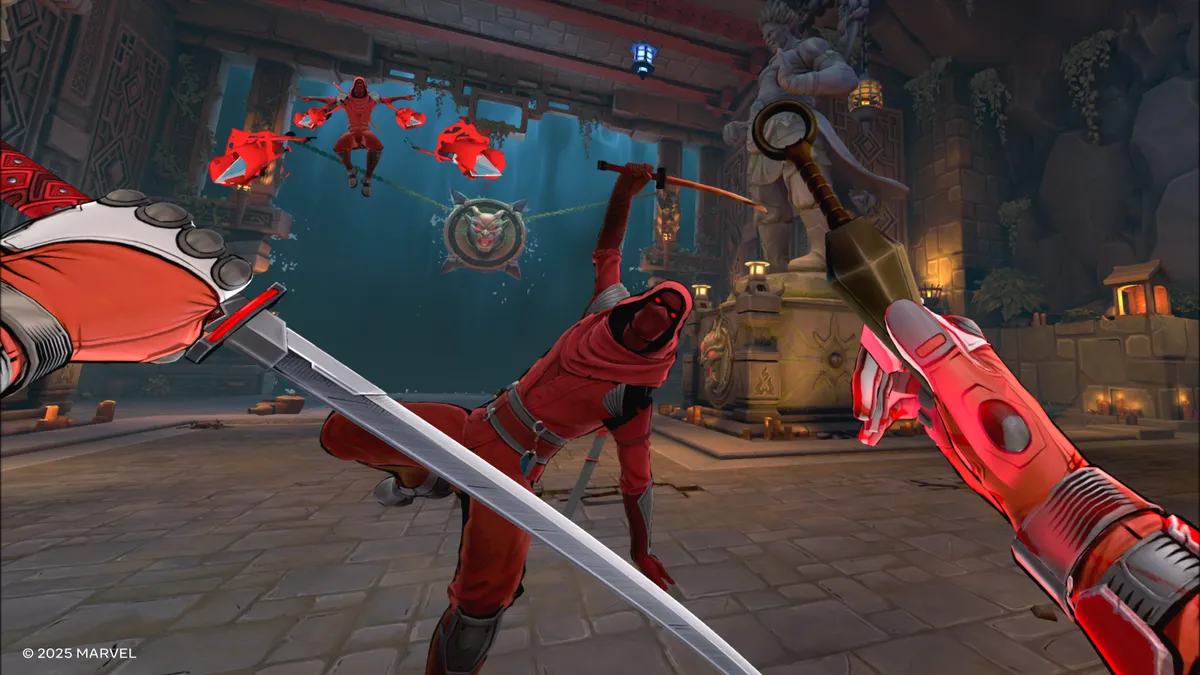
Meta is turning its back on VR gaming. That’s the feeling many, myself included, are feeling after the reports that Meta has shuttered Twisted Pixel, Sanzaru, and Armature, the game studios behind Marvel's Deadpool VR, Asgard’s Wrath, and Resident Evil 4 VR, respectively (among other VR projects).
In addition, Supernatural – the excellent VR fitness app that was the linchpin of my VR exercise routine – will no longer be receiving updates or new content (via the Supernatural Facebook group and emails sent to users). It will, however, “remain active”, though questions remain about certain specifics – for example, will Supernatural’s licensed music catalog eventually dwindle to almost nothing, or will partnerships still be renewed?
This also all comes in the wake of the news from late last year that Meta had “paused” its Horizon OS partnerships with Asus and Lenovo.
In a statement to Engadget, a Meta spokesperson said, “We said last month that we were shifting some of our investment from Metaverse toward Wearables. This is part of that effort, and we plan to reinvest the savings to support the growth of wearables this year."
When I followed up with Meta to address claims it was turning its back on VR, I was told by a representative that “Meta doesn’t have anything to share on this.”
While Meta might not have much more to share on this matter, I do: it’s pretty clear Meta isn’t keen to push VR in quite the same way it once was.
The Oculus Quest 2 felt like the moment VR was waiting for. Aided, in part, by people being trapped at home due to COVID-19-era lockdowns, and its truly affordable price for a solid VR machine, the Quest 2 sold phenomenally well.
In less than half a year, it had sold more units than all previous total sales of all other Oculus headsets, and while it's hard to track precise figures for every machine, it seems that for a while the Quest 2 was seemingly even selling better than the Xbox Series consoles (via Android Central).
However, Meta’s golden goose didn’t last forever, and the Meta Quest 3 didn’t land with anything like the same splash, despite being such an awesome device in its own right.
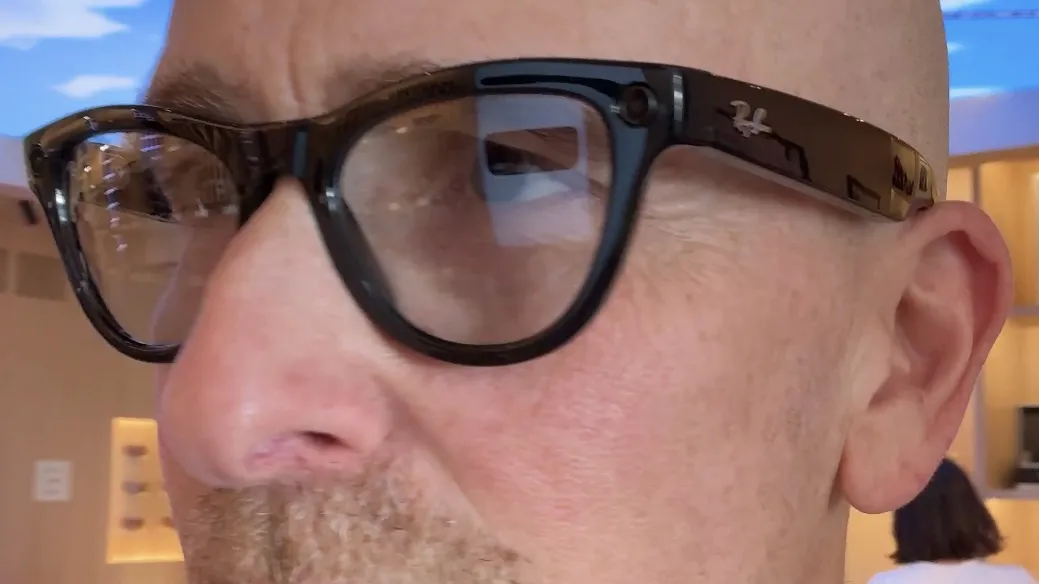
And now Meta has a new favorite child: AI and its AI wearables like the (also hugely popular) Ray-Ban Meta glasses, and as it has said, it is shifting some of its investment and priorities towards this new venture.
Is VR gaming dead?
VR gaming isn’t dead yet, if not least because Valve has its Steam Frame headset due to land later in 2026, and while it won’t be as affordable as a Quest 3 (most likely) the fact it’s a Steam Deck for your face – so it kind of doubles as a Steam Deck and a pair of XR glasses to enjoy your games on a large virtual screen – as well as having all of its VR gaming potential makes me at least a little confident it will have a strong landing.
Plus, if Valve or Google are looking to bolster their XR gaming efforts – Google has its Android XR platform – I’ve heard a lot of talented folks are currently free agents.
Marvel’s Deadpool VR is a fantastic game for capturing the true promise of what it would be like to be Deadpool, and Asgard’s Wrath 2 is a superb, more open-world action adventure that VR doesn’t have enough of. Seeing the teams behind those games work on something for a VR headset with some PC power behind it could be incredible.

Or if Android XR wants a dedicated XR fitness platform, the Supernatural team knows what it’s doing, and I think there’s so much more to explore with fitness in XR – especially in AR. Plus, from a music licensing side of things, Google might have an even easier time, as it already has services like YouTube Music, which could open up an even broader suite of workout options.
We’ll have to wait and see how 2026 unfolds, but while this announcement is frustrating for Quest fans, I believe there’s still some potential for VR to have a stronger year than it did in 2025 – even if it is elsewhere.
Follow TechRadar on Google News and add us as a preferred source to get our expert news, reviews, and opinion in your feeds. Make sure to click the Follow button!
And of course you can also follow TechRadar on TikTok for news, reviews, unboxings in video form, and get regular updates from us on WhatsApp too.
