





TechRadar Verdict
The discontinued Sony Cyber-shot RX10 IV was already the best bridge camera available, and the RX10 V is even better, in all the right ways. Yes, we get the same core features — a 1-inch stacked sensor and 24-600mm lens — but they were already a winning combination, and here are enhanced by Sony's latest processor and autofocus, which take high-speed and wildlife photography to new heights. Add in the better viewfinder, improved ergonomics, handy joystick control and huge bump in battery life, and the RX10 V is a wonderfully polished all-in-one camera. The only sticking point is the price — but you do get a lot of camera for your money.
Reasons to buy
- +
A perfectly struck balance of quality and superzoom versatility
- +
Latest processor and autofocus improve wildlife photography performance
- +
Big boost in battery life over predecessor
- +
Improved ergonomics and key controls added, including a joystick
Reasons to avoid
- -
Expensive
- -
Built-in flash and top LCD removed
- -
Slightly sluggish lens zoom
- -
'Just' a 25x optical zoom
Why you can trust TechRadar We spend hours testing every product or service we review, so you can be sure you're buying the best. Find out more about how we test.
Sony RX10 V: two-minute review
Just when you thought bridge cameras had been sunsetted, Sony returns after a nine-year gap with the new RX10 V — and it’s a genuine upgrade of the Cyber-shot RX10 IV, which was already the best camera of its kind.
We get the same winning combination of a 1-inch stacked 20MP sensor and 24-600mm F2.4-4 lens, but the mark V model has been enhanced with Sony's latest Bionz XR processor and AI chip, enabling improved burst shooting speed, 4K video features, and, most importantly, better autofocus performance.
Sony has also implemented multiple design tweaks to the control layout and ergonomics, and as a result the RX10 V looks much more like an Alpha camera than the RX10 IV, which feels more Cyber-shot compact, did. For a more detailed breakdown of the differences, check out my RX10 V vs Cyber-shot RX10 IV article.
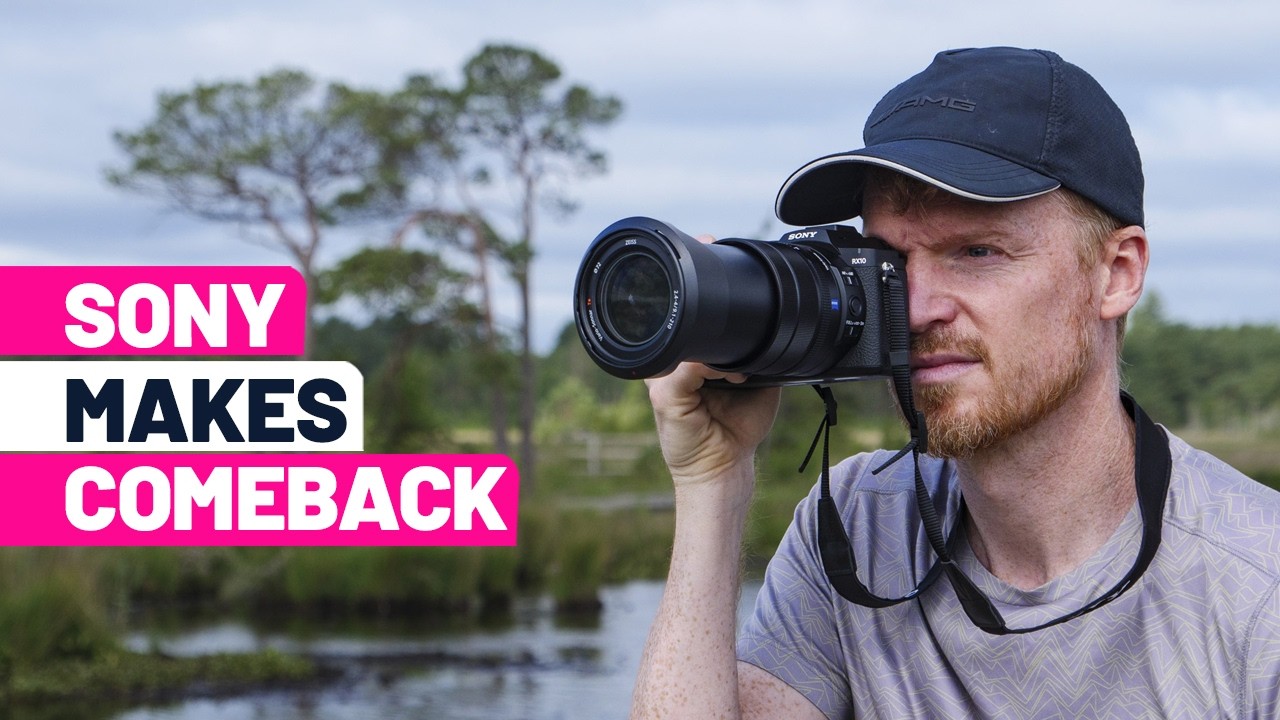
There are additional exposure dials, an AF joystick has been added (thank you, Sony!), as has a USB-C terminal, and the higher-resolution viewfinder is larger, more pronounced, and easier to see.
Throw in a bigger and comfier grip, which hosts the larger NP-FZ100 battery for a 50% boost in shot life, and the RX10 V is all round a slicker camera than the discontinued RX10 IV.

It's not all good news, mind you, depending on which way you look at it — the weather-resistant body misses out on a built-in flash and top LCD, both of which were present in the older model.
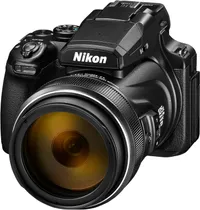
And some of the old drawbacks remain, such as the relatively sluggish zoom of the lens, which is 'just' a 25x optical zoom. I like that range, but other lesser-quality bridge cameras zoom further, such as the Nikon Coolpix P1100.
A significant sticking point is price — the RX10 V had to cost more than its nine-year-old predecessor, which was already pricier than any other bridge camera available. It's a big price to pay for this type of camera, even if you are getting a lot of camera for your money.
All that said, I've thoroughly enjoyed my lengthy review period with the Sony RX10 V, during which I've shot everything from travel to bird and macro photography, with the camera handling those and other subjects with aplomb.
It's a neatly packaged camera, especially when you consider you're getting a 600m f/4 lens when fully zoomed in. The RX10 V is a dream all-in-one camera, especially for enthusiast wildlife photographers with deep pockets.
Sony RX10 V: price and release date
- Announced on July 9 2026
- It costs $2,300 / £2,200 / AU$3,499

Sony's premium RX10 bridge camera series was always pricey compared to lesser-quality alternatives, and the latest version, the RX10 V, is even pricier. I'm not surprised: the RX10 IV launched for $1,800 / £1,500 / AU$2,000 almost nine years ago, and we should expect an inflation-based price bump at least. Still, $2,300 / £2,200 / AU$3,499 for a camera of this kind is a fair whack of anyone's money, let alone the enthusiast wildlife photographers that this camera is practically perfect for.
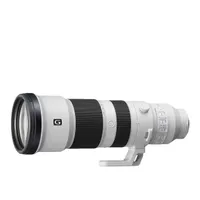
So what else could you get for similar money? If you already own a Sony mirrorless camera, the 400-800mm super-telephoto zoom lens is worth a look, especially if wildlife and bird photography are key reasons why you're considering the RX10 V. Or, if its zoom range alone that you want, and you're less concerned about outright image quality, the Nikon CoolPix with its monster 125x zoom is another option, and it costs almost half the price.
All things considered, though, I think the RX10 V is reasonable value for money, considering what you get.
- Price score: 4/5
Sony RX10 V specs
Type: |
Compact camera ('bridge') |
Sensor: |
20.1MP 1-inch stacked BSI CMOS |
LCD: |
3-inch tilt-touchscreen, 1.62m dots |
Memory: |
1x SDXC UHS-II |
Video: |
4K up to 60fps (no crop) / 4K 120p (cropped) |
ISO range: |
ISO 100-12,800 |
Burst shooting |
30fps (electronic), 10fps (mechanical) |
Viewfinder: |
3.68m-dot EVF, 0.5-inch |
Processor: |
Bionz XR 2 |
Connectivity: |
4k 30p live streaming, USB-C, 5GHz Wi-Fi |
Dimensions: |
136.4 x 94.5 x 151.3mm |
Weight: |
2.45lbs / 1.11kg |
Sony RX10 V: Design
- Same 24-600mm F2.4-4 optically stabilized zoom lens as the RX10 IV
- Larger and more pronounced EVF with higher resolution and refresh rate
- Improved ergonomics and joystick added, but flash and top LCD removed

People buy a bridge camera primarily to get a superzoom lens, and the RX10 V has the exact same 24-600mm F2.4-4 lens as the RX10 IV — that’s a 25x optical zoom, with macro focusing up to a 0.49x magnification. Put simply, you’re covered for everything from landscapes and bird photography to close-ups of insects.
While the RX10 V is the same form factor as the RX10 IV, it has had a fairly major brush-up, and it feels a much better camera for it.
For one, the grip is comfier. It's a new shape with better ergonomics, and that's able to fit a physically larger battery than the previous model could, with a 50% boost in shot life.
If you're familiar with the RX10 IV, the top plate of this camera will take some getting used to; there are additional exposure control dials (one of which can be locked off) making quick changes to settings easier, while the shooting mode dial has been shifted to the right-hand side where a top LCD used to be. Personally I preferred the old setup.


Another major change is that the built-in flash has been removed, though a hotshoe remains for use with accessories such as an external flash.
Also, the viewfinder is more pronounced, which makes it easier to look into, helped by the fact that it's a larger 0.5-inch unit with more-detailed 3.68m-dot display, whereas the RX10 IV has a 2.36m-dot 0.39-inch unit. Put simply, the viewfinder is a major upgrade.
On the camera's back side, an AF joystick has been added (Sony calls it a 'Multi selector'), which is a control I love to have for the likes of manual AF-point selection. For wildlife photography, I used it a lot, and can't imagine how I would have coped so easily in such a scenario with the older camera.


Spin to the side, and the camera's ports are now neatly tucked away under rigid protective doors, with headphone and mic ports, plus a USB-C terminal has been added. The fact that the RX10 IV doesn't have a USB-C terminal is likely a reason it was discontinued, as per the EU's common charger regulations.
The tilt touchscreen is again a 3-inch type. It gets a small boost in resolution, and while that in itself isn't much of upgrade, its improved touch functions, and the fact that you can switch to a vertical format, are.
It’s possible to customize some of the buttons, including a speed-boost function during burst shooting — you can temporarily increase a medium speed, say of 10fps, to the maximum 30fps when the action begins. It’s a neat feature inherited from Sony's pro cameras, which minimizes how many photos you shoot, but the button placement is awkward for this feature — I would have liked a custom button on the front of the camera instead. A tally lamp has been added for video recording.


- Design score: 4.5/5
Sony RX10 V: Performance
- Sony's latest Bionz XR processor with AI chipset
- Burst shooting upped to 30fps, with Sony's most up to date autofocus system that includes a wide range of subject detection modes
- Now uses Sony's NP-FZ100 battery, delivering a 50% boost in shot life
Power and speed are where the major improvements are at. The RX10 V uses the same Bionz XR processor as the Sony A7 V mirrorless camera, with a combined AI chipset. The result is improved burst-shooting speeds and autofocus performance, and what Sony says is better color accuracy.
Burst-shooting speeds are boosted from the RX10 IV's 24fps to 30fps, when using the electronic shutter — which, in a camera like this with a stacked sensor, I have no problem doing. I'd hardly call this improvement in speed a reason to upgrade, though, especially since the mechanical shutter's maximum 10fps speed is enough for most scenarios.
When I was photographing action, such as for my child's sports day, or at my local nature reserve doing bird photography, I generally kept the camera to its 10fps setting, with one of the custom buttons set to a 30fps speed boost for when the action got really interesting.
This has allowed me to minimize the number of photos I've taken, while the way the camera groups burst sequences in playback makes files easier to navigate.
Something that makes the RX10 V feel like a snappier camera than the RX10 IV is that there is no viewfinder blackout, even for the 30fps setting, which is supported by continuous autofocus with Sony’s latest subject-detection autofocus.


Compared to the RX10 IV, the RX10 V is able to detect a wider range of specific subjects with real-time recognition, including dedicated modes for birds, cats, and more.
I generally made sure I selected the specific subject when I knew that was my focus, such as with bird photography, and have been seriously impressed by how sticky autofocus is. Even when birds were small in the frame, the RX10 V was regularly able to pick them up with the camera's autofocus area set to wide.
I had more issues when photographing my child's sports day, given that there were so many faces in a lot of the photos. For such scenarios, a quick jig of the autofocus area to a small area can help to avoid the camera focusing on people in the background instead of the subject.


I've mentioned it already, but like most of its recent mirrorless cameras the RX10 V also uses Sony’s popular NP-FZ100 battery, which is a longer-lasting unit than the NP-FZ50 in the RX10 IV.
Sony quotes shot life as up to 630 shots compared to 400 for the RX10 IV, which is a huge performance boost. Add on-the-go UBS-C charging, and the RX10 V is a better camera for heavy photography days.
For me, all the above performance improvements are key for a camera that people typically buy as an entry point for wildlife photography.
- Performance score: 5/5
Sony RX10 V: Image and video quality
- Same 20.1MP 1-inch sensor and 24-600mm lens as used by the RX10 IV
- New processor boosts color and autofocus accuracy
- 4K video frame rates upped to 60fps (no crop) / 120fps (with crop)


Considering the versatility of the 25x optical zoom lens, image quality is impressively sharp, while the bright aperture helps with low-light quality, and is easily able to blur backgrounds when using the telephoto settings.
That being said, there are no major image-quality improvements over the nine-year-old RX10 IV; we're still getting 20.1MP photos in RAW & JPEG, and 4K video recording.
It's largely the indirect factors that positively improve image quality: better autofocus performance and subject recognition, enabling an increased hit ratio of sharp photos, and images with greater color accuracy based on detected subjects.


Other more direct improvements include a boost in 4K video frame rates: the RX10 IV was limited to 30fps, whereas the RX10 V goes up to 60fps with no crop, or 120fps with a crop. Like before, we still get a 240fps, but only in Full HD format.
And then there are the new color profiles to choose from, including Sony's popular S-Cinetone and S-Log3 for video, and the ability to import up to 16 custom LUTs profiles.
There are a bunch of extra features that make the RX10 V a better camera for video than the RX10 IV; a tally lamp, enhanced audio workflows, and it's also now possible to record an in-camera time-lapse sequence.


If you already own a mirrorless camera, you're probably wondering if the RX10 V's quality is sufficient to replace a supertelephoto lens for photographing distant subjects. I was curious to find out, so I took the same photos of birds with the Sony A7R V professional mirrorless camera and Sony's longest telephoto lens, the 400-800mm, which is a similar price to the RX10 V.
You can see the direct comparisons between the RX10 V and Sony A7R camera with 400-800mm lens in my separate write-up. But to summarize here — yes, the RX10 V's detail is impressively sharp for a camera of this kind, but there is a reasonably obvious gulf in outright clarity from the larger and pricier Sony mirrorless setup.
- Image and video quality score: 4.5/5
Sony RX10 V: testing scorecard
Attributes |
Notes |
Rating |
|---|---|---|
Price |
It's a lot to pay for a bridge camera, but you are getting a lot of camera |
4/5 |
Design |
Excellent design tweaks improve handling, but built-in flash and top LCD are goine |
4.5/5 |
Performance |
Sony's latest processor, autofocus and bigger battery deliver where it matters most |
5/5 |
Image and video quality |
Nine years after the RX10 IV, and we still have the same 20.1MP sensor and 24-600mm lens. Best-in-class image quality, but a mirrorless camera with telephoto zoom will be even better |
4.5/5 |
Should I buy the Sony RX10 V?
Buy it if...
Don't buy it if...
Sony RX10 V: also consider
How I tested the Sony RX10 V

- Sony loaned me the RX10 V for the three weeks prior to its announcement
- I took it travelling and on regular trips to my local nature reserve
- I've used all the major camera and lens settings, plus made direct comparisons with Sony mirrorless gear
I made the most of my lengthy review period to properly test the RX10 V. I took it travelling where it was used in bright sunlight and hot weather, to my child's sports day, to my garden for macro photography, plus I regularly visited a nearby nature reserve which is a very popular spot for birding.
Across the various scenarios, I tested the different lens settings — the entire zoom and aperture range. I shot 20MP stills and 4K video clips, pushed the 30fps Drive Mode to its limits, tested the camera's close focusing capabilities, and shot until the battery drained.
And because I feel most people are interested in the RX10 V for wildlife photography, especially bird photography, I tested the various subject detection autofocus modes and pitted the premium bridge camera against Sony's longest lens, the 400-800mm F6.3-8, to see how it fared.
- First reviewed: July 2026
- Read more about how we test
