



 Become a TechRadar Insider


TechRadar Verdict
Breathes new life into the RAZR witha wealth of new features
Pros
- +
Superbly designed
Stereo Bluetooth
Excellent camera features
Cons
- -
Battery life
No document viewer
Excellent camera features
Why you can trust TechRadar We spend hours testing every product or service we review, so you can be sure you're buying the best. Find out more about how we test.
The original RAZR was that rare thing - an immaculate piece of design that didn't compromise on functionality or ease-of-use. The truth is, the number of products that manage this feat are very few and far between.
So, after 18 months or so cleaning up in the style stakes, it was with some anticipation that we looked forward to the release of Motorola's update that's set up to deliver third generation services - the RAZR V3x. The timing is spot-on, as although the original RAZR is in no way an old phone, the march of time means there are a few features which are now outdone by similarly-priced mobiles from other stables.
The main feature you'd be missing out on with the original RAZR is 3G video calling and high-speed data. The V3x ties up this shortcoming, and adds in a host of other up-to-the-minute goodies.

A TransFlash/microSD memory card slot is not least among these, providing the ability to add up to 512MB of extra storage space, and the camera has been updated to a 2.0 megapixel model with a catalogue of image enhancing capabilities.
It looks as if the marketing will be aggressive, too - at the time of writing, the V3x was available free on contract with 3 on deals costing £30 per month, and should be taken on by other networks by the time you read this.
Beefed-up spec
There are clearly a few features that an updated RAZR could do with, and Motorola has certainly beefed up the spec, but the main challenge must have been to retain the original's unique persona without bulking up the dimensions too.
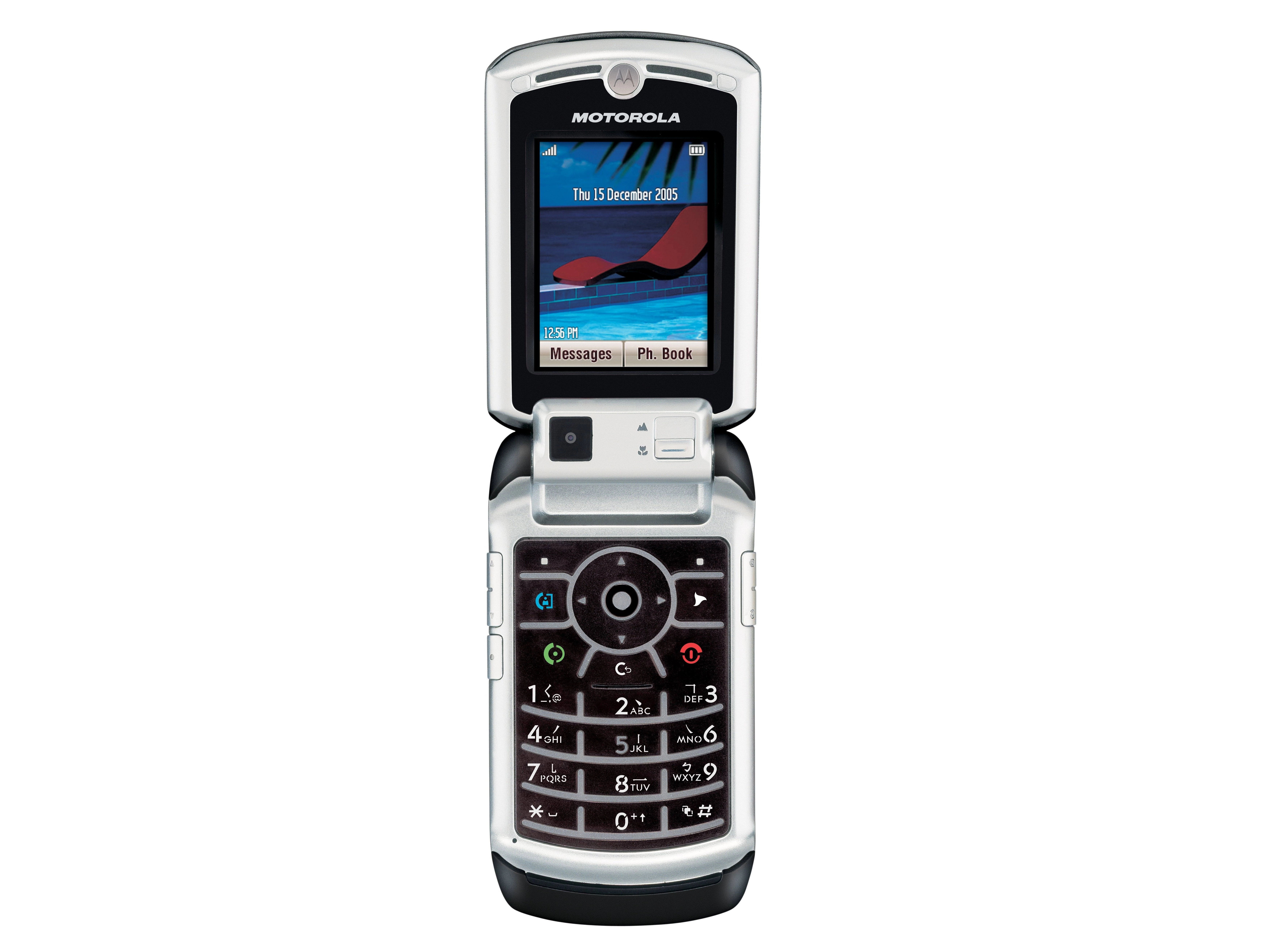
The RAZR was the thinnest cameraphone on the market at just 19mm, with a keypad that looked as if it had come straight from the design lab. The slimline appeal is definitely still there with the V3x, even though it's slightly thicker at 20mm. The trick has been to combine this streamlining with sumptuous curves on the top and bottom halves of the flip, which scream quality and craftsmanship.
The V3x really is a joy to hold. From the chunky yet svelte action of the flip to the rubberised PEBL-like outer coating, every aspect of the design is sure to make it a treasured possession for every owner. With the flip opened, the first thing that strikes you is the quality of the screen. This is the top-flight high-resolution version popular on more expensive mobiles, incorporating 240x320 pixels and up to 262k colours into a 2.2in display.
The keypad remains similar to the original, with the divisions between keys sliced from a sheet of etched metal. The internal camera lens for video calls sits below the screen, in a thicker section of the flip that also incorporates the outer 2.0-megapixel lens - again in keeping with the original design. Next to the internal lens is a switch dedicated to taking pictures with the main camera.
It switches the camera mode between normal and macro modes - allowing you to take close-up shots in focus with the subject as little as a few centimetres away. Apart from the volume keys, a shortcut to the camera and the stereo speakers on the back, there's hardly anything to spoil the lines on the outer casing. The one key that is worth knowing about is the voice-activated command.
This technology has been developed to be speaker-independent, so you don't need to train the phone to recognise your voice, and others can use it too. Simply press the voice button on the side of the phone and state the command you want to use. If you're making a call to someone in your contacts, just state the name, and the call is placed - without any number-punching or menu-searching.
When you start roaming around the V3x's features using the menus, it becomes clear that any additions have been subtly incorporated into a very recognisable format. There's little to confuse anyone familiar with usual mobile operation.
Our review sample was from mobile operator 3, and a special shortcut to 3's online store is cut as a special button onto the keypad for this model, but this was the only unfamiliar aspect of operation. The main menu offers all the phone's operations in places you'd expect to find them, from tools and settings to messaging and multimedia.
We tried out the imaging features of the V3x first, as the macro mode switch was too tempting to leave alone. We were impressed, managing to take some very close-up shots using this feature. Apart from being a step-up from most other cameraphone extras we've seen, it offers the genuinely useful option of photographing written text, so if you need to copy something down quickly, all you have to do is snap it.
Camera features
There's a good few other camera touches as well, including auto-timer, an 8x digital zoom, exposure control and a range of white balance presets for different lighting conditions. An extremely bright LED flash can light subjects more than a metre away, and can also be used as an effective torchlight. The outer and inner lenses can also take video footage, albeit at lower resolution.
Although video calling has yet to properly catch on, we wanted to test the 3G high-speed data capabilities of the V3x on 3's online goodie store Planet 3, so we started by downloading a few music videos and tracks. The speed is a clear improvement on normal GPRS and well worth the upgrade, although speed will depend on how good your 3G signal is.
With downloads being so much more accessible, the V3x's 64MB of internal memory will come in very handy. And the option of TransFlash/microSD removable memory is a further boon, with capacities up to 512MB readily available for around £40.
The quality of the screen really did our downloaded videos justice, and the surround sound from the speakers on the back of the phone isn't bad at all. Of course, a pair of headphones is better for listening to tunes, and this is one of the areas where the V3x goes that little bit further.
The idea of wireless headphones has been around for a while now - the technology has been there, but it has taken longer to catch on. The idea is simple - using a Bluetooth headset to listen to music - but the quality issue has been a stumbling block.
Thanks to the RAZR V3x incorporating the very latest Bluetooth protocols, however, it can broadcast top quality stereo sounds to your enabled headphones - and lets you make and take calls with them, too. Motorola has a pair of Bluetooth headphones on offer from its online store (the HT820) for £69.99, and other manufacturers are also starting to bring them out.
We got the V3x talking to a pair of Plantronics Pulsar 590 stereo Bluetooth headphones, and had the pleasure of listening to wire-free stereo surround sound as well as making handsfree calls. The way Bluetooth is set up is commendable, too. With risks to privacy threatening to limit peoples' use of Bluetooth, Motorola only allows the phone to remain discoverable for a short time (three minutes), so it's not possible to forget and leave your phone open to attack or unsolicited messaging.
As well as Bluetooth, the V3x also has USB connectivity, meaning that you can easily back up your contacts, messages and calendar to a PC - as well as take advantage of high-speed file transfer. A special Sync feature in the settings also offers the option of using operator-run syncing services, if your operator supports it.
Email is also supported in the messaging menu - including email with attachments, so top-quality images can be received and sent. It isn't yet possible to view Word or Excel documents attached to emails on the V3x, though this may change in time.
Games trio
Our 3-branded sample had three games in the games and apps folder - along with the digital audio player. Jumble Rumble is a pay-by-play collection of one-button elephant-based antics; Zuma is also pay-by-play but requires a bit more brain power; and Who Wants To Be A Millionaire should by now be a format familiar to everyone with a TV. There is also the usual assortment of extras such as an alarm clock, calculator and calendar.
This is a timely update to the original RAZR V3, and brings with it a very decent set of features. The camera quality is on a par with the best cameraphones currently available, and the internal memory allocation is ample for getting started snapping away with the camera or downloading over 3G. The looks have been carried over successfully, too.
Owners of the original Motorola RAZR could be forgiven for growing attached to their svelte accessory, but we imagine upgrading to the V3x will be regarded as a step up by most.
The one slight sacrifice that both the original RAZR and the V3x make in keeping their slimline looks is battery life. With some phones offering up to six hours' talktime, the 2.5 hours offered here might seem lacking - especially when video calling reduces that to 99 minutes.
On the plus side though, some neat power-saving features brings the quoted standby time to a very reasonable 10 days. In practice, we found these figures to be fairly accurate, giving us around 24 hours of use from a single charge, including 10 minutes' voice calling, 15 minutes spent downloading and around 20 - 30 minutes listening to music over a Bluetooth connection.
This performance just about satisfies our expectations when it comes to longevity, and with that potential flaw successfully hurdled, there's nothing to stop the RAZR V3x becoming a massively desirable phone. Hugo Frazer
MACRO SELECTION: A switch under the display enables the lens to switch to macro mode for close-ups
VIDEO CALL CAMERA: A secondary camera tucked inside the shell is located for easy video calling
MEMORY CARD SLOT: The V3x packs in swappable memory via a TransFlash/microSD slot under the battery cover
MEGAPIXEL CAMERA: On the outside, the V3x's 2- megapixel camera delivers excellent quality images