


Sleep is something we all need but don't always get enough of. While a sleep tracker won't magically improve your rest, it can help you understand what's happening overnight, from how long you're sleeping to how well your body is recovering.
After testing smart rings, watches, headbands, earbuds and under-mattress sensors, we've found that the best sleep tracker isn't necessarily the one with the longest list of features. Comfort, accuracy and the quality of the insights matter just as much. After all, a tracker only works if you're happy wearing it night after night.
Our team has spent weeks sleeping with these devices, comparing the data they produce, assessing how comfortable they are to wear and judging whether their insights are genuinely useful or simply overwhelming. The products in this guide have all been thoroughly tested and scored for performance, design, features and value.
Right now, our top recommendation is the Oura Ring 5. It delivers the most complete sleep tracking experience we've tested, combining detailed overnight insights with a comfortable design you'll barely notice you're wearing. However, depending on your needs, a smartwatch, dedicated sleep headband or under-mattress sensor may be a better fit.
July 6th
Added the Oura Ring 5 to the guide as our best sleep tracker overall
Best sleep tracker overall

Whether you're trying to improve your sleep or simply understand it better, the Oura Ring 5 makes it surprisingly easy to connect the dots. It strikes the best balance between comfort, accuracy and useful insights, making it easy to build a clearer picture of your sleep over time.
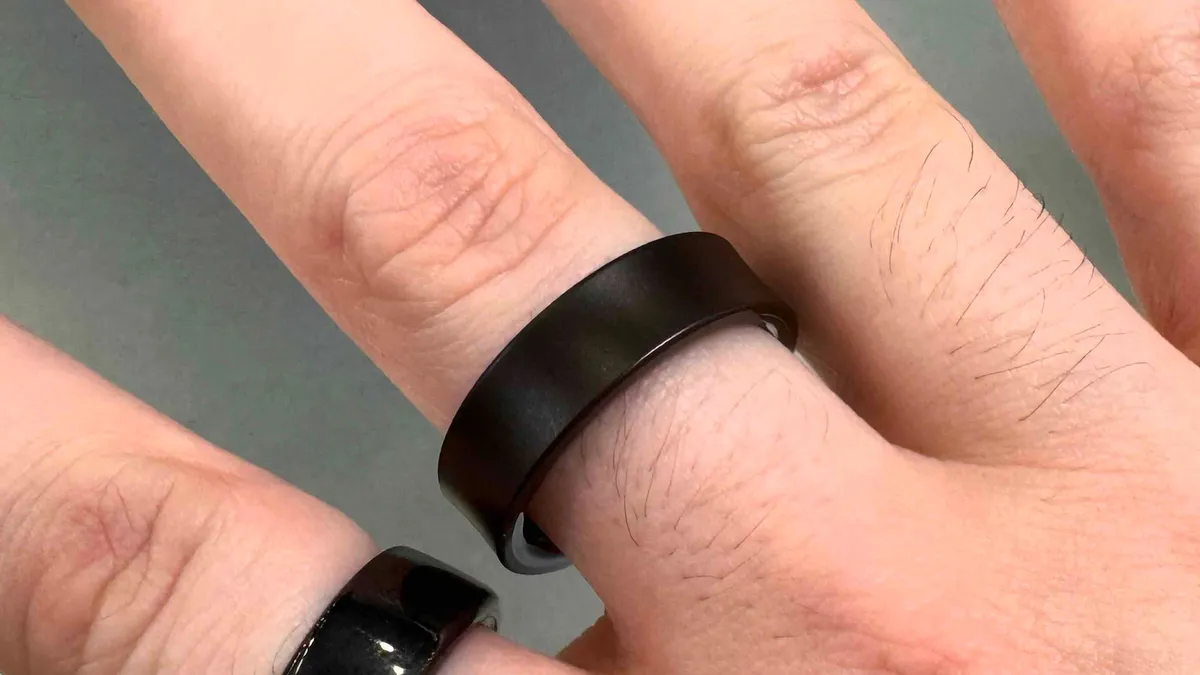
During testing, our reviewer, Amelia, nearly forgot she was wearing it thanks to its redesigned titanium body, which is 40% smaller than the previous model. It feels more like a piece of jewellery than a sleep tracker, while the week-long battery life means you won't be constantly reaching for the charger.
The quality of its sleep tracking is what really sets it apart. Rather than simply telling you how long you slept, it uses more than 50 health and wellness metrics to explain how well your body recovered overnight and where there's room for improvement. Amelia also compared its heart rate readings with the Polar H10 chest strap and found they closely matched, which gave us confidence that the Ring 5 was accurately tracking one of its most important health metrics.
The companion app deserves just as much credit. It presents everything in an easy-to-understand way, helping you spot trends and build better habits instead of leaving you to decipher endless graphs. The only real drawback is the ongoing subscription, which is needed to unlock many of the Ring 5's best features. It's an extra cost to factor in, but if you have the budget and are serious about better understanding your sleep, we think it's worth it.
Read our full Oura 5 review
The best subscription-free smart ring
The Samsung Galaxy Ring is a brilliant, well-rounded health and fitness tracker powered by AI. It boasts up to 7-day battery life, and there's no subscription fee like you'd find with the Oura ring. You do need the Samsung Health app, and it's a bit more expensive than the Oura in terms of initial outlay. But once you've bought one, there are no monthly or hidden costs to speak of.
Samsung touts its ring as a "set and forget" experience, you can simply slip it on and then forget about it. Long battery life and its low-profile form factor ensure it's not as intrusive as a watch, and certainly not as in-your-face as a headband or even a smartwatch.
For when you're not asleep there's water resistance and a rugged titanium chassis. Sensors include PPG and an accelerometer, as well as skin temperature measurements. There's also a nifty earbuds-style charging case that will get you up to six charges before you need to plug it into the wall. Connectivity is powered by Bluetooth 5.4.
While the Samsung ring is compatible with other Android phones, you'll get the best experience on a Samsung device. iPhone users, beware! This is not compatible with iOS, so won't work with your device.
Read our full Samsung Galaxy Ring Review
Best sleep tracker for sleep and training

The WHOOP MG is a screenless fitness band worn around your wrist, with all of its data viewed through the companion app. It's for anyone who wants to understand how their sleep fits into the bigger picture, combining sleep, recovery, strain and activity data to show how they're affecting one another.
The app is packed with detailed sleep and recovery metrics, but does a good job of turning all that data into advice you can actually use. You can see how much sleep you need, how your recovery is looking and how much strain you've put your body under, while the app can even prompt you to start winding down when it thinks it's time for bed. Battery life is excellent too, lasting around nine days in our testing, and you can charge it without taking it off.
The catch is that WHOOP really does want you to act on its advice. Our reviewer found the bedtime notifications particularly persistent, so if you'd rather check your sleep when you fancy it without being nudged towards an earlier bedtime, our other recommendations may suit you better. But if you like knowing whether you're genuinely ready to push yourself after a rough night's sleep, or whether yesterday's workout is still catching up with you, WHOOP makes those connections much easier to see.
Read our full Whoop MG review
Best sleep tracker on a budget

Even the best mattress doesn't guarantee a great night's sleep. The Withings Sleep Analyzer is a pad you can slip underneath to keep track of your sleep quality without having to wear anything on your wrist.
It means you can just jump into bed and you don't have to worry about putting on an extra sleep tracker, and if you do own a fitness tracker or smartwatch you can rest assured that it will be possible to charge it while you doze.
The Withings Sleep will monitor lots of stats too, including your sleep phases, your heart rate, the amount of time you've been snoring, and the duration of your sleep.
If you just want to crawl into bed and have all of your sleep quality recorded and ready for you to digest in an easy-to-use app, the Withings Sleep is the perfect sleep tracker for you.
Read our full Withings Sleep Analyzer review
Tracker |
Type |
Wearable |
Subscription |
Battery life |
Key sleep metrics |
Comfort for sleep |
Samsung Galaxy Ring |
Smart ring |
Yes |
No |
Up to 7 days |
Sleep stages, heart rate, HRV, skin temperature, SpO₂ |
Very comfortable (small, screen-free) |
Withings Sleep Analyzer |
Under-mattress sleep sensor |
No |
No |
Plugged in |
Sleep stages, heart rate, breathing disturbances, snoring detection |
Excellent (nothing to wear) |
Oura Ring 5 |
Smart ring |
Yes |
Yes ($5.99/£5.99/AUD $5.99 per month) |
6-9 days |
Sleep stages, HRV, respiration, temperature trends, SpO₂ |
Extremely comfortable (small, screen-free) |
Whoop MG |
Fitness band |
Yes |
Yes ($29.92/£29.08/AUD $37.50 per month) |
14+ days |
Sleep stages, sleep need, sleep debt, sleep efficiency, sleep disturbances, respiratory rate |
Very comfortable (screen-free, lightweight) |
Also tested
How to choose the best sleep tracker for you
Why you can trust TechRadar We spend hours testing every product or service we review, so you can be sure you're buying the best. Find out more about how we test.
The first thing to consider is what kind of sleep tracker you're happy using night after night. Some people won't notice a smart ring on their finger, while others prefer not to wear anything in bed and would rather opt for an under-mattress sensor like the Withings Sleep Analyzer. Ultimately, the best sleep tracker is the one you'll actually use consistently.
Your budget is also worth considering. If you're happy to spend more, premium smart rings like the Oura Ring 5 deliver some of the most detailed sleep insights available, tracking everything from your heart rate and sleep stages to recovery and readiness. Just bear in mind that Oura requires an ongoing membership to unlock its full feature set.
If you'd rather avoid a subscription, the Samsung Galaxy Ring is our top overall pick, combining excellent sleep tracking with no recurring costs. Alternatively, if you're looking to spend less, the Withings Sleep Analyzer offers detailed overnight monitoring without needing to wear anything at all.
How we test
All our sleep trackers are tested for at least several days and often much longer, giving the device enough time to build up a meaningful picture of our sleep. For example, our most recent addition to this guide, the Oura Ring 5, was worn by our reviewer Amelia Schwanke for two weeks before she wrote her review, allowing enough time to unlock more advanced features and assess its long-term sleep insights.
We look for accuracy by comparing results against other trusted devices where possible, while also assessing comfort, battery life, ease of use and whether the device delivers genuinely useful advice for improving your sleep rather than simply presenting raw data.
Finally, we weigh all of that against the asking price to decide whether a product is truly worth your hard-earned cash. Sleeping better is one of the simplest ways to improve your health and wellbeing, but it's also one of the hardest habits to master. That's why we take testing sleep technology so seriously.
How do sleep trackers actually work
Sleep trackers might feel a little like tiny spies for your nights, quietly monitoring your every toss, turn, and yawn. But not to worry, their goal is not to judge your Netflix‑binging bedtime habits, it is to give you insight into how well you are sleeping and how you might sleep better.
Most trackers rely on a mix of movement, heart rate, and other body signals to paint a picture of your night. When you lie still, they assume you are in deep sleep. When your heart rate spikes or you shift around, they figure you are waking up or in light sleep. Some more advanced devices, like headbands, even measure brain activity to see when you are dreaming in REM or sinking into restorative deep sleep. Certain trackers also measure things like breathing patterns, blood oxygen, or tiny temperature shifts, which can hint at disruptions or changes in your sleep rhythm.
Once they have gathered all that data, trackers turn it into insights you can actually use. That might be a simple sleep score, a graph showing your weekly trends, or suggestions like “Try winding down 30 minutes earlier” or “Consider a later bedtime on weekends.”
The beauty of a sleep trackers, whether it is a sleek ring, a mattress sensor, a headband, or small earbuds that whisper you to sleep, is that they give you a window into your night without needing a lab or a degree in sleep science.
