





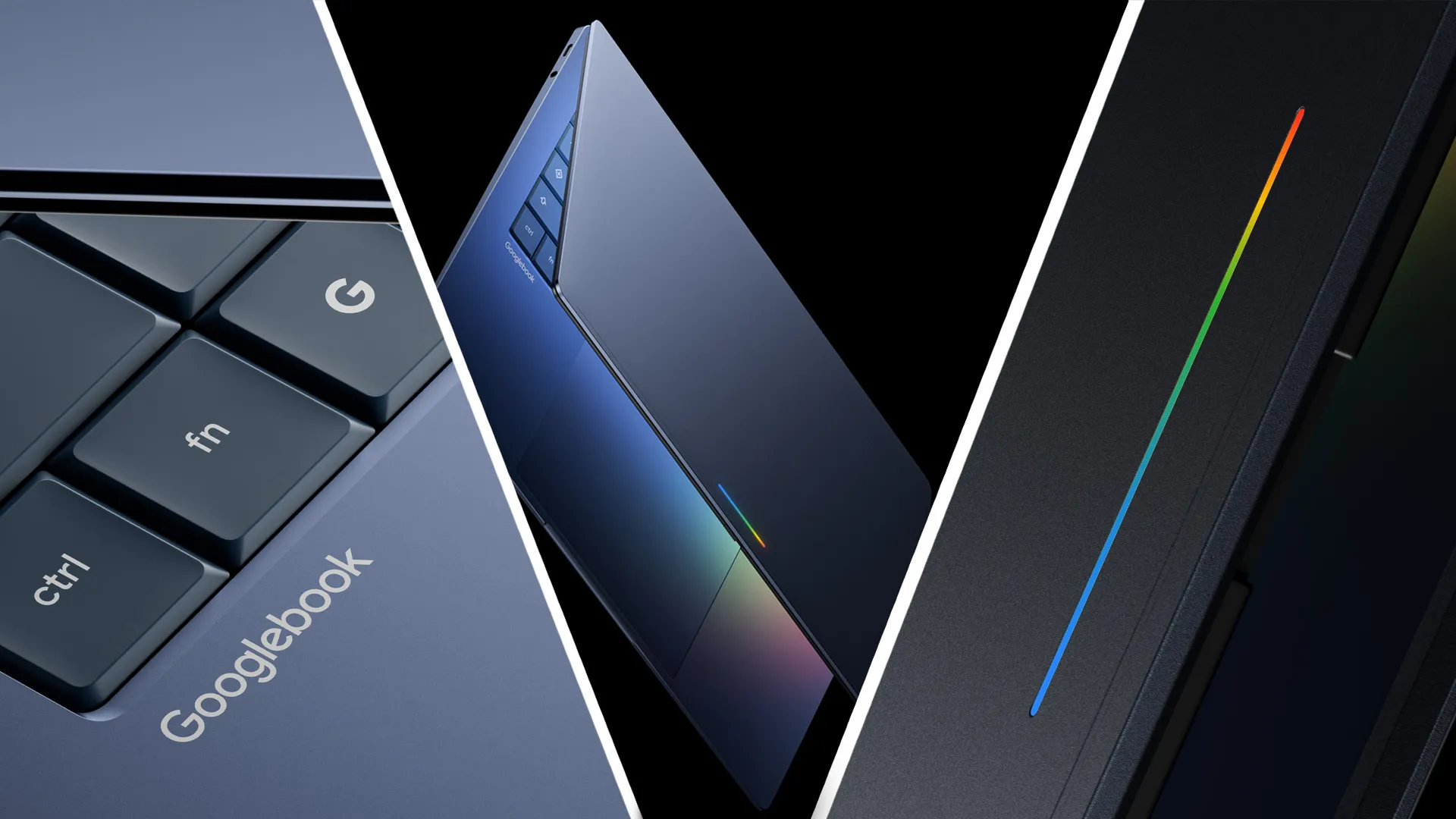
The Chromebook is dead! Long live the Googlebook! Or not, because actually, the Chromebook isn't dead – although that has been a misconception floating around in places – in fact, it'll continue to exist alongside Google's new more premium laptops, freshly announced at The Android Show 2026. And as for the Googlebook, not everyone is wishing it a long life – indeed, some folks out there are hating on the device already, and we don't even know that much about it.
We know enough, though – and the basics of how the Googlebook will be realized – for people to already be throwing stones, casting aspersions, and generally getting quite worked up about what Google is trying to do with an all-new platform here.
What we're dealing with, in a nutshell, is the long-talked-about desktop OS which combines Android and ChromeOS – yes, it can run Android apps natively – powering laptops which Google notes are specifically designed for AI ('Gemini Intelligence').
Can you guess what one of the main points of hatred revolves around? There has, predictably, been quite a groundswell of negative reaction against the focus on AI with this hardware, but that's not been the only bone of contention, as you'll see. Here's my list of five things which are already causing something of a backlash online following Google's early info drop on the Googlebook.
1. AI is baked into the heart of Googlebook

Google must have been prepared for this one. Revealing hardware that has AI baked right into the heart of the system was never going to go down well in some quarters, obviously. But the Googlebook is built around Gemini – as Google bills it, this is a laptop platform "designed for Gemini Intelligence" – and the company believes that AI is going to offer a lot of advantages with these notebooks, one way or another.
We've been shown how AI is built right into the interface, with the ability to create Gemini-powered custom widgets on the desktop, and a range of help and prompts from AI ready to spark into life at the drop of a hat – or a shake of the cursor (and I'll come back to the Magic Pointer feature shortly).
This heavy focus on AI, and Google throwing around phrases like "moving from an operating system to an intelligence system" with the Googlebook has predictably lit the fuse on some already short tempers out there.
As one Redditor says: "A laptop designed by AI tech bros, for… no one? I'm getting really sick and tired of people shoehorning AI into stuff. It's like finding a problem just to create a solution."
Another in the same thread adds: "A widget creator being the second thing shown just shows how bad of a launch this is. There are so many directions they could have went in with marketing for this launch but went with... a wiggle cursor, widget creator and improved Android cross compatibility ([the] only really good thing)?"
Someone who describes themselves as a Pixel and Chromebook fan complains in another Reddit thread: "But Googlebook? And leading with in-your-face AI features? Please don't Copilot this, Google. Read the room. People are rejecting front-and-center AI. This is super cringey and I fear for the future of Android and ChromeOS."
2. The woeful name

"But Googlebook?" As the last comment in the complaints about the AI-first nature of the laptop touched on (earlier in their criticism they observe that this is "horrible branding"), a surprising amount of folks aren't happy about the name.
I mean, I get it, the name is a bit weird-sounding and on-the-nose – it feels kind of egotistical. A bit like Microsoft making a laptop called the MicrosoftBook. It may even lend the errant impression to some that this is a basic notebook for browsing the web – with the use of 'Google' in the title, which has effectively become a modern-day verb for a web search – which the device most certainly isn't.
There's a lot of displeasure around the chosen name, calling it everything from 'dull' to 'woeful', and as one post on Reddit states: "Noooo man that's an awful name, I like the idea of moving away from the Chromebook brand and launching something new but 'Googlebook' isn't it."
It lacks meaning, too, as another Redditor argues: "GoogleBook tells me nothing about the product, and makes me think of Google Play Books."
Obviously it couldn't be Pixelbook (as that was already done, and these aren't Google-made laptops either, but third-party hardware), and Google seems to have missed out on a clear possible alternative here: Geminibook. Given the strong AI leaning, that seems the obvious path to take.
Or what about Bardbook? See, all you name-haters out there – in an alternative reality, it could've been worse, take that as some consolation…
3. There are already worries that it'll be way too pricey

This one is a simple fear, and I can totally see where it comes from. In the initial reveal of Google's new notebook, it was billed as follows: "The result is Googlebook: a new category of laptops built with Gemini's helpfulness at its core, designed to work seamlessly with the devices in your life and powered by premium hardware."
That mention of 'premium hardware' has been taken to mean one thing. As one of the many comments on Reddit runs: "When Google say 'premium' they mean it'll cost a lot. Not that the performance is going to be good."
Clearly, the use of that word indicates higher-end products – particularly as we're told Chromebooks aren't going anywhere, and will stay as Google's more affordable laptops.
We'll have a two-tier system of laptops, then, and there's a clear concern that Google is going to make these upper-tier machines very pricey. Obviously the RAM crisis, spiking SSD prices, and cost increases with other components besides is going to make life more difficult for Google when it comes to the price tag, too.
4. The not-so-magic interface

We've only caught a brief glimpse of the Googlebook's operating system – which remains unnamed (maybe it'll be Google OS, ahem) although it's previously been referred to by the codename Aluminum OS – but some people aren't happy with what little we've seen.
The most unpopular aspect is the idea of the Magic Pointer, which is the wiggle-the-cursor feature I mentioned before. Shake the pointer briefly and a context-sensitive AI menu appears to let you access tasks via Gemini. The example shown by Google was combining a couple of images which were on the screen into a single JPG.
The haters don't like the idea of an AI-centric menu being at the forefront of the OS in this way, but there are also concerns that it could be annoying in terms of the menu being accidentally summoned. (Others also point out that it could be an accessibility challenge, too). Cursor shaking is not a new concept, but it's usually linked to more fringe aspects of the desktop interface (locating the mouse cursor in macOS is the obvious example) – rather than being a central part of the UI.
Some folks also aren't keen on the layout of the desktop interface in general. For example, this Redditor complains: "The UI eats s**t from the ChromeOS one. Launcher/app drawer icon, quick toggles, notifications, time/date, are literally all in the wrong place."
5. A generally poorly-conceived, ill-fated product?

Finally, there's something of a theme among detractors that the Googlebook is doomed to failure, and this hardware won't be around for long – so buying one would be foolish on that basis.
Of course, part of this sentiment is driven by some of the points already touched on here – questioning the wisdom of building a laptop around AI, and worrying that the price is going to be a serious stumbling block to adoption levels.
But it's more than this. Not only is Googlebook launching into a hardware market dogged by component pricing difficulties, but Apple's just had a big success with its MacBook Neo. Seemingly Apple can't make enough of the Neo to satisfy demand, and production is going to be cranked up in a major way, the rumor mill reckons (and it'd be no surprise if that was true).
The MacBook Neo is making waves and impressing by being a slick piece of hardware that's surprisingly premium-like for its affordable cost, and what is Google doing? Making a pricier laptop that goes all-in on AI in a blinkered manner.
The feeling is the Googlebook will be overshadowed, and that it very much represents a missed opportunity. Part of this is a perception that Google had a chance to go and grab Windows 11 defectors – at a time when that OS is in trouble, albeit Microsoft is making a huge effort to turn things around this year – and instead it decided to simply follow in the footsteps of Microsoft's Copilot+ PCs (aka AI PCs).
Some people find this mystifying. As this Redditor laments: "Aluminum OS could've been a safe space for Windows refugees … but instead, Google looked at Copilot+ PC and went: 'That, that right there is what we need to target.'"
Between predicted pricing woes, a perceived failure to take on Microsoft, and having to compete against the new darling of the laptop scene – Apple's MacBook Neo, which is racking up sales like nobody's business – there are a fair few armchair tech commenters out there saying that, one way or another, Googlebook is going to be DOA.
Some are suggesting that the Googlebook should have its tombstone carved right now, and a plot reserved in the 'Killed by Google: Google Graveyard' website in advance.

➡️ Read our full guide to the best laptops
1. Best overall:
Apple MacBook Air 13-inch M5
2. Best budget:
Apple MacBook Neo
3. Best Windows 11 laptop
Microsoft Surface Laptop 13-inch
4. Best thin and light:
Lenovo Yoga Slim 9i
5. Best Ultrabook
Asus Zenbook S 16

Follow TechRadar on Google News and add us as a preferred source to get our expert news, reviews, and opinion in your feeds.