





TechRadar Verdict
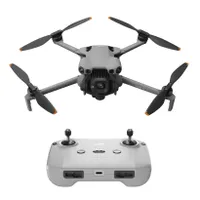
The Antigravity A1 is an impressive innovation that successfully combines 360-degree photo and video capture with drone technology. The FPV goggles and motion controller create an immersive flying experience, but they also add high cost to the package as a whole, and mean that pilots require a spotter during flight to remain safe and legal. Image quality (of reframed 360 videos) matches 360-degree cameras rather than camera drones – expect better quality from, say, the DJI Mini 5 Pro – while the fly-first-frame-later workflow provides many creative possibilities. It’s an expensive and niche drone now, and currently has no rivals.
Reasons to buy
- +
Excellent 360-degree capture and reframing
- +
Slick package with impressive features
- +
Easier to use than you might think
Reasons to avoid
- -
It’s expensive
- -
Goggles require a spotter
- -
Motion controller has limitations
Why you can trust TechRadar We spend hours testing every product or service we review, so you can be sure you're buying the best. Find out more about how we test.
Antigravity A1: one-minute review
The idea of a 360-degree drone may sound like an impossibility, but the Antigravity A1 is exactly that. What’s more, it manages to implement this concept in a sub-250g drone that includes collision avoidance, and which is controlled via 360-degree FPV goggles and a motion controller. You’ll have to read on to discover whether it’s one of the best drones you can buy, but it’s undoubtedly one of the most interesting.
The idea of a 360-degree drone isn’t a new one, and the fact that Antigravity is an independent brand incubated by Insta360 and third parties may shed a little light on its pedigree in this department. But this isn’t Insta360’s first experiment in this arena; first, there was an Insta360 / BetaFPV 360-degree collaboration with the SMO 360 camera for some FPV drones. Then there was the Insta360 Sphere, which was a 360-degree camera that attached to the DJI Air 2 and Air 2S.
Both were great ideas, but – no pun intended – they simply didn’t take off as hoped. The Insta360 Sphere was an interesting idea because it attached to a standard camera drone, but operation was fiddly, and it was tied to a drone model that would inevitably become obsolete.
The Antigravity A1 addresses this issue, as the 360-degree camera is built into the drone. You wear FPV goggles with head tracking that give you a 360-degree view during flight, while control is mostly via a motion controller with head tracking of the goggles. One thing I must stress at this point is that the A1 is not an FPV drone. It’s a 360-degree camera drone that uses goggles and a motion controller, rather than a standard controller and phone.

Antigravity A1: price and release date
- Launched on December 4 2025
- Expensive compared to standard camera drones
- Three kits available
The Antigravity A1 was launched on December 4, 2025. The drone is more expensive than other sub-250g drones due to the high-quality goggles and motion controller that come with the three available kits. These certainly provide an immersive experience, but it would have been massively more affordable if the drone used a standard stick-based controller with a phone attached, or even a smart controller.
There are three kits available: the Standard Bundle, the Explorer Bundle and the Infinity Bundle. In a nutshell, the Standard Bundle includes the drone, motion controller, FPV goggles and one battery. The Explorer Bundle is all that, but it comes with three batteries, a battery charging hub, a shoulder bag, and spare propellers. The Infinity Bundle is the same as the Explorer, but it includes higher-capacity batteries for longer flight times.
The Standard Bundle costs $1,599 / £1,299 / AU$2,099, the Explorer Bundle costs $1,899 / £1,399 / AU$2,599 and the Infinity Bundle costs $1,999 / £1,499 / AU$2,799. To cut to the chase, you'll want to avoid the Standard Kit because one battery isn’t enough, as it doesn’t provide a long flight duration. The best-value package is the Explorer Bundle, while you can enjoy more flight time by paying a bit more for the Infinity Bundle, if you’re happy for the weight of the drone to exceed 250g.
- Price score: 3/5
Antigravity A1: specs
Camera: |
Dual 1/1.28-inch sensors |
Video resolution: |
8K |
Frame rates: |
8K up to 30fps / 5.2K up to 60fps / 4K & 1080p up to 30fps / 4K & 1080p slow motion at 100fps |
Video transmission range: |
Up to 6.2 miles / 10km (Tested in FCC environments) |
Flight modes: |
Cinematic, Normal, Sport |
Battery: |
2360mAh, up to 24 minutes flight time / 4345mAh, up to 39 minutes flight time |
Charger type: |
USB-C / Battery Charging Hub |
Weight: |
8.78oz / 249g |
Dimensions: |
Folded: 5.56 x 3.79 x 3.20 inches / 141.3 x 96.2 x 81.4mm |
Antigravity A1: Design
- Standard folding mini drone design
- Vision googles for a 360-degree camera view
- Motion controller
The A1 sports a standard folding design that makes it look a lot like most sub-250g drones, but it also has an undeniably unique look. The two cameras that provide the 360-degree view to effectively make the drone invisible are on the top and bottom of the front section of the drone. This is dampened and has two forward-facing binocular vision sensors that look like cameras.
There's also a downward binocular vision system, alongside a 3D infrared sensor at the bottom of the drone. Without going into exact dimensions, the A1 is the same sort of size as all other sub-250g drones, but where it differs most notably is the retractable landing gear: two legs extend when the drone is switched on and when it’s landing, while they retract when it has taken off.
This functionality keeps the lower camera off the ground, helping to maintain the invisible drone aspect of the camera stitching for clean footage. Furthermore, when you use the Antigravity landing mat, it provides a precise Return to Home point if you choose to use this functionality to bring the drone back to you at the end of flights. It works surprisingly well, too, so no complaints here.


The overall design of the A1 makes it a camera drone, but rather than using a standard controller, the A1 uses a motion controller paired with FPV goggles. The motion controller is easy to use and intuitive, and when you first connect everything, you’re taken through a short and useful tutorial that familiarizes you with the controls.
The Vision Goggles provide the camera view on dual 1.03-inch Micro-OLED screens with a 2560 x 2560px resolution. Yes, that’s square, and quite different to the usual FPV goggle widescreen view, but it works well with a 360-degree drone. I was surprised because I’m much more familiar with FPV goggles offering a 16:9 ratio image, but I found this square view worked well for the A1. The battery for the goggles can be attached to an included and comfortable lanyard that you can conveniently wear around your neck – a well-thought-out and simple solution.
There are also diopters with a range of -5.0 D to +2.0 D, which is great if you wear glasses and need to correct the view to your prescription. Plus, there’s 30GB of internal storage and a microSD card slot for capturing goggle footage. The goggles are comfortable to wear and provide a clear image for flight, while the head tracking functionality provides intuitive control alongside the motion controller.


There’s also a screen on the front-left of the googles, so people can see the forward-facing camera view while you fly. The downside to a goggles-based approach is that you need a spotter to maintain visual line of sight of the drone while you fly. This makes it much less convenient than a standard camera drone, despite the A1’s immersive and fun flying experience.
The A1 features two battery options, with the 2360mAh option offering up to 24 minutes of flight time, and the 4345mAh option providing up to 39 minutes of flight time. The higher capacity takes the overall weight of the A1 over 250g, so bear this in mind if you plan to opt for the kit with these batteries.
I used standard batteries during testing, and these typically provided around 16 minutes of flight time before Return to Home was automatically initiated. One feature of the batteries that stands out is that you only have to touch the rear end of the batteries and the lights showing the charge level light up – this is rather than pressing a button, as on other drone batteries, and is a subtle yet neat feature.
- Design score: 5/5
Antigravity A1: Features and performance
- Intelligent flight modes
- Solid flight performance
- Subject tracking
The A1 flies incredibly well, while the FPV goggles and motion controller approach suit the system. But – and it’s a big but – this does add cost, and requires pilots to have an observer with them to remain safe and legal during flights. Both, you could argue, are a hassle. If Antigravity had taken a standard controller-and-phone approach it would have kept the price down and removed the need for an observer, without sacrificing much, if anything, in terms of flight performance.
You would lose the immersive flight experience, of course, and the two flight modes, FreeMotion Mode and FPV Mode, are enjoyable. The former requires you to point the controller target in the desired direction of flight, while head tracking on the goggles allows you to turn. You can also use a dial on the motion controller to do this. One point I must make is that you should read about how FPV Mode works before flying it, because it’s completely different to FreeMotion Mode, and the drone feels like it’s out of control if you try to use FreeMotion-style control.
FPV Mode isn’t true FPV, but it does allow for more sweeping and flowing drone movements where you simply tilt the motion controller left and right to turn. This was my favorite mode for flight, although I preferred FreeMotion when I needed more precision, such as when flying back to the take-off point to land.
Standard flight modes include Cinematic, Normal and Sport, although even Sport is quite pedestrian in terms of speed and agility. The A1 certainly lacks the excitement of the DJI Avata and Avata 2, but again this isn’t an FPV, drone despite the goggles and controller. This means that flight is fun, but not exciting. With a fly-first, frame-later approach, where you reframe photos and videos in software, you can increase speed here and make the drone appear to dive, flip and roll like an FPV drone to some degree.
I’ve reviewed many drones, and I’m not normally impressed with Quickshots-style automated flight patterns, but the A1’s equivalent, which are called Sky Genie, did impress me. Then there’s Sky Path, which is waypoints, where you can pre-program a flight path and someone else, a non-pilot, can wear the goggles and look around as the drone follows its course. With the goggles, you get a full 360-degree view as you turn around, look up and look down.
Sky Genie modes include Orbit, Spiral Ascend, Comet, Antigravity Line, Fly Away and Ascend. These allow you to achieve flight that’s not possible with the motion controller, which makes them invaluable, particularly in situations when you want to fly around a subject for visually interesting video reframing later.
There’s also a subject-tracking mode that works well once a moving subject is selected. The drone dutifully follows, and like with Sky Genie, the drone does all the work for you, focusing on the subject so you can reframe your video later. This uses Insta360's impressive Deep Track technology. And if you’re looking for a bit of fun, Virtual Cockpit in FPV mode provides an overlay that aims to inject augmented reality fun into flights. At the time of writing, you can fly with a dragon, and more skins will be added in the future. It’s a bit of a gimmick and not for me, but other people may enjoy it.
- Performance score: 4/5
Antigravity A1: Image and video quality
- Image quality on a par with 360-degree cameras
- Fly-first, frame-later approach
- Invisible drone technology

If you’ve ever used an Insta360 camera, such as the X5, you’ll find the Antigravity A1 as easy and intuitive to use, since Antigravity is an offshoot of Insta360. What’s more, Antigravity Studio is a reskinned version of Insta360 Studio, so if you’re already familiar with it, you’ll be right at home. There is a learning curve if you’ve never used it, and it takes time to get to grips with the software, but it’s far from rocket science.
The software allows you to reframe the A1’s aerial photos and videos in the same way you can with a standard 360-degree camera. The only difference is that the drone is being flown rather than the camera being held, attached to a selfie stick or something else. This ultimately combines the advantages of 360-degree cameras with the aerial capabilities of a drone.
The dual cameras both feature a 1/1.28-inch sensor and an f/2.2 aperture. These create a 360-degree view where the drone is invisible, so you don’t have to edit it out – just like invisible selfie sticks with standard 360-degree cameras. Photos can be captured in INSP and DNG
formats at a resolution of 14MP (5248 x 2624) and 55MP (10486 x 5248). Shooting modes include Normal, HDR, Burst, AEB and Interval. You can reframe photos in various formats and even create animated photos.


Video can be captured in 8K up to 30fps, 5.2K up to 60fps, 4K & 1080p up to 30fps and 4K & 1080p slow motion at 100fps. The maximum bitrate is 170Mbps and can be encoded in H.264 or H.265. Photo and video editing can take place in the Antigravity phone app or the Antigravity Studio Desktop app. The former has more templates for creating reframed videos, which is a shame because it would be great to see these available on the desktop app, where working with 8K footage makes more sense.
Reframed video
Image quality is great for a 360-degree camera – it’s what you’d expect, and capturing photos and videos in the highest resolutions possible allows you to maximize image quality. I shot in Auto mode when capturing both photos and videos, and found that the A1 did a great job in all light conditions; the exposure was balanced. The downside to this, compared to shooting in manual, of course, is that shutter speed can change during video capture.
Animated photo
Image quality isn’t, however, on par with standard camera drones – in the same way standard 360-degree cameras aren’t as good as standard action cameras. This has always been the case, and the trade-off for being able to capture an all-encompassing field of view at up to 8K. 8K, while it produces huge file sizes, isn’t as high-resolution as it sounds when you realize it’s the entire 360-degree view, as opposed to a 16:9 view at 4K or above with standard camera drones.
- Image and video quality score: 4/5
Antigravity A1: testing scorecard
Attributes |
Notes |
Rating |
|---|---|---|
Price |
The A1 is expensive as a result of the goggle-based approach. |
3/5 |
Design |
While the overall design is fairly standard, there are some innovative and unique aspects to the drone. |
5/5 |
Performance |
Excellent all-round performance, but flight feels quite pedestrian in terms of speed and agility. |
4/5 |
Image and video quality |
Great image quality in 360-degree terms, but not as good as a standard camera drone. |
4/5 |
Should I buy the Antigravity A1?
Buy it if...
Don't buy it if...
Antigravity A1: also consider

How I tested the Antigravity A1
- All flight modes tested
- Photos and videos captured
- Automated features tested
I tested the Antigravity A1 for a couple of months to experience all the features and functionality available, including FreeMotion and FPV mode. I captured photos and videos in the highest quality possible, and captured them in a range of conditions to assess overall camera performance.
I tested all Sky Genie Modes (Orbit, Spiral Ascend, Comet, Antigravity Line, Fly Away, and Ascend), alongside subject tracking and SkyPath functionality. I tested the motion controller and googles for usability, and tested the fly-first, frame-later reframing workflow extensively.
- First reviewed: December 2025
- Read more about how we test
