





Robotic vacuum cleaners and mops are the sort of gadget that seemed like pure science fiction just a generation ago. A self-driving robot dutifully scrubbing at your kitchen floor, then vacuuming the living room and returning to base to empty itself – even a time traveler already comfortable with the internet and email would struggle to get their head around it.
I've been testing robotic vacuums and mops for years now, and tried out my first one a full decade ago. In that time I've seen huge change – and massive price increases too, it must be said. And yet, despite the considerable intelligence and cleaning performance of today's best robot vacuums, there are still plenty of opportunities for improvement. Here's what I'd like to see in 2026…
1. A simpler app experience
I don't want my vacuum cleaner to have a more complex menu system than my car. That isn't to say I want to return to the app-free robovacs of old, with nothing but an "On" button and an uncanny ability to ram every wall, baseboard and table leg.
But I don't want pages and pages of adjustability either. Victims of unrelenting feature-creep, many robovac apps have turned into a bloated mess. Some are littered with questionable translation and desperately need a copywriter, while others confuse configurability with clutter.
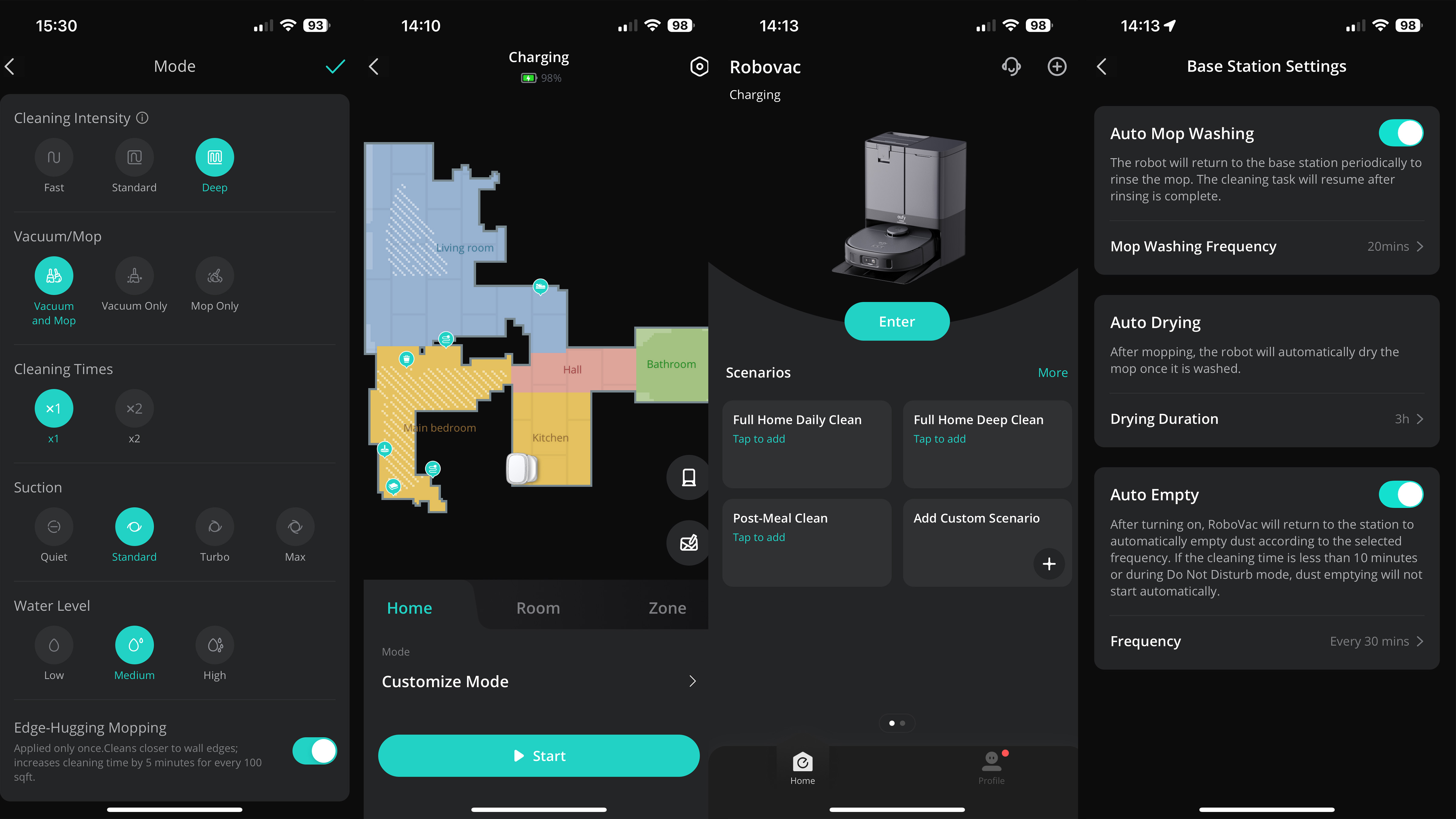
Would you like the robot to wash its mop every 19 minutes, or perhaps every 23 minutes? Should it dry the mops for two, three or four hours? I'd rather the manufacturer tell me what's best and be done with it. Better still, use a sensor and get the bot to work it out for itself.
Keep the configurability if you must, but please give me the option to hide it all and just tap a big "Clean" button instead.
2. More reliable obstacle avoidance
This is, quite literally, a hit-and-miss topic among the robotic vacuums I've tested in 2025. Seemingly regardless of price, some dodge obstacles with balletic precision while others get tangled up in cables, push chairs around as if expecting guests, and snack on discarded shoes like a hungry Labrador.
Joking aside, it's frustrating to see even four-figure vacuums bash into doors, walls and baseboards, seemingly feeling their way around instead of using their clever LiDAR sensors and AI-driven vision tech. I'm hoping for smarter, more confident navigation from robovacs in 2026, and an improved ability to clean around obstacles and work their way out of dead-ends.

3. Edge and corner cleaning that actually works
Spinning side brushes began sprouting from robotic vacuums years ago, but in my experience this now-commonplace setup is flawed. When they're not busy flicking food all over the kitchen floor, they're spinning furiously but often failing to properly reach into corners.
Some manufacturers have fitted motorized arms for extra reach, and others have created nifty folding brushes that extend themselves mechanically to be more effective, but ultimately, a circular robot just isn't built to clean a 90-degree corner.
D-shaped robots have gone some way to fixing this, but my wish for 2026 is for this to be combined with a more effective side brush design. An extendable arm that reaches further would help, or how about an articulating nozzle to deliver suction right where it's needed?
4. Bagless as standard
The bagless design of my Dyson Cyclone V10 stick vacuum feels like second-nature. So much so that I've repeatedly forgotten to check on the bag inside the charging station of my Eufy X10 robot. Why can't the self-cleaning stations of robotic vacuums also use a bagless design? Yes, the manufacturers might lose some cash from selling proprietary bags – about £20 ($27) for 10 last time I checked – but Dyson seems to manage just fine without that particular revenue stream.

For 2026 I'd like to see more robotic vacuums switch to a bagless design for their charge stations. They can still earn ongoing revenue from selling mopping pads, brushes, rollers, detergent and all the other replaceable parts, but going bagless would make for a more seamless user experience.
5. The confidence to tackle raised thresholds
Before moving house, the most common issue I had when testing robotic vacuums was their inability to drive over raised doorway thresholds. I'm not asking them to clamber out into the garden, but just a half-inch difference in height between the exposed Victorian floorboards of a lounge and vinyl floor of a kitchen can prove too much for even the most expensive robots.
In newer homes with level floors it's less of a concern. But for 2026 I want to see robovacs more confidently approach raised thresholds. I've seen some models fail, then reverse and try again with more speed, or at a more favorable angle. This sort of intelligence should be commonplace, along with an ability to dial up the motor torque when there's an uneven floor to clear.

6. The ability to climb stairs (finally)
Perhaps I'm being overly optimistic with this one, but in 2025 we saw Eufy, Dreame and Mova all demonstrate stair-climbing prototypes. Yes, they look like they've escaped from an episode of Black Mirror, but the ability to clean multiple levels is a total game-changer – if anyone can actually bring the tech to market.
I hope 2026 will see commercial versions of these robots go on sale. And, while they'll doubtless be expensive – and almost certainly accompanied by myriad hilarious fail compilations on social media – robots capable of climbing stairs could attract a lot of new customers. I imagine these would work best with two base stations, one on each floor, to more conveniently empty the bin, clean the mops and charge the battery.
As for cleaning the actual stairs? That'll surely be the reason we're told to upgrade to Gen 2.0.

7. Intelligent off-peak charging
This one should be easy. We're used to programming our electric cars to charge at night when electricity is much cheaper, so why can't robotic vacuums do the same? You could unplug the base station every morning, I suppose, but that's not ideal.
For 2026 I'd like to see the option to program a robovac so that it holds off charging its battery until my low-cost electricity tariff has kicked in. The robot itself could still function as normal during the day, but the base station then waits to charge the battery until night time. There could be a manual override for when you need more battery charge during the day – or for when the robot's dust bin needs emptying – but every little helps.

➡️ Read our full guide to the best robovacs
1. Best overall:
Roborock Qrevo Curv
2. Runner up:
Eufy X10 Pro Omni
3. Best budget:
Roborock Q7 M5
4. Best for pet hair:
Dreame L40 Ultra
