





Microsoft has treated us to a deluge of information about the next Xbox, currently known as Project Helix, at a recent Game Developer Conference (GDC) 2026 talk. Delivered by Jason Ronald, Xbox’s vice president of next generation, it told us lots about the upcoming console - but also left one of our biggest questions unanswered.
With the Xbox brand under new leadership following the surprise retirement of long-time Microsoft Gaming CEO Phil Spencer, not to mention the sudden departure of his protégé president Sarah Bond, and questions swirling about the suitability of his replacement, former AI executive Asha Sharma, it’s clearly a tumultuous time for Team Green.
Could the next Xbox reverse years of declining sales and recapture the glory days of previous console generations? It’s yet to be seen, but here are the biggest things that we know (and the most important thing we're still wondering) about Project Helix so far.
1. Early hardware is going out soon
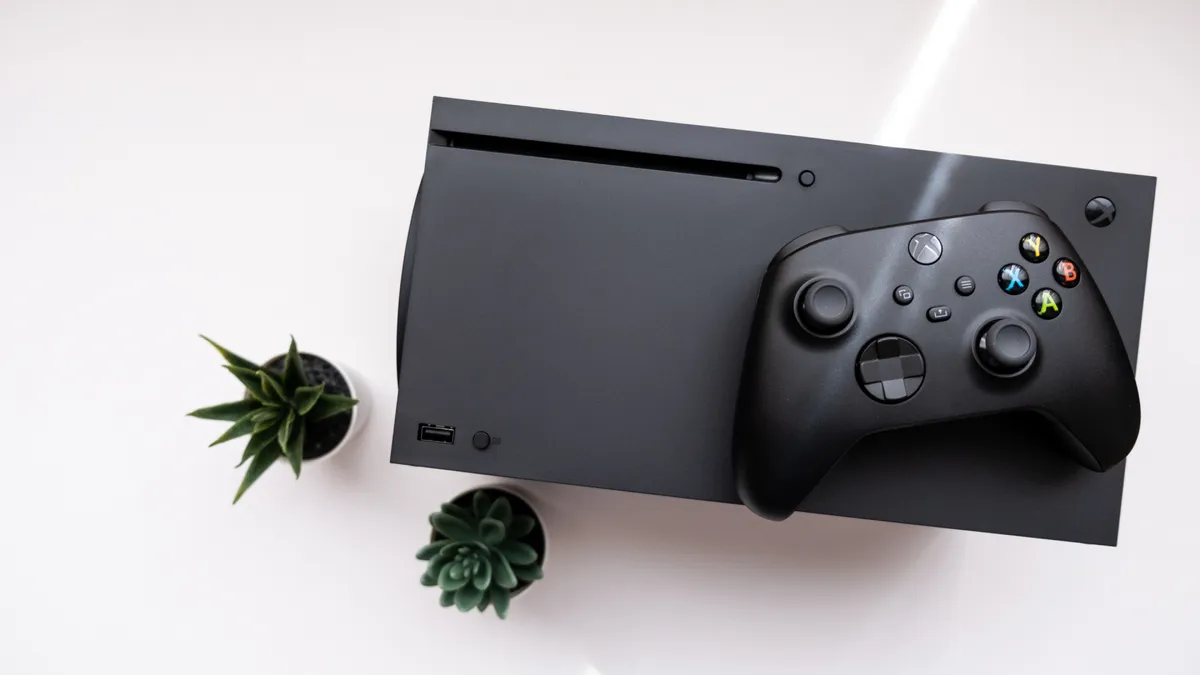
Although there is no official release date for Project Helix quite yet, Ronald did confirm that “alpha versions” of the upcoming system are expected to ship out to developers next year. This presumably means some form of game development kit (or dev kit for short), which could give us some insight into when Project Helix will hit shelves.
Dev kits are specialized prototype consoles designed specifically for game makers so that they can develop and test their software on something that has similar specs and features to the product that will eventually end up in consumers’ living rooms. All major console manufacturers like Sony, Microsoft, and Nintendo tend to send out dev kits to their biggest partners as they’re vital for ensuring that third-party games actually perform well on the company’s respective platforms. They’re a common sight at the offices of many gaming companies, and plenty of my hands-on preview sessions with upcoming software have actually involved me playing on them first-hand.
I know from using the likes of the PS5 dev kit that they can look absolutely nothing like the regular console (the PS5 one has the appearance of a weird, V-shape pizza oven more than anything else), but otherwise perform identically when set up to run games.
Looking back at the Xbox Series X, Microsoft reportedly sent out dev kits back in 2020 - just a few months before the console launched. If the company ends up following a similar time frame for Project Helix, I would expect it to be on sale by the end of 2027 or early 2028 at the latest.
2. It will play both Xbox and PC games

It has long been rumored that the next Xbox will be more of a PC than your usual home console, and Microsoft has all but confirmed that fact at this point.
Last week, Sharma took to X to state that Project Helix will “play your Xbox and PC games,” which presumably means that it runs on a version of Microsoft’s desktop operating system, Windows 11. That’s not the part that’s unusual, though, as the existing Xbox operating system is actually already based on Windows 11. Rather, it’s the claim that “PC games” will be supported that really indicates a departure from traditional consoles.
Although Microsoft does offer PC games on its Xbox PC app, this presumably means support for platforms like Steam or the Epic Games Store, too. After all, the recent Asus ROG Xbox Ally handhelds (which can be used to play Steam games) showed that Microsoft isn’t actually averse to letting some of its competitors have a presence on Xbox-branded hardware.
Some online commentators have theorized that the unreleased system might offer the ability to boot into either full-fat Windows 11 or the existing Xbox OS, but I think it’s more likely that it will run Windows 11 by default with some kind of new Xbox emulator built in. This goes hand in hand with Ronald’s announcement of a Windows 11 Xbox mode, set to start rolling out in April. According to him, this will offer “a familiar full screen and controller optimized Xbox experience” that sounds awfully similar to the existing console UI.
Add in an Xbox emulator for Xbox One, Xbox Series, Xbox 360, and original Xbox titles, and you would have a system capable of running both Xbox and PC games, as Sharma described.
3. It will have AMD hardware under the hood
We already knew that Xbox was working closely with AMD, but the GDC talk revealed that Project Helix will be powered by a custom AMD system on chip (SoC). It will be co-developed by the two companies specifically for compatibility with the “next generation” of DirectX and AMD FidelityFX Super Resolution (FSR).
DirectX is Microsoft’s most significant gaming application programming interface (API) - basically something that allows multiple software or hardware components to interact. It saves developers time by giving them access to the likes of hardware-accelerating 3D rendering and audio processing without the need to write code for every component from scratch.
FSR is AMD’s upscaling tech, which effectively improves performance by allowing a system to render a low-resolution image before upscaling it with an AI algorithm for a clean final picture. Major features of current FSR versions include frame generation (which generates entire frames to increase perceived smoothness) and ray reconstruction for better lighting.
What the next iterations of these technologies involve is yet to be seen, but Ronald’s talk focused heavily on ray tracing capabilities and smooth performance.
4. Xbox Play Anywhere is a focus

On top of technical improvements, Xbox Play Anywhere was another big theme in Ronald’s talk and will likely be a key part of Xbox’s strategy as it moves towards a more unified PC and console ecosystem. He said that the company is committed to “breaking down the barriers between console and PC games for more seamless cross-device play” in addition "to making the Xbox experience consistent across screens.”
This should help reduce development costs by removing the need to develop wholly distinct PC and Xbox versions of titles - currently a major barrier that prevents many third-party games from coming to Xbox Series X and Series S. There are already more than 1,500 Xbox Play Anywhere games - but you should expect lots more in the future.
5. The price could be anything
There’s one big question surrounding Project Helix that still hasn’t been answered: how much will it cost? Of course, it’s still a little early for Microsoft to talk about the price in specifics; we don’t even know the official name of the system after all, but some information about the approximate price point or even just the market segment that the system will target could help ease many fans’ biggest fears about it.
Leakers claim that Project Helix could cost between a lofty $999 and a frankly eye-watering $1,200 (gasp, around AU$1,500-AU$1,700 in Australia!). This makes sense given Sharma’s claim that the system “will lead in performance” (as that would indicate some pretty beefy specs), but would put it firmly out of reach of many prospective buyers.
Xbox is no stranger to high prices (just look at the cost of a Series X these days), but with speculation running rampant, even a small hint to prepare fans could go a long way.

➡️ Read our full guide to the best Xbox hard drives and SSDs
1. Best overall:
Seagate Xbox Storage Expansion Card
2. Best budget:
Toshiba Canvio Basics
3. Best value:
WD Black C50
4. Best external SSD:
WD Black P40
Follow TechRadar on Google News and add us as a preferred source to get our expert news, reviews, and opinion in your feeds. Make sure to click the Follow button!
And of course, you can also follow TechRadar on YouTube and TikTok for news, reviews, unboxings in video form, and get regular updates from us on WhatsApp too.
