Sam Altman has his head on a swivel, constantly clocking huge AI breakthroughs that foretell a future where our biggest and sometimes most personal problems might be solved and our wildest dreams realized by AI.
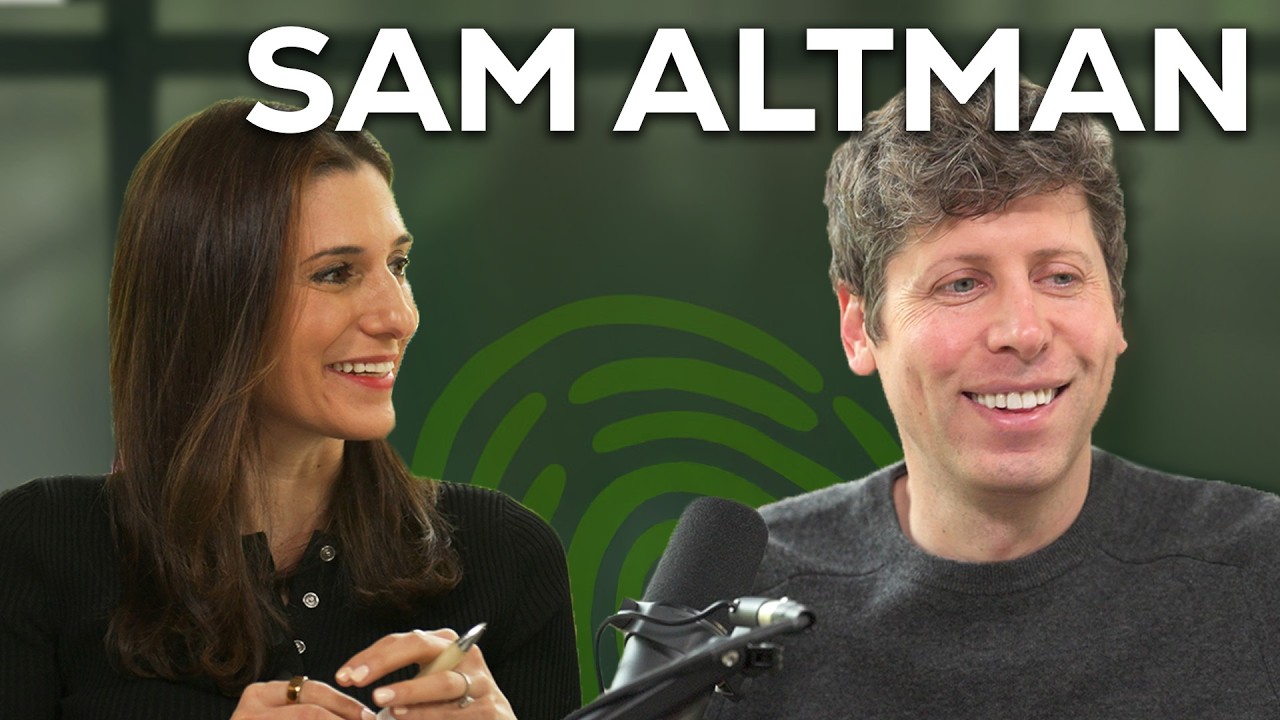
This week, in a lengthy and revealing chat with former CNN journalist and current Mostly Human podcast host Laurie Segall, the OpenAI CEO opened up about Sora's demise (needed the compute because something "very big and important is about to happen"), signing up with the US Department of War after Anthropic balked ("very important that the governments are more powerful [than AI]"), and some remarable AI breakthroughs.
First, there's a dog's tale.
"The coolest meeting I had this week was a guy who was not an expert that used ChatGPT to make a custom mRNA vaccine for his dog's cancer," recounted Altman.
Well, that stopped me in my tracks. After all, when people complain or worry about all the ways OpenAI's ChatGPT and tools like it are changing the world, spitting out scams at lightning speed, changing industries, and vaporizing jobs like raindrops on asphalt, Altman and others will remind them about how these same tools might, for instance, cure cancer.
In this case, Altman was offering a literal example. The story is not apocryphal. While Altman didn't reveal the man's name, it wasn't hard to find the story of Australian tech CEO Paul Conyngham and his dog, Rosie.
According to Phys.org, Conyngham, who has no medical background, was distraught over his misdiagnosed dog, Rosie. Doctors had missed the cancer, and the dog was past the point of traditional treatment.
Conyngham didn't create the mRNA vaccine. Instead, he started peppering ChatGPT (and soon, Gemini and Grok) with questions about cancer therapies.
As he told Phys.org, "I would have conversations and just keep them going non-stop."
The key piece of advice he got was to have his dog's genome sequenced and analyze her DNA. The goal was to identify Rosie's mutated genes. For that, Phys.org reports, he used the AlphaFold scientific model.
ChatGPT even recommended that Conyngham work with researchers at the University of New South Wales, who then developed a custom mRNA vaccine that appears to have worked on Rosie.
It's a remarkable tale, and now Conyngham is opening up the research to other desperate dog owners (he posted a Google form on LinkedIn).
This is not the only AI success story, Altman shared.
Big AI business
Altman, who complained that OpenAI's Codex AI coding agent model is not yet smart enough to help him cook up new side-project ideas, shared the startling story of someone who used the platform to build a billion-dollar company — by themself.
Segall was asking about the possibility that a sole entrepreneur might someday use these tools to build the next billion-dollar company.
"I believe that has happened," said Altman, who wasn't at liberty to offer any details like the name of the entrepreneur, the business, or what it does.
"It is a legitimate single-person billion-dollar company as far as I can tell. I have not like reviewed the financials, but I think it's just happened," added Altman.
The way this person built it might be more interesting. It was all done with Codex.
Altman called the founder "One of the top users of Codex of all time," and "just like unbelievably productive in a way that no single person could have been.”
Altman was so impressed that he hired the entrepreneur.
AI is your new partner
What these two stories have in common is a pair of obsessive people who are pushing the AI's to their limits.
As someone on LinkedIn noted on Conyngham's page, "Paul didn't have a biology degree. He had 17 years of pattern recognition, a dying dog he loved, and the willingness to treat an impossible problem as a data problem."
In the case of the entrepreneur, it doesn't sound like they dropped a brief prompt into Codex and then walked away while it built and ran a company. Most of the best work coming out of AI is collaborative, with the collaboration between you and the AI.
Prompts are merely a starting point. The conversation and refinement of those requests is what gets the work done and drives you and the AI to a final product.
In the case of Rosie the dog, the mRNA vaccine was not developed and administered by the AI. ChatGPT and the other platforms were like very smart research assistants, digging through the reams of data on dog cancer research to find meaningful information and make recommendations. Conyngham figured out what to do with it and then turned to the human experts to make it happen.
Follow TechRadar on Google News and add us as a preferred source to get our expert news, reviews, and opinion in your feeds. Make sure to click the Follow button!
And of course, you can also follow TechRadar on YouTube and TikTok for news, reviews, unboxings in video form, and get regular updates from us on WhatsApp too.