





In your 30s? Years of sitting — at a desk, in a car, on a sofa — gradually teach the body to stop recruiting the glutes properly. It could be that your hip flexors feel a little tighter, or that your lower back picks up the slack when other muscle groups should be working.
Then, one day, that back starts aching for reasons that seem to come from nowhere.
For elite performance coach and Hollywood trainer David Higgins — whose client list spans everyone from Scarlett Johansson and Margot Robbie to Samuel L. Jackson and David Harbour — this is one of the most common and most preventable patterns he sees. The fix, in his view, starts with a single back-to-basics movement: the hip bridge.
David Higgins also recommended the farmer's walk as his go-to muscle-building exercise for over 50s.
What glute dysfunction actually looks and feels like
The trouble with glute dysfunction is that it rarely announces itself clearly. It tends to show up as something else — tightness in the hip flexors each time you lace up your running shoes, persistent lower back tension, hamstrings that feel perpetually strained, or a vague instability when you're standing on one leg.
“Desk-bound lifestyles teach the body to live in hip flexion, which switches the glutes off over time,” says Higgins. The glutes aren't beyond repair; however, they've simply been trained out of the habit of engaging.
One of the clearest tell-tale signs is which muscles dominate during lower-body movement. “During a bridge, for example, you should feel the glutes initiating and finishing the movement, not cramping in the hamstrings,” he says. If your hamstrings are dominating and your lower back is doing the heavy lifting, the glutes aren't contributing properly.
The connection between weak glutes and lower back pain is equally well established. “The glutes help stabilize the pelvis,” Higgins explains. “When they stop doing their job, the lower back overworks to create stability. Where you feel pain is often not where the real problem lives.” Treating the back when the glutes are the underlying issue is, at best, managing symptoms, while the hip bridge can address the source.

Why the hip bridge is the right starting point
The hip bridge works because it isolates the glutes and retrains the pattern of proper activation without requiring any equipment, any particular fitness baseline, or any complex technique. It’s accessible enough to work for someone returning to exercise after years away, while being specific enough to be useful for people who train regularly but have never consciously addressed their glute function.
For desk-bound adults who commit to it consistently, Higgins says the results come faster than most expect. “If someone's desk-bound but consistent, they can usually begin restoring proper glute activation within 2–6 weeks,” he explains. “The body adapts to repetition — both good and bad.”
His coaching cue is the cornerstone of the whole thing: “Ribs down, squeeze the glutes before you lift.” Not arch, or thrust — squeeze. The movement should come from the glutes extending through the hips, not from the lower back overextending to create the illusion of range. Most people get this wrong. They flare the ribs, overarch the spine, rush the reps or push through the toes rather than the heels. Higgins is clear: “Posture dictates muscle recruitment.”
How to perform the hip bridge
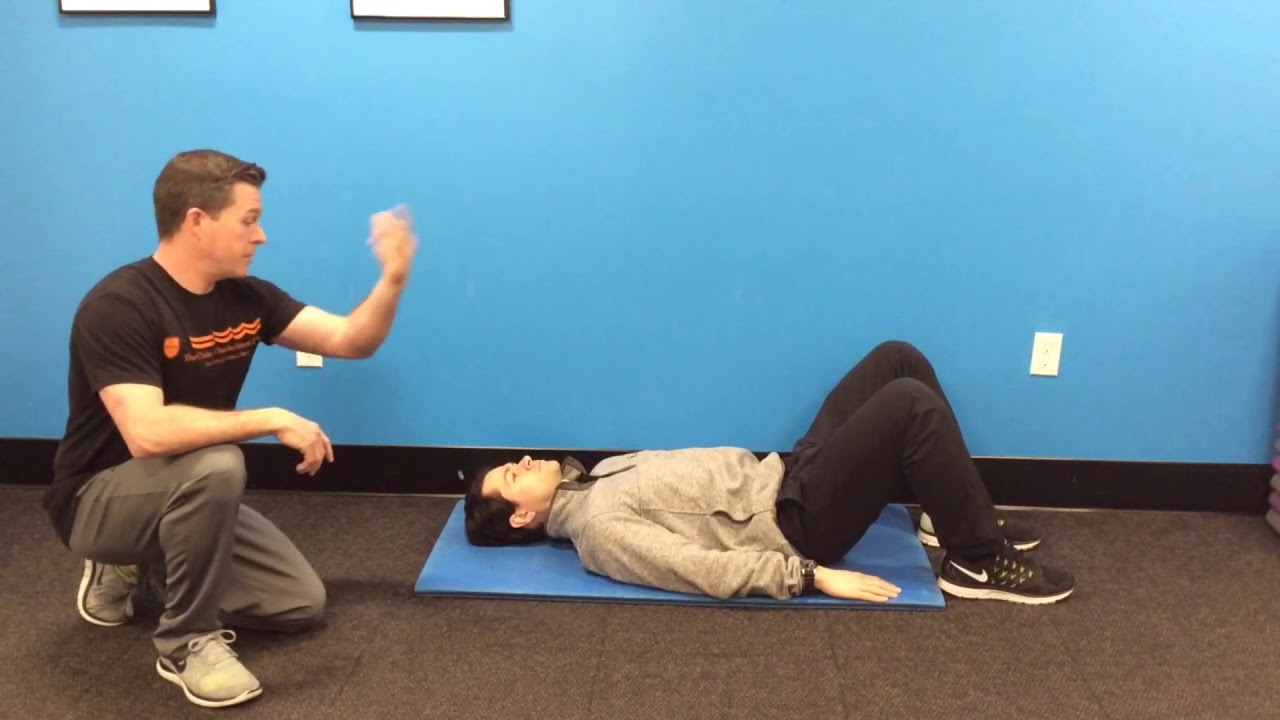
- To perform the hip bridge, lie on your back with your knees bent and feet flat on the floor, hip-width apart.
- Brace your core, squeeze your glutes and drive through your heels to lift your hips until your body forms a straight line from shoulders to knees.
- Pause briefly at the top, then lower with control and repeat.
For beginners, Higgins programmes the bridge with a pause at the top.
“I want people to own the top position, not just fling their hips upward,” he says. In practice, that means either 10–15 controlled reps or short holds of 3–5 seconds at the top — both approaches force you to actually be in the position rather than simply passing through it.
You should feel the bridge primarily in the glutes. Some hamstring involvement is normal, but if the hamstrings are doing most of the work, either the feet are positioned too far from the body or the glutes aren't yet firing as they should. Adjust the foot position first, then focus on the squeeze cue before you lift.
Once the bodyweight bridge is consistent and the glutes are clearly initiating the movement, progressions include single-leg bridges, adding a miniband above the knees, or incorporating longer holds.
What the hip bridge alone won't fix

“Hip bridges are brilliant, but on their own they're not enough for most desk-bound people,” Higgins says. “You also need hip mobility, breathing work, walking mechanics and postural correction,” he says, noting that the body “works as a system, not isolated parts.”
With Higgins’ guidance, try to think of the bridge as the foundation — restoring the basic capacity for the glutes to switch on and do their job. From there, the work expands outward: opening up the hip flexors that have been shortened by years of sitting, retraining walking mechanics so the glutes are actually loaded during movement, and building the postural habits that keep the whole system honest.
Start in your 30s and the work is preventive. “Simple exercises done well will always outperform complicated training done badly," he explains. Getting the fundamentals right now is the most efficient thing you can do for your back, your hips and your long-term ability to move freely.
You can also check out three stretches from a desk yoga expert to undo the damage of sitting at your desk.

Follow TechRadar on Google News and add us as a preferred source to get our expert news, reviews, and opinion in your feeds.