


Meta has released a new AI image model, one clearly designed to compete with ChatGPT and Google Gemini's Nano Banana 2. Meta AI has to not only convince people that AI can make the images they want, but that it will make images that are worth switching AI chatbots for.
To see how well it actually does in that context, I set image prompts for Meta AI and compared them to ChatGPT and Nano Banana 2. The tests, ranging from realistic wildlife photography to comics, are designed to test various aspects of AI image production. While all of the models arguably cleared a similar bar for good results, some definitely seemed to understand the assignment better than others.
Moon Orchard Ads
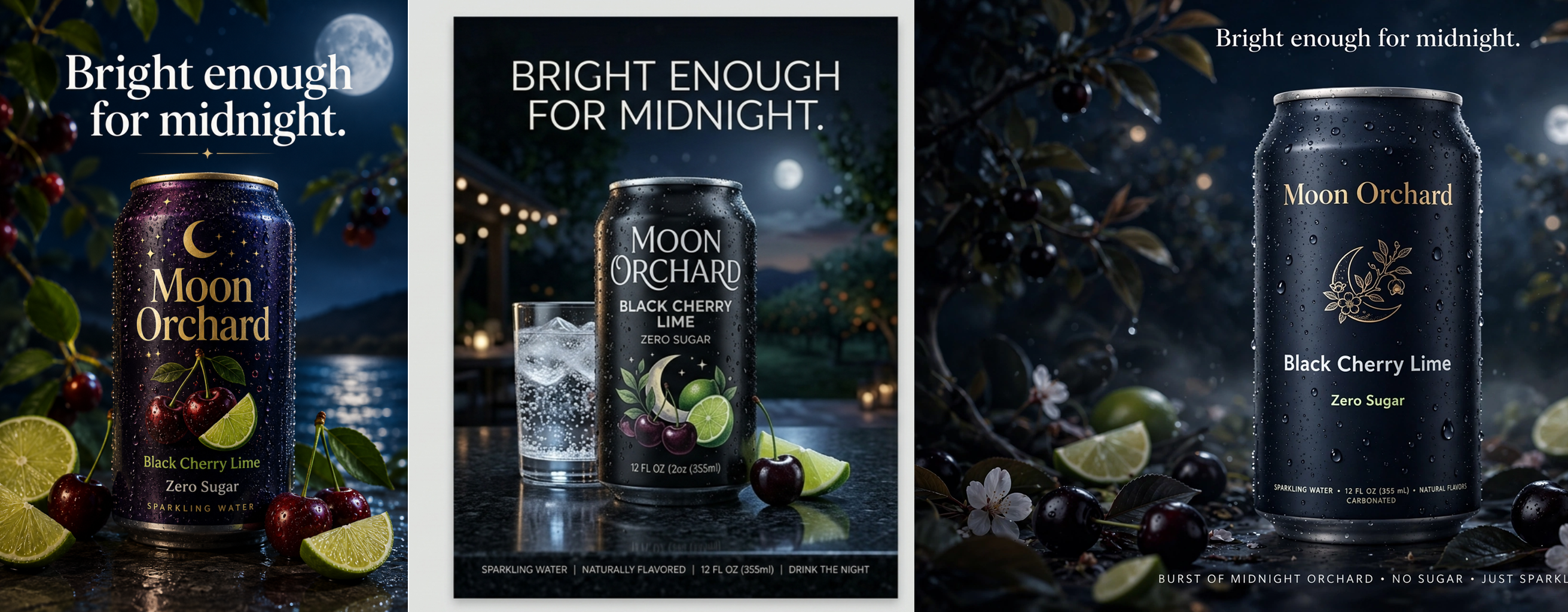
I asked each model to design a polished product poster for a fictional sparkling water brand called 'Moon Orchard', with the can saying exactly "Moon Orchard", "Black Cherry Lime", and "Zero Sugar", plus a clean headline reading exactly "Bright enough for midnight". This was a typography and product-design challenge as much as an image test, because AI models can make a gorgeous fake ad and still mangle the words like a haunted label printer.
All three produced stylish results, but they had different instincts. ChatGPT, on the left in the image above, created the most elegant poster, with a moody purple can, cherries, lime wedges, and a headline that felt like it belonged in a real campaign. Gemini, in the middle, looked the most like a magazine ad layout, but added extra label text and a glass with some of the drink inside. Meta, on the right, produced the most premium-looking can design, with condensation.
Fox photos
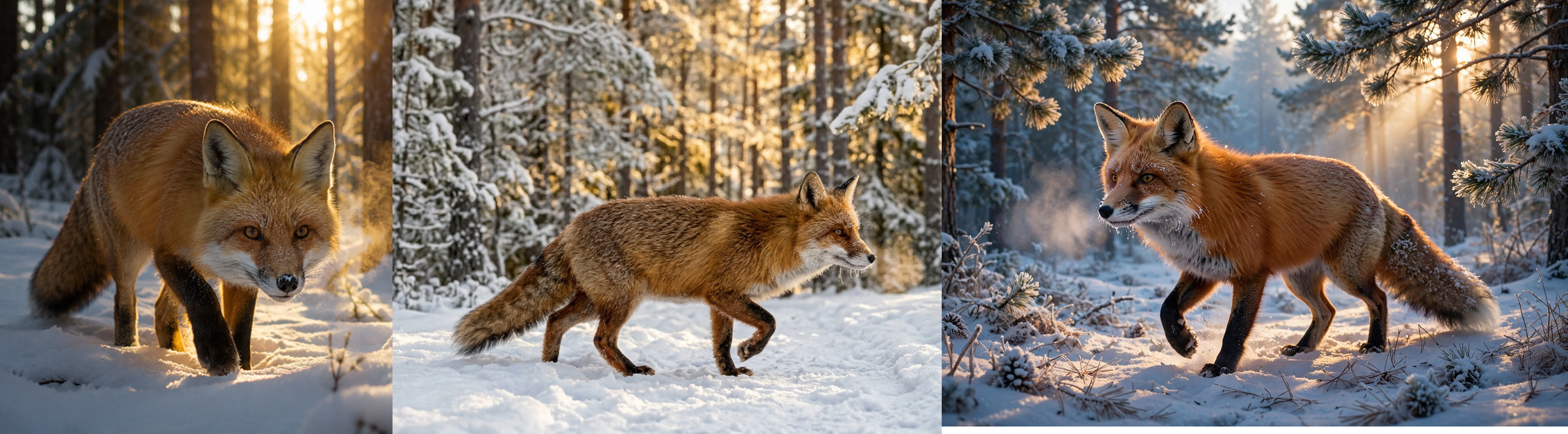
I next asked each model to create an ultra-realistic wildlife photograph of a red fox cautiously walking through a snow-covered forest at dawn. This was a realism challenge, with anatomy, fur texture, lighting, atmosphere, and natural movement. I wanted it like a real animal caught at exactly the right frozen moment.
ChatGPT delivered what I'd call the most dramatic image, with the fox moving toward the camera. Gemini was more restrained and natural in its profile shot. Meta was the most cinematic-looking, with the fox appearing more lifelike and the background almost like a green screen.
Garden invite
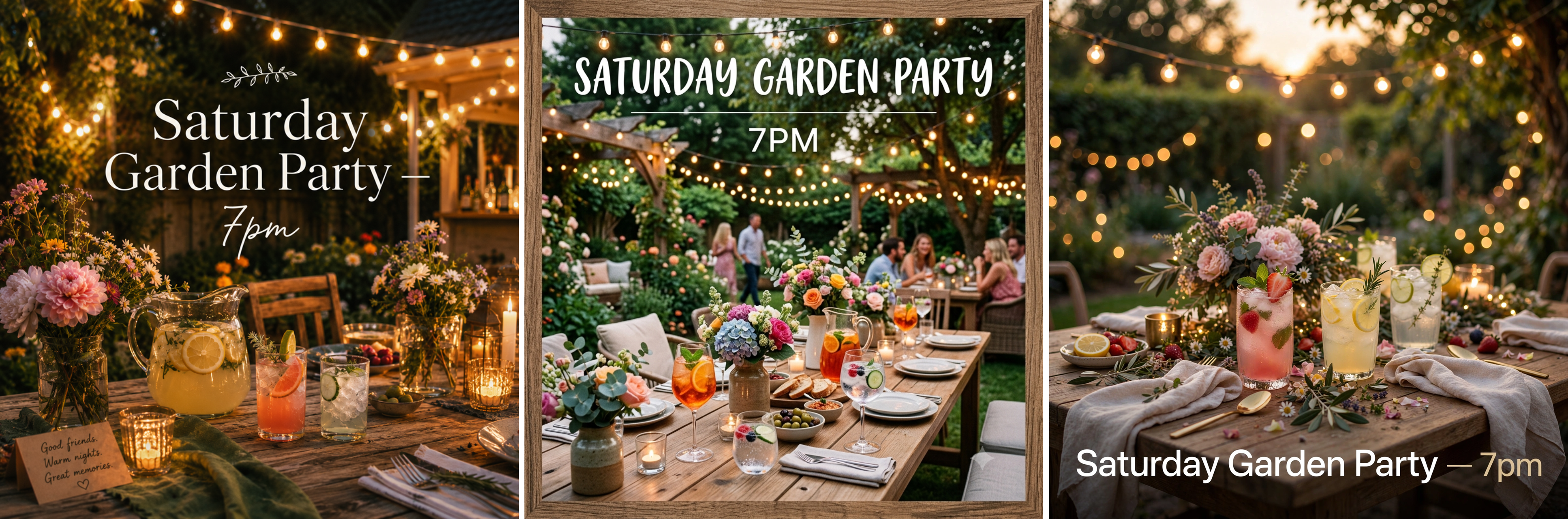
As Meta is the platform for so many social media platforms, I then asked the models for a square Instagram post advertising a summer garden party, with a warm, stylish, realistic setting, fairy lights, a wooden table, drinks, flowers, and the readable text "Saturday Garden Party — 7 p.m.". This was a practical design test, because plenty of people use AI image tools for invitations, posters, and social posts.
Despite Meta AI's social media connection, it's ChatGPT that seemed to do the best with the prompt — the text looks like it's built into the design way better than the others. Gemini's lettering looked more like a framed flyer than a realistic Instagram post. And while Meta produced the most photographic table scene, it seemed more like a photo taken at the event rather than an invitation.
Robot pancake chef
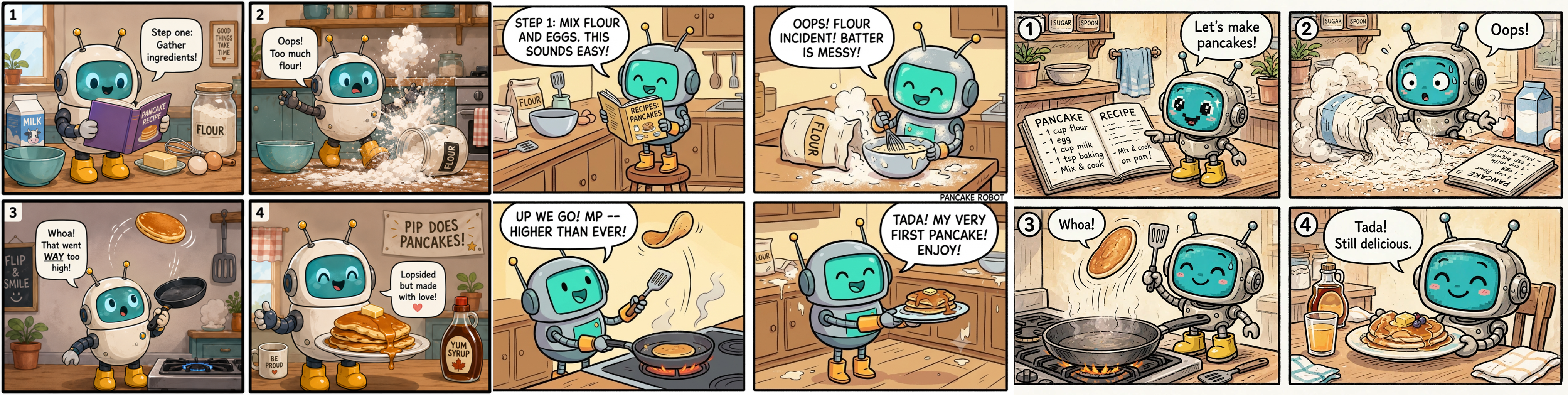
The fourth prompt asked for a four-panel comic strip about a cheerful robot named Pip baking pancakes, while keeping Pip consistent across all panels. It also tested sequential storytelling. This was one of the strongest rounds for all three models.
ChatGPT's comic was easy to follow and was also the most amusing. Gemini had the cleanest cartoon polish. Meta did a great job in most ways, but gave the pancake a word balloon for some reason.
Noir cartoon
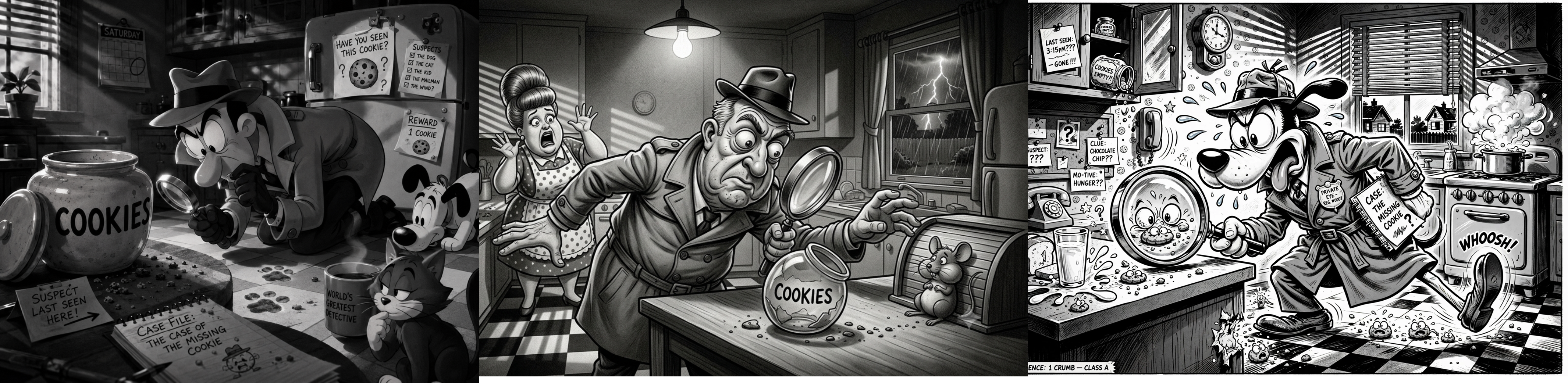
Finally, I asked each model to combine a noir setting with a Saturday morning cartoon. Specifically, a private detective investigating a mysterious missing cookie inside a 1940s suburban kitchen in black-and-white. The prompt tested style-blending, whether the models could make the scene feel like both a detective story and a cartoon.
ChatGPT did a good job balancing the noir mood with a cartoon detective with a dog sidekick. Gemini went for more of a classic detective drama intensity. Meta was the most comedic, with a canine detective exploring scattered clues amid plenty of visual jokes. Meta definitely did the best job in hitting both sides of the prompt.
ChatGPT told the story cleanly, and Gemini had the strongest noir atmosphere, but Meta made the prompt feel the most alive. It understood that a missing cookie mystery should be dramatic and ridiculous.
Five prompts turned out to be enough to show that these image generators have each developed their own personalities. Nano Banana 2 consistently impressed with realism. Meta AI took bigger creative swings than I expected, producing the funniest image of the test in the cookie detective challenge and some of the most polished commercial-looking visuals.
But ChatGPT stood out for seeming to understand what I was actually trying to achieve more consistently than its rivals. It repeatedly delivered images that matched both the wording and the intent of the prompt. The only category where I thought it was genuinely beaten was the film noir cookie mystery, where Meta more effectively embraced the ridiculous premise.
All three are capable of producing good results; the difference comes down to judgment. The best model is the one that understands what you meant. ChatGPT proved to be the strongest at making that leap, even if Meta sometimes stole the show.

Follow TechRadar on Google News and add us as a preferred source to get our expert news, reviews, and opinion in your feeds.

➡️ Read our full guide to the best business laptops
1. Best overall:
Dell 14 Premium
2. Best on a budget:
Acer Aspire 5
3. Best MacBook:
Apple MacBook Pro 14-inch (M4)
