





TechRadar Verdict
A great netbook, but the inclusion of Android seems a little unnecessary
Pros
- +
Long battery life
- +
large keyboard
- +
build quality
Cons
- -
Colours look washed out, Android is unnecessary
Why you can trust TechRadar We spend hours testing every product or service we review, so you can be sure you're buying the best. Find out more about how we test.
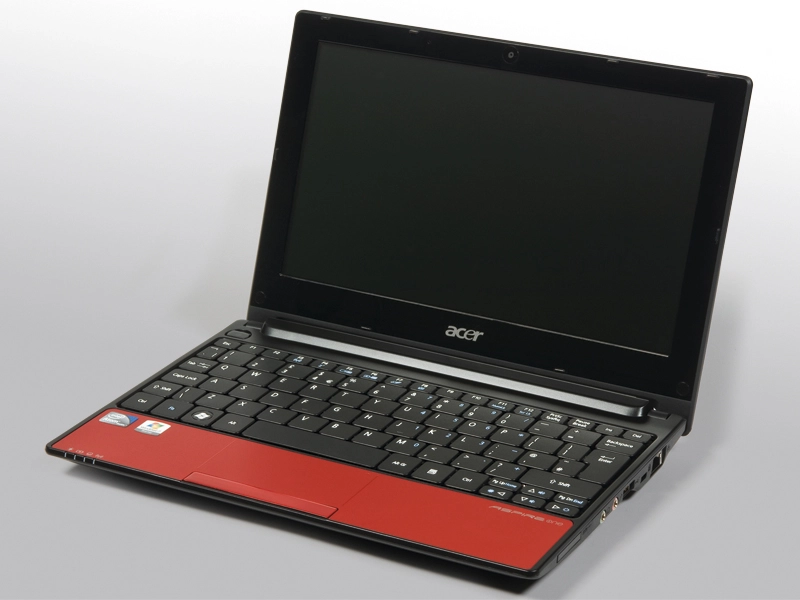
Despite the rise of tablet devices, the netbook market still charges on. The Acer Aspire One D255 (£286 inc. VAT) is one of the latest and, with manufacturers looking to set their products apart from the rest, runs the smartphone-centric Android (2.1) operating system (OS), as well as Windows 7.
The exact model we have here is the Acer Aspire One D255-N55QDr.
The 10.1-inch screen is very comfortable to use thanks to the lack of a shiny screen coating, and so is easy to read in all light conditions. Having said that, we would have liked it to be a little brighter. Colours appear a bit washed out, making this more suited to office work than viewing movies.
Solid build
Build quality is good and this is a machine that will take quite a bit of punishment on the road, which is where this netbook is likely to spend most of its time.
We were extremely impressed by the Acer's keyboard. It is large, firm and provides a very crisp typing action – one of the best we've experienced on a machine of this size, making it ideally suited for those who need to write a lot on the move.
Similarly, the touchpad is exceptionally easy to use, which is not always the case with netbooks. It is large, yet we never brushed it during typing and the multitouch functionality worked without a hitch – again a rarity on a netbook.
Sign up for breaking news, reviews, opinion, top tech deals, and more.
An Intel Atom processor provides power enough for basic use. It is a dual-core version, so should provide more power, but we didn't notice an improvement over older Atom processors, and word processing and web browsing run just as laboriously as before.
The integrated graphics card provides basic multimedia performance, and the netbook is more about consuming content, such as movies, than creating it.
Portability is excellent and the 389 minute battery life and 1.2kg weight are impressive, again making it ideal for the regular traveller. As mentioned above, you can choose to run either Windows 7 or Google Android OS.
Windows 7 works just as you would imagine, offering all the compatibility you could want, as well as a familiar system to work with. Android has been included to provide a quick way of getting on the web, reading emails and viewing your photos and movies.
We like the sentiment and the smartphone-centric OS does transfer nicely on to the netbook – but we can't really see the point and were just as happy using Windows 7 for the above.
Fortunately, the Acer Aspire One D255 does the basics very well, making this an incredibly usable and portable option. We're just not convinced about the inclusion of Android, however.