
When you're part of a large team churning out line after line of code in order to build a spreadsheet, word processor or web browser, there's not that much scope for fun.

You're just an anonymous cog in a big software machine and no one is ever going to know who you are.

That's why Easter eggs were born. They're those odd little snippets of code that really shouldn't be there, hidden so well that only the deeply committed can find them. Type in a keyphrase or click on a specific spot and you just might find something squirrelled away by the developers for you to uncover…

Whether it's a hidden game, a quirky (but possibly useful) feature or even green cheese at the ultimate zoom into a digital map of the moon, there are all kinds of Easter eggs hidden out there.

One of the more mundane types of egg is a scrolling list of the names of everybody who worked on the project. Although this might sound like an anticlimax, this is the real purpose behind Easter eggs. The developers who put in 80-hour weeks to ship a piece of code on time want to let people know that they exist – and that they've got a sense of humour.

There's an old American tradition (grown out of an older German custom) of the Easter egg hunt, where brightly dyed hard-boiled hen eggs are hidden for children to find. These days the eggs are usually plastic, but the idea has grown international legs and egg hunts now take place all over the world. The aim is to hide the eggs so that they're difficult to discover, with the biggest prizes obtained by finding the eggs hidden in the most challenging places.

That's why these hidden features have become known as Easter eggs. You have to hunt to find the right place to trigger the code. Now that many companies have policies against Easter eggs, they're harder to see than ever before – but there are still plenty around if you know where to look.

One of the reasons why digital Easter eggs are on the way to becoming part of computer history is the rise of malware. If a programmer can sneak in a flight simulator then there's a good chance someone with a much blacker hat can do the same with a piece of malicious code. Locking down development teams makes sense in terms of security, even if it isn't as much fun.

Classic Easter eggs

One of the most well known Easter eggs is Excel 97's flight simulator. It may seem surprising that something as big as a flight simulator could be hidden inside spreadsheet software – but if you were familiar with the 8-bit scene of the 1980s then you'll remember just how small some of Geoff Crammond's simulators for the BBC Micro could get!

To launch the flight simulator, all you needed to do was select a specific group of cells (X97:L97) and draw a chart in them. This opened up the simulator and you could use your mouse to fly around.

It wasn't the only Easter egg hidden in Office 97 – Word had a pinball game. And Office 2000 took things further, with a driving game hidden in Excel (you needed to have the Office Web Components installed to play it). To reach the game, you had to publish a blank spreadsheet as a web page and open it in Internet Explorer. You could then navigate to a specific cell and press a combination of keys and buttons to find yourself in the middle of a car-chase game.

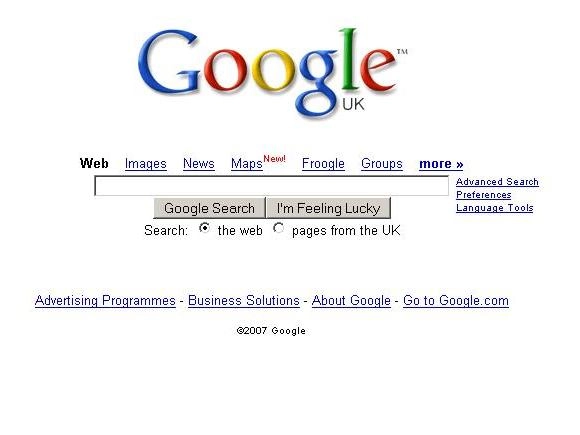
There's another flight simulator in Google Earth, though this time it's a little more official. You can use it to fly over 3D maps and even land on any flat area that you fancy. There are more Easter eggs in the rest of Google's properties (try typing 'Google Easter eggs' into the search box on the Google homepage, then click the 'I'm feeling lucky' button for an Easter-themed example).

Sadly, the moon in Google Maps' Google Moon isn't made of green cheese anymore, but the Gmail spam folder comes with some unique recipes. They're for SPAM rather than 'spam', but it's a tasty alternative to the usual tip or advert. We're still not sure about the SPAM kebabs, mind.

Some Easter eggs are quite subtle and can be found in plain sight. You'd need to have spent much of your life memorising movie scripts to catch all the references in World of Warcraft's character dialogue.

Similarly, the hidden emoticons in Skype's chat tools probably won't be apparent to everyone – but if you find yourself in a conversation where you're being told too much information, try typing '(tmi)' and see what happens.

If hidden games are more your thing, there's a copy of Tetris in the uTorrent bittorrent client, and Space Invaders is hidden inside OpenOffice. To play, open a new spreadsheet and add this formula to a cell: '=game()'. The cell will be filled with the text 'Say what?'. In an adjacent cell, type '=GAME("StarWars")' for a quick bout of mindless alien destruction.

Some eggs are even built into your hardware. If you've got an early Macintosh to hand, you can crack open the case to see the signatures of the entire design team on the moulding. If breaking a collectors' item isn't quite what you had in mind, you can find at least one egg on the Windows Vista DVD. Zoom in with a microscope on the copy protection hologram and you'll see a picture of one of the security team.

Then there are the Easter eggs that eventually become features of the product. Early iPods hid a copy of Breakout that became the first game installed on newer devices.

Browser eggs

Sometimes Easter eggs take a swipe at the competition. Type 'about: Mozilla' into the Firefox toolbar and you'll get a quote from the Book of Mozilla, often referring to Internet Explorer. In the latest version, Firefox 3.03, it reads:

"Mammon slept. And the beast reborn spread over the earth and its numbers grew legion. And they proclaimed the times and sacrificed crops unto the fire, with the cunning of foxes. And they built a new world in their own image as promised by the sacred words, and spoke of the beast with their children. Mammon awoke, and lo! It was naught but a follower." Firefox may not be the dominant browser in terms of numbers, but it's certainly taken the lead in setting standards.

Google's new browser, Chrome, also includes an Easter egg – but only if you're using Windows XP. It's triggered by typing an 'about' request into the toolbar – type 'about:internet' to launch the Windows Pipes screensaver inside the browser.

Vista users don't have the screensaver, so instead they get a message telling them that the tubes are clogged. It's debatable whether calling someone else's code really counts as an Easter egg, but Chrome also comes with its own eggs, including 'about:memory' and 'about:stats', which provide useful debugging information.

Internet Explorer has its own Easter eggs, though they won't work on Vista, either. You'll need to load a DLL inside IE and then edit the HTML of the blank page that appears in order to show a long scrolling list of the entire development team, along with lists of what kept them going and what they left out.

Easter egg on their faces

Not every Easter egg is as successful as the Excel 97 flight simulator. Some end up costing programmers their jobs, while others cost software companies large sums of money. Even the Excel flight simulator gave Microsoft enough bad customer feedback to ensure that you won't see any eggs in Office today.

Rockstar Games suffered from arguably the most controversial Easter egg in history, even though it was an accident. Instead of removing the Hot Coffee mini-game from Grand Theft Auto: San Andreas entirely, Rockstar merely cut it off from the rest of the game – leaving the assets on the disc. It proved a simple matter for hackers to get their hands on the mini-game, and the more explicit sexual content caused Rockstar a lot of problems.

Despite showing nothing more than fully clothed bumping and grinding between consenting adults, the whole game had to be withdrawn and reclassified. The end result was millions of dollars of revenue lost and several class action lawsuits. Rockstar cheekily renamed the more moderate romance achievement in GTA IV after the incident; a polite cut-away to a building roof now throws up the message 'Achievement Unlocked: Warm Coffee'.

Another classic example is the game SimCopter, which was released in 1996. One of the programmers, Jacques Servin, added an Easter egg that occasionally replaced the usual fireworks and bikini-clad girl 'mission complete' animation with kissing men in swimming trunks. This amused more than it offended, but ended Servin's career at Maxis.

For many companies, this was the point at which a blind eye was no longer cast towards such frolics. There are still Easter eggs in modern games and applications, but they're typically approved examples that the company is aware of.

That hasn't stopped everybody, though. You'll have to try out many varied combinations of keystrokes, commands and mouse clicks to find all the eggs hidden on your PC.

Easter eggs elsewhere

You can find Easter eggs in lots of places – not just software.

Fire up a DVD and you'll probably find that there's an Easter egg somewhere in the menus. You might have to press a few strange button combinations, but once you get there you'll find a hidden snippet of film, or even a game.

Peter Jackson's Lord of the Rings films contain plenty of eggs. One on The Fellowship of the Ring DVD pulls up a spoof filmed for MTV, where Jack Black has the ring somewhere not safe for work. There's a casino implosion hidden in Ocean's 11, too. Have a look through your DVD collection and see how many you can find.

Easter eggs in films don't have to be a piece of software – they can be little snippets of dialogue or images that resonate with the audience. John Landis regularly drops in references to See You Next Wednesday, his first (and so far unfilmed) script. Then there are cameo appearances by creators. Douglas Adams appears in The Hitchhiker's Guide To The Galaxy TV series, while Hitchcock's cameos are well known to film buffs.

There are also Easter eggs in electronic hardware, with messages in the screen printing and copper tracks of printed circuits becoming a modern version of the scratched messages in the centre of vinyl LPs.

The messages are often extremely small. If you've got an electron microscope, you can zoom into the etching on microchips to see the silicon artwork left behind by various chip designers.

-------------------------------------------------------------------------------------------------------

First published in PC Plus, Issue 276

Get the lastest from TechRadar on your Vista desktop - download the TechRadar Windows Vista Sidebar gadget