

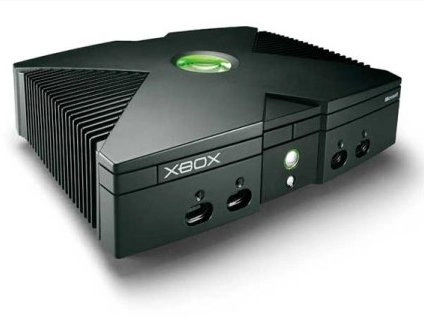
The gaming world was a very different place back in 2001; the home console market was dominated by the mighty PlayStation 2, Nintendo was launching the GameCube and the Dreamcast was proving to be a lead weight for Sega.
But it was November of that year that will be listed in the annals of gaming as a month that redefined consoles for a decade to come – bringing the launch of Microsoft's Xbox.
When Microsoft launched its Xbox on 15 November 2001, it was far from a guaranteed success; the software giant did have some gaming experience through the PC, but despite some impressive hardware, few believed that the console could truly compete with a brand like PlayStation.
However, Microsoft had a few tricks up its sleeve that would convert an idea they had first publicly touted back in 1999 into one its best known products.

The first was the acquisition of games developers Bungie, securing a launch title called Halo: Combat Evolved – a game that would become synonymous with the Xbox.
The second was the arrival, a year on from Xbox, of Xbox Live – a service that took the increasingly popular world of online gaming that had been flourishing on PC, and brought it to the US console.
Of course, Microsoft had not only the financial clout but also the links to hardware manufacturers and developers that were required to make a success of a console, but the Xbox project – evolving out of the work being done on DirectX at the company, represented a huge risk.

A collaboration with Sega on the Dreamcast was already looking ignominious and the decision to try to crack the traditionally Western-averse Japanese market was widely derided as it came at the expense of a speedy European launch.
And yet, Microsoft's console performed admirably, with consumers flocking to buy a console with nifty features like a built-in hard drive, the capability to rip CDs to create custom soundtracks and support for Dolby audio in actual gameplay.
By the time the console arrived in Europe in March 2002, it was already shaping up to be a key new area for Microsoft, and the arrival of Windows Live in November of that year brought the kind of online gaming that began to define the Xbox.
There were, somewhat inevitably, mis-steps; the original controller was mocked for its expansive size and was eventually replaced with a more svelte version but by and large the Xbox had shown the world that PlayStation's position was not guaranteed, despite the deserved runaway success of the PS2.

Just four years on from the launch of its predecessor, the Xbox 360 arrived – beating the PS3 to market by an entire year and, perhaps most importantly, showing that Microsoft had learned its lessons from its first foray into the console world.
Aside from taking advantage of the major strides forward in technology the Xbox 360 focus was on Xbox Live, and the remarkable success that this had brought with it.
The Xbox 360 was an immediate hit – not only bringing upgrades from the fans of the original, but also tapping into the wider gaming market and making huge inroads into the European market.

Sony's PlayStation 3 was on the way, but delayed by the need for the integration of Sony's Blu-ray, whereas Xbox 360 neatly sidestepped the whole problem of format war by sticking to DVD as its spinning media (an HD DVD add-on was an extra, not integrated).
Rushing to market may well have been a calculated risk, however, with the Xbox 360 beset by major hardware problems through the early part of its life-cycle.
Indeed, the now infamous red-ring of death became so problematic that Microsoft had to swallow a huge financial hit by offering to replace bricked consoles – at a cost of around $1 billion.

However, despite the hiccups, few would argue that the Xbox has been anything but an unmitigated triumph for Microsoft in the last ten years.
The launch of Kinect for the console, a motion and voice-sensor which Microsoft is touting as the fastest ever selling consumer electronics device, brought a major overhaul in design and the promise that this console was not being replaced any time soon.

Indeed the launch of the Xbox 720 is still one of the most widely discussed secrets in gaming, with Microsoft hinting at 2015 and many pundits suggesting that it could be just a year or so away.
But one thing's for sure, the Xbox brand is not going to be disappearing for some time to come, and few would bet against it still being around for its 20th birthday in 2021.
-----------------------------------------------------------------------------------------------------
Liked this? Then check out Xbox 720: every rumour about the new Xbox
Sign up for TechRadar's free Week in Tech newsletter
Get the top stories of the week, plus the most popular reviews delivered straight to your inbox. Sign up at http://www.techradar.com/register
Follow us on Twitter * Find us on Facebook * Add us on Google+


Your comments (7) Click to add a new comment
dinot1985
November 16th 2011
7. Play your Star Wars Blurays on this thing called a Bluray player. If you don't own one by the time the 720 comes out, that's your fault. Adding a Bluray will just jack up the price and considering Cloud storage will likely be sorted into package sizes with increasing price to size, theirs no point making it more expensive.
Personally I don't want Cloud storage. How am I mean't to play games if my ISP is having problems?
Alert a moderator
kermit
November 16th 2011
6. weedymuppet
kaka brain
Alert a moderator
weedymuff
November 15th 2011
5. people who think ms are in the red on the console are wrong. Down to the fact they mug off the people who buy the "cheapest next gen console" with the over the top priced add on's like hard drive and wifi. Let alone the fact people are actually paying to go online with the console. Cash must be flying in
Alert a moderator
udimion
November 15th 2011
4. @level380 whilst yes the Xbox division did make a loss - and quite a substantial one during its formative, I think you'll find that it was very much planned that way to ensure it got traction in the market. And that $7bn figure seems to be skewed depending on which source you read, I've seen it as low as $5.5bn.
It has, however, made a profit for nearly 2 years - especially since the launch of the Kinect and whilst you may argue that other companies could not have absorbed that level of a loss, that doesn't mean that it is neither innovative nor provide a good service. It was fighting to get into an already developed market with no base - that is near impossible for all but a handful of companies who have big enough pockets to fund it.
Also whilst Nintendo are doing well in Japan, they are fairing less well outside Japan and when I refer to gamers, I am basing it less on sitting room/family gamers who buy a console but limit their future invesment and more on hardcore gamers who are in it for the long-term i.e. buy into the technologies & games for the long-term.
Latest figures show sales for 2010/11
to be PS3 then Xbox 360 then Wii. Given that the Xbox360 is a year older than both the Nintendo and the Sony I would say that it is going pretty well. Especially if you consider that they didn't even exist in this market until 10 years ago vs Nintendo 1983 and Sony 1994.
Biggest Xbox market - US 2.67m of 5.5m total
Biggest PS3 market - EU 2.79m of 6.3m total
Biggest Wii market - JP 2.15m of 4.9m total
Alert a moderator
ibanezlewis
November 15th 2011
3. Congratulations to them, the Xbox 360 is a great console and I hope for the future they learn from previous mistakes and make the next Xbox even better!
Alert a moderator
level380
November 15th 2011
2. @udimion Its more of a testament to MS ability to poor endless amounts of money into a product! The xbox project after 10 years is still in the red and hasn't covered any of the money that MS has put into the project.
When the xbox hasn't broken even after 10 years on the market, you can't really called this a testament to Microsoft's ability to innovate and deliver a quality service! Anyone can deliver a service like this when your loosing money!
Back in 2009 Information Week revealed that Microsoft had lost about $7 billion in its XBox business alone!!!
I repeat $7 BILLION lost in the xbox product!! Now if you let Nintendo or Sega have that type of loss, I'm sure they would be doing really 'well'.
Your view of Nintendo is a little off, from a USA viewpoint Nintendo might be doing poorly, but in Nintendo's home country of Japan they are huge!
Alert a moderator
udimion
November 15th 2011
1. I think it is testament to Microsoft's ability to innovate and deliver a quality service.
It was only 20 years ago that Nintendo and Sega were running the show and given that the Playstation brand had a good 6-7 years (and 2 console) headstart on them when they came to market. It could have been an unmitigated disaster and yet they've made it work much like Sony did in the mid 90s.
I'm sure it has been helped by the downfall of Sega and Nintendo's lack of desire to move into a gamer orientated field but how many people back in the early 90s would have thought that the two biggest gaming platforms would be Sony and Microsoft?
Alert a moderator
Tell us what you think
You need to Log in or register to post comments