


One of the best smartwatches can tell you a lot about your heart rate, but if you want to take your training feedback up a notch, a dedicated heart rate monitor can give you a clearer, faster picture of what your heart is doing.
The best chest straps and optical armbands can respond quickly to changes in effort and provide more reliable data than a wrist-based tracker, particularly during intervals, strength sessions and other workouts where your heart rate is changing rapidly. That can make it easier to train in specific heart rate zones, pace your efforts and see how your fitness is changing over time.
We've put a host of heart rate monitors through their paces across runs, rides, gym sessions and everyday training, looking at accuracy, comfort, features and value. We’ve worn them for long sessions as well as harder workouts, because a monitor isn't much use if it's uncomfortable enough to make you want to rip it off halfway through a run.
These are the heart rate monitors we'd recommend right now, whether you’re looking for a simple chest strap, a more comfortable armband or something with extra training features.
The best heart rate monitors
Why you can trust TechRadar We spend hours testing every product or service we review, so you can be sure you're buying the best. Find out more about how we test.
The best overall
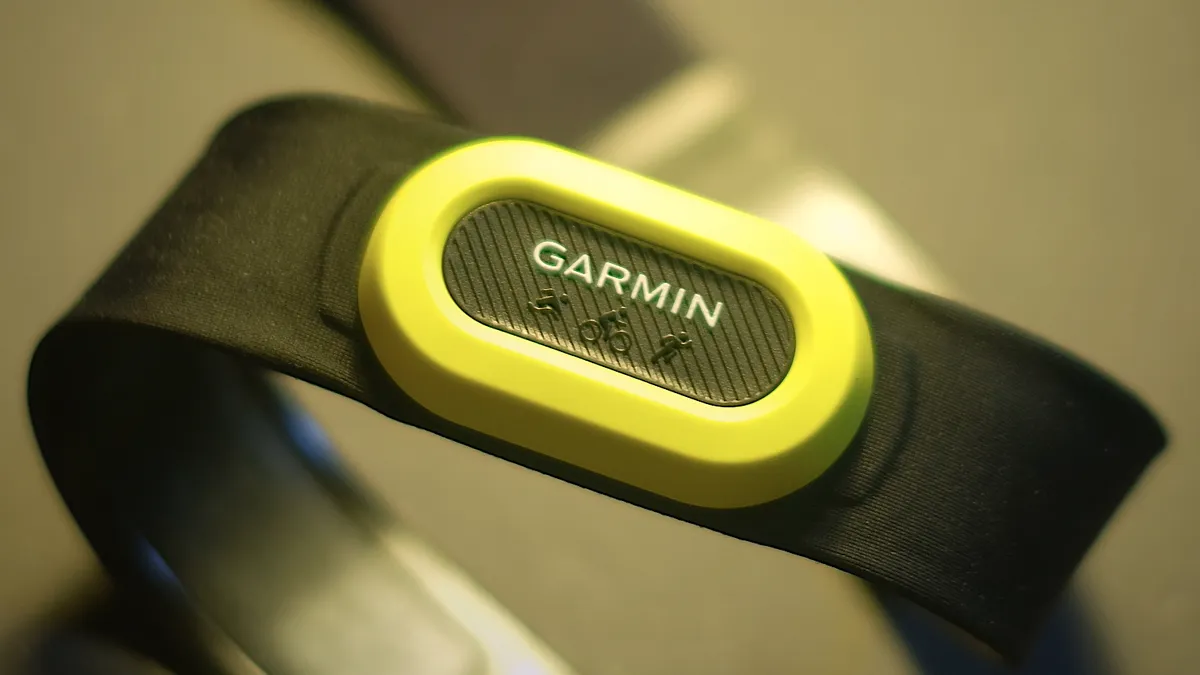
Chest straps are the gold standard, and the Garmin HRM-Pro is our number-one choice for the best heart rate monitor. Its reports are accurate and responsive, and in our tests, we particularly appreciated its compatibility with a huge range of devices and apps.
This is a true multi-sport device that's suitable for land and water. While many modern sports watches can record heart rate while swimming, their accuracy varies greatly, and a chest strap is easily the more reliable option. Wireless signals transmit poorly in water, but the HRM-Pro can store up to 18 hours of data before syncing.
The HRM-Pro also offers running dynamics info, including details of vertical oscillation, stride length, and contact time, which are challenging or impossible to measure with a device on your wrist.
It's one of the most expensive monitors in this roundup, but not by much, and is a worthwhile investment if you're serious about intensity training.
Read our full Garmin HRM-Pro review
The best budget chest strap monitor

The Wahoo Trackr heart rate monitor chest strap is a professional-grade heart rate tracker. Having worked with Team GB athletes, the Wahoo team certainly knows what they're doing.
If you value accurate and clear heart rate data, then the Wahoo Trackr is one of the best. Compared to smartwatches, physical chest trackers provide much more accurate data that can be relied upon for improving performance.
You won't find SpO2 tracking abilities which puts it a little bit behind what you'll often find in many smartwatches now. It also only has an IPX7 rating so if swimming is your thing then you'll need to look elsewhere.
Despite these limitations, the Wahoo Trackr does a few simple things incredibly well. It's comfortably, unbelievably accurate, and delivers a wide-ranging set of metrics through the Wahoo app.
Read our full Wahoo Trackr review here
The best premium Polar heart rate monitor

The Polar H10 heart rate sensor is the best Polar sensor when it comes to accurate results. With up-to-date tracking improved over the H9, the Polar H10 is a beast of a tracker with an impressive battery life. You can assess your general fitness level with stats like VO2 max, and it's got an in-built accelerometer like all the best heart rate monitors.
It's not quite perfect - the app is a little clumsy to use - and it's a bit more expensive than the H9, which can be picked up for a song. But if you're after reliability, it's more accurate than a smartwatch, and whether you choose the HRM Pro over this all boils down to whether you find Polar easier to integrate with than Garmin Connect, as that's how you'll get the lion's share of your stats, and whether you need an ANT+ connection. But it can store up to 30 hours of workout data, which the H9 doesn't.
Read our full Polar H10 review here
The best if you dont like chest straps

In the same way that Garmin made its name in GPS technology, Polar has a long heritage in biometrics, and that really shines through in the accuracy of data from the Polar Verity Sense.
It can be worn on your arm or attached to your swimming goggles, making it a good choice for anyone who doesn't get on with a chest strap. It uses an optical sensor like those on a sports watch, but the positioning means there are fewer artifacts from movements like gripping.
The Polar Verity Sense can be a little awkward to wear with long sleeves, but in our tests, we were impressed by its ability to transfer data to multiple devices, 20-hour battery life
Read our full Polar Verity Sense review
The best for delivering the best of both worlds

The MyZone MZ-Switch gives you the best of both worlds: an ECG sensor so it can be worn on your chest and an optical sensor so it can sit on your wrist, arm, or a pair of swimming goggles. It automatically detects where you're wearing it, so there's no need to worry about switching modes, and although it would be nice to have a choice of different armband sizes, it's comfortable to wear for any type of workout.
That includes swimming; the MZ-Switch is water resistant to 10 meters and stores up to 36 hours of data, so as with the Garmin HRM-Pro, there's no need to worry about syncing when you're in the pool.
When used in chest strap mode, its results compared well with those from the HRM-Pro, though the limitations of technology mean results from the optical sensor have a wider margin of error. Our main criticism is that the MyZone companion app is too busy and cumbersome for our liking, but the device also pairs with compatible third-party apps, so this shouldn't deter you.
Read our full MyZone MZ-Switch review
How we test the best heart rate monitors
The heart rate monitors on this list are tested by expert reviewers who take these wearables running, cycling, and swimming to put all the features to the test. Heart rate tracking accuracy is checked against each model’s predecessors as well as competing brands to determine which performs best in real-world conditions. Our testing is aimed at people who enjoy training and want to better understand how their body responds to exercise, and how to use that data to improve performance.
Heart rate monitors generally have fewer features on board than smartwatches (i.e. there is no display or smart features), so testers focus on the data captured, as presented in the heart rate monitors' companion apps. Another important aspect is connectivity, and how quickly the heart rate monitor picks up a connection with other wearables/fitness machines; this is also thoroughly tested. You can check out our how we test page for more information.
How to choose the best heart rate monitor for you
When buying a heart rate monitor, there are a few things to consider, the most important being whether you need a chest strap or an armband. The former group is better for accuracy, while the latter is considered more convenient to wear. Battery life is also crucial; the replaceable battery in chest straps usually lasts for a year, while armbands – that often have optical heart rate sensors – have a much shorter battery life (under 24 hours).
You should also consider the brand of the heart rate monitor, especially if you have a smartwatch already. Garmin chest straps pair well with Garmin watches, and the same goes for Polar/Wahoo wearables, so if you're after excellent connectivity, make sure both wearables are from the same brand.
Pro tip: if you want to use a heart rate monitor with an exercise bike/treadmill/turbo trainer, check the manufacturer's website to see which brand and model they recommend.
