


Keeping the lights on is usually not something we worry about too much, but now it's getting into winter, having a backup power source is never a bad option.
This Black Friday weekend, heading into Cyber Monday, we've rounded up the best options for delivering portable and solar-connectable power from the likes of Jackery and Bluetti - here's what we found.
My top Cyber Monday Power Station deals
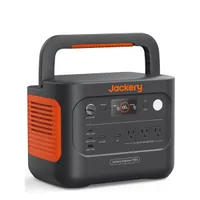
The cheapest UK battery on our list is the Jackery Explorer 1000 V2, and for the modest price, it’s a flexible power source. This is ideal for power tools that need up to 1500W, and the carry handle makes it easier to put in the car or a truck.
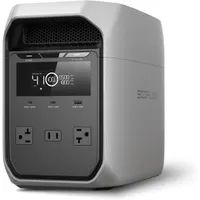
Even cheaper in the USA, the EcoFlow Delta 3 Classic offers the same 1024Wh capacity as the Jackery, but it's slightly more sophisticated in many respects, and it can output 1800W for bigger jobs. The Delta series is excellent, but this one can only take 500W of solar input, which might not be perfect if you intend to use it while camping. But on a sunny day, that might still take about 90 minutes for the battery to fully charge.
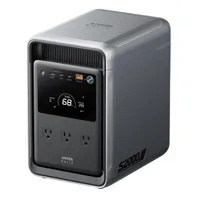
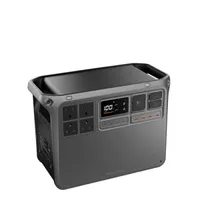
If you want more capacity, the options are the Anker Solix S2000 or the DJI Power 2000 Portable Power Station. The S2000 is a fantastic offer for the capacity, but it only outputs a maximum of 1500W, and only one of the USB-C ports outputs 100W.
The DJI Power 2000 can output 3000W continuously, although it costs a good bit more.
I’d say the S2000 is the simple, no-fuss option, whereas the Power 2000 has more to offer but is also more complicated. Solar charging on the DJI isn’t its strongest feature, and it uses an annoying MPPT solar adapter box.
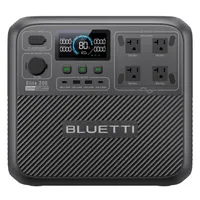
If you need even more capacity, consider the Bluetti Elite 300 or 400, depending on how much more battery you want. These products may seem similar, but they differ in several important ways.
The Elite 300, as the name implies, has 3kWh of capacity and 2400W of output, and it's all in a neat, luggable package that weighs a whopping 26.3 kg (about 57.98 lbs). That’s plenty to carry, so don’t expect to go far carrying it. However, compared to the Elite 400, it's easy to carry.
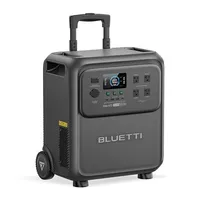
Thankfully Bluetti gave the Elite 400 wheels and a handle, because otherwise the 39 kg (approximately 86 lbs) would be impractical for anyone but an Olympic weightlifter.
With that extra weight, you get 3840Wh of capacity and 2600W of continuous output, and it is probably worth the additional cost because of those numbers.
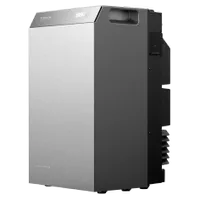
Finally, we get the largest capacity and specifications with the EcoFlow STREAM 5000, a battery not intended for travel but designed to provide power support in a home or small business. With 5 kWh of capacity that can grow to 90 kWh, a maximum AC output of 3000 W, and the ability to handle 5000W of solar input, this unit is untouchable by any of the other devices listed here. Rated for 10,000 cycles and 15 years of operation, this is an investment that should pay for itself many times over.
It's heavy, needs an electrician to properly attach to the house's electrics, and is the most expensive battery here. But it’s worth every penny, and with the deal, it's £100 cheaper.
Black Friday Power Station deals - buying advice
What power stations should I choose during Black Friday and Cyber Monday?
That comes down to two things: how much battery do you want, and do you intend to move it around?
Batteries, in the amounts needed to run mains-powered equipment, aren’t light, and the realistic maximum size of mobile devices is 4kWh. In fact, unless you have help, much above 3kWh is a challenge. If you want mobility, go with 2 Wh batteries, though some brands let you connect multiple units for longer run time.
If you don’t intend to make the power portable, and instead want a home device, then you can buy heavier solutions as they’re not likely to be moved. With static installations, expansion is an important consideration, since a home can’t run for long on even 5kWh.
A typical UK home uses around 10-15 kWh per day, although most batteries can’t output enough to run multiple heavy-use items (oven, kettle, washing machine, etc.) at the same time.
The other aspect of these devices you need to consider is using them with solar panels, as these require inputs and most batteries that have them limit the wattage and amperage they can handle from DC solar sources. Many Power Station makers offer panels specifically for use with their batteries, and a few even use proprietary connectors.
Before you spend anything, think about how you intend to use this hardware, and if it's up to the job. A smaller 1024 Wh battery might be fine for overnight camping and charge reasonably quickly from portable solar panels, but it won’t power a large TV for more than about four hours.
What features should I check when selecting the right Power Station deal?
The feature you should think about most, other than battery capacity, is the output limit in watts. As a general rule, larger batteries can output more, which enables them to cope with more demanding devices.
As an example, I use one of mine with the Bambu H2D 3D printer, and it can use plenty when it's first powered up and heating the bed and nozzles. But once it's printing, it uses much less. Therefore, the battery must handle both the peak power demand and the sustained demand. This is especially important if you intend to use the Power Station for some remote DIY, as circular saws and planes have high initial demands that might overload smaller batteries, causing them to cut power to protect the equipment.
Check what the equipment makers say the normal and peak demands are, and compare that to the battery's specs before plugging anything in.
I’ve already mentioned the weight of these things, and if you are older or have a strength issue, don’t buy a battery you cannot move with the help of another person.
If you want to use solar panels, research what watts and amps the solar inputs accept, and get panels that work within those ranges. You can connect panels in series or parallel to charge faster, but this won’t work if the watts or amps are too high, and you could damage your equipment. A smaller battery might only take 400W, limiting it to a single panel of that size, but larger batteries might take much larger single inputs or an array of smaller panels.
The final consideration is what the battery technology is, ideally LiFePO4, and how many recharge cycles the equipment is rated for. Smaller batteries might only be rated for 4000 cycles, whereas larger batteries, like the EcoFlow STREAM 5000, are rated for 10,000 complete recharges before dropping to 70% of their original capacity.
If you use the battery every day, then being able to handle more cycles is clearly more important than one that gets occasional use.
