



 Become a TechRadar Insider


TechRadar Verdict
Palm weighs in with a capable smartphone at a decent price
Pros
- +
Touchscreen smartphone
Qwerty keyboard
Full suite of software
Cons
- -
No built-in Wi-Fi
Lacks 3G operation
Low resolution of camera
Why you can trust TechRadar We spend hours testing every product or service we review, so you can be sure you're buying the best. Find out more about how we test.
The latest Treo has a more-than-familiar feel about it, given that this model is once again is powered under the hood by the Palm OS rather than the Windows Mobile Operating System favoured by its direct predecssor, the 3G-equipped Treo 750v.
It is a good two years since the last Palm OS Treo handset arrived in the UK, and casual watchers could have been forgiven that we had seen the back of it on the Treo range. But the Treo 680 shows that reports of its demise have been exaggerated, and a recent licensing agreement for using and developing the Palm OS (signed in December 2006) means that there could be more to come.
As the Palm OS led the PDA revolution in the 90s (chalking up some 20 million sales), and the Treo was such a cult success in the early days of smartphones, it is a phone that we can't help but get excited about.

Fellow fans will be pleased that this is really an update of the popular Treo 650. It has taken the exterior styling of the more recent 750v with its internal patch aerial - making it much smaller proposition than before.
There are also white, red and orange versions being produced as alternatives to the more predictable grey business-suited standard issue. But the core offering is still much the same.
Features
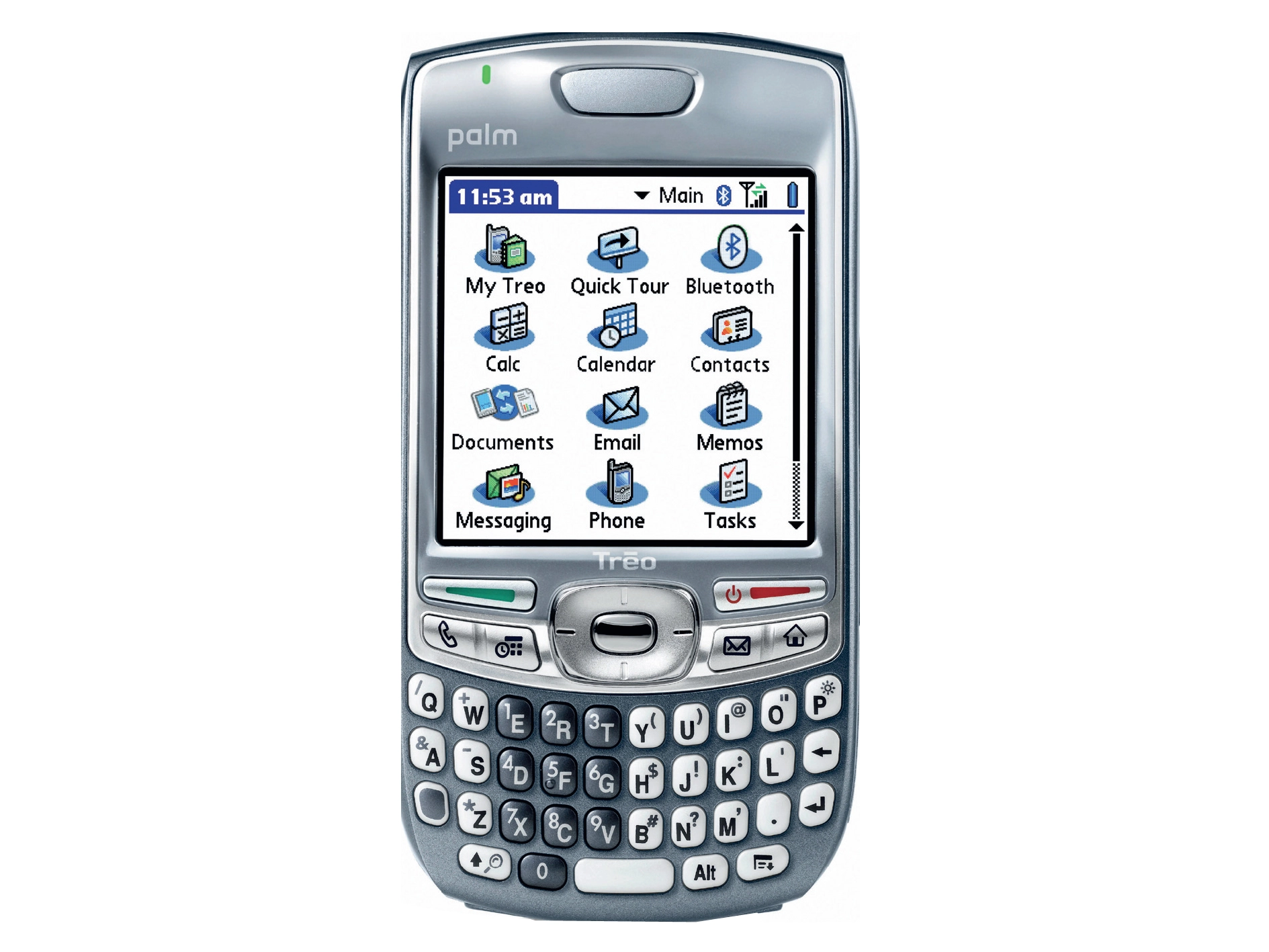
Up front on the device there's a giant 320x320-pixel 65k-colour TFT touch-sensitive screen, which can when used with the supplied stylus (or any other blunt object), which allows you to access a wide range of options at speed.
But in addition to this there is also a reasonably sized Qwerty typewriter-style keyboard laid out underneath the display for pumping out messages or tapping in other notes or data. In addition to the letters, a regular phone numberpad is craftily inserted within the Qwerty layout, so that numbers prove to be as easy to enter as text.
The keyboard is not quite up to touch typing but using fingers and thumbs you can write your messages and emails much quicker than you can on most phones you can buy.
What's more, handwriting recognition can be added using a low-cost third-party application. Because of the keyboard, and its requirements for accommodating such a useful display, the phone is not particularly lightweight, weighing in at some 157 grams.
The Palm operating system and the user interface are, nonetheless, still a joy to use. The menu, home and joypad keys mean that it is easy to access options without the need to get the stylus out of its sheath. And you can even navigate web pages easily enough without needing to use the touchscreen option. To get the best out of the phone, and to navigate swiftly, you are recommended to use the two approaches in unison.
The onboard 312MHz Intel processor seems to be well up to the task of handling the device's many applications, despite having the same specification as the old Treo 650.
Web surfing using Palm's own updated Blazer browser is still a key attraction of the Treo. However, the lack of Wi-fiand 3G connectivity mean that it may not be the fastest option for the UK user. Pages download at a reasonable lick over GPRS using its improved caching algorithm - and there is support for EDGE - but it can not compete with the connection speeds we have got used on other recent smartphones.
However, the Treo 680 does come with a good onboard package of other software. There is a proficient email program, as you would expect. On top of this there is DataViz' s Documents to Go software, a Palm alternative to Office, which allows you to open and edit spreadsheet and word processing files, and save them in a Word or Excel compatible format. You can also open and view Powerpoint slideshows.
Some of the more useful free applications provided with this device are supplied on a disk in the box, rather than in the phone (so if you don't look for these you might miss them). Useful applications that you will find here include an almost-essential file management utility, an electronic book reader, and a voice dialling facility.
Synchronicity
One of the strong selling points of the Treo, and this is no exception, is the ease with which it can synchronise with computers. Unlike most other smartphones currently on the market, it does this not only with Windows PCs, but also with Apple Macs.
A USB lead is supplied by Palm for this, and files and applications can be dropped onto a desktop icon for transferring to the phone at the next Hot-Sync session. This also proves to be the best way of transferring across MP3 music tracks to the handset.
The phone comes with 64MB of user memory onboard, but there is also a full-sized MMC or SD I/O memory card slot on the side, if you want to expand the device's storage capacity - which you may well do if you want to make the most of the Treo's onboard MP3 music player.
Music plays decently enough through the device's speakerphone, but surprisingly (and annoyingly) Palm only supplies a mono headset in the box. However, as the unit has a standard mini-jack socket built in, it is easy enough to find (or even buy) a set of headphones that provide the music player with a proper stereo performance.
A major disappointment, however, is the integrated camera. This is a basic VGA affair (like the Treo 650's), offering a resolution of under a third of a million pixels. This is poor when compared to multi-megapixel rivals that offer ten times that resolution, particularly as only the most basic mobiles in the UK market now make do with VGA shooters.
And not surprisingly with such a low-grade specification you do not get autofocus or macro shooting facilities either. Given the limitations, the control and image quality are reasonable.
In comparison, the camcorder feature is much more state of the art, offering a movie-shooting resolution of 352x288-pixels, which is actually better than many other mobiles.
Performance
This isn't a smartphone to set pulses racing, or to send other manufacturers racing back to their drawing boards. It's quite a way from having a full spread of state of the art features and functionality, giving it a rather underspecified feel when lined up against many recent smartphone newcomers.
The core offering is good enough to appeal to business users, however, who may be looking for a less demanding workhorse Palm-based PDA phone. The excellent library of Palm software available makes the Treo an attractive budget smartphone offering, despite its obvious shortcomings.
Sensibly, Palm has priced its latest model at the lower end of the full-feature smartphone market. Yes, it does not have a photographic-quality camera, or Wi-Fi, or 3G - but it can be yours without contract or commitment for around £280. Chris George