Updated 13 hours ago

12814 products + 13864 members

How to run a one-person web design agency

How to pitch, design and deliver - on time and on budget

October 11th | Tell us what you think [ 4 comments ]

tim-van-damme

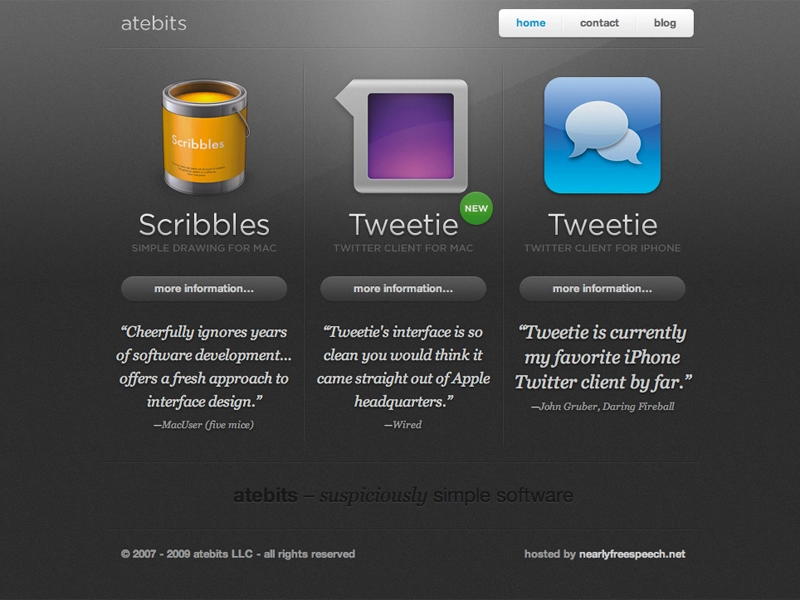
Tim Van Damme's inspiring work for Atebits, the creators of Tweetie and Scribbles

<>

We're lucky enough to work in an industry where resources are seemingly endless. Books, magazines and online articles are readily available to offer hints, tips and advice about working with the web and all that comes with it.

There's no shortage of knowledge to be found on the subjects of design, development, project management and freelancing. However, I've always had a problem with many of these resources.

It's not that they're wrong, just that they're so often aimed at studios that much of the 'best practice' advice is irrelevant to independent designers, whose clients' budgets rarely stretch to include time for thorough research, a variety of design options and usability testing for the completed site.

Even my own book (Sexy Web Design, published earlier this year by SitePoint) talks about web design projects in an ideal world. The harsh reality is that us freelancers often have to cut corners. This is not out of choice, but because projects usually have a smaller scope than those taken on by large agencies.

It's not just the unknowns that struggle: many 'big name' designers face the same problems, simply because projects created by one person take on a different shape than those created by a team.

So let's look at how a one-man-band achieves a great working life. "Knowing yourself, working hard, playing even harder and being able to quickly switch between different tasks is a start," says Tim Van Damme.

Making introductions

"The best way to get good work is to produce good work. The better work you create, the more people will want to work with you," says Ian Coyle. Whether you have to pitch for clients, actively seek them out or find that they come to you, the initial communication with your new or potential client should always have the aims of impressing them and making them feel excited about working with you.

Ian coyle

IAN COYLE: Ian Coyle's recent site for Luigi Bormioli mixes classic chic with JavaScript goodness

For Sam Brown, it's about personal branding. "The perfect client is someone who wants to work with me because they've heard about me, perhaps via word of mouth or a link on a site design they loved," he says. "It's really not about being the number one link on Google for 'web designer'."

When working with a solo designer, there's an extra element that clients are looking for: your personality. Unlike an agency, everything that happens with a one-man business is going to go through you. This has a major advantage for the client: they get a more 'hands on' approach and a direct relationship with the person doing the nitty-gritty work, but this also means that you need to get along and communicate well.

So, while it's important to assure your client that you're a consummate professional, it's equally important to be friendly and open. Show them that you're happy to chat, happy to discuss different directions and generally pleased to be working on their project. "Good communication really is the key to a successful project," enthuses Sam Brown.

Sam brown

SAM BROWN: Sam Brown is a forward-thinking designer who runs the one-man studio Massive Blue


Your comments (4) Click to add a new comment

discountwebdesign


October 14th

4. Thats really interesting article. Its amazing in terms of resources we have in the web design field. And lots of free stuffs also available for those who cant afford.

Alert a moderator

gecko


October 13th

3. "All that malarkey" happens to be an important part of the ease of navigation on a website. A well designed color/theme for a site will "pull in the punters" better than a site lacking in that department, no matter how good the navigation is.

Alert a moderator

chapolito


October 12th

2. pete highlights something interesting here - how often business owners don't understand the correlation between the visual design and the effectiveness of an interface. the relationship between what color the buttons are and the ease of navigation are big.

Additionally To think that a business has no interest in creating a welcoming and comfortable environment for users is dangerous.

I suppose part of our jobs is to assure them that we understand their goals and that if they are serious about achieving them then it might be wise to trust us a bit and listen.

Alert a moderator

pete_l


October 12th

1. This all sounds very luvvy: designs, themes and all that stuff. If I wanted a commercial website created for my business the only things I'd be interested in would be the ease of navigating to the areas which interest visitors and getting them to the site in the first place. That's 99% of the problem - pulling in the punters. Not what colour the buttons are.

Design philosophy and all that malarkey is way down the list, a long way past the cost of the design or the time it takes to produce.

And don't forget that making the website accessible is far more important than "colour and texture" - especially when the Disabilities Discrimination Act is taken into account.

Alert a moderator

Tell us what you think

You need to Log in or register to post comments

By submitting this form you agree to our Terms of Use and so are legally responsible for anything you submit. DO NOT submit anything which may violate the Terms of Use or another person's rights including copyrighted or offensive materials.