





If you think there are more robot vacuum cleaners flooding the market than any other kind of floor cleaner, you're right. In the last 12 months, we've seen several new autonomous bots released than cordless vacuums, while uprights and barrels are even fewer and far between. And that's alright.
With time-strapped folk looking to ease their chores, opting for one of the best robot vacuums in Australia or one of the best stick vacuums is a good choice. However, with such a significant number to choose from, how do you decide which is the best vacuum cleaner for your household?
I've been testing vacuums of all kinds for nearly a decade, which has helped me figure out what exactly to look for when choosing the best vacuum cleaner for different needs. A lot depends on what floor type you have and whether you need to clean up after pets. Your budget and storage space also go into the equation.
I've used that knowledge to list the best vacuums in Australia — one from each of the most popular categories (except the old barrel type) — to help you choose the right one for your home. Rest assured, every single one of them has been tested by either myself or one of my colleagues, and they've all scored well in our reviews.
We don't usually give a full five-star score to any product unless it's really deserving, balancing price and performance well. With that in mind, there is now a new entry at top spot on this page — and it's an unexpected one.
With excellent suction and cleaning performance, at a price that's easy to recommend even at RRP, the Samsung Jet 95S takes the #1 spot away from Shark for the first time... well, ever. While its 280AW of power is excellent for most households, there are more powerful options with self-emptying perks, if you're willing to pay more. And that puts the premium Dreame Z50 Station (#2) as an excellent alternative.
I've also listed a robot vacuum and a floor washer to provide a variety of models, each one best suited to a different use case. If none of them are quite what you're after, please scroll further down the page to take a look at a few alternatives I would recommend as runner-ups to the main picks.
August 2026: I've recently completed a review of a Samsung cordless vacuum cleaner which, surprise surprise, got a rare 5-star score. That means Shark has been dethroned and we have a new best vacuum cleaner taking out the top spot.

Sharmishta has spent the last eight years testing vacuum cleaners of all shapes and sizes – Dyson, Shark, Ecovacs and other brands in between. She's fascinated by how far robot vacuums have come in the last few years, but is always on the lookout for a lightweight cordless vacuum that gets into the tight spaces of her flat.
The best vacuum cleaner for most people


I can't remember the last time I gave a vacuum cleaner of any kind full marks and yet the Samsung Jet 95S managed to impress me enough to get just that. It doesn't do so by offering a plethora of new features or industry-leading suction. It does so by offering exactly what most households need in a vacuum cleaner, including one very useful attachment, and at a price that's easy to recommend. Compared to some of the vacuums on this list, the Jet 95S seems like a no-frills option, but its suction is excellent and performance par excellence.

The 280AW of suction that the Samsung Jet 95S features may no longer be the most powerful — just take a look at the Dreame Z50 Station below (#2) — but that's more than enough for most households, even if it's a pet-friendly one and covered in wall-to-wall carpets.
Whether it was pulling up entangled hair from deep within carpet fibres or sucking up different dirt sizes, the Jet 95S cleaned up everything I could throw at it, although it was all dry debris — there's no mop attachment here.
The Jet Dual Brush+ and the Slim LED Brush have no loss of suction when moving forward or back, and I found it typically needs just the one movement to clear up a full strip of dirt at its default suction setting (Mid, which is the second mode). If you've got stubborn dirt somewhere, bumping it up to Max or even Jet will definitely ensure the perfect clean.

While it might weigh less than some of the other cordless vacuums listed below, the removable battery pack does make the Jet 95S top heavy but, at just 2.69kg with the biggest floorhead, it's still lighter. That makes it better to use handheld, although it can become uncomfortable if you're holding it up to reach ceiling corners, for example.
Moreover, the main floorhead, the Jet Dual Brush+ which can be used on both hard floors and carpet, isn't the easiest to move around, requiring a little extra energy. However, the Slim LED is very easy to manoeuvre, so if you had only hard floors, you'll have no trouble moving the Jet 95S around.
Making it even more comfortable to use when cleaning at odd angles is the Flex Tool, that bends so you can use various attachments to get to hard-to-reach spots.

The Samsung Jet 95S doesn't have a lot to make it stand out. In fact, unlike Samsung's Bespoke range, there's no SmartThings connectivity here, but you also don't really need it. The only unique feature here is something called Smart Motion that triggers the vacuum to power down if you just put it down somewhere — say against a chair or a couch while you move an obstacle or go answer the front door. It will power on again automatically if you move it within a minute of setting it down, thus conserving a little battery life.
As good as this feature sounds, I personally thought it was superfluous because the power button (along with the suctions settings) are well within reach of the thumb of the hand you'll hold the vacuum with and you'd intuitively just switch it off.
It makes up for all the lack of other features like self-emptying by offering a flexible attachment (the aforementioned Flex Tool) that helps you get to all kinds of nooks and crannies, high or low.
Read more: Samsung Jet 95S review
The best premium vacuum cleaner


A relatively new release in Australia, the Dreame Z50 Station is currently only available directly from the brand's own site. With an industry-leading 330AW of suction and a floorhead that's quite unique, this is probably one of the best stick vacuums I've tested personally. I only wish it was available more widely and that Dreame decides to offer the battery kit to take full advantage of its accessory cradle that allows you to charge a spar pack while you use the machine, effectively doubling the Z50's runtime.
Dreame has put the whopping 330AW of suction to good use here, with all my tests showing it can clean well on carpets and hard floors alike. And with lights on floorheads becoming commonplace, it's nice to see the brand has done something similar to Dyson's Detect technology to illuminate tiny dust particles that are easy to miss on hard floors, although Dreame's CelesTect beam misses out being as effective as Dyson's by a smidgeon.
Allowing the machine on Auto mode is the most effective way to get an excellent clean, as I found the dynamic suction worked wonderfully with plenty of ingrained dust and hair in carpets coming off easily, and it was a much better job on hard floors. No matter what I got it to clean (dry spills of course), it aced every test.
As with the Shark PowerClean above (#1) and the Dyson Gen5detect below (#4), the Z50 is a heavy vacuum, weighing about the same as its Dyson competition. However, I love the fact that its wand is telescopic, which means taller users should find it a lot more comfortable than either Shark or Dyson, although its top-heavy weight distribution can make the Dreame harder to manoeuvre, particularly on carpets.
The same top-heavy issue comes into play when using it as a handheld — when cleaning cobwebs from ceiling corners, I found it hard to hold it aloft for more than a minute or two in one hand, needing to support it with the other hand as well.
The Dreame Z50 Station's biggest drawcard is its sheer power, thanks to the 330AW of suction. Sure, Samsung beats it with its 400AW Bespoke AI Jet Ultra, but that's still plenty that ensures its keeps your floors clean and dust-free.
The CelesTect Lighting tech on the floorhead also helps, although Dyson's implementation of its Detect technology is ever so slightly better at revealing invisible particles on hard floors.
The floorhead is also, on paper, able to automatically detect a change in floor type and adjust its brush height accordingly, but that failed to happen in my tests. That said, it didn't affect the cleaning performance at all and I didn't miss the feature at all.
Its self-emptying freestanding charging dock is also a tempting addition that would be useful for many potential users, particularly for those with pets in larger homes. It also comes with five additional tools, four of which slot into an accessory cradle. The downside here is that you'll need extra floor space to store the cradle, while you'll need to figure out where to store the last tool that doesn't have a spot of its own.
Read more: Dreame Z50 Station review
The best lightweight vacuum cleaner


Despite getting a little long in the tooth, the Shark Cordless PowerDetect still deserves a spot on this page for offering what is arguably the best value on a per-dollar basis. Sure, it's not the most powerful vacuum on this page, but if you predominantly have hard floors (or low-pile carpets), it will suffice. Throw in a decently good runtime and a freestanding auto-empty charging dock that doesn't require replacement dust bags, and it definitely carves a place for itself.
All that for a regularly discounted price that comes in under AU$500... you do the maths.
I may not have written TechRadar's Shark Detect Pro cordless vacuum cleaner review, but I tested this machine for sister site Tom's Guide and was very impressed by how well it can clean. I should be up front about its suction power though — at just 125AW, it's better suited to hard floors or low-pile carpets.
Thanks to dynamic suction, it's able to automatically adjust suction when detecting a change in floor type or a particularly dirty area and, interestingly, it even boosts power when it detects a room edge — all very handy indeed.
One slight flaw with the floorhead design is that when it's being pulled backwards, it causes debris to pool up behind it, requiring careful manoeuvring so you're only tackling dirt when pushing the vacuum forwards. This is an issue that Shark specifically addressed with the PowerDetect model (#1).
If you do have mostly carpets at home, and you're sharing that space with a furry friend, I would recommend you look for something a little more powerful than this.
The Shark Cordless Detect Pro is one of the lightest vacuums I've tested, as is evident by its 2.68kg weight with the floorhead. And even though its battery is on the handle, the weight distribution is wonderful, making it comfortable to use in handheld mode or raise to clean ceiling corners — unlike the Samsung Jet 95S higher up on this page.
The floorhead also moves smoothly over different floor types, while headlights on the attachment help illuminate dark patches of floor while cleaning, although it's important to note that the lights don't reveal dust particles that are invisible to the naked eye.
The best feature of this Shark is its compact size. Not only is the stick vacuum lightweight, but its dock is a lot more compact than others and, despite housing an auto-empty bin (yes, it's an actual box and not a dust bag), it's perfect for smaller homes.
It's ability to automatically detect different floor types, dirt quantity and room edges also makes this an fantastic option for most people.
Read more: Shark Detect Pro Cordless review
The best Dyson vacuum cleaner


If you have cash to splash and the Dreame Z50 Station (#2) isn't tickling your fancy, I would wholeheartedly recommend the Dyson Gen5detect as an alternative. It may not have self-emptying, but it competes with the more-powerful Dreame in terms of performance.
It's meticulously engineered and boasts a range of innovative features, executed in a user-friendly way. It also delivers excellent, low-effort cleaning.
As you might expect, the Dyson Gen5detect is firmly in 'investment pricing' territory, especially at full price, although deals do crop up semi-regularly. If it's still out of your budget, you could also consider the V15 Detect – this is the model down, and has most of the same features but is slightly more affordable.
The Gen5detect has 280AW of power, putting it between the two Dreames on this page, and its performance reflects the same as well. It's pretty darn powerful, but it takes two passes to clean carpets that the Dreame Z50 would do in one.
Despite that, the Dyson soared through my tests in my review — in fact, it was the only stick vac to outperform the Shark PowerDetect (#1) in a group test conducted by a colleague of mine before the release of the Z50 Station. It had no trouble picking up chunky debris, fine particles or pet hair from a range of surfaces.
It suffered from being a little too sucky on deep-pile carpet — you might need to shift down to Eco mode so you can actually push it.
It's much more manoeuvrable than an upright, but in the context of stick vacuums the Gen5detect is rather heavy, much like the Dreame Z50 (#2). However, unlike the Z50, the Dyson doesn't have a telescopic tube, which means some taller users might find it uncomfortable in the lower back.
I also found it hard to use as a handheld unit on account of being top heavy, but that's not unique to the Dyson any more. The addition of a padded section above the handle does help with comfort. The button operation is good for long cleaning sessions but it's frustrating to have to use the free hand every time you want to switch it on or off as it's not quite within reach of the thumb.
The Dyson Gen5detect has an Auto mode that responds to how much dirt is on the floor, but more than that, it'll report back on the size and number of particles it's sucking up as it does so. This information is conveyed on a colourful, moving bar chart. If you want to get meticulous about cleaning then it's easy to use this to see when the bar for each particle size has shifted to acceptable levels.
You'll also get an extra, soft floorhead for delicate hard flooring, and it's equipped with a very bright laser that effectively lights up hidden dust. The interface is very well-designed, too — it'll spell out exactly how much cleaning time you have left in your current mode.
Read more: Dyson Gen5detect review
Best Shark


It may not be the most powerful tool in the shed, but it still manages to clean really well, tackling pet hair with ease and shipping with an auto-empty charging base that makes vacuuming less of a chore. In fact, one of my colleagues pitted the Shark PowerDetect against a few other top-tier vacuums to find it offers the best outright cleaning performance.
And the best part is it can be had for around the AU$700 regularly, which is excellent value for money for this machine offers. It is, however, on the heavier side compared to other Shark models, but so are a few others vacuum cleaners listed on this page.
Not only did it score well in our review, my colleague Ruth conducted a mega group test of top-rated stick vacuums and the PowerDetect, as already mentioned earlier, came out on top in every single test she could throw at the lot of them. According to her, it was "hands-down the best cordless vacuum" she'd tested.
She found that it was excellent at handling pet hair and powerful enough to pull fine particles from thick- and medium-pile carpet. Because of a clever flap on the floorhead, it'll clear chunky particles when pulled backwards over them, rather than causing them to snow-plough up. This is especially useful on hard flooring.
Here's the only negative there is — the Shark PowerDetect is a heavy vacuum to manoeuvre, although it's not alone here. For example, the Dreame Z50 and the Dyson Gen5detect listed below are also just as heavy.
To its credit, Shark has made a big effort to improve comfort by shaping the handle ergonomically and adding a rubberised grip and padding.
The Shark PowerDetect has an Auto mode that responds to dirt levels on the floor. It can also detect room edges and boost power on the relevant side of the floorhead to clear any dust or hair that might have built up there, and the wand can be released to bend forward for cleaning under furniture.
Perhaps the most useful feature for pet owners is the auto-empty dock, which pulls all the dirt from the onboard bin, so you won't need to deal with emptying very often. In better news, there's no recurring cost for disposable dust bags because all the dirt just empties into a 2L washable box inside the dock.
It would be remiss of me to not point some issues with the overall design that some users might not appreciate. For example, the vacuum switches on with a one-press button that's good for long sessions but annoying for quick cleanups, because the button isn't reachable from the handle. So not only will you need to use your other hand, it takes a second or so to kick into gear each time, rather than responding immediately. Another design element that's not intuitive for first-time users is how to manually switch modes, which uses a button where the trigger would usually sit.
Read more: Shark PowerDetect Cordless review
The best self-emptying vacuum cleaner


Like the Shark Cordless Detect Pro w/ Auto-empty System (#3), the Dreame Z20 Station a vacuum you shouldn't pay full price for. For the last few months, we've seen the RRP of AU$799 drop to a discounted price below AU$400 and, for a model with more suction than the Shark, plus self-emptying and better tools, that's arguably even better value for money.
The only reason it's not sitting in the best budget category is that the Shark is discounted a lot more often than the Dreame Z20 Station.
My colleague Max, who did our Dreame Z20 Station review, was so impressed by its cleaning performance that he said "it changed the way he cleaned his home". His partner added that "he was traumatised to see how much dirt" was on their wooden floors, revealed by Dreame's CelesTect Lighting technology that works similar to Dyson's Fluffy Optic tool to reveal particles normally invisible to the naked eye.
Its 250AW of suction performed well in real-world tests, with our reviewer impressed that it took just one forward motion for a rather nasty concoction of rice, coffee beans, flour and his own hair clippings to be fully cleaned up on hard floors. The same mixture took one forward and one backward motion on carpet, although a couple of instances he found it took two forward motions and one back for the entirety of the mess to be cleaned up. That's still very impressive.
Using the Dreame Z20 stick vacuum was my colleague's biggest complaint — it's relatively heavy at 3.3kg and while the floorhead is easy to move around, the wand is shorter when compared to other brands and isn't telescopic like the Dreame Z50 (#2). So taller people might feel lower back pain when using this machine for prolonged periods.
Like many other heavy stick vacuums, the Z20 also carries most of its weight on the top, close to the handle, which induces fatigue in the wrist and arm, and makes it harder to use as a handheld.
The Dreame Z20 Station might be the Z50's cheaper sibling, but it doesn't compromise on much. It has the same sharp and clear LCD display that makes best use of the real estate to provide a lot of useful information, while having a self-empty dock means vacuuming is as hands-off as possible without buying a robot vacuum.
Unlike Dyson, where you get two different floorheads of carpets and hard floors in the more premium options, the single Omni Brush floorhead does the work for you, with a switch to change the bristle positioning to minimise fibre damage when used on high-pile carpets.
For its price, the suction power here should also be a feature to call out.
Read more: Dreame Z20 Station review
The best upright vacuum cleaner


A vacuum cleaner with a power cord might be a rare thing these days, but if you want to maximise power, this is the kind of cleaner you need. My top pick in this category is the Shark Stratos Upright. While you'll sacrifice manoeuvrability and the freedom you'd get with a cordless stick vac, the pay-off is more suction, a larger dust cup, and never having to pause to recharge.
Pricing for this vacuum can vary as Shark loves a deal, but in general it's pretty affordable. Corded uprights are often cheaper than cordless vacuums, and tend to have a longer lifespan too, so it might be a better investment in the long run.
On test, the Shark Stratos Upright delivered incredible cleaning, handling pet hair with ease, and pulling an "embarrassing amount" of dust from a deep-pile rug that our reviewer had cleaned with a different vacuum three days prior. It also comes with detail tools that work very effectively, including an excellent mini motorised tool. I'd recommend this model to households with heavy foot traffic, lots of carpet, and/or multiple shedding pets.
When compared to a cordless stick vacuum, the Shark Stratos Upright is far harder to move around. It's bulkier and heavier — it weighs upwards of 6 kilos after all — and it has a cord that you'll need to work around when cleaning.
However, in the context of uprights, it's impressively usable. The bin/motor section can be lifted out and held in your hand, while you use the floorhead or a detail tool on the end of a wand attached to a flexible hose. With this setup, you might find it easy to vacuum stairs, furniture and underneath low-slung cabinets.
This is one of the most basic options in my ranking. A slider switch lets you move between three modes: Hard floor, Carpet/low pile, and Thick carpet/area rug. There's no Auto mode, and while the floorhead has lights, they're not especially bright. Shark has added an anti-odour puck to keep your floors smelling fresh, which might be useful in homes with pets.
Read more: Shark Stratos Pet Pro Upright Vacuum review
The best robot vacuum cleaner


Robot vacuums are perfect for regular, hands-off, light cleaning — the idea being that you run them regularly, while you're out, so the dust doesn't have a chance to build up. I've tested a fair few and my favourite might be the Dreame Aqua10 Ultra, but I'd recommend the Ecovacs Deebot X8 Pro Omni wholeheartedly as it's often discounted significantly, offering good value.
In my review, it performed reliably and well too, just don't expect it — or any other robot vacuum — to completely replace your stick vacuum.
A robot vacuum generally can't deliver the same level of cleaning as a manual vacuum, but this Deebot packs a serious punch for a bot. Plus, it can mop your floors, then clean itself too... although on the down-side, it's no good for stairs or furniture.
The Deebot X8 Pro Omni sailed through my tests when I reviewed it, although I would recommend a robovac, no matter how powerful, for homes that mostly have hard floors. It did manage to clean my mid-pile carpets well, although it often required the maximum suction setting and several passes to remove most of the entangled hair strands.
It's the robovac that convinced me that a roller mop is much better than the two rotating pads, offering excellent mopping. It can tackle some dried-in spills, but if it's really caked up, you'll need to loosen the stain with water or a knife for a mop-up to be effective.
In terms of 'comfort', you can't get more low-effort than a robot doing the work for you. The X8 Pro Omni won't just clean, but it'll also take care of a variety of maintenance tasks, including auto-emptying its onboard bin into a dust bag in its dock, refilling the onboard water tank, dispensing detergent, and cleaning and drying its mop pads. You can set it to run while you're asleep or out, for minimal disruption.
The only thing you need to do is empty the dirty water tank in the dock and refill the clean as necessary. Less frequently you'll need to clean the wash tray to avoid bad odours building up.
The Deebot X8 Pro Omni has some amazing features, although they're not unique to it at this price point — from a voice assistant that can be handy for some easy commands to Matter support to futureproof a smart home setup.
It's best feature is its reliable navigation and obstacle avoidance that I found quite impressive. Its outward-extending mop also ensures some of the best edge mopping I've seen in a robovac that's often discounted to under AU$1,400.
Read more: Ecovacs Deebot X8 Pro Omni review
The best wet-dry vacuum mop


Now, if you have even a single room with wall-to-wall carpets, or you have a lot of rugs you need to vacuum regularly, a floor washer like the Roborock F25 Ace is not for you. Wet-and-dry vacuum mops are purely for hard floors as they vacuum and mop at the same time, and the two functions can't be separated. To put it another way, this type machine is primarily a mop that also happens to suck up dust and debris too.
One way to tell if your floor washer is doing what it promises on the tin is to see how dirty the water is after it's done its work. And even though our reviewer thought his floors were clean, the colour of the water after each run proved him wrong — meaning the Roborock F25 Ace did a fantastic job each time.
To test it further, our reviewer spilt rice and coffee beans on wooden floors to find the F25 Ace had no issues sucking up the dry spill. Mopping left no puddles or streaks on his floor, thanks to a large roller rotating at a speed of 450rpm and getting cleaned by scrapers with each turn. Importantly, the design of the floorhead ensures the roller is fitted right to the end, so room edges also get a thorough clean.
Wet-dry vacuum mops are usually quite heavy, but our reviewer found moving the F25 Ace around was quite easy despite the 6.2kg weight. That's thanks to what Roborock calls SlideTech 2.0 Automated wheels on the floorhead that make changing directions very easy indeed.
Furthermore, with the clean-water tank positioned on the base of the machine, which lowers the machine's centre of gravity to ensure the roller mop is always in contact with the floor. And with the dirty-water tank positioned on the front, the F25 Ace can lie fully flat so you can clean under low-lying furniture easily.
I've already mentioned the design elements that make the Roborock F25 Ace stand out — allowing it to lie flat on the ground and still have the roller mop in full contact with the floor at all times.
Alongside this useful feature is a self-cleaning cycle that washes and dries the roller mop with hot water and warm air, much like a robot vacuum does these days. You will, however, need to clean out the dirty-water tank yourself after each cleaning session as it fills up quickly.
Read more: Roborock F25 Ace review
Alternatives to consider
If none of the vacuums listed above look quite right for you, here are some other models worth considering. These models all scored highly in our tests, but just didn't quite make our main guide.

The V8 Cyclone comes with better performance than its predecessor, at about the same price. In our tests, we found that it does a better job than the more powerful and more expensive V11, making this a fantastic Dyson to consider.
Read our full Dyson V8 Cyclone review

No other stick vac has this machine's whopping 400AW of suction power, but it comes at a cost. If you have cash to splash, Samsung's Clean Station is arguably the best self-emptying charging dock I've ever used.
Read our full Samsung Bespoke AI Jet Ultra review

It's better than the Ecovacs Deebot X8 Pro Omni, with more power and reliability in performance. However, it missed put on being in the main list due to its price as I'm yet to see it drop below the AU$2,000 mark.
Read our full Dreame Aqua10 Ultra review

If you aren't enthused by the idea of a corded upright vacuum, why not go traditional? This model is compact to store away in tight spaces and you'll never have to worry about battery life. Just note that its power cable isn't very long.
Read our Miele Boost CX1 review

This floor washer can detect particularly dirty areas and increase its power automatically, which makes it the better option than the Roborock. The only reason it missed out on being in the main list is that it can't lie flat.
Read our full Tineco Floor One S7 Pro review

Often discounted to AU$199 on Amazon, this Dreame is an excellent affordable option for smaller homes. In fact, our reviewer found that it can even tackle pet hair effectively, making this one of the best-value options out there.
Read our in-depth Dreame U20 review
What kind of vacuum do I need?
I need something for... |
Buy a... |
Because... |
|---|---|---|
Carpeted floors |
Corded upright or good cordless stick vacuum |
You need a decent amount of power to effectively clean carpet |
Hard floors |
Cordless stick vacuum, hybrid robovac or wet-and dry vacuum |
You don't need that much outright power to clean hard floor, and if could be helpful to be able to mop as well as vacuuming |
Pet hair |
Corded upright or good cordless stick vacuum |
Pet hair requires a good amount of suction, but consider also dustbin size if you don't want to be constantly emptying |
Awkward spaces |
Cordless stick vacuum or handheld vacuum |
You want maximum maneuverability |
⭣ Read more
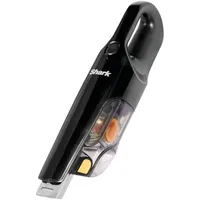
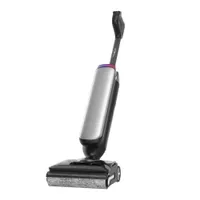
There are a number of different types of vacuums on the market, to suit different needs. Here's a super-quick rundown of the main benefits and drawbacks of each type:
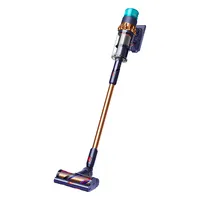
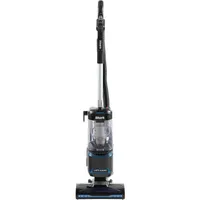
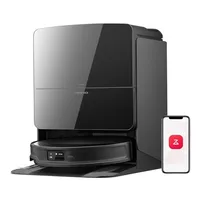
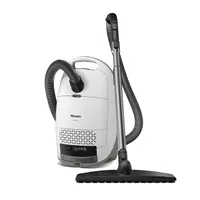
Frequently asked questions
Is Shark better than Dyson?
Shark and Dyson are two of the biggest names in the floorcare market, and if you're on the hunt for the best vacuum for you, these brands will almost certainly crop up in your research. But which is best?
Dyson vacuums are high quality and meticulously engineered, and the newer models feature some seriously flashy special features (real-time dust reports, anyone?). They're also typically very expensive, although Dyson has started offering more affordable options recently.
Shark’s vacuum cleaners tend to be more affordable than Dyson’s offerings. This brand's special features tend to be a little less hi-tech, although that doesn't mean they're not useful. A wand that can be released to bend forwards for cleaning under furniture is a favourite.
Shark releases new vacuums far more frequently than Dyson, and it can be tricky to figure out how the different models compare (I've even seen multiple models with the same name before). Head to our Shark vs Dyson article for a more in-depth look at these two floor-cleaning titans.
Keep in mind, however, that Dreame is a strong contender in the vacuum space now as well, as is evident from the list on this page.

How we tested these vacuum cleaners
✅ We've tested over 190 vacuums and robot vacuums
✅ We reviewed 43 new vacuums in total over 2025
✅ >9 years of vacuum testing experience
At TechRadar, we test dozens of vacuum cleaners each year. We cover a range of cleaner types – from cordless stick vacuums, to upright vacuums, to handheld vacs and robot vacuums – at a range of price points and from different brands. Each model included here has been put through its paces either by a member of the TechRadar Homes team or by one of our trusted freelance reviewers.
Our reviews are underpinned by a set of specific, standardized tests. Here's a quick rundown of our vacuum cleaner review process.
Suction tests
These are designed to test how well the vacuum can suck up different kinds of debris on different floors. For fine debris, we sprinkle a teabag's worth of loose, dry tea on a carpet or carpet-like rug, and see how many passes are needed to clear it. We'll start on the vacuum's lowest setting, then increase until there's no mess left.
To see how the vacuum handles chunkier debris, we run the same test using a handful of oats. We'll then repeat both tests on hard floor.
The final suction test is to see how well the vacuum handles hair – both human and pet. We'll see how effectively the main floorhead can pull hair from both carpet and hard flooring, and test any hair-specific detail tools on furniture too. We'll also check to see if it ends up tangled around the roller or is effectively diverted into the dust cup.
Battery tests
If the vacuum is cordless, we'll record how long it lasts on a single charge, on each available suction setting, plus how long it takes to recharge. For corded vacuums, we note how long the cable is and if it's generous enough not to be too much of a hindrance while cleaning.

General tests
To get a feel for how the vacuum performs in general use, we'll use it regularly over the course of a couple of weeks. We'll report back on how easy it is to maneuver, how usable it is, if there were any unexpected pain points in the design.
Read more on how we test vacuum cleaners.
