





TechRadar Verdict
Sony Ericsson's classy looking W715 packs in A-GPS location technology, Wi-Fi and a cracking Walkman player performance
Pros
- +
High quality Walkman music player
- +
A-GPS technology and Sat Nav software
- +
Wi-Fi
- +
HSPA high-speed 3G connectivity
- +
4GB Memory Stick Micro card memory supplied
- +
Good quality earphones supplied, with 3.5mm headphone adapter
- +
FM radio
- +
Stylish design
- +
High quality build
- +
Motion sensor automatic screen orientation for some functions
- +
Google Maps app pre-loaded
- +
Shake Control
- +
Video call support
Cons
- -
No smartphone functionality
- -
Camera performance average
- -
Video capture quality limited
- -
Motion sensor doesn't work with all functions
- -
No 3.5mm headphone adapter on bodywork
- -
Connector positioning on side
- -
Shake Control operation awkward
- -
Vodafone-only exclusive in the UK
Why you can trust TechRadar We spend hours testing every product or service we review, so you can be sure you're buying the best. Find out more about how we test.
While we admired the design, ample mid-range features and delightful Walkman music player of the Sony Ericsson W705, the near-identical looking W715 adds an extra bit of must-have high-tech spec to zoom in on: A-GPS satellite location finding.
Available in the UK exclusively through Vodafone, the Sony Ericsson W715 can be thought of pretty much as a super-charged Sat Nav-packing version of the W705.
Its form sheet lists an enticing set of features for a non-smartphone device: Wi-Fi and HSPA 3G high-speed connectivity, the latest Walkman software (including Shake Control), with a 4GB Memory Stick Micro card packaged in-box, video calling, plus support for a variety of online services. A 3.2-megapixel camera with flash is also built in.

Design
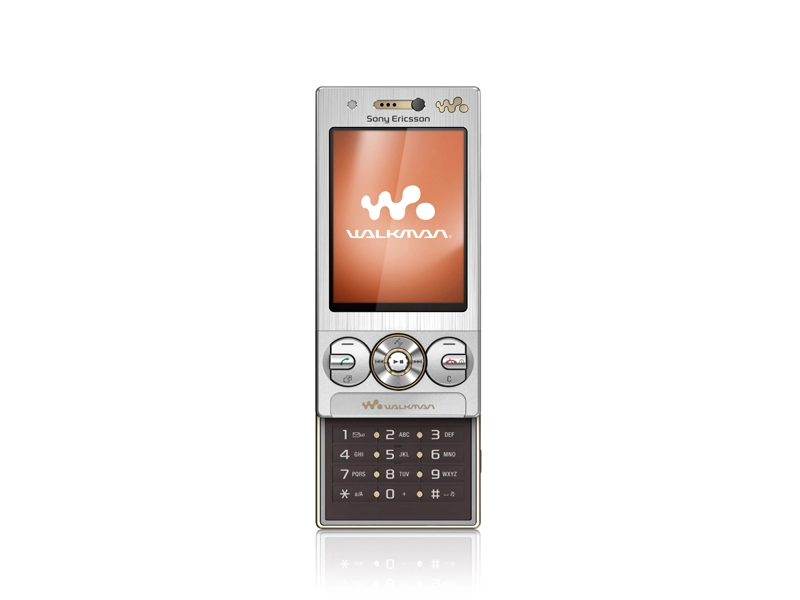
Features aside, the W715 is an elegantly attractive sliderphone. It has many of the stylish design hallmarks of the W880i candybar classic, including a brushed aluminium front panel with angular edges, a rubber-feel back panel, and fine finishing touches. The silver fascia with its low-key gold trim and well-contoured circular control pad arrangement is a sharp-looker as well as a joy to operate.
A large-ish 2.4-inch, QVGA 262k-colour display is a bright and clear platform for showing off its multimedia wares, while the slider mechanism is solidly built but smooth-running. The one-piece surface of the numberpad is subtly bumped and marked to help fingers work the spacious keys accurately. It also has a nice, springy action for responsive texting and number punching.
As far as Walkman buttons are concerned, the central navigation D-pad, which is the hub of the menu control system, takes care of music business too, with music controls marked on it. A satellite icon on the D-pad also provides hotkey access to the various location-based services.
Another Walkman control button sits inconspicuously on top of the phone. This very tiny key fires up the music player, and when tunes are playing can also be utilised for working the Walkman's Shake Control gadgetry. Press and hold while shaking in certain directions and you can switch tracks back and forward, increase and lower volume, or shuffle track playback.
The button's positioning makes it a touch awkward to hold and shake, though it does work adequately. But, as you still need to press a button to use Shake Control, it's just as simple, and less fiddly, just to press the forward/rewind or volume buttons instead (unless you have the music player operating in the background, in which case you can save yourself one whole button press using shake operation).
The motion sensor accelerometer that underpins Shake Control is also used to auto-rotate screen orientation between portrait and landscape in certain media and browser functions, depending how the user is holding the phone.
Handling
Measuring 95(h) x 48(w) x 14.3(d) mm and weighing a reasonable 98g, it's a pocket-friendly size and feels good in-hand. The menu system is mostly typical mid-range Sony Ericsson, with the navigation pad being used to negotiate most elements of the grid-based main menu, sub menu lists and tabbed sets of options.
The controls are fairly conventional, with shortcuts onthe D–pad, softkeys under the screen, plus a familiar Sony Ericsson Activity Menu button propelling you into a handy menu of useful functions, mobile internet browser and info options. Here you can switch on or off Wi-Fi, activate Bluetooth, kick off pre-loaded apps, or operate the browser with just a quick bit of scroll and select action. Easy.
In the Vodafone-optimised version of the handset, Sony Ericsson's usual set-up has been given a mild makeover. A link to the Vodafone live! portal are one of on the softkey options on the standby screen, menus are appropriately themed, and options for Vodafone services are integrated into the control system and options – so you get Vodafone Music in the Walkman player options, a Vodafone live!-based browser home screen, Vodafone Messenger instant messaging, and so on.
Sat-nav software
Vodafone has also included its Find & Go route planning and search software among the Location Services folder, utilizing the A-GPS satellite software to good effect. In addition, as well as the fine Google Maps location spotting, mapping, search and route-planning software we've come to expect on mid-range Sony Ericssons, Find & Go offers route planning and search facilities for businesses, services, addresses and other points of interest, plus the option to upgrade to a Sat Nav solution with turn-by-turn voice instructions and onscreen 2D and 3D street map guidance. This upgrade is free for three months, after which it costs a £4.89 per month subscription.
While this is similar to a standalone Sat Nav set-up, it's not as sophisticated and maps are updated over the air as you go along rather than being stored onboard the phone or memory card. It works well enough though and is quick to refresh via HSPA mobile data connections.
Of course, it's not a replacement for a large-display, dedicated in-car Sat Nav system, but the A-GPS hardware on the W715 is effective, and tracks changing positions quickly and accurately. It offers a potentially very useful tool for finding your way around in unfamiliar places – particularly as you're always likely to have your mobile close to hand. It could well be the feature that sways some potential W705 buyers to reach for the Vodafone-exclusive W715 instead.
A-GPS is also employed for Sony Ericsson's Tracker app, running performance software which can record work outs, calculate calories burned, and so on.
Walkman phone
We expect Walkman-branded phones to put in a top of the bill music performance, and the W715 delivers with an excellent audio performance from its music software. The music player interface is the usual attractive and intuitive mid-range Walkman set-up, smoothly taking you through various music categories options under which tracks are listed.
These include the usual albums, tracks, artists, playlists, genres, plus year, podcasts and audio books. Sony Ericsson's SensMe option – where tunes can be selected according to pre-defined mood and tempo – is listed too. To use this option these criteria have to be defined before copying over from a PC using supplied Media Manager software. Tracks can also be dragged and dropped in mass storage mode with the USB cable attached, or Bluetoothed over.
Another category included is the Vodafone Music service, from which you can buy tracks individually or subscribe to it Music Unlimited downloads.
The Walkman player's sound quality through the decent quality in-ear headset supplied is top quality for a mobile phone, with a lovely dynamic sound, good depth, and sufficient bass whack where required.
Although there's no standard 3.5mm headphone socket on the phone itself (annoyingly there's the usual Sony Ericsson chunky multi-connector on the side again), an adapter is supplied as part of the two-piece headset, in case you want to add your own ear-gear. Stereo Bluetooth wireless earphones are supported too.
With a 4GB card in-box to supplement the 120MB of onboard storage, you can get a fair few tracks on before having to buy another Memory Stick Micro. An FM radio is included in the W715's spec too, for a bit of extra audio entertainment.
Wi-Fi connection
The Wi-Fi connectivity really adds speed to your browsing, downloading and uploading when in range of a suitable Wi-Fi connection. It's simple to use and maintain connections automatically on access points you regularly use.
Mobile network connectivity is pretty brisk too; the phone's HSPA can provide downloads at up to 7.2Mbps rates, plus faster 3G uploads where supported on the network. This works effectively when uploading images or video clips to blogging or content sharing sites; the W715 is pre-loaded with fast links to Blogger, Picasa Web Album and MySpace online accounts, and users can easily define their own for other services.
The camera isn't the snappiest of snappers, however. It's a middle-of-the-road fixed focus 3.2-megapixel shooter, with no autofocus to get precise focusing on subjects, and has an average set of mid-tier settings adjustments and effects rather than anything more Cyber-shot phone-like. Its average quality pictures are OK in strong light, though they can lack detail look a touch soft when lighting deteriorates. The LED flash isn't particularly strong and, other than very close up images, shots taken in the dark aren't adequately lit.
Video capture
Video capture is no great shakes either, recording at up to 15 frames per second in QVGA resolution for distinctly average quality footage.
Sony Ericsson does provide the usual combination of useful tools, handy apps and bits of time-killing fun. Organiser functionality includes calendar, tasks, notes, timer, stopwatch, voice recorder, calculator, and a code memo app. In addition email and instant messaging are supported, while among other gadgetry there's a Walk Mate pedometer feature as a more sedate alternative to the Tracker GPS running feature, TrackID song identification software, a Music Quiz app, and a selection of demo Java games.
Call quality is certainly up to scratch on this handset, with excellent call reception and audio performance. Best scenario battery life is reckoned by Sony Ericsson to be up to 350 hours of standby time on 3G networks (400 hours in GSM coverage), or 4 hours of talktime (10 hours on GSM). Be aware that heavy usage of the more power hungry features will eat into real-life battery life. We managed just over two days of charge with moderate use of Wi-Fi and A-GPS, plus a normal amount of calling and other Walkman-related use.
Summary
Including many elements of other higher end Walkman phones, this is one of the most attractive of Sony Ericsson's music majoring bunch. Sure, its camera is a weak spot, and while it doesn't break radically new ground for the music phone brand, it has some well-integrated higher-end features like Wi-Fi and A-GPS, a top-drawer Walkman music player experience and a classy design. A fine mid-range addition to the line-up.