
Updated 10 hours ago

What makes an HDTV a 3D Ready TV?

Explained: The specs to expect from a set sporting a 3D Ready sticker

January 27th 2010 | Tell us what you think [ 1 comments ]

3d-ready-bravia

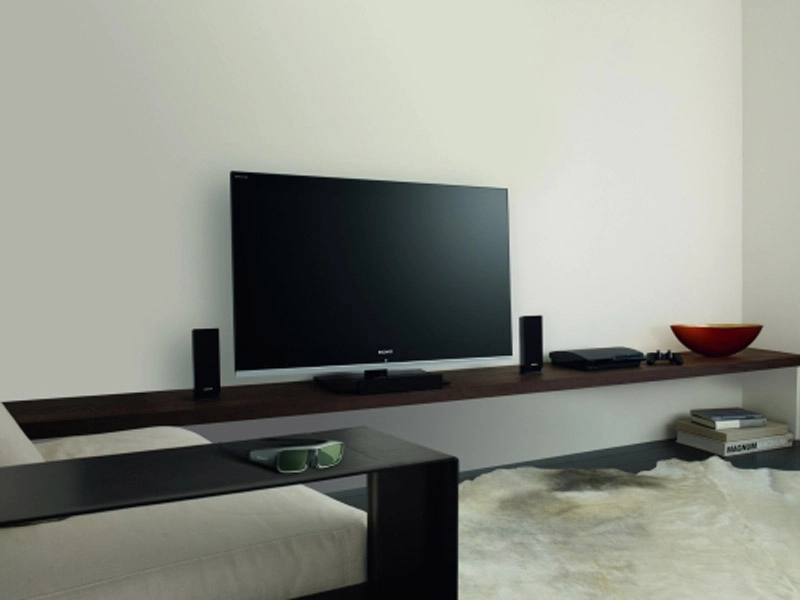
The 3D-capable Sony Bravia LX900

Just as new high definition TVs were marketed as 'HD ready', expect the first wave of 3D-capable sets to wear a '3D Ready' sticker.

DisplaySearch forecasts that 3D TV shipments will balloon from 0.2 million units in 2009 to 64 million units by 2018, raking in $17 billion along the way. The revolution will be televised. And those with the biggest wallets will enjoy it in 3D.

But what does '3D Ready' mean, and what defines a 3D Ready TV? Samsung's 3D-capable 7000, 8000 and 9000 Series HDTVs, for example, will include a proprietary 3D processor and emitter. These are designed to be compatible with multiple 3D standards, including half/full HD resolution formats and the recently finalised Blu-ray 3D specification.

All of which suggests that the term '3D Ready' is just a catch-all phrase for a less exciting (but more accurate) one – 3D-capable.

3D TV size and refresh rate

While there seems to be no restrictions in terms of TV size, a 3D TV needs a minimum refresh rate of 120Hz (a basic 60Hz displayed for each eye). The higher the refresh rate, the smoother the 3D effect. So a 240Hz set will be capable of outputting 120Hz to each eye.

HDMI 1.4 will also be required for full HD per eye viewing.

Until the broadcast industry settles on a standard, any '3D Ready' badge will need a graphic depicting some fingers firmly crossed.

Blu-ray 3D is the closest that we currently have to an accepted 3D standard. The Blu-ray Disc Association has given the thumbs up to Multiview Video Coding, a variant of the existing high-def H.264/MPEG-4 AVC codec. The world's first 3D Blu-ray disc, Monsters Vs Aliens, was announced at CES 2010.

Of course, how you view 3D content has also not been set in stone. Cinemas currently use three different types of 3D glasses – passive polarized glasses, active LCS glasses, and Infitec (Dolby 3-D) glasses.

At CES 2010, manufacturers such as Samsung, Sony and Panasonic all favoured active shutter technology, although these can be expensive and need a power source.

-------------------------------------------------------------------------------------------------------

Liked this? Then check out HDMI 1.4: 10 things you need to know

Sign up for TechRadar's free Weird Week in Tech newsletter
Get the oddest tech stories of the week, plus the most popular news and reviews delivered straight to your inbox. Sign up at http://www.techradar.com/register

Follow TechRadar on Twitter


Your comments (1) Click to add a new comment

ausworkonline


December 16th 2010

1. I read what you said that:

3D TV needs a minimum refresh rate of 120Hz (a basic 60Hz displayed for each eye). The higher the refresh rate, the smoother the 3D effect. So a 240Hz set will be capable of outputting 120Hz to each eye.

if that is the case how come my sony hd lcd-led 240hz will not work when watching 3d movies? shouldnt it be fast enough?

Alert a moderator

Tell us what you think

You need to Log in or register to post comments

By submitting this form you agree to our Terms of Use and so are legally responsible for anything you submit. DO NOT submit anything which may violate the Terms of Use or another person's rights including copyrighted or offensive materials.

LG's 55-inch EM9600 OLED TV will be sold during 2012

OLED TV: what you need to know

OLED TV prices, manufacturers and more

Choose the best TV for you!

Best TV 2012: what TV should you buy this year?

Best LCD TVs and plasma TVs reviewed

The Toshiba 55ZL2 is the first 4K consumer TV announced. It uses the extra resolution to create glasses-free 3D

4K TV resolution: what you need to know

What is 4K, why is it significant and when can you get it?

Which is the best 32-inch LCD TV?

10 best 32-inch LCD TVs in the world today

Let us help you choose the best 32-inch LCD TV