





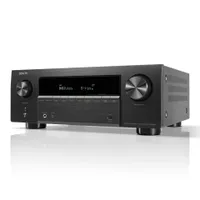
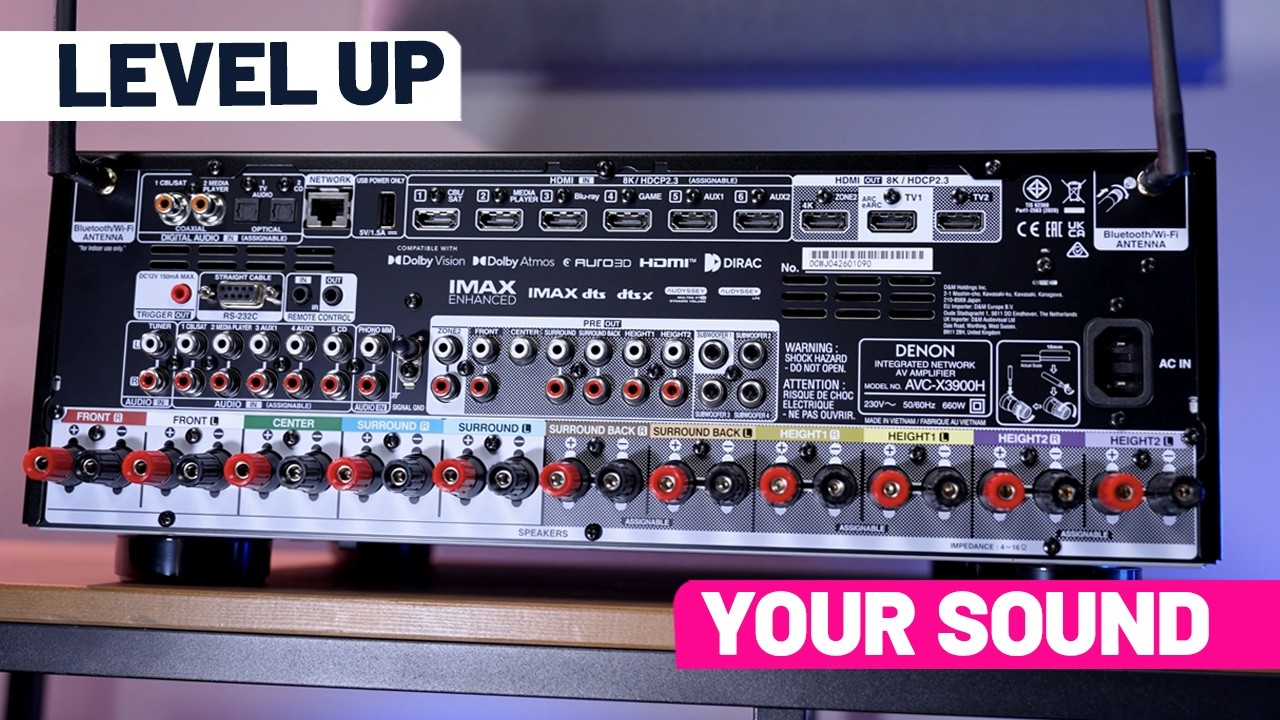
Here at TechRadar, we recently upgraded our home theater system, moving from a surround sound soundbar system to an AV receiver and separate speaker system, consisting of the Denon AVC-3900H AVR and Bowers & Wilkins 600 series 5.1 speaker package. I wrote about the surprisingly easy process of setting up the system, and the specific improvements it made to the sound, here.
If you’re thinking of upgrading to the same kind of system at home, there are certain things you should plan before you start, so you can make sure you buy the right options first time. Here are the six things worth thinking about before you upgrade.
Room height and speaker placement

The first thing you’ll need to think about when upgrading is the actual space you’ll be putting them in and where these speakers are going to go. Room height can play a major factor in what speakers you get and where you’re going to place them, because a higher ceiling means sound is going to dissipate faster.
Our own testing room is roughly 3m in height, which is pretty standard for a home theater space here in the UK and won’t really affect sound quality. Higher ceilings would need to be considered when choosing speakers, though (we’ll go into more detail on this later).
The next thing to consider is where to put your new speakers. Ideally, all your speakers will be placed equal distance from your viewing location. Ours, for example, are 140cm/55 inches from where our seat is, and we found this gave us the optimal, balanced sound. And remember to measure this from where your head will go, not from the front of the seat, or something like that.
If you’re using a 5.1 system, you also need to think about where you’re placing your surround speakers. Any of the best soundbar system packages would have you believe surround speakers belong diagonally at the rear. In fact, in a 5.1 setup, surrounds are best placed to the sides. We did test out placing them at the rear diagonal in our setup and really that works well too, so don’t worry if this is all you can do in your own space — but still, more to the side is how it’s supposed to be in a 5.1 setup.
Cable length: always overestimate

Once you’ve worked out where your speakers are going, you’ll next need to consider cable length. Cables will need to run from the terminals on the rear of each speaker all the way to the rear of the AV receiver, so again remember that you’re not measuring from the front of each device. After you’ve measured, always add on extra length anyway to give yourself some flexibility and slack — and then even more if the cable will need to run along walls or under floorboards, to give yourself flexibility.
For our demo room, we’re using 5m pre-terminated (with banana plugs already installed) QED XT25 cables. While this is excellent quality cable and does reach our Denon AV receiver, the cables just about reach from the rear placed speakers to the AV. This is fine for our testing space, but for your own home, where these speakers will be permanently installed, it’s worth adding extra to make sure you’re not caught short.
Is it 5m from your rear speakers to your AV receiver? Honestly, you may want to account for 8m-10m (even more) of cable, just to give yourself that extra length in case these cables do need to run somewhere else later.
Speaker size

Remember how I said you need to think about the size of your home theater space? This is where speaker size comes into play. If you’ve got a higher ceiling room, it might be worth getting floorstanders (larger speakers) rather than bookshelves (smaller speakers). The extra power you’ll get from floorstanders should compensate for the large volume in the room from higher ceilings.
If you’ve got a smaller room with a lower ceiling and find floorstanders will dominate the room, then there are plenty of top-quality standmount speakers that will give you enough power and detail in their own right. It’s important to consider the size of your speakers as you don’t want anything too underpowered or overpowered for the room.
You’ll also want to factor in your AV receiver’s power. While most smaller, budget AV receivers should have the power to juice your speakers, they may struggle with larger, more power hungry speakers. Check out the ohms (indicated by an Ω) of a speaker and AV receiver, as this demonstrates the resistance needed by both. If they don’t match, it can deliver an underwhelming or overwhelming experience, The same is true with power, indicated by the wattage needed (shown with a number followed by a W).
Is it worth adding heights?

While having height speakers for Dolby Atmos can add an extra layer to the viewing experience, there are several things to consider if they’re worth installing.
If you want to install ceiling speakers, you’ll need to make sure to install fire hoods. While these aren’t terribly expensive, ceiling speakers often need breathing room around them for fire safety, and to accommodate for the hoods themselves, meaning you’ll need to get an installer to cut out more space within the ceiling.
As I found out working at an AV retailer, you’ll also need special fire-resistant cable that can handle more enclosed ceiling spaces. This is also true if you’re running cable in walls or under the floor. Again, while this cable is relatively affordable, it’s not always the best cable (more on that below).
You’ll need to think about the material and angle of your ceiling too. This is more relevant if using up-firing Atmos speakers, which bounce sound off the ceiling so it sounds like it’s coming from above. If your ceiling is textured then it’ll interfere with this. If you have something like a vaulted ceiling, then obviously it can’t bounce back correctly.
Even if you can’t install height speakers, you can still get a feeling of the Dolby Atmos ‘dome of sound’ with really good speakers and good AVR with powerful processing, because high-quality drivers can add a strong spatial effect. When watching movies like The Batman or Top Gun: Maverick, we’ve still experienced a 3D sound without the need for heights in our 5.1 system, so consider whether it’s worth the hassle of installing height speakers.
Planning for a subwoofer

A subwoofer renders the low-end and bass within a home theater setup and is crucial for getting the most optimal viewing experience. As such, subwoofers are often quite bulky and can take up a lot of space, so thinking of where you’re putting your subwoofer is important.
Bass isn’t directional so you do have more options when placing your subwoofer. It’s often worth doing a ‘sub crawl’. This is a process where you set up your sub in the location you’d normally sit, play something bass-heavy, and then you literally crawl into the spaces where you’re considering putting your sub, and see where it sounds best. Mark that spot, then put the sub there.
It sounds odd, but it’s based on reciprocity in acoustics, meaning that if you swap a speaker and listener’s position exactly, the acoustics shouldn’t change. And, basically, it’s easier to move yourself than to move the sub, so you only want to do that bit once…
Common places where subwoofers live include the corners of a room (not ideal acoustically, but practical), behind the main seating area and even at the front of the system, roughly where the front speakers or display are. In our case, our B&W AWS610 works fine at the front of the room and delivers meaty, powerful bass.
Getting the right cables

Cables are the way sound is delivered from an AV receiver to each speaker and as such, it’s important to make sure you get good enough cable quality to match your system’s components. It’s all well and good spending thousands on a top of the range setup, but if you connect it all with poor-quality wire, you’re not going to get the best sound.
Crucially though, you don’t have to spend tons to get good quality cable. I found working at an AV retailer that cable costing around $3 / £2 per meter worked well for a budget system, and I used cable that cost around $26 / £20 per meter for higher-end systems. It can go much higher than this — but generally cable between $7 / £5 per meter and $15 / £10 per meter will cover all the bases.
As I mentioned before, if you’re running speaker cable in ceilings, in walls or under floors, you will need fire-resistant cable which sounds expensive, but thankfully is some of the more affordable cable out there.
One thing that is worth investing in is banana plugs. These are attached to the end of bare speaker wire, they keep said wire in much better condition, prolong the life of your speaker cable and, in turn, help to deliver more consistent and better sound.
If you can factor it into your budget, pre-terminated cables (speaker cable with banana plugs already professionally attached) is best, as these cables will be some of the better quality available. We’re using QED XT25 cables in our own setup and these were among my top recommendations when I helped with installs during my time at an AV retailer. While they’re a little more pricey, they’re worth the investment for a setup like ours.

Follow TechRadar on Google News and add us as a preferred source to get our expert news, reviews, and opinion in your feeds.
