


If "slop" was 2025's word of the year (and to be clear: it was), AI slop is the scourge of music streaming sites as we march into 2026. It's also the bane of musicians' lives.
Talented recording artists just trying to earn a crust are finding themselves directly up against AI-generated musical spam, seemingly with very little help from streaming platforms.
But as Spotify continues to deny that it is flooding users' recommended feeds with AI music, bemoaning "it’s not always possible to draw a simple line between AI and non-AI music", Bandcamp has quietly issued a concise and simple policy entitled 'Bandcamp's Mission and Our Approach to Generative AI'.
The policy effectively bans any AI generated music or audio on its site. It reads as follows:
Today we are fortifying our mission by articulating our policy on generative AI, so that musicians can keep making music, and so that fans have confidence that the music they find on Bandcamp was created by humans.
Our guidelines for generative AI in music and audio are as follows:
• Music and audio that is generated wholly or in substantial part by AI is not permitted on Bandcamp.
• Any use of AI tools to impersonate other artists or styles is strictly prohibited in accordance with our existing policies prohibiting impersonation and intellectual property infringement.
If you encounter music or audio that appears to be made entirely or with heavy reliance on generative AI, please use our reporting tools to flag the content for review by our team. We reserve the right to remove any music on suspicion of being AI-generated.
With this policy, we’re putting human creativity first, and we will be sure to communicate any updates to the policy as the rapidly changing generative AI space develops. Thank you.
Was that so hard, Spotify?

I shouldn't just dig out Spotify on dragging its feet here. YouTube Music users are also furious about the prevalence of AI music clogging up their recommendations at the time of writing, with one user taking to the YouTube Music subreddit community to post that "six out of ten News recommendations were AI slop".
So, even as Spotify users rage about no longer trusting Discover Weekly, the big green music streaming machine is far from the only villain of the show.
Dear Google, that's not, what I'm paying for. AI slop is really getting out of hand.from r/YoutubeMusic
Great, so you forcefully banned AI slop – now how do you enforce it?
Here's the thing: imposing this kind of ban is going to be incredibly hard for Bandcamp to actually implement.
Don't get me wrong, it's a huge win – and very much on-brand – for the online record store and music community, but when rival Deezer announced last November that 34% of new music on its platform was AI-generated (or over 50,000 AI-made tracks being uploaded to the site every single day) perhaps the most chilling stat was actually that according to a separate study (also commissioned by Deezer), 97% of listeners couldn't tell the difference between AI music and human-made tracks.
So, simply stating that such content is forbidden and asking listeners to report it when they hear it won't work. It's also worth noting that Bandcamp is in a stronger position than many music sites to be banning AI content, since Bandcamp doesn't rely solely on streaming for revenue. It sells vinyl, CDs, merch and cassettes as its main gig – which is good for me, since I'm very much into cassette tapes lately, as part of a digital music detox this year.

So Bandcamp is in a position to demand more. I hate to point to AI's implementation by humans to generate harmful images and US Senators calling out for Grok to be banned entirely, but humans are tricksy. They like to get around rules using artificial intelligence – and since AI has no agency (it cannot feel emotion such as malice or shame; it won't do anything without a prompt) it's ultimately humans causing the issues here.
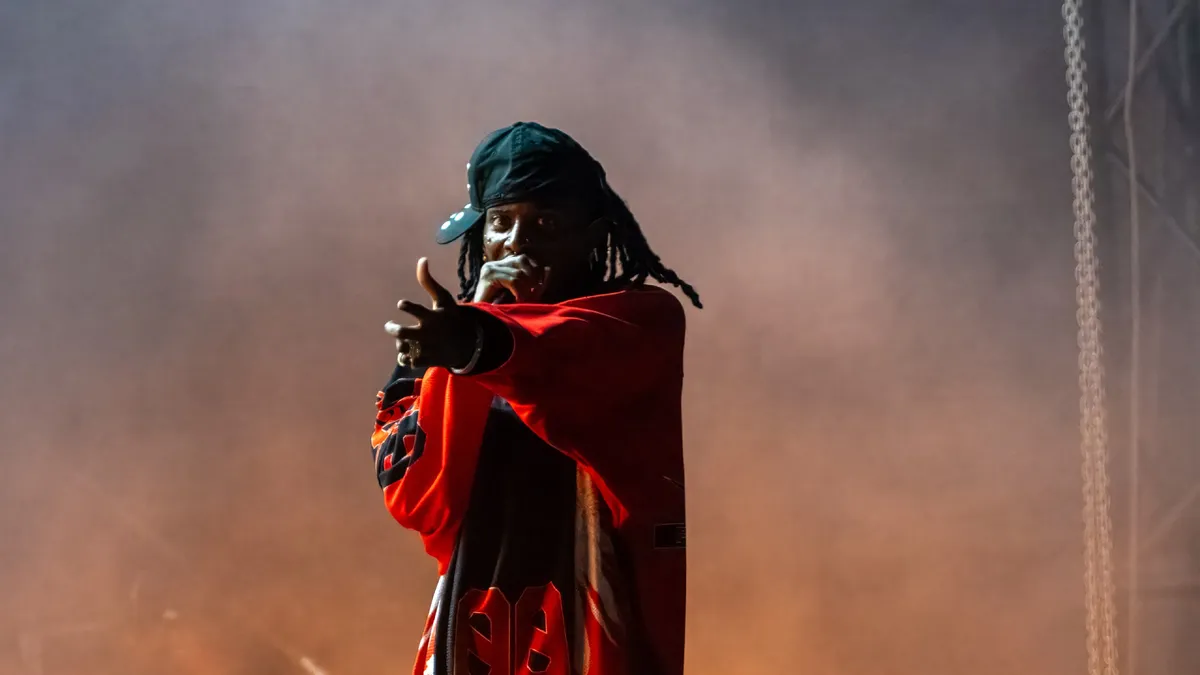
Remember last year, when Playboi Carti fans accused the rap star of using an AI model of his own voice to complete the album MUSIC, a record loyal devotees had waited nearly five years for? As my colleague and professional DJ Jamie Richards pointed out at the time, "what worries me is, I wouldn’t be able to tell".

Accountability at the source must surely be the way
The thing is, Playboi Carti is under no obligation to divulge whether or not he used an AI version of his own dulcet tones to complete his tracks. Currently, no artist (nor producer of said artist, nor record label) is obliged to disclose whether or not what we're hearing was ever actually uttered from a human mouth, or played by human hands.
And AI use isn't always so clear cut. In the Playboi Carti example, Bandcamp's policy wording could call into question whether or not the album (if indeed it does include AI generated content) actually falls foul of the the ban. Was the AI model used "wholly or in substantial part", for instance – or just in one or two backing vocals, on one track? And when Bandcamp states that "Use of AI tools to impersonate other artists or styles is strictly prohibited in accordance with our existing policies prohibiting impersonation and intellectual property infringement", it rather suggests that if you're an artist using your own generated voice, rather than using it create "other artists or styles", that's not an issue.
And yet to fans, the idea that they weren't listening to the actual Carti clearly was a problem.
As my colleague Rowan Davies reported at around the same time as the Carti AI accusations began to fly last year, a coalition of more than 1,000 musicians released an album consisting of silence and studio ambience to protest the growing threat AI poses to music and the music industry. It was titled Is This What We Want? and for me, listening to deathly quiet recording studios (because no musicians can afford to record in them) is a pretty compelling protest and prediction for the future.
So what's the answer? Accountability. At a Bluesound hi-res music streamer release I attended a few years ago, the team identified 17 potential points of change in any recorded audio signal path. So, from the moment an artist sings into a mic to a listener hearing it (think mic level, patchbay, audio interfaces, processing etc.) an authentic sound can be doctored plenty, even without the use of AI. The possible solution floated at the event was a requirement for more metadata on recordings – a roll call of the production team, declaring the mixing suite used, an index of samples and even a kind of tapping-in system on the door of recording studios, thus revealing who was in the room when track-specific decisions were made on the use of AI. How's that for accountability?
I think it's clear that leaving this issue to listeners as something to call out when they hear it won't work as a solution. As a starting point, I’d like to see some kind of mandatory warning label on tracks – like the “E” icon to denote explicit language – to alert us of the use of AI in a track. That might be a start, because then we wouldn't be seeing it on Bandcamp…

➡️ Read our full guide to the best hi-res music players
1. Best overall:
Activo P1
2. Best budget hi-res player:
Fiio JM21
3. Best step-up hi-res player:
Astell & Kern A&norma SR35
➡️ Read our full guide to the best headphone DACs
1. Best budget USB-C portable DAC:
iFi GO Link Max
2. Best budget desktop DAC:
iFi Uno
3. Best premium portable DAC:
iFi xDSD Gryphon
4. Best wireless DAC:
Fiio BTR17
Follow TechRadar on Google News and add us as a preferred source to get our expert news, reviews, and opinion in your feeds. Make sure to click the Follow button!
And of course you can also follow TechRadar on TikTok for news, reviews, unboxings in video form, and get regular updates from us on WhatsApp too.
