TechRadar Verdict
A decent device for those on a budget - but you do very much get what you pay for.
Pros
- +
Attractive design with slim, lightweight build Comfortably usable interface
- +
Good quality audio performance
- +
Decent text message experience
- +
3-megapixel camera
- +
Sub-£100 price tag
Cons
- -
No 3G or Wi-Fi high-speed data connectivity
- -
Slow browsing and online app experience
- -
Limited feature set
- -
Camera limited, with no flash or autofocus
- -
Video capture quality poor
Why you can trust TechRadar We spend hours testing every product or service we review, so you can be sure you're buying the best. Find out more about how we test.
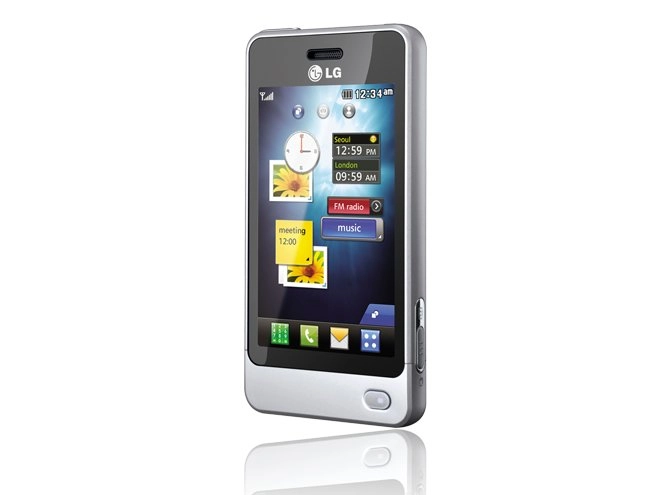
Aimed at mobile buyers after some touch control action on a budget, the LG POP GD510 is the smallest, lightest and one of the cheapest 3-inch touchscreen phones around. After LG's success with the cash-conscious Cookie KP500 – which notched up over 10 million sales in just over a year – LG must be hoping for similar things from this stylishly slimline device, which at launch is selling for under £100 on a pay as you go package.
The LG POP GD510 doesn't try to be a do-everything smartphone. The POP is instead pitched at delivering a fun package, with a friendly user experience and the sort of features its target audience are after.

The LG POP operates on LG's A-Class user interface (essentially a slightly altered version of LG's S-Class system on the likes of the Arena and Crystal), so you get plenty of eye-pleasing icon graphics and finger swiping screen switching effects. This will be what grabs off-the-shelf interest more than any head-turning features or cutting edge application technology
The set of features offered is reasonable for this grade of handset though not eyebrow-raisingly exceptional, with tick list essentials such as music and video players, a 3-megapixel camera, email support and FM radio covered. Unsurprisingly, you needn't look for Wi-Fi or GPS, but there is MicroSD card expansion (up to 8GB cards are supported) to bolster the POP's modest 40MB of internal user storage. Also, there's the option of adding a solar-cell powered back panel as an alternate power source.

The design of the LG POP GD510 is certainly a draw. The bodywork is elegantly slim and compact – it measures 97.8(h) x 49.5(w) x 11.2(d) mm and weighs just 87g. That size helps give its 3-inch screen more prominence, particularly as the front panel features an ultra-minimalist single physical button for interacting with the UI. This Smart Key acts as a Call/End/Clear/Back button all in one, adjusting role dynamically as required. In practice it works effectively and you don't miss the usual keys.
The casing around the screen has a matt silver finish with a splash of chrome here and there, and feels reasonably robust for a lightweight handset.

Buttonry is again kept to minimum. The power button on top doubles as a lock-key with a short press, while the camera button on the side also has a dual role, a quick tap of it pulling up a grid of favourite applications onscreen. This can be easily configured to your own requirements, as can much of the onscreen shortcut and quick key options.
Volume/zoom keys are in place too, and there's a single microUSB socket for charger, earphones and data hook-up to a PC.