





A researcher at Tel Aviv University claims that structure of human teeth holds promising clues for aerospace engineers as they build the aircraft and space vehicles of the future.
After spending years peering into mouths, Professor Herzl Chai has concluded that planes made from tooth-like materials could be much more resistant to potentially lethal stress fractures.
He started by wondering how our teeth can withstand enormous amounts of pressure, over many years, when tooth enamel is only about as strong as glass.

This is where your teeth end up
His team of researchers applied varying degrees of mechanical pressure to hundreds of extracted teeth, and studied what occurred on the surface and deep inside them. Chai found that teeth are made from an extremely sophisticated composite material that reacts in an extraordinary way under pressure.
The professor says, "Teeth exhibit graded mechanical properties and a cathedral-like geometry, and over time they develop a network of micro-cracks which help diffuse stress. This, and the tooth's built-in ability to heal the micro-cracks over time, prevents it from fracturing into large pieces when we eat hard food, like nuts."
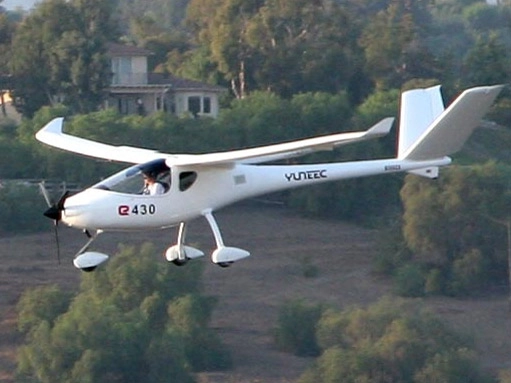
The aviation industry already uses sophisticated materials to prevent break-up on impact. For example, airplane bodies are made from composite materials, layers of glass or carbon fibres, held together by a brittle matrix.
In teeth, though, fibres aren't arranged in a grid, but are wavy in structure and arranged in several layers, unlike the single-thickness layers used in aircrafts. Under mechanical pressure, this architecture presents no clear path for the release of stress. Micro cracks absorb pressure in unison to prevent splits and major fractures.
Chai, himself an aerospace engineer, suggests that if engineers can incorporate tooth enamel's wavy hierarchy, micro-cracking mechanism and capacity to heal, lighter and stronger aircraft and space vehicles can be developed.