





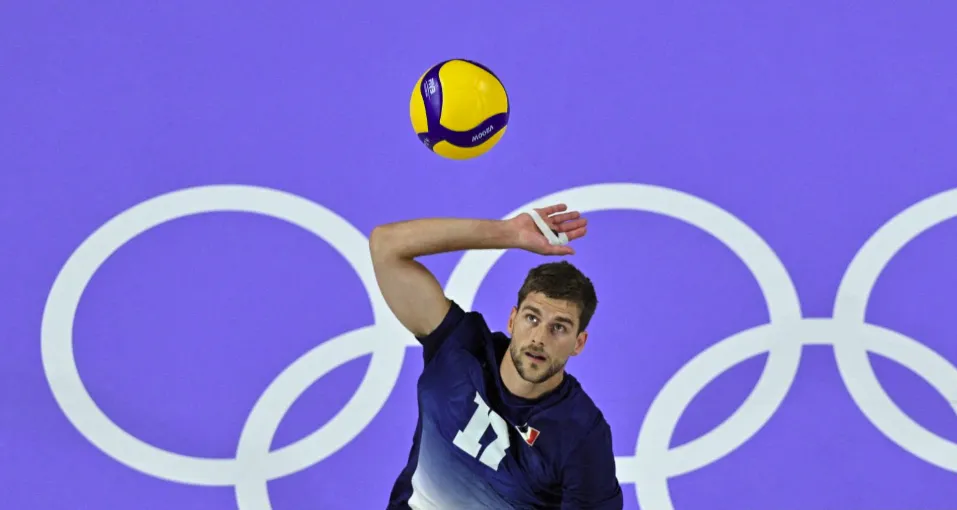

The Olympics have always been a proving ground for broadcast innovation, from the first ever live sports broadcast to today’s ultra-low latency IP workflows. Milano Cortina 2026 has been no exception.
The first-person view (FPV) drones tracking athletes at ridiculous speeds have delivered perspectives that cable cameras simply cannot reach, while real-time 360-degree replay and AI tools for indexing have helped to deliver richer storytelling.
Suspended rail cameras, ice-level rigs and cloud-based master control rooms have further reduced physical constraints on production, creating an increasingly software-defined broadcast environment. In short, the Games were a technical marvel, as much as a sporting one.
Principle Engineer at Nokia.
However, no matter how close these technologies bring us to the action, or how immersive the replay, each of these innovations still operate within the same flat visual framework. The most talked about upgrades have enhanced existing 2D paradigm.
Volumetric video represents something more disruptive, beyond a better camera angle and marks a different capture model entirely. By recording subjects from many viewpoints simultaneously, volumetric workflows allow producers to reposition the camera in post production, even if the final output is still rendered in 2D.
Early deployments, most notably in Paris 2024, show where it delivers value today, and where the technical constraints still bite hardest.
Volumetric video’s uneven adoption across sport, music and film
Volumetric video is often framed as an inevitable future for cinema, but its most credible deployments so far have emerged elsewhere, particularly in live sport and selective creative productions. The reason is simple: each sector values something different from the technology, and those differences shape adoption.
In high-profile sporting environments, like the Olympics, volumetric capture has already demonstrated clear advantages. Unlike film production, where a director can call ‘cut’ and reshoot a scene, Olympic performances happen once – there is no opportunity to repeat a moment for better framing.
By recording athletes from multiple angles simultaneously, producers preserve the performance in its entirety and can later generate camera viewpoints – in a single, live shot – that would be impossible to achieve with traditional rigs without obstructing the field of play.
This isn’t about replacing broadcast cameras, but extending what live production can represent. Volumetric capture safeguards one-in-a-lifetime moments and adds spatial flexibility on top of an existing 2D pipeline, enabling editorial choices to be made after the event rather than being locked in at the point of capture.
But it’s not only sport where volumetric video is proving useful. Music and selective film productions have similarly found near-term value, but for entirely different reasons. A$AP Rocky’s Helicopter video, for example, was captured entirely using volumetric video, giving directors complete freedom over camera positioning and movement during post-production. The technology collapsed the boundary between capture and creative decision-making, allowing the ‘shot’ to not be locked and final at the moment of filming.
Cinema, however, presents a tougher challenge. Blockbuster filmmaking is deeply director-driven: framing decisions are deliberate, controlled, and made on set. Entire sets, lighting plans, and production workflows are designed around a specific 2D camera perspective – often built to be seen from one direction.
Volumetric capture fundamentally shifts that paradigm by deferring some of those framing decisions to post-production. Widespread adoption has therefore been less about technical feasibility and more about creative convention and deeply embedded workflows. Directors must rethink how control, authorship, and framing operate in a spatial medium.
As such, it is unlikely that entire narrative features will be captured volumetrically in the near term. However, select use of multi-view rigs offers clear value – particularly when integrated into visual effects pipelines. This is where early adoption is emerging, with productions such as Superman, Dune: Prophecy, and Jurassic World Rebirth experimenting with volumetric techniques to enable greater post-capture flexibility.
That barrier is far less prohibitive for professional broadcast or premium creative projects than it is for mainstream narrative filmmaking at scale.
What all early deployments of volumetric video confirm is that the technology’s strengths are already tangible today, even when audiences never see a fully immersive endpoint. Much of its current impact is felt upstream, in the flexibility it introduces to conventional workflows. The output may still be flat video, but production is embracing the shift.
What must mature next
Broadcast engineers rarely ask what’s theoretically possible, but instead what will fail first if and when their systems are put under stress.
Considering the distribution of volumetric video to the end users, visual quality is typically the first compromise under real-time broadcast constraints. Early deployments demonstrated that integration into 2D broadcast workflows was possible, but often limited to replay segments that required seconds or minutes to generate.
Paris 2024 showed that volumetric replays could be successfully incorporated into Olympic broadcast coverage, but they remained relatively constrained in resolution or immediacy.
Milano Cortina 2026 marked a step forward here. Its AI-powered replay system – built on volumetric capture – delivering dramatically improved visual fidelity, with some replays approaching cinematic standards. The quality leap was immediately visible, signaling meaningful progress towards making volumetric workflows not just experimental additions, but credible and scalable broadcast tools.
For high-end visual results, many engineers look to techniques such as 4D Gaussian splatting. However, this introduces a second major constraint: latency. Generating 4D Gaussian representations requires an iterative learning process that cannot simply be solved by adding more parallel compute resources. Even emerging single-camera approaches do not scale effectively to multi-camera environments, which are essential for full volumetric capture.
Bandwidth compounds the issue for streaming of volumetric video to the consumers. Uncompressed volumetric datasets are large, and – even with file compression – bitrates can reach tens or hundreds of megabits per second. At broadcast scale distributing that reliably, particularly to large audiences or mobile devices, remains challenging.
The broadcasting industry’s next “gold medal” is unlikely to come from capture hardware alone, but from the compression and delivery ecosystems needed to scale volumetric experiences. What’s therefore missing is a mature, interoperable ecosystem for compressing, transporting and decoding volumetric formats efficiently. That means creating solutions and standards that accelerate progress towards large-scale live deployment.
The direction of travel is clear. Just as FPV drones and cloud production have shifted expectations around what live sports coverage can look like, volumetric workflows hint at a future where perspective is no longer fixed at capture, but programmable after the fact.
In the near term, volumetric video will continue to serve as a powerful tool within director-led 2D workflows, expanding creative flexibility without disrupting established production models. But the real transformation will unfold when production and consumption evolve around viewer-controlled viewports – when audiences are no longer confined to a chosen frame but empowered to define their own perspective.
Mainstream adoption may not arrive for a few more years, dependent on the evolution of certain technologies such as extended reality (XR) headsets and autostereoscopic displays. Yet even before that shift becomes widespread, we are already beginning to see how volumetric techniques can influence production.
The most profound change, however, will come when control moves beyond the broadcast truck and into the hands of the viewer. This will fundamentally reshape how live events are experienced.
Check our list of the best video editing software for beginners.