





This isn't your typical online guide packed with product suggestions. Every pair of the best over-ear headphones below has been rigorously tested by our expert team before earning a place on this list. You can rely on these selections because we've extensively evaluated each one for their audio quality, noise cancelling performance, battery life, comfort levels and features.
Headphones are still considered the best way to get spacious sound and comfort. Over-ear designs enclose your ears, delivering an immersive experience that generally beats in-ear buds – though which you prefer is a subjective thing. It makes sense that many of the best noise cancelling headphones you can buy today are over-ears. Their large cups pack in powerful drivers for high-definition audio, clever mic arrays for cancelling out noise, and soft cushioning for solid passive isolation. That's why this design features heavily in our best travel headphones guide, too.
Over-ear headphones can also be better for your hearing health. Drivers are positioned outside the ear canal rather than in it, which reduces strain on your eardrums. Whether you have a modest budget, want a premium pick, or prefer wired or wireless, the best over-ear headphones all do a great job at combining comfort, performance and style.
August 11, 2026
We've added a bunch of new products to this guide. Firstly, the AirPods Max 2 take the place of the AirPods Max in our 'best for Apple' category. Meanwhile, we've created a new 'best wired' category for the tremendous HEDDphone 1 headphones. Finally, a couple of new pairs have made their way into our 'also tested' section.
The best over-ear headphones in 2026
Why you can trust TechRadar We spend hours testing every product or service we review, so you can be sure you're buying the best. Find out more about how we test.
The best over-ear headphones for most people


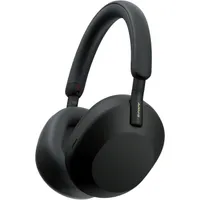
Sony has raised the bar again with its flagship over-ears, the WH-1000XM6. As expected, they’re exceptional in design, sound, ANC, and overall performance – finally surpassing the XM4s that topped this guide for years. Despite the higher price tag, they’re now our top pick for most people, having finally claimed the crown simply because they’re that much better.
The WH-1000XM6 are a major upgrade, particularly in noise cancellation. Thanks to the new QN3 processor and a powerful setup of 12 microphones (four more than before), the ANC is genuinely class-leading. During testing – even on public transport or beside busy traffic – we experienced near-total silence. If immersive listening is your goal, this is as good as it gets.
Sound quality impresses too. The new 30mm driver, paired with that upgraded processor, delivers expressive, detailed audio with a more balanced tuning out of the box – punchy bass, rich mids, and crisp treble all intact.
Design-wise, Sony combines the foldable portability of the XM4 with the sleeker look of the XM5. You also get intuitive touch controls, a premium finish, and an even more comfortable headband.
They’re not cheap, but if you want the most powerful noise-blocking headphones around, with equally impressive comfort and sound, they’re easily worth it.
Read our full Sony WH-1000XM6 review
The best budget over-ear headphones


If you want great over-ear headphones without spending a fortune, the 1More Sonoflow Pro HQ51 are hard to beat, and are our top budget pick. They pack in a lot for the price, including solid active noise cancellation, a whopping 100 hours of battery life, and surprisingly decent sound.
The 1More Sonoflow Pro HQ51 go big on features. You get ANC and a transparency mode, LDAC support for higher-quality Bluetooth streaming, and up to 100 hours of battery life – that’s if you turn off LDAC and ANC, but there’s still an impressive 65 hours with ANC on. In our testing, we found that ANC performance is better than expected for the price, easily clamping down on background chatter, traffic and general noise. The passthrough mode does a good job of helping you to stay aware of your surroundings.
Sound quality is seriously respectable here. While they don’t match more premium pairs of headphones we've tested, the audio is clear and pleasingly bassy. You can adjust the EQ through the companion app if you’d prefer a more balanced profile, and this had good results too. In general, there's an energy and dynamism to them that's easily lost in cheaper headphones – especially if the budget has gone on supporting lots of other features too. There's no feeling of being short-changed here on sound.
We found them comfortable enough to wear for long sessions, thanks to soft padding and a lightweight frame. They also look pretty slick, with a matte finish and sleek forward-tilted design. The build is where you feel the price a little – the buttons and headband are more plasticky than more premium headphones – but they’re still perfectly durable for everyday use.
For under $100/£100, you’re getting a strong all-rounder here. These over-ears are comfy, capable, long-lasting, and good-looking. If you’re after an affordable pair of headphones with premium features, the Sonoflow Pro HQ51 are a standout budget pick.
Read our full 1More Sonoflow Pro HQ51 review
The best premium over-ear headphones


The Bowers & Wilkins Px8 S2 are about as premium as mass-produced wireless headphones get. The good news is that the sound absolutely lives up to the price tag too. They’re a subtle evolution of the Px8 that came before them and the more affordable Px7 S3 (firm favorites of ours that the Px8 S2 replace in this guide). But the refinements on offer here do add up – and then some. These over-ears are lighter, sleeker and come with improved noise cancellation and even better sonic performance.
Inside, upgraded carbon-cone drivers, a new motor system and refined tuning deliver some of the most open, dynamic, and detailed sound you’ll hear from wireless headphones. The Px8 S2s also create a spacious, balanced soundstage with beautifully controlled bass, natural mids and crisp treble. What we’re saying is, audio performance is exceptional. They’re easily among the best-sounding headphones you can buy right now.
Noise-cancelling is very good here, though not quite at Bose or Sony levels. However, that’s a small sacrifice for this kind of audio quality. Bluetooth 5.3 with aptX Lossless support, a 30 hour battery life and reliable controls via the app round out the package in terms of features too.
The headphones are finished in aluminium and nappa leather (which means they're not ideal for vegans, unfortunately) and have a very high level of detail and finish. Which means they do look and feel every bit their $799 / £629 price tag. If you want class-leading sound in a design that’s premium and sophisticated, the Px8 S2 are the ones to beat.
Read our full Bowers & Wilkins Px8 S2 review
The best budget Sony over-ear headphones


The WH-1000XM4s may no longer be Sony's flagship headphones. That title has since passed to the Sony WH-1000XM5 and, more recently, the WH-1000XM6 at the top of this list.
But we still recommend the XM4s if you're looking for exceptional Sony design, sound and ANC on a budget – and their iconic shape certainly doesn't hurt. Now that they’re no longer the newest model, you’ll find them available at much lower prices. You can do better in most individual areas if you’re after the ultimate pair of headphones (usually by opting for the newer XM6s), but not as a complete package for under $200/£200 – a price we regularly see these Sonys drop to. Our recommendation assumes you’ll find them around that mark during a sales event.
Aside from clear, well-balanced and detailed sound, there's also highly effective noise cancellation. You get useful extra features too, including multi-point pairing for switching between two devices instantly, DSEE Extreme upscaling of lower-quality audio (such as from Spotify), auto-pausing when you remove them, Sony’s 360 Reality Audio format, and LDAC high-quality wireless tech for compatible phones.
They're also lightweight and comfortable, with a folding design that's ideal for travel. Now that their price has dropped, especially if you grab them at one of their frequent sales prices, they're unbeatable value, which is why they're still a top recommendation here despite their age.
Read our full Sony WH-1000XM4 review
The best over-ear headphones for noise cancellation


The Bose QuietComfort Ultra Headphones (2nd Gen) are our top pick for sheer noise-cancelling power. The Sony WH-1000XM6s in the top spot do now rival them for pure ANC performance. But if you’re a Bose loyalist (and many of us are), these remain our ultimate recommendation. They take the place of the original QC Ultras in this guide, which they’re very similar to, but some of the newer upgrades here (better battery, more listening modes, hard-wiring them to a music source, etc) make them the better choice.
As our reviewer wrote, the ANC here is “absolutely superb”. It really is the best noise-cancellation you’re going to get at anything like this kind of money. Having said that, this power does still come at a premium price, as is typical for Bose, but it’s also paired with truly glorious audio quality too, which makes it worth every penny in our books.
Let’s talk about that audio quality, shall we? They’re not the most detailed headphones around. But the sound here is energetic, engaging and truly impressive. The bottom end digs deep, the soundstage is large and defined and that fantastic ANC makes it even more enjoyable. Bose’s take on spatial audio is here too, with added listening modes now for an even more cinematic experience.
As always with Bose, these headphones look and feel premium, while remaining light, comfortable and travel-friendly thanks to a foldable design. One of our criticisms of the original QCs was the just fine battery life, but that’s had a boost here to 30 hours with ANC on, which isn’t class-leading but is very welcome.
If you want a more affordable alternative, you might find the original Bose QuietComfort Ultra Headphones for a little less now they’re the older model. Or you may even consider the Bose QuietComfort Headphones that came before them. They can’t match the upgrades here, but they’re both Bose and as their names suggest they still do quiet and comfort exceptionally well. Otherwise, the Bose QuietComfort Ultra Headphones (2nd Gen) really are special. They do ANC like no other over-ears at this level, look good, feel great and received a rare five out of five stars rating in our review.
Read our full Bose QuietComfort Ultra Headphones (2nd Gen) review
The best over-ear headphones for design


If you like your over-ear headphones to look as lovely as they sound, we recommend the Dali IO-8. Expect an exceptional level of build and finish quality here – these headphones definitely qualify for our ‘best for design’ pick. They look minimal and premium, with perfectly circular earcups, brushed and anodised metal on the exterior, memory foam lining the inside for maximum comfort, and a choice of ‘iron’ black or ‘caramel’ white finishes. The only drawback in terms of design is there is leather on these headphones and there’s no alternative to opt for instead. Which is a shame as it means they’re not for vegans.
Certainly not style over substance, the Dali IO-8 deliver exceptional sound that we described as “alive with detail” in our review. This is the case, to our pleasant surprise, across all genres and volumes. Expect a thoroughly enjoyable listen, whatever you feed them. In our review, we wrote: “There’s a sensation of directness and of positivity to the way these headphones deliver music.” Even with ANC on, the sonic performance isn’t negatively impacted. And noise-cancelling performs very well – although it can be beaten by Bose.
The specs list here is impressive, packing in everything you’d expect from a pair of high-end headphones, including Bluetooth 5.2 with aptX Adaptive compatibility, 24bit/96kHz support, 50mm full-range drivers with 10Hz-43kHz frequency response and 30 hours of battery life with ANC on. They can also work with a wired connection – ideal if you forget to charge them and don’t have access to power. The only thing that’s missing here is a control app. If you like to tweak your sound settings there isn’t much choice here then, with only two EQ settings on offer. But you could argue: why would you need to mess with the sound when it’s this good? If you don’t like fussing with apps, this could actually be another point in favor of the Dali IO-8 rather than against them.
The Dali IO-8 are not cheap. However, by Dali standards, they’re actually more on the affordable side. If you’re on a budget, or you don’t like the leather or the lack of a control app, you’ll find plenty more options that will better suit you. Otherwise, we really rate these headphones (we awarded them a rare 5 out of 5 stars in our review) because with an impressive list of specs, excellent sound and a gorgeous design, they’re going to deliver a stellar performance for those who are willing to splurge.
Read our full Dali IO-8 review
The best over-ear headphones for Apple fans


Apple’s AirPods Max 2 are the latest over-ears in the brand's illustrious line-up, delivering Apple-specific features that make them the current standout for anyone invested in the Apple ecosystem. In daily use, that integration is smooth: automatic device switching is seamless, and helpful features like 'Find My' make them easy to track if you misplace them. If you rely on iOS or Mac devices, the AirPods Max 2 fit into your daily life in a way its rivals can’t match.
Active noise cancellation gets a measurable boost here, with Apple claiming a 1.5x improvement over the previous generation. A subway ride that used to require cranking the volume now stays comfortable at lower levels. For blocking out background noise, these are among the strongest performers available, especially if you want reliable isolation without fiddly app settings.
On connectivity and audio quality, the results are a mixed bag. USB-C wired mode finally brings true lossless support, but there’s still no wireless hi-res codec like LDAC or aptX Adaptive. That’s a notable omission if you’re prioritizing audiophile-grade streaming or plan to use these outside the Apple world. In exchange, you get platform exclusive features like Adaptive Audio that blends ANC and transparency, Conversation Awareness that lowers your music for speech, and a surprisingly handy Live Translation feature.
Battery life remains the only major sore point. Topping out at around 20 hours (with ANC enabled), the AirPods Max 2 fall well short of many of its competitors. As a result, while they'll see you through a day or two of heavy listening, you might find you'll be charging them up more often relative to other devices.
The best wired over-ear headphones


Here's the elevator pitch for the HEDDphone D1 headphones; our reviewer James Grimshaw named them "a quite frankly astonishing pair of over-ear headphones," adding that he couldn't fault them "in any meaningful way." That's why they're our debutant product in this new 'best wired' category. And while still pricey, they're much more affordable than the Audio-Technica ATH-ADX7000 which you can read about below.
The HEDDphone D1 is built for audiophiles who want uncompromising sound quality and long-session comfort. Its 50mm Thin-Ply Carbon Diaphragm (TPCD) drivers and open-back design deliver a broad, immersive soundstage with exceptional presence and scale. In our listening tests, the D1 resolved fine detail and ambient cues with precision, rivaling elite planar magnetic headphones that cost at least twice as much.
Listening to artists like PJ Harvey and Queens of the Stone Age, our reviewer noted the D1 produced tactile transients and natural instrument textures. The fit is firm but not fatiguing, thanks to thick velour pads and a breathable headband that should keep you comfortable even throughout extended listening sessions.
Do note that the D1's open-back design means significant sound leakage and no isolation, making it best suited for dedicated listening rooms rather than travel or commuting. While the build is solid, it’s utilitarian rather than luxurious, with less premium materials than some similarly priced competitors.
Though if your priority is reference-class sound and comfort, the HEDDphone D1 delivers in spades on that front, and at a price tag that's accessible to folks who aren't necessarily money-no-object audiophiles.
Read our full HEDDphone D1 review
The best premium wired over-ear headphones


If you've read this far, you came here for the high-end headphone buy, and you're certainly getting it at $3,499 / £3,000 / AU$4,999. What? We did say it was high-end...
Yes, the Audio-Technica ATH-ADX7000 is absolutely a money-no-object purchase, with a name that we have to triple-check to ensure we've not made any typos. Rest assured that if you're willing and able to take that price plunge, you'll be getting near-unrivaled comfort and an arresting level of audio detail.
At the heart of the ATH-ADX7000 is Audio-Technica’s HXDT driver technology, paired with a remarkable 5Hz–50kHz frequency response. This wide range is not just a spec on paper; it contributes to what we perceive as a sense of dynamic reach that sets these headphones apart in their class. The resolution and separation are nothing short of stunning.
Cueing up Led Zeppelin, we were struck by how this Audio-Technica model unraveled layers in the recording. Cymbal splashes, guitar textures, and vocal nuances all held their place in the mix. When The Levee Breaks was the best we've ever heard it, with every part of John Paul Jones' bass distinct from John Bonham's thunderous drums and Jimmy Page's iconic slide guitar.
There’s an inferred expectation of system-matching here, though. With a 490-ohm impedance, the ATH-ADX7000 needs a serious amplifier to perform, unlike more generalist models like the Sony WH-1000XM6 or Bowers & Wilkins Px8 S2, which offer relative plug-and-play convenience. So yes, this one's for the most serious of audiophiles only; those willing to put in the extra grunt work for truly stellar audio.
Read our full Audio-Technica ATH-ADX7000 review
More over-ear headphones we've tested
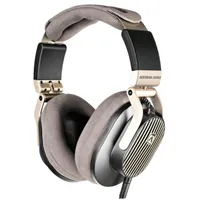
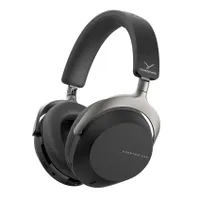
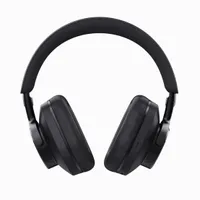
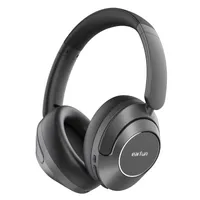
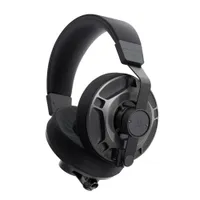
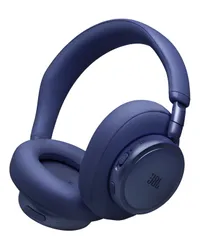
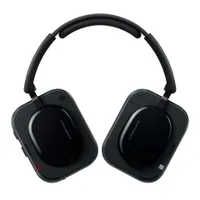
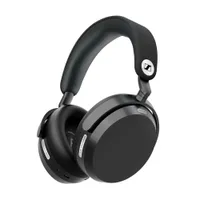
Meet the team
Our expert team of reviewers have years of audio tech experience and testing. They've covered all of the latest and best headphones over the past 10 years and more, which means they're clued up on everything there is to know about the industry.

Becky became TechRadar's Audio Editor in 2024, but joined the team in 2022 as Senior Staff Writer. She focuses on all things audio and hi-fi. Before TechRadar, she spent three years at What Hi-Fi? testing, reviewing and generally enjoying everything from wallet-friendly wireless earbuds to huge, multi-product high-end sound systems. Her career as a professional dancer is what still makes listening to music all day a true joy – and why her quest for the best pair of headphones whatever your budget is never done.

Matt Bolton is TechRadar's Managing Editor for Entertainment and has more than a decade of experience as a technology journalist. Before joining TechRadar he managed TV and audio content for T3.com, and before that he was the Editor of T3 magazine. He's contributed to many tech titles, including Creative Bloq, PC Gamer, Digital Camera World, Edge, Official PlayStation Magazine, PC Plus, MacFormat and many more.

Becca Caddy is a freelance technology journalist and author and she's been writing about consumer tech for more than 12 years with a focus on wearables, headphones and smart home devices. Her work has appeared in The Guardian, Wired, New Scientist, MIT Tech Review, Inverse, National Geographic, Lifehacker, Metro, Stylist, Grazia. Her first book, Screen Time, was published in 2021.

Simon Lucas is a freelance technology journalist and consultant, with a particular emphasis on the audio/video aspects of home entertainment. He was previously editor of What Hi-Fi? magazine and whathifi.com. He has written for Wired, Metro, the Guardian, HiFi+ and GQ, and has acted as an audio consultant for some of the world's most high-profile consumer electronics brands.

Tom Bedford was deputy phones editor on TechRadar until late 2022, having worked his way up from staff writer. Though he specialized in phones and tablets, he also took on audio and hi-fi products with great enthusiasm and a keen ear. He is based in London, UK and now works for the entertainment site What To Watch.
He graduated in American Literature and Creative Writing from the University of East Anglia. Prior to working on TechRadar, he freelanced in tech and entertainment, and also spent many years working as a mixologist.
How to choose the best over-ear headphones
Sound quality has got to be the most important feature to look out for when picking over-ear headphones. Audio quality from those bigger drivers (that doesn't rely on a seal betwixt ear tip and ear canal, as buds do) can be more expansive, open, nuanced and immersive.
But you also have to have an eye on comfort, because there's a big band going over the delicate crown of your head. Padding and material on the ear pads makes a difference too – and often, a broader headband is something to look for, so the weight can be better distributed.
People often choose over-ear headphones with active noise cancellation, because the around-ear pads are great at passive noise isolation to begin with – and it's a good call. Most of our picks on this list include ANC, but it's not the case that spending more on ANC automatically gets you better results. That's why we're here.
It's also possible to buy over-ear headphones with 'open backs', which means they allow air to flow right through the ear cup. This can lead to an expansive, powerful sound, but it also means audio leaks – great for listening in a special room at home, less good on the subway. Here's our in-depth explanation of open-back vs closed-back headphones.
The last big question is whether you want to go wired or wireless. Do you want to prioritise sound that isn't compressed by Bluetooth – and does your device have a USB-C (or even 3.5mm – some still do!) port to hook 'em up to? Most of our suggestions are wireless, because they tend to be preferred in this day and age, but some feature the option of going wired.
Not all wireless codecs are created equal, so if the cans only support SBC and AAC, you won't be getting higher-quality options such as Snapdragon Sound, aptX or LDAC. These are all CD-quality options, but your devices must also be compatible with them. Want truly hi-res audio? You'll need to go for some of the best wired headphones and add a good quality headphone DAC to the mix.
Finally, check the weight – 250g is fairly lightweight for advanced wireless headphones; 350g is about the maximum you'll want for longer listening sessions, but if the design's good, they can still be supremely comfortable.
How much should I spend on headphones?
That really depends on your budget – you don't need to overstretch yourself to prices you can't really afford in your quest for great sound.
You can find over-ear options among the best cheap headphones under $100 / £100 / AU$150 – check out brands like Jabra and JBL if you want to keep costs down.
The best noise-cancelling headphones and higher-spec options tend to cost more than this. For wireless headphones, the flagship models start around $250 / $250 / AU$450.
When you get to true audiophile headphones for analytical listening, the prices really start to shoot up – but these cans will last you decades if you look after them.
Is it worth getting over-ear headphones?
Choosing over-ear headphones over earbuds is a personal choice. There's no wrong option here but over-ear headphones typically provide better battery life and better sound quality.
Thanks to being larger, they can pack in a better battery along with more advanced features like superior drivers. By their very nature, they tend to provide better noise cancellation too as they cover your ears more comprehensively than earbuds.
However, some of your decision making process needs to come down to what you feel more comfortable with. Earbuds are easier to store away, but not everyone likes the feeling of them in their ears. Alternatively, headphones can feel more secure over your head but are heavier and require more thought when storing them.
What are the benefits of over-ear headphones?
The two biggest differences are comfort and sound quality. Many people find over-ear headphones much more comfortable to wear than in-ear ones, and because they're much bigger they can accommodate much larger and more powerful drivers. Unlike earbuds, they're not limited by having to fit into the very limited space of your ear canal.
Because over-ear headphones have bigger drivers, they can potentially deliver a wider frequency range than earbuds, especially at the low end where the bass lives. For example, our current favourites, Sony's WH-1000XM4 go down to 4Hz and top out at a very high 40kHz. By comparison Sony's closest equivalent earbuds, the WF-1000XM4, still reach 40kHz but the low end only reaches 20Hz.
There's another crucial factor here. According to the Hearing Health Foundation, over-ears are less likely to damage your hearing. Once damaged, hearing doesn't repair itself so it's really important to look after it. Over-ears don't sit so close to your eardrums so they're less dangerous over long periods – provided of course you don't run them too loud.
Another advantage of over-ears, albeit a horrible one, is that they don't end up covered in ear wax like in-ears do, so you don't have to read our how to clean wireless earbuds guide. And on a more cheerful note, they're also considerably harder to misplace.
Is over-ear better than in-ear for noise cancelling?
There's not really a simple answer to that one. Some earbuds are very good at passive noise cancellation, which is when the headphones simply block out a lot of external audio by being stuck in your ear canals. But over-ears can do much the same by enclosing your entire ears, so there's huge variation here.
Where things generally do differ is when active noise cancellation is involved. That's when your headphones analyze the sound around you and produce additional waves to cancel the sounds you don't want. As with the drivers that can deliver better sound quality, the larger size of over-ears means there's more room for tech in there.
In our many hours of testing and casual listening we've found that over-ears such as Bose QuietComfort Ultra Headphones and Sony's WH-1000XM5 deliver even better noise cancelling than the same firms' best earbuds. And they generally sound better too.
How we test the best over-ear headphones
☑️ More than 2,400 audio reviews
☑️ 15 years of product testing
☑️ Over 16,000 products reviewed in total
☑️ Nearly 200,000 hours testing tech
We've tested all of the headphones in this guide extensively, without exception, spending countless hours analyzing the sound, fit, design, specs, and value for money – and comparing them to the competition, of course. We always make sure we're giving you advice that's correct, considered and contextual.
Running-in: We allow all headphones a running-in period, to make sure the drivers are working at their best. We listen to audio from a range of sources, including both high-quality and more basic music services, as well as movies, online video, and podcasts or audiobooks. We're looking for all kind of elements here, including how deep the bass can go, whether that bass feels controlled and precise, whether the balance is right between different frequencies, whether the mid-range is able to communicate lots of detailed sound, whether treble frequencies stand out, whether treble is natural or too harsh, how spacious and natural the sound is, how dynamic the headphones between loud and quiet moments, and much more nuance.
Extra features: We test all additional features in headphones, including spatial audio support or active noise cancellation – we will test the latter in real-world situations, including public transport and walking around a city.
Smart functionality: We'll test any smart features, including making sure that multi-point Bluetooth works seamlessly, or testing EQ-changing options and customization of active noise cancellation. We also monitor battery life ourselves, testing the depletion of the battery from full over time.
Perfect partnering: With wired headphones, we'll use a suitable amp where necessary to make sure they get the chance to perform at their full potential. And of course, we listen to myriad types of audio, including music, podcasts and movies, from various sources including (where connectivity permits) phones, laptops, NAS drives and dedicated hi-res audio players.
Latest updates to our over-ear headphones guide
May 13, 2026
Added the Audio-Technica ATH-ADX7000 headphones to our 'best high-end wired' category. We've also revamped the 'more we've tested' section, turning it into more of an honorable mentions section with imagery and targeted recommendations.
February 20, 2026
Refreshed the introduction to this guide. Added several new suggestions to our 'More options' section, based on recent reviews. Including the Tribit QuietPlus 81 and Final DX30000CL.
December 15, 2025
Refreshed the introduction. Switched the Bose QuietComfort Ultra Headphones out for the newer Bose QuietComfort Ultra Headphones (2nd Gen), based on our recent testing. Added several models we’ve reviewed to the ‘also consider’ section, including the Sennheiser HDB 630, CMF Headphone Pro and FairPhone Fairbus XL (2025).
October 10, 2025
Refreshed the introduction. Added the AKG N9 Hybrid into our 'other options' section. Made the Sony WH-1000XM6 our 'best overall' pick. The WH-1000XM4s then become our 'best budget Sony buy' . Changed the Bose QCU Headphones to our 'best for ANC' choice. Switched the B&W Px7 S3 out for the Px8 S2 as our 'best premium' pick, based on recent testing.
August 5, 2025
Swapped the Shanling HW600 out for the new and recently reviewed Meze Audio Poet, as the best high-end wired set we've tested. Added more information about the Sony WH-1000XM6 to our entry on the WH-1000XM4 to help the reader understand where they sit in the pecking order. Added a new entry – the Nothing Headphones (1) – to our 'also consider' section.
June 5, 2025
Swapped the Cambridge Audio P100 for the Bowers & Wilkins PX7 S3 as our ‘Best premium’ pick, swapped the Bose QuietComfort Ultra for the Sony WH-1000XM6 as our ‘Best noise cancellation’ choice based on our comparative testing, and added a new ‘Best for Bose fans’ category, for those who only trust Bose. We added the Cambridge Audio and Sony WH-1000XM5 choices to our ‘more options’ section, as they’re still worth considering.
April 7, 2025
Switched out the Earfun Wave Pro for the 1More Sonoflow Pro HQ51 as our 'best budget' pick, based on our recent review. Added the Earfun cans into our 'also consider' section, as they're still well worth considering.
March 14, 2025
Updated the intro, added the Sennheiser HD 505 to our 'also consider' section based on our most recent reviews.
See more recent updates…
February 17, 2025
Swapped Sennheiser HD 660 S2 for Meze Audio 105 AER based on our testing. Added some more recently reviewed products to our 'Also consider' section.
January 16 2025
Rewrote the introduction. Added the Shanling HW600 as our 'best high-end wired' pick in the no. 12 spot based on our recent testing. Selected more product images to go with each entry so readers get a better sense of the size, shape and design of the recommendations. Added several new suggestions to our 'also consider' picks, including the OneOdio Focus A5. Refreshed all copy so it's up to date.
December 20, 2024
Checked all models against our latest reviews. Updated the intro to mention more of what we look for in our testing, and added more models to our section of other options we've reviewed.
November 6 2024
Added a 'meet the team' section, to introduce our talented audio review team. Rewrote the 'How to choose' section to better explain how to approach buying over-ear headphones.
November 1 2024
Rewrote the introduction. Switched the Bowers & Wilkins PX8 for the Dali IO-8 as our 'best design' pick based on our testing. Added some new options to our 'also consider' section, including the Noble FoKus Apollo.
October 3 2024
Updated the introduction, added several new over-ear headphones to our 'also consider' section, including the Anker Soundcore Space One Pro and Marshall Monitor III ANC. Itemized our 'how we test' section to make it easier for readers to understand our reviewing process.
September 4 2024
Replaced the Edifier Stax Spirit S3 with the Stax Spirit S5, based on our review. Added more information about other recently reviewed products.
August 5 2024
Replaced the Sennheiser Momentum 4 Wireless for the Cambridge Audio Melomania P100 based on our extensive testing and 5-star review.
July 5 2024
Added the Sonos Ace the best over-ear headphones for movies, based on our testing and comparison with other headphones in the list.
June 6 2024
Swapped Sony WH-CH720N for Earfun Wave Pro as our budget pick, based on our review, and current prices.
May 9 2024
Checked all products against our latest reviews, and updated the 'Also consider' section with information about new options.
March 20 2024
Added some additional information about how we test, and added a new section covering our recent reviews that haven't made it into this list.
8 Feb 2024
Updated to include the Bose QuietComfort Ultra Headphones as the best for active noise cancellation.
2 Jan 2024
Updated with 2024 information; all products checked against latest reviews.
15 November 2023
Updated with information about expected Black Friday deals on these headphones.
13 October 2023
Checked all products against our latest reviews.
17 August 2023
Added quick list navigation and updated product listings to reflect latest launches.
7 July 2023
Updated rankings to include the Sony WH-CH720N. Re-ordered the list to reflect latest pricing and options in the market. Added new easy navigation subheadings.
23 May 2023
Checked list against latest product reviews.
