





☑️ 100s of smartphones reviewed
☑️ 15 years of product testing
☑️ Over 16,000 products reviewed in total
☑️ Nearly 200,000 hours testing tech
Editor's note: This list is due some disruption as Samsung has revealed a new suite of Galaxy folding phones comprising the Samsung Galaxy Z Fold 8, Galaxy Z Fold 8 Ultra and Samsung Galaxy Z Flip 8.
Our advice is to not buy a Samsung foldable phone until we've fully tested and reviewed the models above. Once we've done that we'll update this list to better reflect what the best Samsung phones are based on our rigorous testing.
As a leader in the Android space, Samsung offers a lineup where almost any choice is a solid investment and likely one of the some of the best Android phones around. But to pick the best Samsung phone, the key lies in identifying which features best align with your priorities.
For mobile photography enthusiasts, the Galaxy S26 Ultra remains the gold standard. If you want to experience the cutting edge of modern hardware, the Galaxy Z Fold 7 is arguably unmatched. Meanwhile, standard Galaxy devices continue to prove their reliability through our rigorous testing.
A quick note: Our full review of the standard Galaxy S26 is coming soon. However, last year's models are currently heavily discounted and offer exceptional performance for the price.
Check out the price tracking widgets below to secure the best deal, and explore our full list of recommended Samsung phones below.
The best Samsung phone overall


✅ You want a true two-in-one device: This isn't just a phone; it's a flagship phone and 8-inch tablet in one. It's lighter than the S25 Ultra, nearly as thin as a regular phone when closed, and the 8-inch main screen is as big as an iPad mini.
✅ You want a foldable and you care about photography: The 200MP sensor is a showstopper, but the 12MP wide-angle lens's macro capabilities are also impressive. This is the best foldable camera phone you can buy, by far.
❌ You are an S Pen power user: This is a major change from previous Galaxy Z Fold devices. Samsung dropped the digitizing layer, which leaves the Galaxy Z Fold 7 unable to work with the S Pen.
❌ You want a perfect, uninterrupted media-viewing experience: The better 10MP inner camera means there is a noticeably larger camera punch hole that is no longer hidden, and the new 5:6 aspect ratio means some videos and games may have larger black borders.
📱The Samsung Galaxy Z Fold 7 feels like a true inflection point for foldables. While its eye-watering price and the sacrifice of S Pen support are significant drawbacks, it’s by far the best large-screen foldable ever made and the new standard for all others to follow. ★★★★½
What you need to know
The Samsung Galaxy Z Fold 7 sets a standard for what a large-screen foldable can be. It's exquisitely thin and light, and by finally adding a 200MP camera, it delivers an all-around experience that is almost perfect.
Value: This is the most expensive Z Fold to date, with a price that flirts with $2,000, making it one of the priciest foldables you can buy. While that's a lot for any phone, you're essentially getting two devices in one—a flagship phone and an 8-inch tablet—which may help justify the high cost for those who want something truly special.
Design: The design is the phone's most remarkable upgrade, resulting in a device that is super-thin, surprisingly light, and almost as compact as a standard flagship when folded. This exquisite engineering, combined with premium materials, a reengineered stiff hinge, and a nearly imperceptible crease, makes it feel like you're carrying a secret.
Display: Both screens are larger and better this year, with the 6.5-inch cover display finally feeling like a standard flagship and the main 8-inch screen offering a fantastic multitasking canvas. The trade-off for this new thinness is the loss of S Pen support and a more noticeable, uncovered 10MP punch-hole camera on the inner display.
Camera: The camera system is finally a true flagship experience, headlined by a versatile 200MP main sensor that lets you crop without losing detail and even take "horrifyingly" clear selfies. While the macro photography from the wide-angle lens is surprisingly impressive, the system is held back slightly by the decision to include a 3x telephoto lens instead of a more powerful 5x optical zoom.
Performance: Powered by a custom Snapdragon 8 Elite for Galaxy chipset, this is the first Android phone in memory to beat the iPhone's multicore performance in our tests. This power translates to a device that is incredibly fast and responsive, handling intense multitasking and gaming without ever skipping a beat.
Battery life: Although the 4,400mAh battery capacity hasn't changed, our testing confirmed it's more than capable of providing a full workday of battery life, with our reviewer seeing between 12 and 18 hours of mixed use. When you do need to top up, the phone supports fast charging that gets you to 50% in just 30 minutes.
Read our full Samsung Galaxy Z Fold 7 review
Photos taken with the Samsung Galaxy Z Fold 7
Why you can trust TechRadar We spend hours testing every product or service we review, so you can be sure you're buying the best. Find out more about how we test.


Attributes |
Notes |
Rating |
|---|---|---|
Value |
The most expensive foldable out there, but it might also be worth it |
4 / 5 |
Design |
Excellent, slim and light design that still feels elegant and solid. |
5 / 5 |
Display |
Two fantastic and now larger screens. The crease is almost gone, but so is support for an S Pen. |
4.5 / 5 |
Performance |
Better than the best Qualcomm chip on other Androids, and the performance knocked our socks off. |
5 / 5 |
Software |
Android 16! One UI 8! So much AI. It may sound like a lot, but it's a winning combination. |
4.5 / 5 |
Cameras |
The 200MP sensor is a major upgrade, and overall photography is excellent. We would have liked a 5x optical zoom. |
4.5 / 5 |
Battery |
Really good battery life |
4.5 / 5 |
The best Samsung camera phone


✅ You want more than any other smartphone: There is no phone around that matches everything the Galaxy S26 Ultra can do, especially with is Privacy Display.
✅ You want a phone that's future proof: The performance and feature set of the Galaxy S26 Ultra should last you for years, with seven years of major Android OS updates and plenty of AI features available now and likely to come in the future.
❌ You don't need everything this phone can do: The Galaxy S26 Plus can do almost as much as the Galaxy S25 Ultra, but it doesn't cost nearly as much, so maybe you don't need the S Pen.
❌ You already have a Galaxy S25 Ultra: Even with the Privacy Display, the chip and camera upgrades the S26 Ultra offers are iterative so don't make it worth upgrading to from the previous generation.
📱 Samsung's Galaxy S26 Ultra is one of the most feature-packed Android phones around, but while that might be overkill for some people, the flagship phone shines with its camera suite. The quartet of rear cameras and their features, plus AI tools, make for a system that's flexible, powerful and a serious tool for people keen to get the most photography chops out of a phone. ★★★★½
While Samsung has opted for evolution over revolution with its latest flagship, the Galaxy S26 Ultra polishes a winning formula into something nearly untouchable. It remains a powerhouse of productivity and mobile photography, asserting itself as the leading Android phone if price isn't taken into account.
Design: Samsung has pivoted slightly from the sharp corners of the past. The Galaxy S26 Ultra features a subtly rounded chassis, significantly improving one-handed comfort compared to the S25 Ultra. The phone moves from titanium back to a refined Armor Aluminum, which reduces weight without sacrificing structural integrity. The S Pen slot is present and correct, as are a selection of muted colors.
Display: The 6.9-inch Dynamic AMOLED 2X panel remains a class leader with its 1Hz–120Hz adaptive refresh rate. However, the headline feature is the Privacy Display. This tech selectively deactivates pixels in the screen to limit what can be see on the display if you're not looking at it directly. There's a depth of customization, from adding privacy to the whole display to just obscuring notifications. Expect other phone makers to copy this flagship feature from Samsung.
Cameras: The heart of the Galaxy S26 Ultra's appeal is arguably in its rear camera array. While unchanged in the rawest of specs, wider apertures on the 200MP main camera and 5x telephoto camera allow for better low-light photography and video recording. Refinements on the software and AI features side round out the excellent camera package.
Performance: Driven by the Snapdragon 8 Elite for Galaxy and up to 16GB of RAM, the Galaxy S26 Ultra is a spec monster. In Future Labs testing, it went toe-to-toe with the iPhone 17 Pro Max in Geekbench 6.5, with a single-core score of 3,766 and a multi-core score of 11,537 to the flagship iPhone’s respective scores of 3,871 and 9,829. Basically, the S26 Ultra is one of the fastest phones around,
Battery: With a runtime of 16 hours and 10 minutes in our testing, the S26 Ultra is a marathon runner in terms of battery life. While it trails the iPhone 17 Pro Max by about an hour, it compensates with a larger display and superior charging speeds, hitting 77% in just 30 minutes. It easily clears the 'one-day' hurdle for even the most demanding power users.
Value: Avoiding a price hike over its predecessor, the Galaxy S26 Ultra is arguably strong value for a flagship phone, given it's packed with features and an innovative display. It’s not a slam-dunk of an upgrade if you have the S25 Ultra, yet for people looking to upgrade from older Galaxy phones, the Galaxy S26 Ultra earns its price tag.
Read our full Samsung Galaxy S26 Ultra review
Photos taken with the Samsung Galaxy S26 Ultra


Value |
Keeping the same price while increasing capabilities, speed, and photo quality is always a good thing. It's a pricey flagship but I think the inclusion of the S Pen makes it a better value than most. |
4.5/5 |
Design |
If you liked the design of the last Ultra, you should appreciate this incremental update that slims the phone down, makes it lighter and just a little bit softer around the edges. The new colors are a bonus, too. |
5/5 |
Display |
It's a fantastic 6.9-inch AMOLED that makes every image pop. Plus it has that fast and buttery-smooth 120hz refresh rate. The marquee update, though is Privacy Display, a one-of-a-kind innovation that actually does what it promises |
5/5 |
Cameras |
While this is essentially the same set of cameras as with the S25 Ultra, Samsung has upgraded the aperture on a couple of key lenses, thereby effectively upgrading light-capturing capabilities and we have a selfie camera that can fit more friends and family in the frame. Photos taken with all the lenses are excellent and Super Steady with horizontal lock is shockingly effective. |
5/5 |
Software and AI |
Samsung has stuffed the Galaxy S26 Ultra full of AI possibilities to the extent that the options can be overwhelming. You can use the powerful Gemini, the photo and creativity-enhancing Galaxy AI, the phone system-knowledgeable Bixby, or its new partner Perplexity. Each lets you do many AI-infused wonderful things (though some things don't always work as anticipated). Some consolidation is in order. At least OneUI 8.5 feels more consistent and useful than ever. The Now Brief is a useful widget, but I remain unmoved by Now Nudge and Now Bar. |
4.5/5 |
Performance |
The S26 Ultra's Qualcomm Snapdragon Gen 8 Elite 5 for Galaxy is more powerful and efficient than ever. It's hard to find a task it can't handle. |
5/5 |
Battery |
Fantastic battery life; days if you keep settings to a mid-range resolution. |
5/5 |
The best battery life


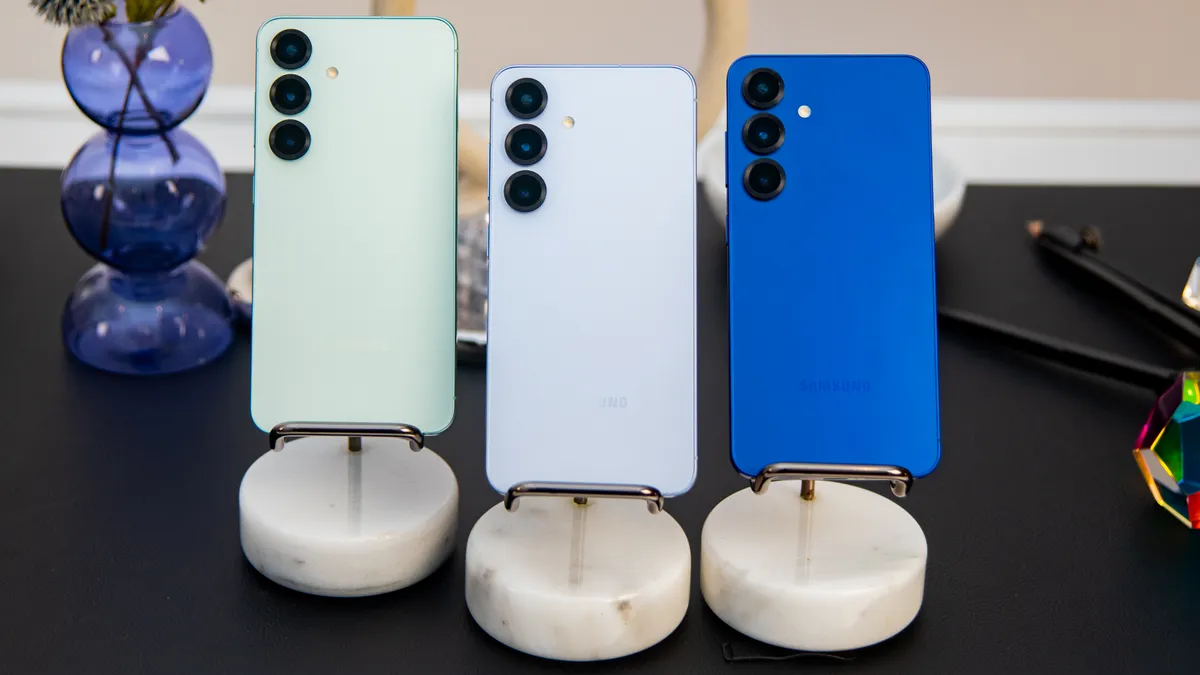


✅ You want top notch performance: The Galaxy S25 Plus has all the power of the Galaxy S25 Ultra, with the same high-resolution display and faster charging, for much less.
✅ You want a bigger, sharper screen: The Galaxy S25 Plus gives you more than a bigger screen, it also gives you Samsung's ProScaler technology and the highest pixel density.
✅ You want more battery life: I got amazing battery life from the Galaxy S25 Plus, and the Plus outperformed even the Galaxy S25 Ultra in our battery lab tests.
❌ You want the long zoom cameras: The 5X zoom camera and the high-resolution ultra-wide sensor are the best advantages that the Galaxy S25 Ultra has over the Galaxy S25 Plus.
❌ You need easy software: Samsung's OneUI interface is bloated and complicated; more difficult than Apple's iOS by far. Even Google's Pixel 10 is easier to use.
📱 The Galaxy S25 Plus has great battery life and a big, sharp display, with fantastic performance to boot. It gives you all the Samsung features you need and nothing you don't. ★★★★
The Galaxy S25 Plus is incredibly impressive. It might seem surprising that Samsung's middle-tier model is our favorite Samsung model, but it provides identical performance, the same crisp and vibrant display, and the same excellent battery life as the Galaxy S25 Ultra. It's hard to justify spending significantly more for features that even premium users won't utilize.
Design: While it lacks the titanium frame of the Galaxy S25 Ultra, the Samsung Galaxy S25 Plus is available in a variety of more attractive colors and maintains a premium and contemporary aesthetic.
Display: The Galaxy S25 Plus features a display that is not only larger than the Galaxy S25 but also packs more pixels, resulting in a higher resolution than the Galaxy S25, and it even offers slightly more sharpness than the Galaxy S25 Ultra.
Camera: You could spend considerably more for 5X zoom on the Ultra, but the Galaxy S25 Plus features a 3X optical zoom camera, in addition to a fantastic main camera and an ultra-wide lens. Samsung's shooting modes and AI photography also help the phone take great pics.
Performance: The Galaxy S25 Plus delivers top-tier performance thanks to the Snapdragon 8 Elite for Galaxy chipset. In our benchmark tests, the Snapdragon often outperformed the Apple A18 Pro chipset found in the iPhone 16 Pro Max. The Galaxy S25 Plus will effortlessly handle your gaming and productivity demands.
Battery life: The Galaxy S25 Plus lasted longer than nearly every other smartphone I've tested, lasting just a bit longer than the larger Galaxy S25 Ultra. It also charges quickly and offers reverse charging, should you need to power up your earbuds while on the go.
Value: The Galaxy S25 Plus launched at a price point similar to the iPhone 16 Pro, but Samsung phones are consistently available at a discount, so check Amazon, your preferred mobile carrier, or Samsung's own online store before you make that final click.
Read our in-depth Samsung Galaxy S25 Plus review
Photos taken with the Samsung Galaxy S25 Plus


Value |
Worth the premium over the Galaxy S25, with a display and battery life that beat the more expensive Ultra. Still expensive, but worth the high price. |
4/5 |
Design |
A solid, refined look that hasn’t changed much over the years, and strongly resembles its biggest rival. I’m ready for something new, but this design is a classic, with good color options this year. |
3/5 |
Display |
A fantastic display that’s bright and colorful, making it easy to use in any situation, even taking photos in bright sunshine. I only wish the fingerprint scanner were more responsive, but it’s still a great screen with minimal bezels. |
5/5 |
Software |
Samsung has improved One UI with a refreshed look and brighter colors. The bloatware problem is growing, though, and many of the Galaxy AI features mentioned at launch don’t show up on the phone. |
3/5 |
Cameras |
Takes good photos, but you can find much better cameras on competing phones, with bigger sensors and more pixels. It’s time for an Ultra-fied camera upgrade for the rest of the Galaxy S25 lineup. |
4/5 |
Performance |
You won’t find a faster phone than the Galaxy S25 Plus, but what will you do with all that power? This Snapdragon wins benchmark tests, but in real-world performance it’s less apparent. Still, it’s the fastest phone around, even if you can’t see it. |
5/5 |
Battery |
Excellent battery life, topping even the Galaxy S25 Ultra, but the OnePlus 13 is far more impressive, with longer battery life and much faster charging. It’s time for Samsung to catch up if it wants to remain at the top. |
4/5 |
The best for teens


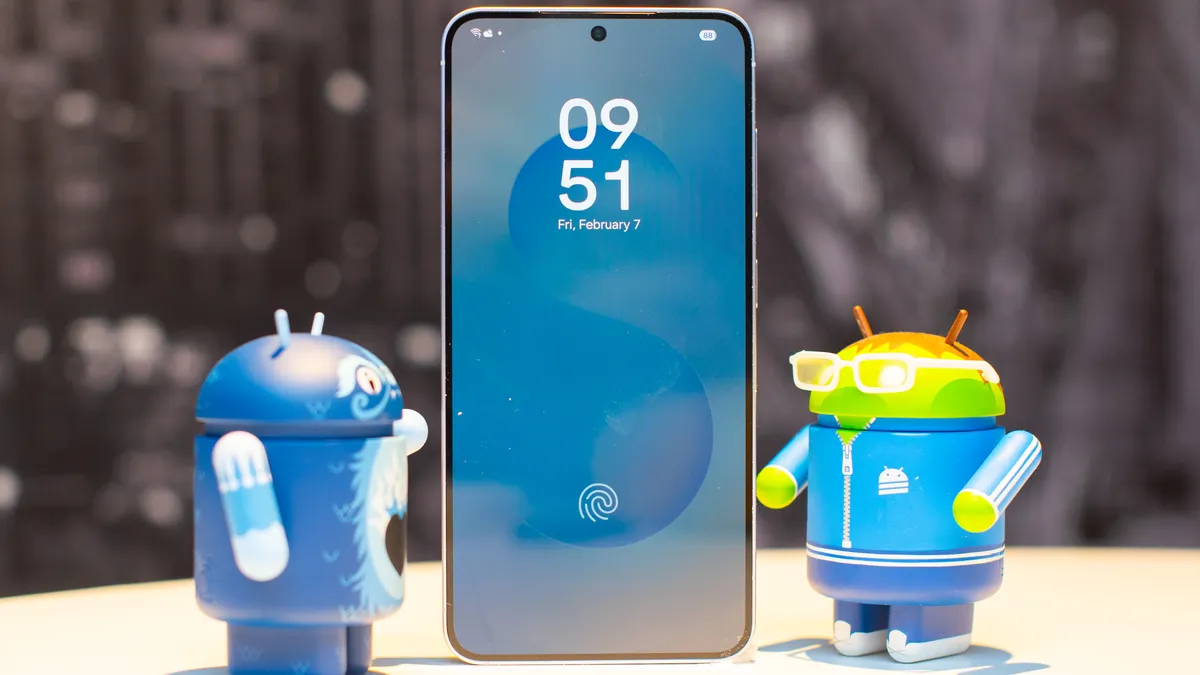


✅ You're want power on a budget: The Galaxy S25 isn't cheap, but it packs as much power as the Galaxy S25 Ultra for much less.
✅ You want a compact phone: The 6.2-inch Galaxy S25 offers plenty of power for a phone this small, and you can't find a more powerful phone this size.
✅ You need serious power: Qualcomm's Snapdragon 8 Elite for Galaxy chipset is plenty powerful for any task, even running an external display or using the latest AI models.
❌ You want a big screen: A 6.2-inch display used to be huge, but these days it's feeling a bit cramped, especially if you're used to a big phone like an iPhone Pro Max or a Galaxy Ultra.
❌ Your budget can stretch: For a lot more cash you can have a much better camera system, a magical S Pen accessories, and a huge screen with a big battery inside, if you get the Galaxy S25 Ultra.
❌ All of your friends use the iPhone: Samsung's software is a big weakness, and it's lagging behind Apple's iOS in social features that make it fun to share with other iPhone users. If your crowd is all Apple, all the time, check out the iPhone 17.
📱 The Samsung Galaxy S25 packs a serious punch for its small size, with a Snapdragon 8 Elite inside that can handle any task you'd imagine, and thanks to Galaxy AI, even some tasks you never thought possible. There is a lot of software bloat, and of course you can get a lot more from Samsung if you spend more, but the Galaxy S25 is the best compact phone if you need a strong mobile champion for a bit less. ★★★★
The Samsung Galaxy S25, the smallest of the Galaxy S25 family, is a remarkably powerful Android. Its compact size makes it the most pocket-friendly option among today's flagship phones.
Design: The Galaxy S25 offers a wider range of colors compared to the Galaxy S25 Ultra. However, it forgoes the titanium frame found in the Ultra. Despite this, the S25 remains a robust device with IP68 water resistance and a design reminiscent of its predecessor.
Display: The 6.1-inch display on the Galaxy S25 provides a sharp viewing experience. You don't get the ProScaler tech from Samsung TVs, but I couldn't spot the difference compared to the Galaxy S25 Plus.
Cameras: While the Galaxy S25's camera hardware remains unchanged, Samsung's improved image processing results in better photos. The camera system includes a 50MP main lens, a 12MP ultra-wide lens, and a 10MP telephoto lens with 3x optical zoom.
Performance: The Galaxy S25 family is powered by the new Qualcomm Snapdragon 8 Elite for Galaxy processor, which delivers exceptional performance. It rivals even the Apple iPhone 16 Pro in speed and efficiency, making it ideal for demanding tasks and gaming.
Battery life: The Galaxy S25 uses the same battery capacity as the Galaxy S24. Nevertheless, battery life has improved, and most users can expect a full day of typical use.
Value for money: The Galaxy S25 provides an accessible entry point to the Samsung Galaxy S experience. While it doesn't offer all the features of the S25 Ultra, it comes at a significantly lower price.
Read our in-depth Samsung Galaxy S25 review
Photos taken with the Samsung Galaxy S25


Value |
The fastest phone in this price range by a small margin, but the design and specs are getting a bit stale. |
4/5 |
Design |
The Galaxy S is starting to feel like the same great song stuck on repeat. The phone looks refined with great color options this year, but it also looks just like last year’s model, and the model before that. |
4/5 |
Display |
A fantastic-looking display that’s plenty bright, even on a sunny day. It’s smooth and responsive (except for the fingerprint reader), with a very slim bezel. |
4/5 |
Software |
Samsung’s One UI 7 looks great, but many of the AI features have failed to materialize, for better and for worse. It does a lot, though it’s bloated with software, but Samsung keeps improving, and this phone will get seven years of software updates. |
3/5 |
Cameras |
Very nice cameras that always deliver a great photo, no matter the lighting or subject. I wish there was more zoom and more megapixels available, since the Galaxy S hasn’t seen a camera boost in years, but the AI editing helps smooth rough edges. |
4/5 |
Performance |
Superlative smartphone performance, really the best you’ll find at any price, though I’m not sure where all of that power is going. Probably the AI? If so, it’s going to get even better over the next few years as the AI develops, but for now it’s just great for playing games with the settings cranked to maximum. |
5/5 |
Battery |
Excellent battery life, the best you’ll find on a phone this size. It lasted a full day in my review testing, and hours longer than the iPhone 16 in our lab tests. I wish it charged faster, but it’s quite capable, with great wireless charging features. |
4/5 |
The best flip phone


✅ You want the best cover screen: This phone's astounding 4.1-inch cover display takes up the entire front of the phone, featuring the thinnest bezels Samsung has ever used for a truly edge-to-edge experience.
✅ You're a power user who loves flip phones: This is an exceptional flip for serious smartphone users, packing tons of features you can't find on competitors, including the ability to run a full desktop experience with Samsung DeX.
❌ You value a simple, intuitive software experience. I found Samsung software to be a mess and a real drag, with crucial features, like running apps on the cover screen, hidden under multiple layers of confusing settings in a "Labs" menu.
❌ You demand top-tier performance and battery life. The Flip 7's Exynos processor lags behind the Snapdragon chips in other Galaxy phones, and this impacts battery life, which was 6.5 hours less than the Moto Razr Ultra in our lab tests.
📱 The Samsung Galaxy Z Flip 7 is the best flip phone Samsung has ever made, finally delivering the stunning, edge-to-edge cover display and polished design I’ve been waiting for. It makes a perfect argument for the flip form factor, combining a huge 6.9-inch internal screen and powerful features like DeX into a compact, pocketable device. ★★★★½
What you need to know
The Galaxy Z Flip 7 finally delivers a stunning, truly edge-to-edge cover display and a beautiful 6.9-inch internal screen, all while packing in serious power-user features like Samsung DeX. The excellent hardware is held back a bit by confusing software and the new Exynos processor, but this is still one of the best flip phones we've ever tested.
Value: At $1,099, the Galaxy Z Flip 7 costs the same as last year's model, which feels like a fair price considering you get two advanced displays in one device. It's also priced competitively, costing less than its main rival, the Motorola Razr Ultra, and is often available for free with new carrier contracts.
Design: The phone's design is defined by its new 4.1-inch cover display, which is a showstopper that takes up every possible inch with the thinnest bezels Samsung has ever used. Durability remains a question, however, as our review unit's back glass panel accumulated noticeable scuffs and scratches after just one week of normal use.
Display: Both screens are spectacular, with the 6.9-inch inner display being exceptionally bright and clear, making it a joy to open even in bright sunlight. The real star, however, is the new 4.1-inch cover screen, which features the thinnest bezels ever and finally delivers the useful, edge-to-edge experience we've been asking for.
Cameras: The 50MP camera system is very good, producing photos with a more natural, realistic look that we loved, and Samsung's Portrait mode is arguably the best on any smartphone. The Flip 7's coolest trick is using the cover screen as a viewfinder for high-res selfies, but the setup is held back by the lack of a dedicated optical zoom lens.
Performance: This is the phone's biggest disappointment, as its Samsung Exynos 2500 processor lagged behind the Snapdragon 8 Elite in every benchmark test we ran. While it's powerful enough for daily tasks and finally supports the welcome return of Samsung DeX, it's a shame the phone runs on a platform that is clearly inferior to other Galaxy phones (and the competition).
Battery life: Battery life is a major disappointment, as the inefficient Exynos chip is likely to blame for its poor showing in our lab tests. The Z Flip 7 lasted 6.5 hours less than its main competitor, the Moto Razr Ultra, though in our real-world testing, it did usually last a full day.
Read our full Samsung Galaxy Z Flip 7 review
Photos taken with the Samsung Galaxy Z Flip 7


Attributes |
Notes |
Rating |
|---|---|---|
Value |
Solid value considering you get two displays for the price of one, plus all of the technology Samsung packs inside. There are cheaper flip phones, but none that can do as much as the Flip 7. |
4 / 5 |
Design |
A nice design that will be familiar to Samsung fans. I still wish it were more exciting, and some scuffs during my review time left me more concerned about durability than before. |
4 / 5 |
Display |
Excellent displays inside and out. The inner display is bright and clear and a joy to use. The cover screen has the smallest bezels ever, and it's more useful than before. |
5 / 5 |
Performance |
Disappointing performance all round thanks to the Exynos 2500. I’m being extra harsh so Samsung doesn’t make this mistake again and use an inferior Exynos chip when the Snapdragon is obviously superior. This phone should be faster. |
3 / 5 |
Software |
The Flip 7 can do more than ever, but Samsung doesn’t make it easy. Expect hidden features, extra steps, and hacked-together solutions. Also, the AI features don’t seem fully baked. |
3 / 5 |
Cameras |
Nice cameras that tone down the saturation for a more realistic look. The best camera modes in the biz, including great portraits and appetizing food shots. Solid AI editing tools remove artifacts flawlessly. I wish it had zoom. |
4 / 5 |
Battery |
Battery life isn’t terrible, but it’s disappointing considering other phones have seen huge advancements thanks to new battery tech and more efficient (Snapdragon) platforms. It still lasts a full day, most of the time. |
3 / 5 |
The best Samsung thin phone


✅ You find the Galaxy S25 Plus too thick and heavy: The Edge "fits neatly in between" the Plus and Ultra, and it's so easier to hold thanks to its remarkably light weight that you have to hold it to appreciate it.
✅ You're a gamer who needs top-tier performance and cooling. The Edge delivers excellent performance (just as powerful as the Ultra) and has superior cooling that, in our testing, passed a stress test that breaks other phones.
❌ You need reliable, all-day battery life: This phone had trouble lasting past dinner time in my testing, and its charging speed is pretty slow, making the small battery a significant compromise for its thinness.
❌ You need a versatile camera system with optical zoom. I was disappointed with the cameras; the digital zoom doesn’t come close to the quality of the S25 Ultra, making it a poor choice if you take photos from far away.
📱 The Samsung Galaxy S25 Edge successfully slims down the S25 Plus, offering a remarkably lightweight feel and top-notch performance that stays incredibly cool. This thin design makes significant compromises, but if you want a uniquely light phone that's a pleasure to use, check out the Edge. ★★★½
What you need to know
The Samsung Galaxy S25 Edge is a remarkably lightweight phone that successfully slims down the S25 Plus, offering top-notch performance and superior cooling in a very thin package. However, this design comes at the cost of great battery life and a versatile camera system, as it lacks an optical zoom.
Value: The S25 Edge slots neatly between the S25 Plus and Ultra, costing $100 more than the Plus for its svelte design. Since there are no surprises, it's not a bad price for those who know what they’re getting and are willing to pay a premium for thinness.
Design: The real selling point of the Galaxy S25 Edge isn't just its thinness but its remarkable lightness, which you have to hold to appreciate.
Display: The 6.7-inch display is fantastic and one of the best you can find, offering plenty of brightness and a super sharp 120Hz refresh rate. My only complaint is the totally unreliable under-display fingerprint scanner, which failed more often than not during my testing.
Cameras: The camera system is fine, but not groundbreaking, with a 200MP main sensor that's good but fuzzier than the S25 Ultra's. If you need a zoom lens, this isn’t the phone for you, as its digital zoom doesn’t come close to the quality of an optical zoom.
Performance: Performance is excellent and delivered beyond my expectations, thanks to the powerful Snapdragon 8 Elite for Galaxy chipset. I was most impressed by the superior cooling, as I couldn’t get the Edge to overheat, even under stress tests that break other phones.
Battery life: The Galaxy S24 FE boasts even better battery life than its predecessor and even better longevity than the flagship S24, and proved somewhat difficult to run down all the way in a single day of normal use. It supports both wireless charging and power sharing, and charges at a reasonable 25W.
Read our in-depth Samsung Galaxy S25 Edge review
Photos taken with the Samsung Galaxy S25 Edge


Value |
Not a bad price for the svelte design and pocketability. You know what you’re getting, there are no surprises, so it seems like a fair upgrade from the Galaxy S25 Plus (or is it a downgrade from the Ultra?) |
4/5 |
Design |
A bit thinner and much lighter than any other flat phone you’ve tried. You can’t tell by looking; you have to pick it up to feel the difference. The finish is a bit shoddy, but the design might still satisfy buyers with a sore pinky. |
3/5 |
Display |
The same great display I saw on the Galaxy S25 Plus (with the same lousy fingerprint scanner). It’s super sharp and very bright, though if you’ll often be in bright sunshine the Ultra has a better anti-glare coating that makes it worth a look. |
5/5 |
Software |
Samsung’s One UI looks as good as ever, though the AI features are starting to wane in terms of their usefulness. Thankfully, this phone gets seven years of updates, so it will have no problem running your favorite apps and hopefully improving in the years to come. |
3/5 |
Cameras |
You get fewer cameras on a thinner phone, but the main camera still takes fantastic shots, albeit ones that are a bit subdued by normal Samsung standards. They don’t pack the same detail as the Ultra, but food photos and portraits are especially gorgeous. |
3/5 |
Performance |
Fantastic performance from the Snapdragon 8 Elite for Galaxy is paired with some of the most impressive cooling I’ve experienced on a smartphone. I couldn’t get the Edge to fry itself, no matter how much I pushed past its performance limits. |
5/5 |
Battery |
Battery life isn’t terrible considering the weight reduction, but I wish the smaller battery came with faster charging to make me forget how long I need to wait. I had to charge the phone most nights after dinner, unless I was careful. |
3/5 |
How to choose the best Samsung Galaxy phone
If you've decided to buy a Samsung phone, the next consideration is how much you want to spend. The best Samsung phones cost more than the Apple iPhone, making them the most expensive smartphones you can buy. Make sure you aren't paying more for features you don't need.
Do you need a pen? The S Pen is more than a stylus, it's also a Bluetooth remote control, but is it worth paying more? Do you need a foldable display? You can replace your tablet with a tablet foldable, but it will cost more than an average phone and tablet together.
Decide how much you want to spend, wait a moment, because Samsung phones go on sale often. We saw deals on Samsung phones over Black Friday, and Samsung offers trade-in bonuses, bundle offers with earbuds, and other discounts throughout the year.
What makes a Samsung better than other Android phones?
Samsung makes much of the technology used in mobile phones, even phones from other phone makers, and it is known for producing top tier components. Samsung displays, Samsung memory, and processors made on Samsung's foundries (including chips from other chipmakers), are often the highest quality available, and Samsung uses those components on its own phones.
Samsung also offers the most robust service and support among any Android phone maker. If you Samsung phone breaks (or if you break it) and you need help, Samsung has a proven track record and numerous options to get your phone fixed.
How we test
How we test the best Samsung Galaxy phones
We only include phones that we've fully reviewed in this guide, so every entry has been extensively tested. As such, we can be confident of how each model compares to other Samsung phones, and to the wider smartphone landscape.
As well as the review score, we consider the specs of a phone, how well it all comes together in practice, how much it costs, how good value it is, and how it compares to the competition.
To come to these conclusions we'll make use of every key feature of a phone, see how it performs under different circumstances, and see how the battery holds up under different use cases. We'll also run benchmarks.
With all that information combined, we're then able to see exactly how each Samsung phone stacks up.
- See our Samsung promo codes page for this month's best discounts
