





Quality audio is crucial for professional content whether you’re shooting for social or cinema. Our team of camera experts has tested every major wireless mic on the market to help you find the best tool for recording clearer sound today.
The DJI Mic 3 is a prime example. During our in-depth review, it proved itself a winner for recording vocals, using Adaptive Gain Control to automatically adjust to changing conditions. Its ultra-compact design and generous set of pro-friendly features is also impressive. It's a brilliant package for content creators on the go and currently the best wireless mic for most people.
But it's not the only choice out there, and my guide includes wireless mics for every kind of creator, whether you’re shooting solo with one of the best camera phones or working on a project using a top video camera. Each wireless mic recommended below has gone through hours and hours of testing at the hands of our specialist team, in order to give you an honest and accurate assessment of the options available.
Today's best wireless mics
Why you can trust TechRadar We spend hours testing every product or service we review, so you can be sure you're buying the best. Find out more about how we test.
Below, you'll find full write-ups for each of the best wireless mics in my list, plus a link to a full in-depth review. I or a member of my team has tested each one of these extensively, so you can be sure that our recommendations can be trusted.
The best wireless mic overall


✅ You need versatility: The Mic 3 connects to a wide variety of products either through its RX unit or directly, while the TX works as a solo recorder with 32GB of storage.
✅ You want a discreet but powerful mic: The Mic 3 is about half the size of the Mic 2 delivering better performance and features – quite the technical achievement.
❌ You only shoot with a phone: Smartphone-first creators should consider something with a smaller RX, as the Mic 3's adds bulk to your handset's profile.
❌ You prefer to use a lav microphone: The Mic 3's ditching of the 3.5mm lavalier input won't bother most people, but for those that use discreet lav mics it's a major drawback.
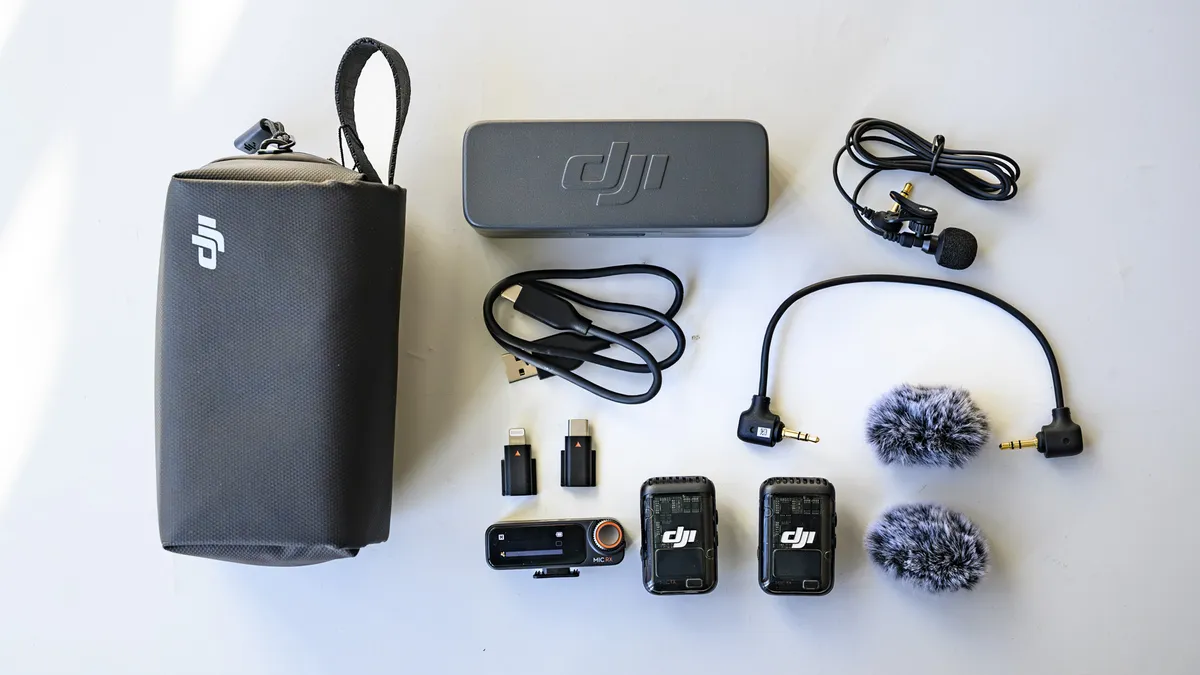
The DJI Mic 3 represents a leap forward from the already excellent Mic 2, packing impressive upgrades into a smaller and lighter transmitter design. At just 16g, the TX unit is far more discreet and comfortable to wear than its predecessor, yet delivers even better performance. The charging case has been brilliantly redesigned too, now accommodating two TX units, the receiver and all the accessories including windscreens and clips, fixing one of the Mic 2's most irritating oversights.
Performance improvements are notable across the board. Battery life jumps from 18 hours to 28 hours with the charging case, onboard storage quadruples from 8GB to 32GB, and wireless transmission range extends from 250m to 400m. There's now two-level active noise cancelling, three new voice tone presets for instant character, and support for 24-bit lossless audio transmission alongside the existing 32-bit float recording. New professional features include timecode support and 4TX+8RX group recording capabilities, while dual-mode Adaptive Gain Control intelligently balances audio in unpredictable environments.
The audio quality remains excellent, matching the Mic 2's high standards while adding greater versatility (aside from the removal of the 3.5mm lavalier input on the TX). The Mic 3 connects seamlessly to cameras, computers, tablets and smartphones via USB, 3.5mm or Bluetooth, with particularly impressive integration with DJI's OsmoAudio ecosystem products like the Osmo 360 and Osmo Action 5 Pro. At a lower launch price than the Mic 2, it's great value for a premium wireless mic that sets the standard for the category.
- Read our in-depth DJI Mic 3 review
The best wireless mic for phones


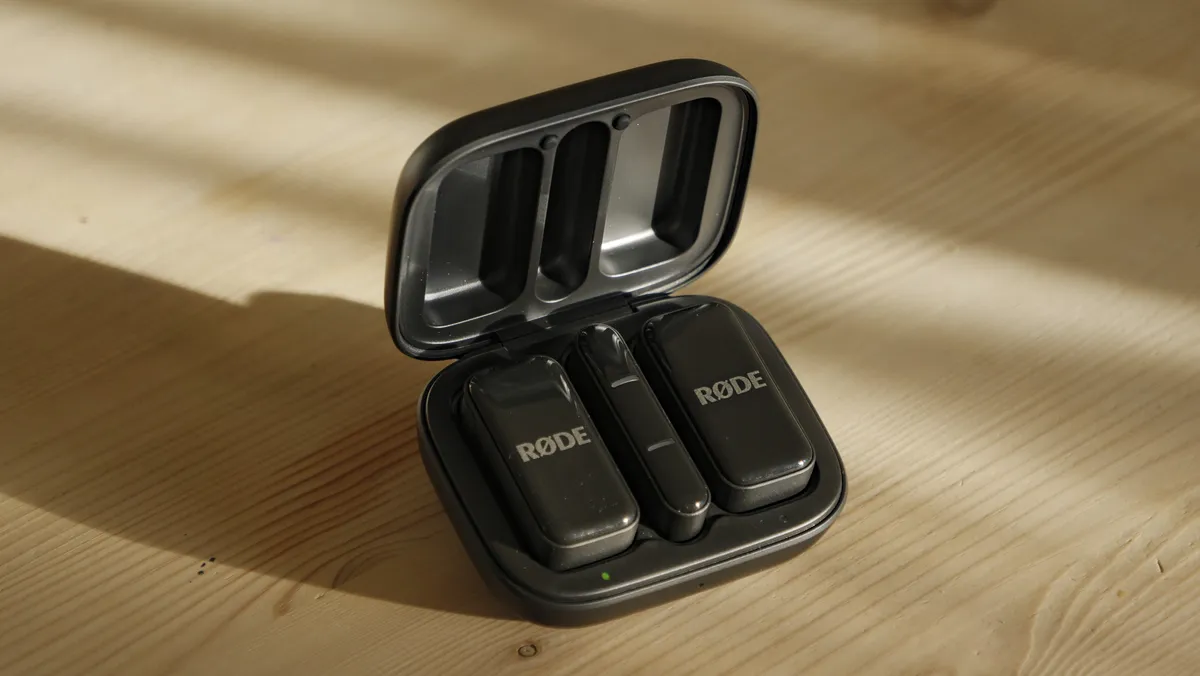


✅ You want a simple wireless mic for smartphones: The Wireless Micro is as simple as it gets. Plug in the receiver, select the wired mic option and you're connected. It's a matter of seconds.
✅ You want a discreet wireless mic system: The receiver sits flush against the profile of your phone and the transmitters themselves are tiny and discreet.
❌ You need a mic for cameras too: The Wireless Micro is for USB-C / Lightning devices only, meaning phones / laptops and very select cameras like the Osmo Pocket 3. If you think you might also use cameras to create content then the DJI Mic Mini is a better bet.
❌ You want some degree of manual control and audio-level monitoring: There's no real way to manually adjust audio levels, or even monitor them while recording.
This compact, affordable wireless mic set is focused entirely on USB-C / Lightning device recording and tailor made for smartphones, with a receiver that sits beautifully flush with the underside of both Apple and Android handsets. You’ll have to pick from the two, though: with the Lightning or USB-C connect built into the receiver rather than an add-on, each Wireless Micro set you buy is only able to fit one kind of phone. And with the components only available as a set, we think Rode has missed a trick by not putting additional receivers on sale.
The set comes with two tiny transmitter mics with magnetic attachments which, along with the receiver, slot neatly into a pocketable charging case (the supplied charging cable and windshields, however, don’t fit inside). The case’s battery-replenishing talent gives the full setup an outstanding 21 hours of battery life, making it ideal for a long weekend of on-the-hoof recording.
The 24-bit audio quality supplied by the Wireless Micro is excellent, despite a lack of built-in noise reduction. Our test vocal recordings sounded clear, crisp and well-balanced, even in loud environments like a sports stadium. It’s worth noting though that, unlike many wireless mics, there’s no way to monitor or manually adjust audio levels during recording, and control freaks might struggle with relying solely on Rode’s (admittedly proficient) Intelligent GainAssist technology.
- Read our in-depth Rode Wireless Micro review
The best cheap wireless mic
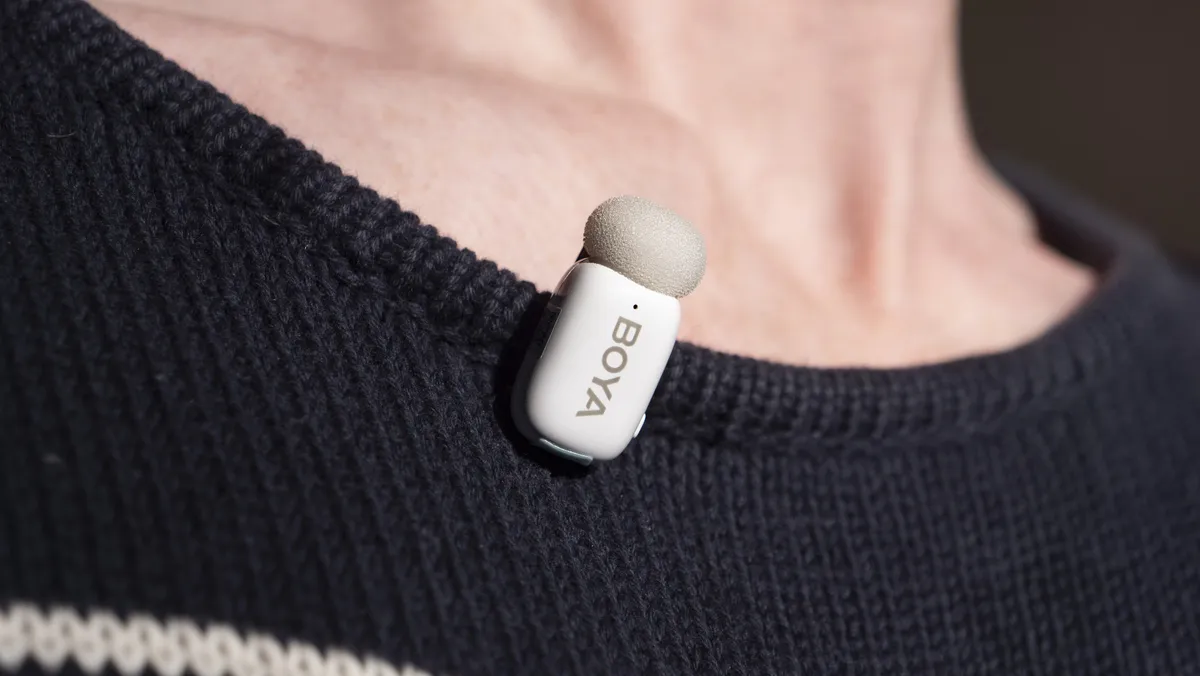


✅ You want the cheapest possible wireless mic that's worth buying: It might be mega cheap, but it's also the real deal, with decent-quality audio and reliable performance.
✅ You want a tiny wireless mic: Billed as the world's smallest and lightest wireless mic, the Boya Mini is positively tiny and discreet, and available in black or white version.
❌ You'll eventually need a mic for cameras: The Boya Mini lacks a 3.5mm connector, meaning that you wont be able to use it with a dedicated camera.
❌ You want the best possible audio quality: The Boya Mini punches above its weight, but it's not one for audiophiles, who will prefer the richer audio quality of pricier rivals.
Beginner content creators, or those operating on a shoestring budget, should give the Boya Mini careful consideration. This discreet, compact wireless mic setup is less than half the cost of a DJI Mic Mini and, while it can’t match that model in terms of features, flexibility or audio quality, there’s nothing here that makes it a bad purchase at that low, low price.
The tiny mic transmitters weigh just 5g, so you won’t feel them tugging on your garments at all, while the similarly small and lightweight receiver sits on your phone’s charging port without adding annoying bulk. Both USB-C and Lightning receivers are included in the complete kit, as well as a charging case, charging cable and two foam windshields for the mics. Build quality isn’t wonderful, but we think the plasticky feel is acceptable given the cost.
With a full kit inside the case, it weighs just 29g and easily fits in a shirt or trouser pocket – all while providing enough recharging power to keep the mics recording for a total of 30 hours recording time. For those who want the cheapest option, it’s possible to buy just a single mic and receiver too.
With audio quality limited to 16-bit and mono, no low-cut filter and no 3.5mm input, there are compromises here, but we think all are acceptable for a mic this cheap.
- Read our in-depth Boya Mini review
The best small wireless mic


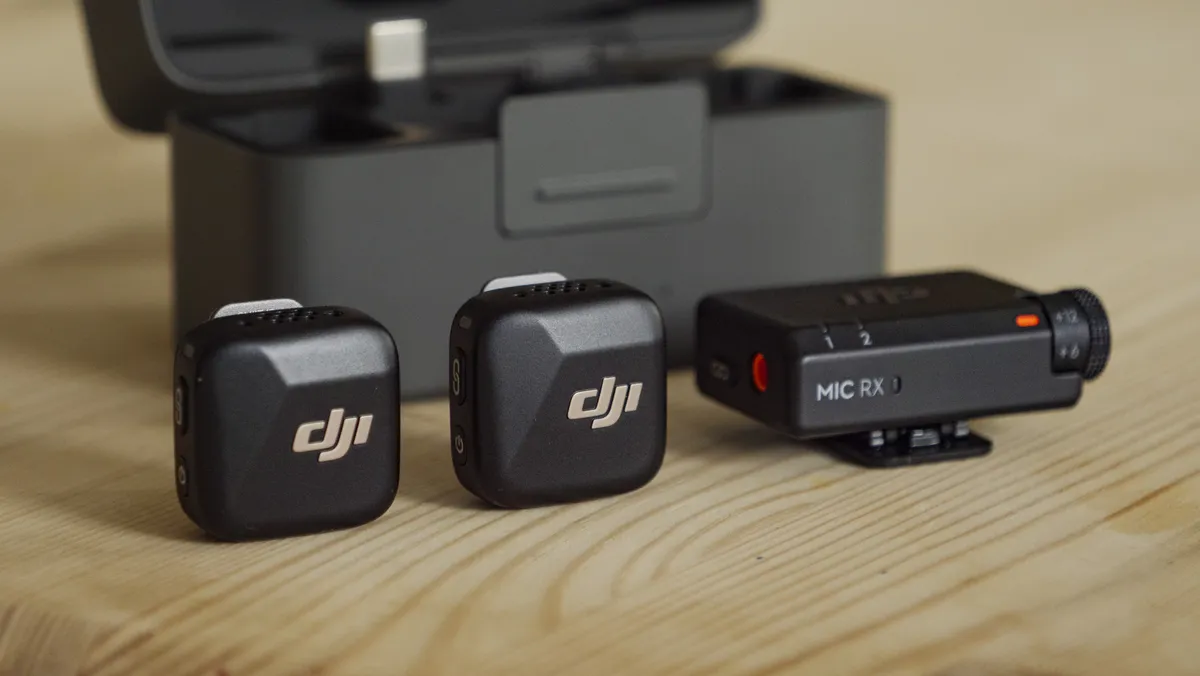


✅ You want a simple wireless mic for phones and cameras: DJI has stripped back the design and audio modes from its pro Mic 2 but support for both phones and cameras remains.
✅ You want flexible buying choice: The Mic Mini comes as a complete kit, a half kit, or with components individually, meaning you don't need to overspend for what you won't use.
❌ You only shoot with a phone: The Rode Wireless Micro is even simpler and its receiver is purpose-made for use with smartphones, whereas the Mic Mini's receiver is a little bulkier.
❌ You want some form of manual control: The Mic Mini is for those who want an automated mic with minimal fuss, and are happy to rely on its quality without needing peace of mind from features such as audio-level monitoring.
Following hot on the heels of DJI’s premium wireless mic, the Mic 2, the Mic Mini is a cheaper and more compact option that ditches a few of its big brother’s premium features but remains a fantastic option.
Sure, you can’t record 32-bit float files here, there’s no on-board storage on the transmitters and the lack of a screen on the receiver makes monitoring audio while in the middle of a recording difficult, but it doesn’t feel like you’re getting a stripped-back budget option here: there’s two-level noise reduction technology plus the ability to record 16-bit Bluetooth audio direct from smartphones and selected other devices, completely bypassing the need to use a receiver. The receiver, though, can be attached to devices via a USB-C or 3.5mm connector for great quality 24-bit recordings – and a Lightning adapter is available too (albeit as a more expensive option).
With a long wireless range (up to 400m), automatic syncing, the feather-light 10g weight of the transmitters and the stonking 48 hours of use you get out the set (with a charging case included), the DJI Mic Mini is a joy to live and work with, minimizing fuss and helping you get superb sound from a range of sources.
- Read our in-depth DJI Mic Mini review
We recently tested the DJI Mic Mini 2 but the review didn't warrant replacing the DJI Mic Mini. Our reviewer stated, "For anyone coming from the original Mic Mini, the interchangeable covers and voice presets aren't a compelling reason to upgrade."
So, what if you don't already have a DJI Mic Mini? Well - there is a new Mini 2 S coming out in a few months that'll have internal storage and support up to 4 transmitters.
If you want one now, and with a previous edition discount then go with the Mini. If you can wait and want the best then hold out for the 2 S.
The best designed wireless mic
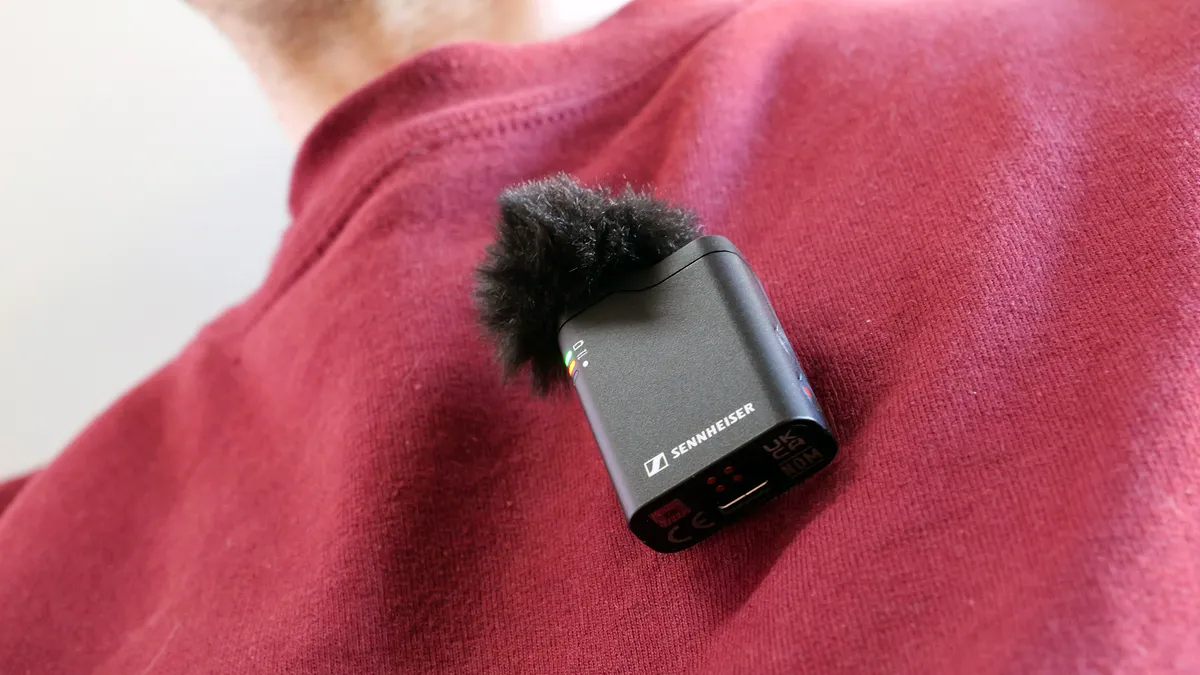


✅ You want protection against signal drops: Profile Wireless's automatic backup mode kicks in to rescue recordings that might otherwise be lost if the wireless signal becomes weak.
✅ You want to interview people while out and about: The charging bar’s ability to double as a handheld broadcast-style microphone makes it ideal for recording vox pops and similar interviews.
❌ You often record in very noisy places: With no noise reduction, you’ll be hearing background sounds in recordings. If recording in noisy environments is commonplace for you, it might not be the best choice.
❌ You want to buy components separately: The Profile Wireless is only available as a two-transmitter kit with the charging bar, with extra transmitters and receivers being sold separately – but only as replacements or backups.
Microphone veteran Sennheiser’s first foray into the small wireless mic market is a typically solid and dependable effort. While it’s quite a bit more affordable than the likes of the DJI Mic 2, and lacks some of the features you might expect from a true premium option (there’s no 32-bit float or automatic noise reduction here), the Profile Wireless is nonetheless a reliable and effective alternative with clear, well-balanced and weighty 24-bit sound.
Perhaps its best aspect is its innovative design. Instead of a charging case, Sennheiser has created a charging bar that not only incorporates and recharges the two transmitters and single receiver but doubles as a traditional handheld microphone – the sort you’d see a TV reporter shoving into the face of a disgraced politician on some courtroom steps.
Innovation also comes in the way sound is recorded too. A Backup Recording Mode kicks in in the event of the wireless signal dropping, switching the recording directly to the 16GB of space on board the transmitter. It’s a welcome safety feature that could well end up rescuing an otherwise lost recording.
- Read our in-depth Sennheiser Profile Wireless review
The best value pro wireless mic


✅ You want an affordable pro-friendly wireless mic: The Saramonic Ultra is packed with useful and often premium features, such as 32-bit float recording, despite being one of the more affordable wireless mic packages around.
✅ You need a waterproof solution: With IPX5-rated water resistance, you could use the Saramonic Ultra’s transmitters in a rainstorm (or even during your morning shower) without fear of damage.
❌ You want to buy the components separately: The Ultra is only available as a two-transmitter kit supplied with a charging case. So if you need just one transmitter and one receiver and are hoping to save money, you’re out of luck.
❌ You record in loud environments: With the on-board noise cancellation tech far from the best around, recording in noisy environments like busy roads can be risky.
Despite being kitted out for professionals who demand superb audio performance, the Saramonic Ultra heavily undercuts other pro-level wireless mics when it comes to price. It comes with timecode support, 32-bit float recording, adapters for phones and cameras (including those with Sony Multi Interface) and its transmitters are waterproof, making it one of the best-specced wireless mics out there.
The Ultra is not perfect: the noise reduction tech isn’t very effective and the charging case doesn’t feel as reassuringly solid as that of DJI’s Mic 2, but neither of these feel like deal-breakers given the flexibility and overall performance.
Thanks to features like auto sync, auto gain, low cut and vocal boost, the Saramonic Ultra is also reasonably simple and easy to use, with solid battery life when used in conjunction with the charging case.
- Read our in-depth Saramonic Ultra review
Also consider
Not every wireless mic could make the cut above, but there are a few alternatives I've tested that are also worth considering.
Alternative all-rounder option – DJI Mic 2: Before the arrival of the DJI Mic 3, this was my go-to pick for overall wireless microphone, and it's still a fantastic option in terms of audio quality and flexibility – it's just not as lightweight, compact as the Mic 3, and its battery life isn't as impressive. One advantage it has over its successor is that each TX unit has a 3.5mm input for a separate lav mic.
Best flexible mic setup – Boya Magic: This affordable shapeshifter is four microphoness in one: lavalier, desktop, on-camera and handheld. All of them sound great to boot, but the tiny lav mic, weighing just 7g, is the workhorse you'll probably use most often. It doesn't offer direct Bluetooth recording, however.
Best alternative phone mic – Godox Cube C: This minuscule mic is brilliant for content creators who primarily use their phone for recording, thanks to a slim receiver that slots discreetly into your handset's USB-C port. Despite its size and cheap price tag, it's a stellar performer too, recording 48kHz / 24-bit audio and offering up to 10 hours of use on a single charge.
Meet the team

I've been covering consumer electronics as a journalist for over 20 years, contributing to titles including Stuff, Wired, T3 and GQ while reporting on and reviewing everything from vintage cameras to video games. I now specialises in photo and video gear, and has become well acquainted with the kind of products promising to turn amateur dabblers into professional content creators – of which wireless mics like these are a prime example.
Why you can trust my choices
Every wireless mic in this guide has been extensively tested by TechRadar’s cameras team. Our reviewers have years of experience using the latest photo video kit, including audio hardware. For reviews, we put each microphone through a series of real-world scenarios covering every use-case, from interviews to run-and-gun vlogging.
We test each wireless mic for core a number of core competencies, including audio clarity, wireless connectivity and battery life. We also focus on ease of use and how effectively each kit pairs with different devices. Other key factors include mounting options, range and noise-cancelling performance.
☑️ 15 years of product testing
☑️ Over 16,000 products reviewed in total
☑️ Over 200,000 hours testing tech
Collectively, TechRadar's team of reviewers has amassed scores of hours thoroughly testing wireless microphones for all budgets and use cases. Each member of the reviews team is an expert with years of experience reviewing camera accessories and other tech products, so you can trust their opinions

Tim is the Cameras Editor at TechRadar. He has enjoyed more than 15 years in the photo video industry with most of those in the world of tech journalism. Tim has also worked in video production for Studio 44 with clients including Canon, and volunteers his spare time to consult a non-profit, diverse stories team based in Nairobi. Tim has plenty of experience with wireless mics, using them every week for TechRadar's social media content.

James Abbott is a professional photographer and freelance photography journalist for a wide range of magazines and websites, with a wealth of drone experience. He is A2 Certificate of Competency (A2 CofC) certified, and has been testing drones for over a decade, and uses them for professional work. He's one of our top go-to drone experts.

For more than a decade, Chris has been finding and featuring the best kit you can carry. When he's not writing about his favourite things for Stuff, you'll find Chris field-testing the latest gear for TechRadar. From cameras to classic cars, he appreciates anything that gets better with age.
How to choose the best wireless mic
What are the key wireless mic features?
Some wireless mics keep things simple, while some are packed with additional features to improve usability and sound quality. Ones to look out for are 32-bit float recording (a relatively new audio format that supports lots of tweaking in post-production, in theory allowing you to get great audio in difficult or dynamic environments), noise cancelling and on-board recording (where audio is recording to and stored directly on the transmitter). Some wireless mics also come with a charging case to massively boost battery life, supporting users through long trips or lengthy recording sessions.
What is the best wireless mic for me?
Before buying a wireless mic, consider your needs and your budget. What device or devices will you be recording on? Will you be recording in tricky environments where noise cancelling might be required? Do you need two transmitters, in order to record in stereo or record two people at once? Do you plan on long recording days where battery life and charging cases would be useful?
I think the DJI Mic 3 is the best overall wireless mic for most people, but others might get by just fine with a cheaper, simpler option like the Boya Mini or Rode Wireless Micro.
