





TechRadar Verdict
The AGM G3 Pro is a rugged phone that combines practicality with some useful features, like the thermal camera. The snag with this phone isn’t the hardware spec or its physical scale, but the affordability, depending on where you live.
Reasons to buy
- +
Robust
- +
Excellent battery life
- +
Decent camera
- +
Thermal imaging
- +
Wireless charging
Reasons to avoid
- -
Expensive in some regions
- -
Can’t use dual SIMs and a MicroSD card
Why you can trust TechRadar We spend hours testing every product or service we review, so you can be sure you're buying the best. Find out more about how we test.
AGM G3 Pro: 30-second review
What I like about AGM is that this company's phones typically aren’t a rehash of something I’ve seen previously, but something unique to this brand.
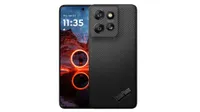
Available in Carbon Black and Alloy Grey, the G3 Pro sells the robust nature of its construction well with an alloy frame and polymer shell. At just 375g, this rugged design isn’t especially heavy, although it has double the battery capacity of a standard phone.
As lovely as it is, the G3 Pro has one special feature that not many competitor devices offer, specifically a thermal imaging camera. AGM quotes a resolution of 512x384, which is probably achieved by interpolation of a 256x192 sensor, but when combined with images captured with the 64MP primary camera, it can deliver some decent results.
This camera offers two thermal ranges, going between -20C to 150C, and another of 100C to 550C, making it useful for tracking hot water, overheating electronic components and automotive issues.For general phone use, the G3 Pro features a popular MediaTek SoC, 12GB of memory, 512GB of storage, and 5G capability.
In short, there is plenty to like in this phone, with the one possible exception of the price. At nearly 700 Euros, this is one of the most expensive rugged phones I’ve covered for Tech Radar Pro. It is possible to get thermal imaging either in a cheaper design or as an add-on to any Android or iOS phone for much less than this.
What AGM is offering is a decent specification and a clean integration of the thermal camera, but it wants plenty for that privilege. Its the high-ish price point is certainly what could stop this from being the best rugged phone choice.

AGM G3 Pro: price and availability
- How much does it cost? $699/£545/€699
- When is it out? Available now
- Where can you get it? You can get it in most regions directly from AGM or from many online retailers.
The pricing of this phone is odd, in so many ways. Directly from AGM, US customers pay $699 and in the EU that translates into €699. However, the UK price is £545, which seems to make it even more expensive there for no obvious good reason.
However, UK customers can also pick it up on Amazon for £599 and AliExpress for just £481.62. From the same source, US customers pay $515.99, though I’m unsure if that includes tariffs.
The EU price from AliExpress is €618.69, which seems excessive when compared with that paid in the USA. To be clear the EU and UK don't apply tariffs to Chinese phones.
For those who want more immediate delivery in the USA, it can be purchased via Amazon.com for $699.
Comparing these prices to other thermal phone solutions, its still $100 less than the Ulefone Armor 29 Pro, although that has a faster SoC and AMOLED displays, and double the battery capacity.
But the Doogee Fire 6 Max is only $479.99, the Ulefone Armor 27T Pro is $458.99 and my personal favourite, the Ulefone Armor Mini 20T Pro is $469.99.
The bargain basement is the Doogee Fire 6 with a thermal camera at only $265.99.
Therefore, the AGM G3 Pro is one of the more expensive phones with a thermal camera, although it's also one of the better quality options.
The pricing makes zero sense. It’s like AGM decided to offset American tariffs by hiking the European prices, or they wanted to kill demand for some reason.
This is a good phone, and it has a high-quality thermal camera, but it's way too expensive.

- Value score: 3.5/5
AGM G3 Pro: Specs
Feature |
Details |
|---|---|
Durability |
IP68/IP69K, MIL-STD-810H, drop/water/dust resistant |
Battery |
10,000mAh, fast wired/wireless charging |
Thermal Camera |
512x384 resolution, professional-grade |
Main Camera |
64MP rear, 50MP front, 2MP macro |
Display |
6.72" FHD+, 120Hz, toughened glass |
Performance |
MediaTek Dimensity 7300, 12GB RAM, 512GB storage |
Connectivity |
5G, Wi-Fi 6, Bluetooth 5.2, NFC, dual SIM, microSD |
Speaker/Light |
5W, 116dB loudspeaker, camping LED light |
OS |
Android 15 |
AGM G3 Pro: design
- Large, but not impractical
- Refined form
- Wireless charging
I’ve seen way too many rugged phones recently where the scale and weight of these devices made them borderline impractical. Thankfully, the AGM G3 Pro isn’t one of those, being just a little heavier and larger than a typical XL design.
And, its subtle styling delivers a device that’s easy to hold and use, with all the buttons, trays and ports where you would normally expect to find them.
The fingerprint sensor is on the power button on the right side, and the alloy chassis is sculpted so your thumb naturally rests where it can be easily read.
Or rather, it does if you are right-handed, and it's much less convenient if you are a lefty.
The inclusion of one feature has defined the back of this phone, and all phones should have an underside this elegant, I’ve concluded. By creating a pad on the back for wireless charging, the back of this phone is dramatically less lumpy than others I’ve reviewed, and this extends to the camera cluster that doesn’t stand excessively proud of the body.
Between the charging pad and the camera cluster is a large LED array that provides a powerful camping lamp for when you decide to wander around in the woods at night.

My only reservation about the camera cluster is that to provide a grill for a 116dBa speaker, the cluster is shifted to the left, and the main sensor is well away from the centerline of the phone. The macro and thermal sensors are more central, but none are exactly in the middle.
The USB port does have a rubber plug, but because this phone can charge wirelessly, it isn’t necessary to keep removing and reinserting it. AGM put another rubber plug over the SIM tray, and like the USB-C cover, it's held in place with a screw, implying that it might be possible to get replacements should they become worn. That might not be the case, but its better than those designs where they can’t be removed at all.
What’s mildly disappointing about the SIM tray is that it's one of those that can take two Nano SIMs or one Nano SIM and a MicroSD card. If there wasn’t space for all three, AGM should have made it so that it took one Nano SIM and the MicroSD, and then added a second number via an eSIM. A MicroSD card isn’t a necessity, because this phone comes with 512GB of storage, but the current arrangement, where if you use two SIMs, you can’t add storage, is a compromise.
Overall, the AGM isn’t anything radical, but most of the obvious rugged phone pitfalls have been avoided, thankfully.

Design score: 4/5
AGM G3 Pro: hardware
- Common Dimensity 7300 SoC
- Decent screen
- Thermal camera
About half of the better rugged phone designs recently released use a Mediatek Dimensity 7000 series SoC, and the G3 Pro is no exception, using the most popular Dimensity 7300 variant.
At one time, the SoC darling was the Helio G99, and now it’s the Dimensity 7300, which I’ve seen in the Ulefone 30 series, Doogee V Max series, and now the AGM G3 Pro.
What’s good about this chip is that it's fabricated at 4nm, making it highly power efficient, and the Mali-G615 MC3 GPU that it is part of delivers decent graphics performance.
That graphics engine isn’t up to the power of the Mali-G610 MC6 used in the Dimensity 8200, but it's more than sufficient for the average phone user, unless they’re a hardcore gamer.
One place that many phone makers cut costs is with the screen, but AGM included a workable IPS panel that has a natural resolution of 2400 x 1080. That’s sufficient for 1080p video playback, and the 120Hz refresh results in a smooth interface experience. People love the colour gamut of OLED screens, but they tend to bump the cost of the phone up, and after three years or more, they can start looking less ideal. The IPS panel in the G3 Pro should still be readable for the entire life of the device.
One inclusion I’m less thrilled at is the 116dB loudspeaker, as that’s sufficiently loud to damage hearing. Perhaps the market research that drove the inclusion of such a prominent speaker didn’t consider that some people think they have exceptional musical choices that should be shared with everyone around them. And those stuck near them might strongly disagree.
The final feature I’d like to talk about is the thermal camera, something that has become popular with rugged phone makers, along with projectors, as a special capability that certain trades might find invaluable.

The FLIR Lepton 3.5 peaks at 400 °C.However, what’s slightly curious about the thermal hardware on this phone is that AGM don’t say what it is. I’ve seen people claiming that it is a FLIR ONE Gen 3, but that only offers a resolution of 80 x 60.
My first guess was that it was a FLIR Lepton 3.5 previously used in CAT S62 Pro, Ulefone Armor 19T, and Blackview BV9900 Pro, but the quoted temperature range of -20°C to 550°C (-4°F to 1022°F) doesn’t fit. The FLIR Lepton 3.5 peaks at 400°C.
Other alternatives are the Seek Compact, CompactXR and Compact Pro, but again, these can reach 550 °C.
There is one chip that can do this in common use, and it’s the one used in the InfiRay P2 Pro, which has a resolution of 256 x 192 pixels, and can have a thermal range of -20°C to 550°C. AGM claims a 512 x 384 super resolution, which hints that it’s an interpolation or multi-sample from the real resolution.
Whatever the truth, and I’m unsure why AGM is being so coy about this, the results from this sensor are decent, and mainly because it's coordinated with images captured with the conventional rear camera. That’s something that add-on thermal attachments don’t do, in general, and something this does well.
I should say that there are professional thermal solutions with real resolutions greater than this, but they’re expensive and wouldn’t easily fit in a phone.
AGM should get some kudos for delivering the thermal solution in the G3 Pro, but less of an accolade for not being open about what technology the phone offers.

- Hardware score: 4/5
AGM G3 Pro: cameras
- Rear camera: 64MP Sony IMX682 primary camera, Camera, 2MP BYD BF2257 Macro Camera, Thermal Sensor
- Front camera: 50MP Samsung S5KJN1

The more phones I see like the AGM G3 Pro, the less convinced I am that 200MP sensors are any more useful than the 64MP Sony IMX682 primary camera on this phone.
What I like most about its output is that it keeps saturation and contrast levels within a realistic range, avoiding the excesses of HDR and the way it tends to make everything look like plastic.
If you look through the examples, you’ll see just how clean the captures that this sensor can deliver are. What’s less wonderful is the 2MP macro sensor, and you won’t need to have it pointed out when this kicks in over the 64MP primary sensor.
What this camera cluster desperately needed was some movable optics, because only having 1x and 2x digital zooms seems annoyingly unhelpful.
I’ve seen this on phones like the Lenovo ThinkPhone 25, and it elevates the quality of the photographs dramatically.
What AGM did with the camera app was provide plenty of useful modes and features, including slow motion, panorama, time-lapse, document, and dual-view.
Dual view combines video capture of the primary sensor with an inset of the front-facing camera 50MP sensor, providing a live reaction to events.
What I find a little odd is that technically, both front and rear sensors can do 4K, but only the rear sensor will capture 4K, making the Samsung JN1 front sensor completely overkill for 1080p video capture.
I did note that maybe AGM might bump out the 50MP Samsung S5KJN1 for a 50MP Omnivision sensor, since the Android 15 distro was compiled with both supported.
Overall, the photo and video capabilities of this phone are good, but AGM typically takes the Chinese phone makers' view that Widevine L1 encryption isn’t necessary, reducing streamed show quality to only 480p with Widevine L3. Not a surprise, but on a phone this costly, I was expecting L1.

While I’ve already mentioned the thermal capability, I should say that the quality of the thermal captures on this device is great. Using the thermal sensor isn’t achieved via the main camera app, but the Thermal AGM app. It’s packed with useful features, including the ability to bracket specific areas where temperatures are to be tracked and have timed captures. There isn’t a huge selection of colour palettes, but enough to provide something workable for most users. You can even set thermal alarms, should you be interested in a critical thermal event.
The only caveat I experienced with this thermal solution is that if you select ‘Super Resolution, ’ the frame rate drops dramatically, I estimate to a quarter of its normal rate to deliver that bump in image quality. But if the phone is on a tripod, ideally, this won’t be a huge issue.
AGM G3 Pro Camera samples


- Camera score: 4/5
AGM G3 Pro: performance
- Powerful enough
- GPU is game-friendly
- Power-efficient SoC
Phone |
Header Cell - Column 1 | AGM G3 Pro |
Ulefone Armor Mini 20T Pro |
|---|---|---|---|
SoC |
Row 0 - Cell 1 | Mediatek Dimensity 7300 |
Mediatek Dimensity 6300 |
GPU |
Row 1 - Cell 1 | Mali-G615 MC3 |
Mali-G57 MC2 |
Mem |
Row 2 - Cell 1 | MediaTek NPU 656 |
MediaTek APU |
NPU |
Row 3 - Cell 1 | 12GB/512GB |
8GB/256GB |
Weight |
Row 4 - Cell 1 | 375g |
301g |
Battery |
Row 5 - Cell 1 | 10000 |
6200 |
Geekbench |
Single |
1026 |
791 |
| Row 7 - Cell 0 | Multi |
3003 |
2141 |
| Row 8 - Cell 0 | OpenCL |
2560 |
1478 |
| Row 9 - Cell 0 | Vulkan |
2509 |
1481 |
GFX |
Aztec Open Normal |
38 |
17 |
| Row 11 - Cell 0 | Aztec Vulkan Norm. |
40 |
15 |
| Row 12 - Cell 0 | Car Chase |
33 |
16 |
| Row 13 - Cell 0 | Manhattan 3.1 |
57 |
25 |
PCMark |
3.0 Score |
16286 |
10975 |
| Row 15 - Cell 0 | Battery |
34h 4m |
19h 22m |
Charge 30 |
% |
25 |
60 |
Passmark |
Score |
13665 |
9654 |
| Row 18 - Cell 0 | CPU |
6927 |
4683 |
3DMark |
Slingshot OGL |
6612 |
3806 |
| Row 20 - Cell 0 | Slingshot Ex. OGL |
5123 |
2815 |
| Row 21 - Cell 0 | Slingshot Ex. Vulkan |
4822 |
2658 |
| Row 22 - Cell 0 | Wildlife |
3123 |
1378 |
| Row 23 - Cell 0 | Nomad Lite |
347 |
N/A |
I’ve covered so many phones using the Dimensity 7300 recently that it seemed pointless comparing two of them again, to show almost no difference. So instead, I chose the Ulefone Armour Mini 20T Pro, which has the older and cheaper Dimensity 6300 in a phone that also comes with thermal imaging, but at a lower price than AGM G3 Pro.
What’s important to realise, looking at these results, is that the 7300 uses a more modern 4nm process, and the 6300 uses an older 6nm fabrication. It also sports a memory bandwidth of 25.6GB/s versus 17GB/s on the 6300.
Obviously, that makes the AGM G3 Pro a much more powerful phone, and with a better GPU, in some tests, it's more than twice as fast.
But where these technical advantages are truly pivotal is in respect of power efficiency, because with only 61% more battery capacity, the AGM G3 Pro lasts 75% longer than the Ulefone Armor Mini 20T Pro. OK, that’s only 14%, but given that platform's performance, it would get significantly more done with its 10000mAh battery.
The only real advantage that the Ulefone Armor Mini 20T Pro has is that it recharges much more rapidly, enabling it to get fully recharged from drained in around an hour, whereas the AGM G3 Pro would take at least two hours or more.
The balancing factor in this instance is that the Ulefone Armor Mini 20T Pro can be found for only $424.99 on Bangood for customers in the US.
- Performance score: 4/5

AGM G3 Pro: Final verdict
The AGM G3 Pro is an excellent option for a person working with plumbing or vehicles, where temperature monitoring is a useful capability.
However, the problem here is that while the USA price of this phone is plausible, the cost in the UK and, oddly, Europe seems excessively high.
While its price in America is predictable, why is it so expensive in Europe?
My guess is that AGM has a limited stock of this line currently, possibly due to the thermal sensor, and that’s forcing them to control demand, at least initially.
Hopefully, America will stop beating its buying public with the tariff stick soon, and AGM can better balance production and volume to bring the price of the G3 Pro down for many.
Should those issues be resolved, there is plenty to like here for those who want a go-anywhere phone that has a decent camera and an exceptional thermal capability.
Should I buy a AGM G3 Pro?
Attributes |
Notes |
Rating |
|---|---|---|
Value |
Maker price is too high in some regions |
3.5/5 |
Design |
Large but a practical shape and weight |
4/5 |
Hardware |
Decent SoC, wireless charging and thermal imaging |
4/5 |
Camera |
Good 64MP primary camera, and effective thermal sensor |
4/5 |
Performance |
Good performance and excellent battery life |
4/5 |
Overall |
A great phone, if only it were cheaper in some places |
4/5 |
Buy it if...
Don't buy it if...
Also Consider

For more ruggedized devices, we've reviewed the best rugged tablets, the best rugged laptops, and the best rugged hard drives
