


Nvidia is having another go at the personal computer market with the launch of the RTX Spark SoC which will power a raft of new desktop PCs and laptops later this year just in time for back to school.
Yet few will probably remember that this is Nvidia's second attempt to penetrate a market hitherto dominated by AMD and Intel.
Exactly 17 years ago, on June 2 2009, Nvidia, then a mere $6 billion tech behemoth, partnered with a company no-one had heard of to launch a Windows laptop.
Meet the Elan
The Mobinnova élan was a netbook (remember them?) which was unlike anything else on the market.
It ran an Nvidia Tegra chip on Windows CE because of its Arm origins and offered build in 3G connectivity thanks to an embedded modem.
Its small battery could power the device for up to 10 hours and it was totally silent because it was passively cooled.
Looking back at its inch-wide bezels, the tiny touchpad and the equally small washed out LCD display, we can cringe at how bad it was back then for something that would have cost around $300.
On the other hand though, there was not much you could do given that was essentially a locked down version of full-fat Windows.
Sure you could view Microsoft Office and Adobe documents, but playing games or installing other apps? No way.
This was pre-Microsoft Store and while it did have an "innovative 3D graphical user interface", it was a device that was unfortunately way too ahead of its time.
The forerunner of Chromebooks
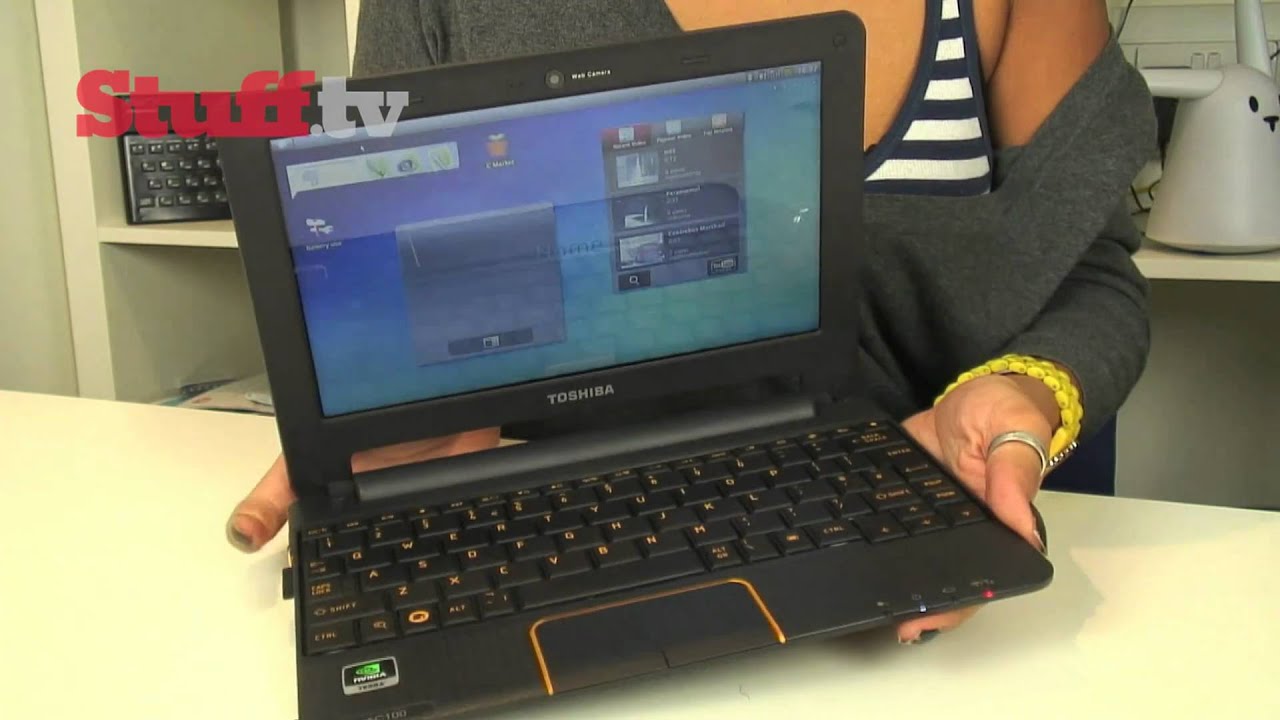
The following year, Nvidia partnered with Toshiba to bring us the first Android laptop, well before Chromebooks were even a thing. 2010 saw the launch of the AC100, presented as a “mobile internet device” and ran on a Tegra 250 and wait for it, Android 2.1.
Like the Mobinnova élan, it had a 3G modem and embraced the netbook concept - with a diminutive touchpad and screen - and like its rival, it had the same issues: quasi non-existent support for Android apps, poor compatibility with the UI etc.
After a very lukewarm welcome on the netbook front, further iterations of the Tegra (v2 and v3) found their way initially in smartphones and tablets.
Subsequently, Nvidia abandoned the former as competition from Qualcomm and Mediatek forced the company to retreat almost completely from mainstream products (with the exception of the Shield and Nintendo Switch).
17 years later, Nvidia is almost 1,000x bigger than in 2009 and can afford to take technological bets like these. But will it be worth it given how fragmented and diverse the current x86 market is? Only time will tell.
Today's best MacBook Neo & Mac mini deals
