





- 3D printed drone sets new verified speed record at 408mph
- DIY quadcopter regains Guinness title after record changed hands
- Project shows how hobbyist engineering continues pushing speed limits
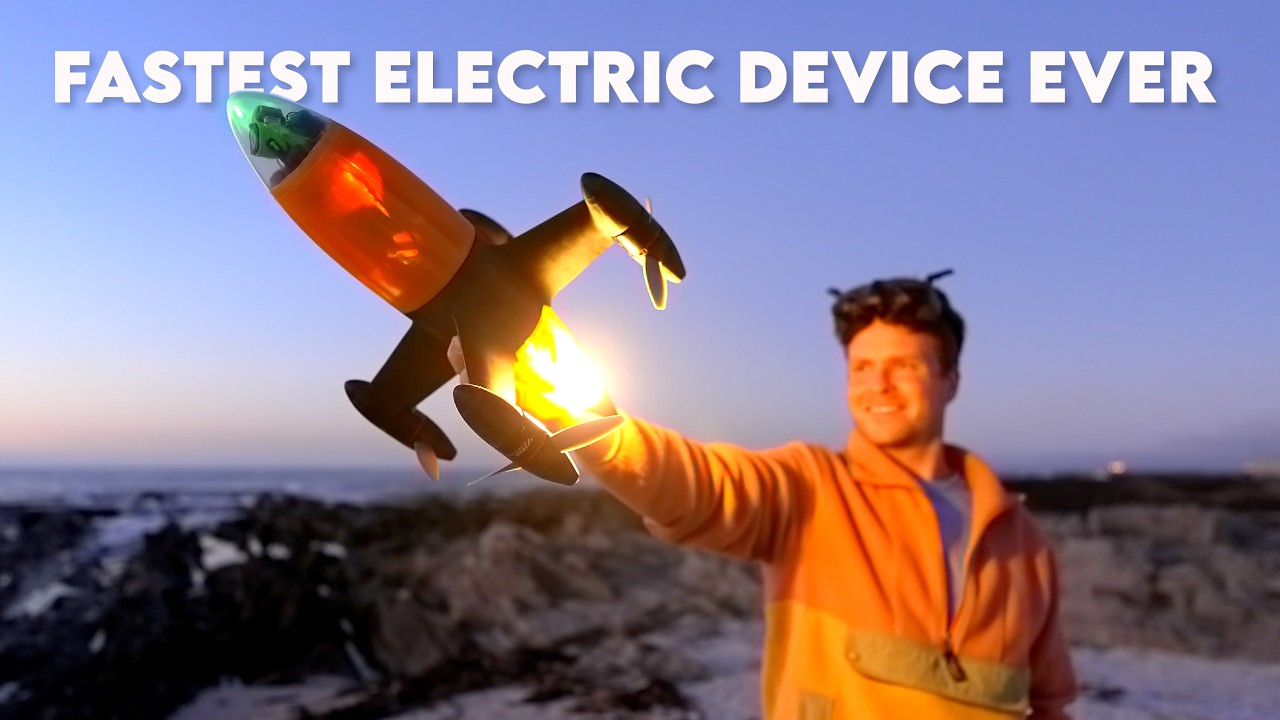
A fully 3D printed quadcopter has set a new speed benchmark for DIY aircraft, reaching 408mph during verified test flights.
The drone, called Peregreen V4, was built and flown by engineer and YouTuber Luke Maximo Bell with his father.
At that speed it is probably the world’s fastest DIY plane ever, faster than the P38 Lightning at around 414mph, although it still trails the Tu-95’s roughly 575mph figure.
A new Guinness World Record
The speed was recorded as part of an official attempt overseen by Guinness World Records, using a two run average to account for wind conditions.
The fastest downwind run reached 659km/h (410mph), while the fastest upwind pass recorded 599km/h (372mph), producing a verified average of 657km/h (408mph).
That performance places the drone ahead of its immediate competitors in the DIY category, reclaiming the record from Australian engineer Ben Biggs.
Biggs had previously set a 626km/h record with his Blackbird drone, briefly taking the title from the Bell team.
The Peregreen V4 project took more than two years and relied heavily on computational fluid dynamics simulations and repeated flight testing.
Its airframe was printed as a single continuous piece using multiple materials, including PETG, PA6-CF, and TPU.
Bell said: “The new printer’s larger build volume and dual-nozzle system made it possible to print the body as one continuous piece. That gave us smoother aerodynamics and a much higher surface finish quality than before”.
Three different motor designs were evaluated before the team settled on the T-Motor 3120, prioritizing temperature stability over peak thrust.
The chosen motors were modified from 800KV to 900KV to allow higher rotational speeds and improved top-end performance.
Aerodynamic refinements also included sanding and polishing the body and trimming propellers from 7x5in to roughly 6in.
Although exceptionally fast for a quadcopter, Bell has suggested the record is unlikely to stand for long, and development work on future versions is already well underway.
Should you wish to make your own drone and try to take the record for yourself, we can only wish you good luck, and suggest you take a look at our round up of the best 3D printers to get you started.
Via Tom's Hardware
Follow TechRadar on Google News and add us as a preferred source to get our expert news, reviews, and opinion in your feeds. Make sure to click the Follow button!
And of course you can also follow TechRadar on TikTok for news, reviews, unboxings in video form, and get regular updates from us on WhatsApp too.
