
 Become a TechRadar Insider





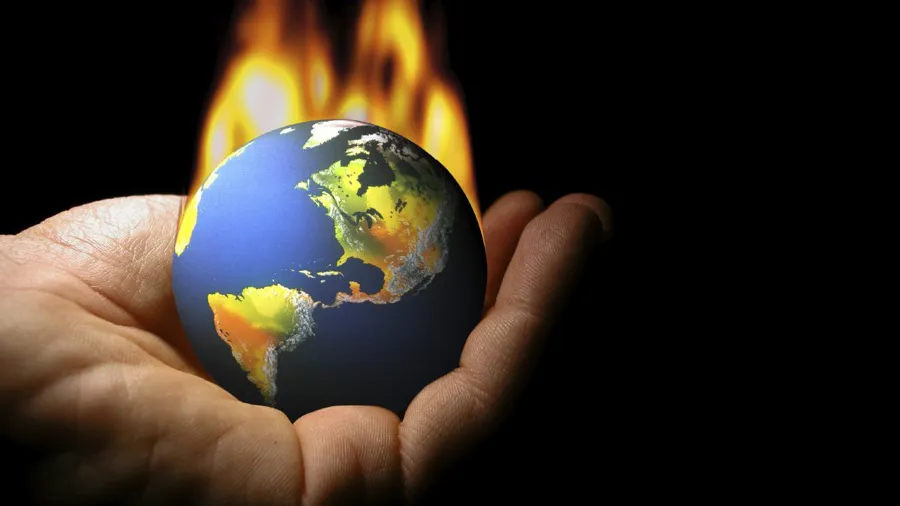
It’s hard to be optimistic sometimes, we know. Politics is a mess, the environment’s in trouble and half the world appears to be either melting or actually on fire. But there are reasons to be cheerful, because technology is working to defeat each and every horseman of the apocalypse. Here’s how technology will save the world…
Tech vs death
Medically speaking, this is the best time in human history: our life expectancy is massively longer than our ancestors’, and the bulk of that change has happened in the last four generations: life expectancy in much of the world has doubled since 1900.

Technology continues to find new ways to help us live longer, better lives. Gene editing with molecular 'scicssors' has the potential to remove inherited diseases and battle cancers; artificial pancreases may transform the lives of people with diabetes; and 'big data' analysis may help unlock the cures for conditions that currently ruin or end many people’s lives.
We’re starting to see wearable devices save people’s lives by warning them of conditions they didn’t know they had, while platforms such as Apple’s ResearchKit could provide researchers with unprecedented amounts of information on all kinds of conditions.
- Do you have a brilliant idea for the next great tech innovation? Enter our Tech Innovation for the Future competition and you could win up to £10,000!
Tech vs pestilence
Pestilence is a fatal, epidemic disease such as bubonic plague, aka The Black Death. That one may not be much of a worry these days, but ebola, HIV and bird flu show that we shouldn’t get too complacent. The spectre of a natural or man-made plague killing millions is something many experts are taking very seriously.
The World Economic Forum describes four ways in which technology can help fight future epidemics: messaging, to warn people of hazards and how to avoid contracting any virus; delivering training to health workers in the field; enabling health workers, agencies and other crucial interests to monitor the spread of disease; and real time monitoring to see how a virus is spreading and predict where it’s going.
Tech vs famine
The western diet’s love of meat is incredibly bad for both the environment and our long-term food security – and it’s hardly great news for the animals that provide it. Enter lab-grown meat, which has gone from the stuff of speculative fiction to something you'll soon be able to buy in the shops, while and in the meantime, protein-based meat-free burgers are finally good enough to fool even the pickiest carnivore.
The truth is that we already make more than enough food to provide for every single person on the planet, but it isn’t evenly distributed. As Oxfam reports, 65% of the world's hungry live in only seven countries: India, China, the Democratic Republic of Congo, Bangladesh, Indonesia, Pakistan and Ethiopia.

Technology can help. Establishing supply chains that keep food fresh can make a massive difference, especially in warm countries where food spoils quickly, and social networks such as the WeFarm platform enable better communication between remote farmers. As CNN reports, technology can also help predict drought: a combination of satellite data and mobile phone information can identify vulnerable areas and enable action before there’s a problem, not afterwards.
Tech vs war
Tech may have enabled world leaders to call each other names on Twitter, but it’s also helped to prevent conflicts around the world. In Kenya, the Una Hakika ('Are You Sure?') project uses web and SMS tools to counter misinformation and rumors that previously caused terrible violence; similar schemes have prevented conflict in other countries such as Burundi.
Such schemes are impressive, but unfortunately we’ve got thousands of years of history demonstrating that while technology can have positive effects, it never stops war. Quite the reverse: in addition to creating ever smarter ways to turn people into pink mist, our highly industrialized and wasteful world has contributed to devastating climate change that’s amplifying the already terrible effects of wars.
According to the UN, world hunger is once more on the rise due to the combination of those two factors: if the climate doesn’t destroy food supplies, sometimes warring people do. Starvation is often used as a weapon of war, with combatants damaging or destroying water systems, farms, livestock and markets.

As Colin Kelley of Columbia University in New York told New Scientist: “Climate-related shocks, especially droughts, exacerbate existing food and water insecurity, and can even contribute to social unrest when thresholds of resilience are crossed… In turn, conflict undermines resilience and dramatically reduces access to food and water, with devastating consequences for nutrition and health.”
It’s said that the next world war won’t be fought over oil, but water. It’s been argued that drought was a key driver of the revolution in Syria, and as climate change really kicks in it could render countries such as Sudan uninhabitable. The mass migration of desperate people from affected countries is already having a massive impact on the countries they travel to and through, especially in Europe.
Can tech really save the world?

Yes, the Arctic Circle is on fire, the US President is sabre-rattling on social media and the world has many evils, but this really is the greatest time to be alive in all of human history. The challenge for technology, and for us, is to keep moving in that same positive direction.
Our options for halting or reversing climate change are limited, but by embracing smarter, greener technologies such as clean energy and transport and sustainable food we can stop pressing quite so hard on the accelerator. That should help to keep the horsemen of the apocalypse at bay.
Antonio Guterres is the UN Secretary-General, and he’s optimistic. While “there are reasons to be alarmed” about climate change, he believes that technology will find a way, stating: “I am very confident that this battle will be won.”
TechRadar's Next Up series is brought to you in association with Honor

