


With flexible working arrangements here to stay, people spend more time at their desks than ever before, and a fair few are investing in the best office chairs in Australia — whether it’s for work, web browsing or even watching movies and gaming.
A cheap office chair may be tempting, but it likely won’t last as long as you’d want to — and it won't have the right ergonomics, support and comfort your body needs when you spend hours sitting at a desk.
There are plenty of brands and models to choose from in Australia, although that also means finding the best office chair for your specific needs or body type can be a tall task. Given that many sell directly to consumers, testing a new office in person at a store isn’t as accessible as it used to be.
That’s where we come in — TechRadar Pro’s expert testers have tried a variety of office chairs from different brands and I’ve curated our top 6 picks you can buy in Australia below so you know exactly what you’re getting for your hard-earned cash.
Whether you’re after an ergonomic chair with tons of adjustment points, a no-frills, basic desk chair that won't hurt your back, or something that suits your specific body type, there’s something for you in this list.
And the good news is you don’t need to spend thousands on one of the best office chairs — a lot of my picks have a three-figure price tag in Australia.
Best office chair overall

Buy it if:
✅ You don’t always sit completely still: The backrest’s geometric 'Air LiveBack' mesh design flexes to support you when you shift your weight a lot.
✅ You want plush foam that stays firm: The seat cushion has high-density foam that won't flatten or sag after prolonged use, unlike cheap office chairs.
Don't buy it if:
❌ You want to lock your position: The backrest doesn’t feature a lockable recline, so it springs back upright once pressure is lifted.
❌ You stand 180cm or taller: The low-profile design won’t be as comfortable for taller users, and the backrest could dig into your shoulders.
Why I chose Steelcase Series 2
With its cushioned seat, breathable mesh fabric back, and one of the best ergonomic designs with height-adjustable lumbar support, our reviewer found the Steelcase Series 2 task chair incredibly comfortable to sit in, even for long hours. Its gentle, elegant design makes it ideal for both the office and home office, and it’s even backed by a 12-year warranty.
Beyond all-round comfort, what really makes the Steelcase Series 2 stand out is the configuration lineup. We reviewed the task chair version, a mid-back executive-style desk chair, but the seat is available with or without a headrest in Australia and, importantly, in a variety of colourways to match your style.
Our reviewer found that adjusting the chair with the under-seat levers and dials was very intuitive — certainly no fumbling for controls here. The only real issue is that the recline doesn’t lock into place, returning to the upright position each time. This shouldn’t affect posture as you’ll still get the support that’s right for you, so it’s not a bad choice at all. Plenty of chairs offer similar specs and features at lower prices, but we found the Steelcase Series 2 to be the complete package.
Seat height rests between 37cm and 43cm, armrests boast 7.6cm adjustability, and there’s a 181kg max weight load, so it may not suit taller users, but it’s perfect for the average person working long hours.
Read our full Steelcase Series 2 Task Chair review
Best ergonomic chair

Buy it if:
✅ You want maximum adjustability: With 15 points of adjustment, sky’s the limit for how you want to optimise the ErgoTune Joobie to suit your body.
✅ You also want to relax: The lumbar support and headrest (plus the optional footpad) turn the Joobie into a comfortable recliner with a quick adjustment.
Don’t buy it if:
❌ You’re taller than 190cm: While the chair itself can accommodate taller people, the optional footpad doesn’t extend far enough for some.
❌ You need longer armrests: While they can pivot 360º, the armrests are short and your elbows can hang off the ends.
Why I chose ErgoTune Joobie
The smart-looking ErgoTune Joobie improves upon the brand’s older offerings with 15 points of adjustment, up from 11 on the now-discontinued Supreme. It can take a while to wrap your head around all the various adjustments, especially trying to figure out how the proprietary VerteSync recline works, but our reviewer quickly fell in love with the Joobie during testing and still uses it in TechRadar’s Sydney office today.
While the armrests' adjustability is limited and the lumbar support might be harsh for some, it’s one of the best ergonomic chairs we’ve tried in Australia. Sure, your elbows might not feel supported as they hang off the back of the armpads, but making the lumbar support adjustable is a big positive. It's not as harshly curved as it was in the Supreme, so it's easy to get used to on day one, but it’s still got a good curvature that anyone with back issues might appreciate, and it can now be adjusted for both tension and height.
The Joobie also comes with an optional footpad for just an additional AU$50. Not everyone will want it, but it turns the Joobie into a recliner — although not really a La-Z-Boy, more a dentist's chair, but without the stress. Not only can you sit up straight while working, but you can relax on the Joobie, too.
Our reviewer found the adjustments were easy to make whenever needed and the controls are all easy to reach, even for shorter people.
It comes with a 6-year warranty, available in several colours and, importantly, doesn't cost an arm and a leg. In fact, you'll find it discounted by at least AU$100 quite often.
Read our full ErgoTune Joobie review
Best chair for back pain

Buy it if:
✅ You suffer from serious or chronic lower back pain: The dynamic 'LiveBack' backrest and other adjustable points all work together for precise, targeted relief.
✅ You stay active in your seat: This chair won't make you feel like you're locked into place, as the seat and armrests almost glide as you move the Leap V2.
Don’t buy it if:
❌ You work in a warm room: The thick cushioning retains heat and doesn't offer as much breathability as a mesh-backed chair.
❌ You like to rock in your seat: The recline has a sticky feel — it will let you lean back, but doesn't move as freely as some other chairs.
Why I chose Steelcase Leap
What’s a more comfortable office chair than something that’s been proven to relieve lower back pain? Pair that with 8 adjustment options (9 if you include the headrest), and you get the Steelcase Leap, an office chair that’s comfortable enough to sit for long hours at your desk.
The Leap’s mechanically engineered backrest naturally moulds to your body, keeping your spine aligned at any angle. Its firmness can be adjusted to help you achieve better posture, while the lumbar support system can either support the middle of your back or your lower back.
Adding to the adjustability is the Steelcase Leap’s accommodating fit to provide all-day comfort for a range of body types (our reviewer stands at 188cm and agrees with that sentiment). Together with the premium build quality, the Leap is worth the high price for long hours at your desk.
Read our full Steelcase Leap review
Best office chair for gaming

Buy it if:
✅ You want a smart, quality seat: It's a fantastic-looking chair and would be just as at home in an office as in your personal gaming setup.
✅ You're sick of complicated adjustments: It's a refreshingly no-nonsense chair when it comes to its adjustments, including automatic lumbar support.
Don't buy it if:
❌ You're a tall person or have long legs: The maximum low seat height is unavoidably going to be an issue if you're particularly tall (think over 188cm) or have longer legs.
❌ You want maximum adjustability: You get 6 ways to adjust the Atlas, but you'd have to look elsewhere if you want more points of adjustability to fine-tune your fit.
Why I chose Secretlab Atlas
Gaming chairs often have distinct designs that may make them stand out in an office environment, and they also aren't known for having the best ergonomics. Secretlab's Atlas is a more understated-looking option that can feel right at home in both an office and a gaming setup, while also offering great ergonomics.
The Atlas has a mid-range price, starting from AU$699 for the base configuration with Cold-cure foam, and as much as AU$1,039 for the premium Dune+ model with NanoFoam Composite foam. There are also two size options, regular and large. It's not a budget chair by any means, but the Atlas falls well below the premium price bracket, making it a fairly affordable seat overall.
I've tried this chair for just over a month and the Atlas feels very comfortable with its premium materials and the automatic lumbar support adjustment works like a charm. That means there's very little in the way of fiddling or moment-to-moment fidgety adjustments, though fine-tuning your fit may be better with the other options here.
The included head pillow — which attaches magnetically to the backrest — is luxurious with a plush finish that nicely sits around your head during long gaming sessions or office days.
The only major gripe we have with the Atlas is its seat height, whether or not it's the regular or large variant. Even at maximum, it's oddly low to the ground, which means it's a poor fit for taller users. If you're around 188cm or taller, you might feel the hunch even after adjusting for maximum height.
Otherwise, Secretlab has produced a beautiful office-style gaming chair here, and the Atlas could be a great fit for your home or office space if you want something with sleek looks, minimal fuss, and superb comfort.
Read our full Secretlab Atlas review
Best budget chair
Buy it if:
✅ Good lumbar support is essential: While a little basic, the two-way lumbar support does the job of accurately curving to your spine.
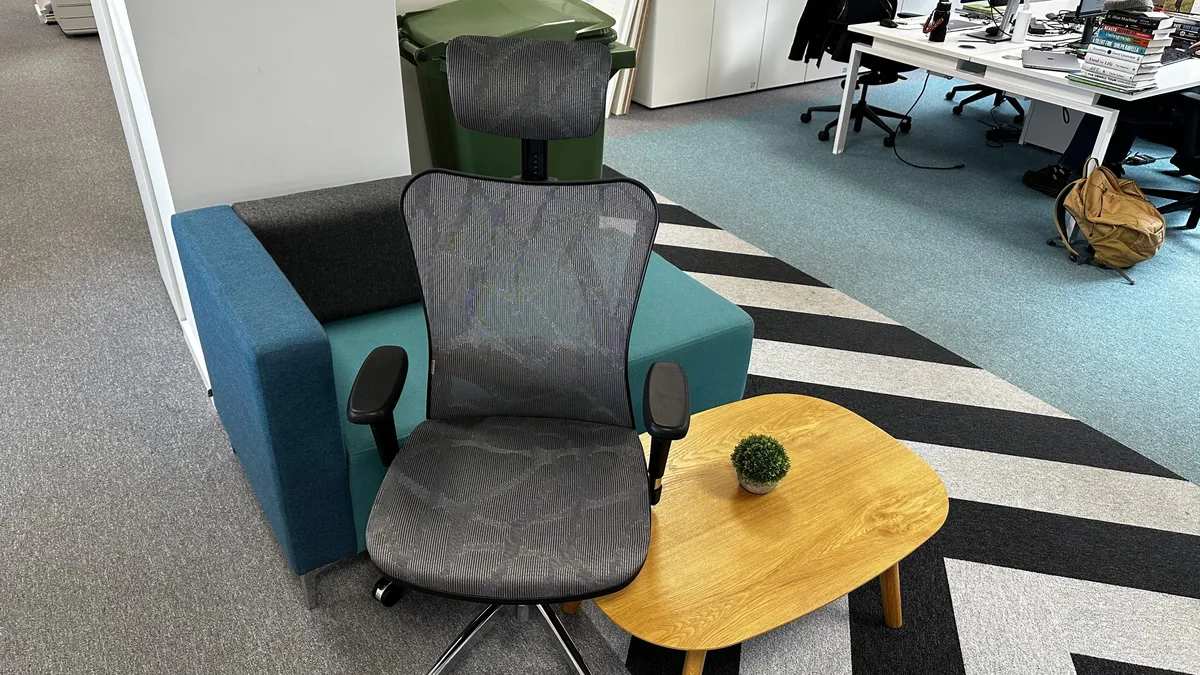
✅ You want something neutral for the home office: The Sihoo M57 keeps flashiness to a minimum with its black-and-chrome visual design. If you’re in the market for something subtle, then you can’t go too far wrong here.
Don’t buy it if:
❌ You’re taller and heavier than the average person: If you’re around 180cm or taller, then you may not be completely supported by the Sihoo M57.
❌ You want a premium feeling chair: The Sihoo M7 is as basic as it comes. While completely serviceable, don’t go in expecting leading assembly and high-end components.
Why I chose Sihoo M57
Admittedly, most of the chairs in this list are pricey enough to make some people shudder, which doesn’t mean they aren’t worth it, but not everyone necessarily needs all the bells and whistles. For some people, a no-frills seat that won’t cause back pain would be more than enough.
With an RRP of AU$489, the Sihoo M57 provides decent lumbar support and ergonomic performance for the price. It has an understated look, which can be appealing to some, and the mesh helps keep you cool all year round. There is some adjustability outside of the usual seat height, like the adaptive lumbar support that changes with a turn of a knob and the backrest can be locked into place when you want to lean forward or backward.
Ultimately, this office chair will not fit everyone, as our 183cm tall reviewer found that they were a bit too big for the Sihoo M57 to feel fully supported (despite the brand’s recommended height provided). If you’re closer to the average height and weight and just want something with a good build quality and enough lumbar support, the Sihoo M57 is the best office chair at this price point.
Read our full Sihoo M57 review
Best office chair for big and tall

Buy it if:
✅ You need some extra room: While the seat itself is the standard 52cm width, the armrests are placed wider compared to the other chairs in this list.
✅ You want to fine-tune your seat: The Vesby has 14 points of adjustment to optimise the fit to suit your body.
Don’t buy it if:
❌ You get distracted easily: The lumbar support may make a loud clicking sound when you move around as it’s pre-built and can’t be tightened.
❌ You want something easy to assemble: The Vesby is relatively heavy and you may need an extra pair of hands to assemble it.
Why I chose ErgoTune Vesby
The Vesby is Singapore-based ErgoTune’s most expensive chair yet, but it’s still under a grand in Australia and justifies its price point in spades. Its broader backrest and widely spaced arms make it look larger than it is, but the seat is still the standard 50cm width of most chairs; but there's more room to wriggle around, which makes this better suited to people with broader builds.
Moreover, its lumbar curvature is smoother than the older Supreme but harsher than the Joobie mentioned above, making it easier to adjust to for some people while others can easily get used to it in days. It's what you'll need if you have lower-back issues already, or want to prevent them from occurring in the future. It also has a much nicer-feeling headrest than all of the other chairs in this list.
There are a total of 14 points of adjustment here, including the lumbar support and headrest. The former has 2 adjustment options while the latter has three. Even the adjustment levers are bigger here, and they're all uniquely shaped, so you can easily learn which one does what and reach for them without looking.
Our reviewer’s favourite part of the chair is the armrests, with pads that swivel a full 360º and can be positioned to allow your elbows to rest when leaning back.
Their only complaint is the Vesby’s clicky lumbar support and the roughly cut hatch on the underside of the seatpan – minor problems both and possibly just unique to the review sample sent to us.
Read our full ErgoTune Vesby review
Alternatives to consider

This all-mesh chair is the best looking of the bunch and also features the most high-tech materials to optimise comfort. It’s also the priciest one here, but you do get 12 years of limited warranty for your trouble.
Read our Steelcase Karman review

This office chair provides some of the best ergonomics, especially for its price range, and its breathable mesh back makes it a comfortable option for long days at your desk.

Another budget gaming option with decent lumbar support, Corsair TC100 Relaxed comes with pillows and can fit a range of body types comfortably.
Read our in-depth Corsair TC100 Relaxed review

This gaming chair is a premium option that can accommodate larger frames, supporting up to 180kg in weight and people up to 210cm tall.
Read our AndaSeat Kaiser 3 XL review

Highly adjustable and sturdily built, the Steelcase Gesture is a premium office chair with arguably the best armrests we've ever tried – but we found it lacks breathability and lumbar support is limited.
Read our full Steelcase Gesture review

A low-priced office chair for gamers on a budget, we liked the surprisingly good fixed lumbar support and smart design built for a range of body types.
Read our full Razer Enki review
Best office chairs: FAQs
How can the best office chairs support healthy workplace routines?
TechRadar's former Senior Fitness & Wearables Writer, Stephen Warwick, explains how to support a healthy workplace routine:
“The best way to maintain a healthy lifestyle working at home or the office is to regularly move throughout the day - it’s about creating a balance when using an ergonomic office chair. Remember, sitting for too long puts you at risk of CVD like coronary heart disease, stroke, and heart failure. Standing desks and under-desk treadmills can promote a more active workplace routine, while the best fitness trackers and smartwatches will also support activity with movement reminders and step-counts.”
We've also explored the benefits in our in-depth report Sitting vs. standing for work: we take a comprehensive look at what the science says.
What are the different types of office chairs?
Ergonomic office chair
An office or home ergonomic office chair is designed for comfort and better posture while sitting, with support for your lower back and improved bodyweight distribution.
Executive office chair
A premium. padded office chair, usually boasting a high-back and leather upholstery, designed for all-day comfort and support.
Mid-back office chair
As the name suggests, this is a seat with a low backrest that reaches below the shoulders. The design is popular in smaller home offices, boardrooms, and communal areas.
Gaming chair
A plush, adjustable chair, usually covered with fabric or leatherette for soft cushioning during long gaming sessions
High-back office chair
The classic tall office chair design, offering full back support from the base of the spine to the neck. Often, high-back office chairs feature a built-in or detachable headrest.
Task chair
A functional chair that’s built for most workspaces and employee body types, they usually feature a slim profile and compact, ergonomic design, and a focus on productivity.
What is the difference between an office chair, task chair, and gaming chair?
Office chairs are a broad category, with high-back and mid-back styles, sometimes padded. Mesh designs are popular in modern offices, while padded ones are usually seen at home and in executive offices. There are also a few differences when it comes to office chairs vs desk chairs.
A task chair is a type of office chair designed for functional use across almost any workspace. This type of office chair tends to be small, ergonomic, and business-like.
A gaming chair usually has a well-padded design for long, comfortable gaming sessions. While some have RGB accents, others feature professional designs fit for home and office.
An office chair, task chair, or gaming chair will offer plenty of options to adjust the armrest, tilt tension and locking, seat height and depth, lumbar support, and more. However, in our experience, gaming chairs often offer more flexibility in the reclining options, having most chairs recline back and feature a headrest pillow for extra gaming support.
Are office chairs good for gaming?
Some gaming chairs work great and many traditional office seating options can be used as gaming chairs. In fact, many gamers out there opt for a good office chair over those kitschy bucket seat gaming chairs that promise comfort but don’t exactly deliver.
That said, the one thing that generally sets the best gaming chairs apart from office chairs is their design. They’re heavily inspired by race car bucket seats, oversized frames, support cushions, gaming logos, and bright or distinctive colors. Meanwhile, office and task chairs built for work and productivity are designed to blend into a business or work-from-home environment and usually feature subtle colors, flatter seat cushions, and a mesh or padded backrest.
How can I make my work chair more comfortable?
When you need to know How to make an office chair more comfortable, it's worth considering that many of the top choices offer lots of flexibility, customisation, and adjustability. This way, you can find the most comfortable position for extended hours. If you're struggling to find the right position for comfort, it may be your posture or the chair's current set-up.
What’s the best office chair for those with back pain?
You’d be tempted to go with a soft and plush office chair if you’re dealing with back pain, but it won’t necessarily have the right support you’ll need. A softer chair may feel comfortable at first, but it would eventually compress and make your hips sink and misalign your spine, which would just cause more pain.
What we recommend is something firm, which may sound counterintuitive, but the support tends to stay consistent. We’ve found that the best office chairs that feature supportive mesh, cold-cure foam or high-density foam provide that feeling of suspension that makes the chairs more comfortable for those with back pain. The Steelcase Leap, which we recommended for sitting for long hours, is also the best office chair for those with back pain.
Can an office chair help improve my posture?
Yes, the right office chair can help maintain and improve your posture if you set the adjustments to the correct positions for your body.
Most office chairs let you adjust the seat height, seat depth, and armrests - and many let you modify the position of the lumbar support. Seat depth should be set to support your lower back against the lower half of the backrest. For high-back office chairs, shoulders should also be supported in this position. Seat height should also be set at a level where your feet are flat on the ground with your legs bent 90 degrees.
Lastly, you should sit close enough to the desk that you're not forced to lean forward, while also ensuring you’re not feeling cramped with your wrists and arms bunched up or at an awkward angle.
How much should I spend on the best office chairs?
When it comes to budget, there's no right or wrong answer – so long as you're not making these 5 common mistakes most people make when buying an office chair.
You can find a super-comfortable office chair for around the AU$300 mark, or spend thousands on a premium ergonomic seat. Generally speaking, we'd avoid suspiciously cheap chairs – anything below AU$100-AU$150 will likely suffer from poor build quality, limited adjustability and padding. In our experience, those in the AU$100 bracket can be very hit and miss, so check reviews.
There are many factors at play when you're looking at how to buy an office chair and you can find a comfortable and ergonomic chair in every budget range.
How often should office chairs be replaced?
The answer isn’t quite straightforward here. Obviously, if you’ve got a chair that’s broken or no longer provides good support, there’s no better time than now to replace it – hopefully with a better option. But if you’ve got a working chair that has no massive issues, chair manufacturers somewhat disagree on when you should replace yours. And, that’s really due to the fact that it largely depends on their build.
Some crafted for home and office will last you seven to eight years, others will last you five. A handful, like the Humanscale Freedom, will last you 15 or more years. ErgoTune offers 6 years of warranty only, but the chairs are well built and could go the distance. Of course, factors like the level and amount of usage, as well as environmental conditions, matter as well. We recommend consulting your chair’s manufacturer first before dropping a chunk of change on a new chair. And also, trust your gut. You’ll know when your trusty old chair just isn’t cutting it anymore.
How to choose the best office chair
Our 5 essential features of a good office chair gives an in-depth guide of what to look out for when picking the perfect seat, but here’s a quick summary of what to look for when you’re shopping for your next piece of office furniture:
Adjustability
With a wide variety of desks, pairing the right office chair can come down to its adjustability. How high can the chair rise? Are the armrests movable? Does the backrest tilt? These options can impact how you sit at your desk, and you want to make sure you have the right chair with the adjustments you need for the most comfortable seat.
Size
You’ll want to find a chair that not only fits in your space, but also one that fits your body comfortably. While a lot of gaming chairs offer options for bigger and taller people, not every office chair has been designed to fit every body type. Each chair has weight limits and recommended heights, so it’s important to check those specifications if you’re on either end of the size spectrum.
If you’re working with a smaller space, consider looking at chairs with removable armrests and a minimalist design – though you might have to go without all the adjustability options you’d otherwise have.
Support
You’re likely going to be sitting in your office chair for hours a day, so you want to make sure it offers the right support. From lumbar support to headrests, these can be the difference between a chair that’s comfortable for the first few hours, and a chair that will keep you comfortable and sitting correctly throughout the whole day.
Ergonomic chairs can also help to keep you productive – you won’t be spending your valuable time thinking about how uncomfortable you are, and instead can focus on your task or game.
Materials
The right material can also impact the comfort of your office chair, as well as how long it'll last. High-quality materials will increase its lifespan, saving you time and money in the long run while still providing a comfortable seat.
Additionally, different materials can help keep you cool or warm, depending on your office’s climate. If you have a warmer office, consider looking into mesh chairs, or other breathable fabrics. Alternatively, if you want a premium chair and have an office with good regulated temperature, leather – or faux leather if you prefer – chairs should be your go-to, as they both look and feel the part of an executive seat.
Cost
The bigger the budget, the more options you’ll have. Though, that’s not to say there aren't high-quality affordable office chairs out there. It really will come down to what you’re looking for, but cost can be impacted by brand, material and design.
How we test office chairs
Each office chair we review is tested for over a month, with close consideration given to the comfort, material, adjustability, durability and weight limit of the seat. It’s not just a matter of sitting in the chair while we work, we carefully consider each of the above categories, and how the chair impacts our productivity.
Additionally, we also look at how easy each chair is to assemble and, more importantly, its cost. Options from both the premium and lower end of the price spectrum are put to the test, so we can assess a big variety of chairs. We also take into consideration the design and size of a chair, as each workspace will have its own spatial needs.
See more about our testing process in How we test, review and rate on TechRadar Pro: Office Chairs.
