Updated 32 minutes ago

Why the Apple iPad chip is a staggeringly big deal

Opinion: Are Apple custom-designed chips headed for MacBooks and iPhones next?

January 27th 2010 | Tell us what you think [ 7 comments ]

apple-ipad

Is the chip in the iPad a sign of things to come?

Apple makes few acquisitions, and it baffled the industry when it splashed out nearly $300 million on PA Semi, a processor developer, back in April 2008.

As of 27 January 2010, Apple's reasoning suddenly became clear.

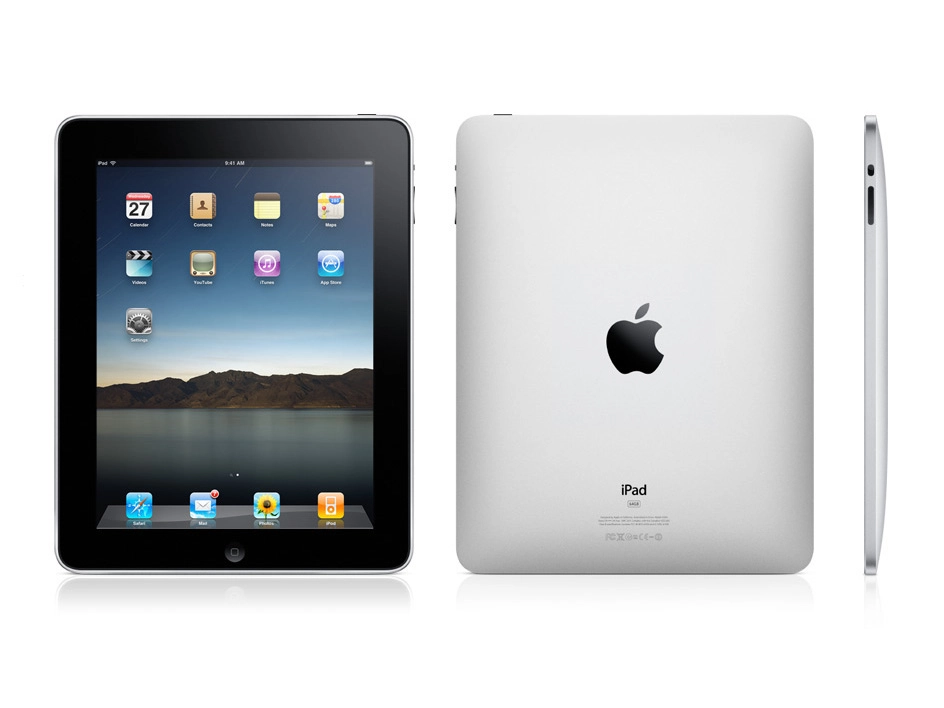
In something of a blink-or-you'll-miss-it moment during the flurry of excitement surrounding Apple's iPad, a single staggering slide during the presentation offered one of the most interesting points and biggest pieces of news: the iPad is powered by the 1GHz Apple A4 chip.

This is a big deal, because Apple often creates closed offerings. On the desktop, it makes its computers and the operating system that runs on them.

In the mobile space, it also, to some extent, controls the application ecosystem. Although some perceive these things as restrictions, they also enable Apple to create more stable and usable products, and to take more risks, given that the company's not often reliant on third parties.

Different with CPUs

Things have always been different when it comes to CPUs. Before the Intel switch, things had become quite dire - Mac laptops had gone from being the fastest around to a joke, due to shortcomings in PowerPC architecture.

Today, Apple works with Intel on the desktop, but this is clearly out of necessity more than any other reason. And in the more cutting-edge space of mobile, you'll find third-party ARM chips inside iPhones and iPod touches.

One might argue Apple could have taken an off-the-shelf component for iPad, but to do so misses the point.

Apple's developing its own chips because then it has the potential to get exactly what it wants, when it wants.

And while it might be a more expensive option in the short term, due to R&D costs, long-term it's a smart move. Apple will own the IP for its chips, and can adapt them as the market and its devices require.

The real question is this: how long will it be before we catch a glimpse of a slide during a Steve Jobs keynote that features a MacBook or iPhone with an "Apple custom-designed, high-performance, low-power system-on-a-chip"?

-------------------------------------------------------------------------------------------------------

Liked this? Then check out Apple iPad - our first impressions

Sign up for TechRadar's free Weird Week in Tech newsletter
Get the oddest tech stories of the week, plus the most popular news and reviews delivered straight to your inbox. Sign up at http://www.techradar.com/register

Follow TechRadar on Twitter

Comment on this article
 

Your comments (7) Click to add a new comment

hss1


February 6th 2010

7. The A4 processor enables 10 hour 720I HD video and 140 hours 6 days constant playback of music with screen off.

The iphone can do 10 hours video but not at that resolution or with such a large screen as ipad

Alert a moderator

bdonegan


January 29th 2010

6. Supposedly the reasoning for the A4 is that it 'enables' the iPad's high speed and 10 hour battery life. However doing the calculations show that while the iPad's battery is 3x stronger than the iPhones (and it runs the same software), the battery life is actually inferior (I'm sure an iPhone could run video for 10 hours).

I think this is more about efficiency on the money side than anything technical.

Alert a moderator

bubbahotepuk


January 28th 2010

5. It's certainly beneficial for Apple to do this in the short term. It will be interesting to see if Apple can keep up with (or ahead of) the competition on the chip development front over time; the short term advantages may turn into longer term competitive disadvantage.

Alert a moderator

wittgenfrog


January 28th 2010

4. I'll be interested to see if Jobs' hybris encourages more chip development. Whilst working with ARM is relatively cheap - that's why ARM is so sucessful - trying to make your own i5 or Athlon is a whole different ball game.....

Alert a moderator

padstar


January 27th 2010

3. How do we know what this does for their production costs? Presumably R and D costs for new chips will fall on Apple. As for how well it works all we've seen is a sales demo.

The most interesting thing about the release is the new chip. Hopefully it gives the other manufacturers a kick up the ****

Alert a moderator

adrianpolglase


January 27th 2010

2. Let's be honest - I am not an Apple fan and in fact usually quite the opposite, but I am very pleased to see that they have started making their own chips to give a bit more 'umph' & competition to the market. Also, being a bit patriotic here, it's nice to see it based on the old British Acorn ARM framework.

Lovely. I will be very interested to see what is to come.

Alert a moderator

tonymontana


January 27th 2010

1. Ooh in before the anti-Apple retards.

This gives Apple a lot of flexibility and reduces their manufacturing costs to some extent too.

The A4 seems to work exceptionally well with what its doing but I wonder what its limit is.

Alert a moderator

Tell us what you think

You need to Log in or register to post comments

By submitting this form you agree to our Terms of Use and so are legally responsible for anything you submit. DO NOT submit anything which may violate the Terms of Use or another person's rights including copyrighted or offensive materials.