





Tim Cain, the revered creator of Fallout and The Outer Worlds, has posted a video on his YouTube channel outlining his take on the future of generative AI. He speaks about the impact of the technology on various aspects of life, including games development, and offers up some interesting potential use cases.
He seems quite optimistic about the controversial technology, pointing to its potential to radically alter how various forms of entertainment are created and consumed. Aside from voicing some concerns about regulation and royalty payments, Cain appears to see all this as an improvement.
He has some experience in the field, having worked towards a PhD in AI in the late eighties and early nineties. But are his views realistic, and is the picture he paints one we’d actually like to see come true?
Tim’s crystal ball
According to Cain, generative AI will eventually hand a lot of control to the consumer. He envisions a scenario where you’ll be able to change the content of film and TV as you’re watching it. If you don’t like certain characters, jokes, or even the story, you’ll be able to use AI tools to change all that.
With respect to games, Cain thinks people could create their own mods using generative AI tools. He also sees a potential application in VR and AR, although he thinks these are further down the line.
Many of us already know the ways in which generative AI can be used in game development, from creating art and assets to programming entire titles.
Cain does have concerns in this department. He says regulation is needed to ensure contributors to AI datasets are appropriately compensated, including voice actors whose unique tones might be replicated in generative outputs.
But he still seems quite sure that this issue will work themselves out, comparing it to the initial disruption digital sales caused industry professionals, before contracts were amended to account for them. And those aforementioned AI-generated mods would require a license if players actually wanted to sell them, rather than keep them for personal use.
AI dystopia or utopia?

Unsurprisingly, many viewers weren't exactly on board with Cain. At the time of writing, the top two comments on the video are “New title: Tim describes a horrible artless dystopia with a smile on his face” and “Art is not supposed to adjust and change to me. Art is supposed to change me.”
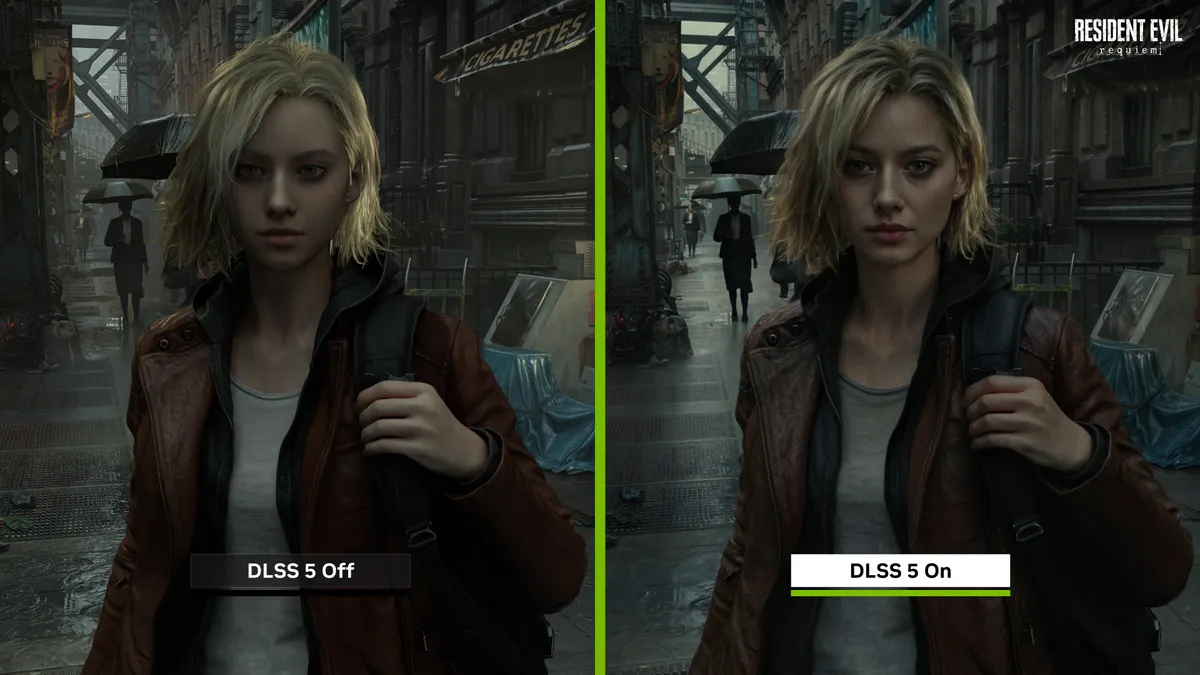
Being the quixotic type, I largely agree with these sentiments. I like my art authentic, even if that means it's a little messy and rough around the edges; hell, that just makes it even more human. And given the backlash over Nvidia’s new DLSS 5 technology, it’s clear to see many gamers feel the same way.
That being said, I certainly see the potential and temptation for studios to use it to speed up development. I can’t say that I was particularly on board with the furor surrounding its use to generate certain assets in Crimson Desert and other titles like Call of Duty: Black Ops 7.
Yes, the publishers in question should’ve been more transparent about using the technology, but as long as they’re largely insignificant to the game’s overall aesthetic, I’m happy to look the other way, especially if it means saving some poor developer from being crunched to make them manually.
Also, it does seem that generative AI is better deployed in games than other artforms. Unlike music or film, it’s easier to argue that a game can be objectively good or bad when you only consider its mechanics, and so can be objectively improved upon with the use of AI tools.
Granted, there are those endearingly janky titles that I wouldn't wish to see get even the mildest of remasters, but there are plenty of games that are simply broken and thus ripe for AI to fix.

But there’s a problem here, too. AI datasets of the future would contain lots of code for game mechanics, including mediocre examples. A model’s resultant output might be similarly mediocre, and if models end up feeding on their own outputs to further train themselves, we’ll end up in a slop-ridden landscape.
Worse still, we might end up losing idiosyncratic games altogether. Instead, we’ll be left with mechanics that no longer delight or surprise us, turning the whole medium into a bland, homogenous slop. This problem existed to some degree before AI came along, with modern AAA titles getting the blame in its place, but AI could make the situation even worse.
Besides, there are other issues with using AI to speed up development. Chiefly, the fact that at this point in time such AI tools make too many mistakes to rely on them without supervision and manual verification, which of course takes time as well. Even tasks that are relatively basic, such as translating in-game text, are hard enough for AI to achieve without erring.
Then, of course, there are those concerns we’re all too familiar with at this point: the absurd environmental impact of data centers, the thorny issue of copyright, and, of course, the threat to industry jobs.
It’s no surprise that big studios are keen on using the technology, from Level-5 and Capcom to Take-Two Interactive and possibly even Remedy. But it’s perhaps surprising to see Tim Cain, of all people, being so effusive about generative AI. After all, this is the man responsible for games with strong anti-corporate, anti-capitalist themes. He’s right when he says AI can’t be bottled up now it’s been let loose, and I hope he’s also right that the technology's main sticking points will be resolved, but I’m not so hopeful it’ll create the kind of games we’d actually like to see.

Follow TechRadar on Google News and add us as a preferred source to get our expert news, reviews, and opinion in your feeds.

➡️ Read our full guide to the best PC games
1. Best overall:
Elden Ring
2. Great for multiplayer:
Helldivers 2
3. A brilliant roguelike:
Hades 2
4. An old-school shooter:
Doom Eternal
5. Best for racing fans:
Forza Motorsport
