





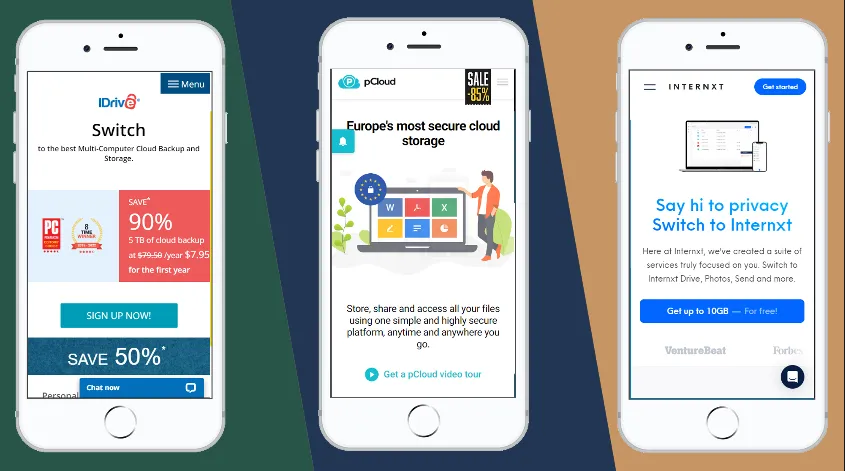
Lifetime cloud storage - where you pay once for a service and sounds too good to be true. But somehow, the concept has been adopted - and embraced - by many cloud storage service providers, 9 of them at last count and some have been doing it for years, disproving critics that lifetime cloud storage is a fad.
In this article, I will look at the best lifetime cloud storage deals available right now. These change all the time so it's worth checking this guide often. If your storage requirements are limited, consider free cloud storage as well, which technically is also forever.
I’ve arranged them from cheapest to most expensive, looking at the most common capacity (i.e. 2TB). Filejump is - by far - the most affordable while IceDrive, at almost 10X the price, is the dearest.
Why not have a look at our best unlimited cloud storage deals, too?
The best lifetime cloud storage deals right now
What is a lifetime cloud storage?
As the name implies, it is a special category of cloud storage where you pay once and use-forever or as I often put it, a fire-and-forget offer with no recurring charges. A lifetime subscription as others call it.
Although the initial cost can be high, it is amortized the longer you stick around. The more you stay, the cheaper it becomes. A $500 lifetime cloud storage ends up costing about $4 per month if you stay with it for 10 years (or 120 months).
Remember as well that all service providers tend to increase prices annually (hello Netflix!). Buying the service in advance protects you from future price increase.
Just bear in mind though that lifetime is as long as the company operates or chooses to fulfil this particular offer. It doesn't mean forever.
This is why it is often imperative for users to have a backup plan (usually by having multiple local copies of the files available), in case of service shutdown.
Several companies have removed lifetime plans (Ganso, Filen, Zoolz, PolarBackup and Deego) and two household names - Amazon and Samsung - that have pulled completely out of personal cloud storage.
Filen’s CEO published a candid explanation as to why the lifetime plan was never going to be forever.
How does lifetime cloud storage compare to pay monthly?
Purchasing a 10TB cloud storage solution over a period of 10 years from iDrive costs $900.48 far more than Internxt ($350) and that price may go up as iDrive doesn’t allow you to pay for more than one year at a time (using our special link anyway).
Why do companies offer lifetime cloud storage?
We approached a few companies, asking that particular question. Anonymously, they told us that they often do it to get more exposure and that the numbers do work out.
“Lifetime deals are not really sustainable for us as a company, but they are great for the users,” one noted. “We generate a lot of publicity from lifetime deals, which is great for us as we are the newcomers in the cloud storage space.”
Lifetime cloud storage is also a great way to bring in revenue almost immediately, which helps prop up your balance sheet, removing the risk of customers stopping payment and moving their custom elsewhere. pCloud, for example, will not refund you if you cancel the subscription.
Lifetime Cloud Storage: What are the pros & cons
Pros: Lifetime cloud storage is designed to help you save money in the long run as well as remove any headache that might be associated with, well, life's little mistakes, like cancelling a credit card or bank account tied with a cloud storage subscription.
With no recurring payments, you don't have to worry about account suspensions or bumped prices further down the line.
Cons: Putting all your eggs in the same basket can have unintended consequences.
Companies can go bankrupt, or change their business model, like Zoolz did in 2020 when it phased out its lifetime offer because it was unsustainable.
Cloud storage has some fixed costs like the price of the hardware and some operational costs (e.g. incoming and outgoing bandwidth, the price of electricity etc), so while a lump sum can help reduce the cost of the former, it does only cover a little bit of the latter.
What happens if the company goes bankrupt or is acquired?
If a company goes bankrupt, your data could be at risk of being lost or inaccessible. In mergers and acquisitions, the new entity might honor your existing lifetime plan but they are not always legally obligated to do so.
This is a significant risk that subscribers to lifetime plans will have to keep in mind.
Of course, as with any cloud storage plan, if you're really concerned about your data being lost in the event of company bankruptcy, be sure to employ backup software or take a look at our guide on the best ways to backup photos, which includes several physical media options, like USB flash drives, SD cards, the best SSDs, and more.
Is lifetime cloud storage secure?
No vendor can realistically guarantee data safety forever? Rapid strides in quantum computing means that traditional encryption may become obsolete within the next decade.
Some cloud storage providers have rolled out so-called PQC (Post Quantum Computing) encryption but none of the services on the list have at the time of writing.
All of them employ advanced security measures like encryption (at rest and in transit), multi-factor authentication, and regular security audits.
Look for zero-knowledge encryption, where only you hold the decryption key. However, no subscription can offer 100% security against all threats (if they say they can, they're lying).
Then there’s the other side of being secure. There are several allegations online from Thunderdrive.io and PrismDrive that accuse both sites of being organized scams.
Should I still maintain local backups if I have a lifetime cloud storage deal?
Whenever you're talking about storage, redundancy is a good thing. Even if you're signed up to a lifetime plan, it's still a good idea to keep local backups of your most important files. The 3-2-1 backup rule (3 copies, 2 different media, 1 offsite) remains paramount.
A lifetime cloud deal may fulfill the "offsite" component, but it should never be your only copy. Due to the inherent risks of company longevity and service changes, if anything, having local backups is even more crucial with lifetime deals.
- We've built a list of the best cloud storage for photos out there
- Here's our list of the best cloud backup available
- Also check out our list of the best file syncing solutions around
