





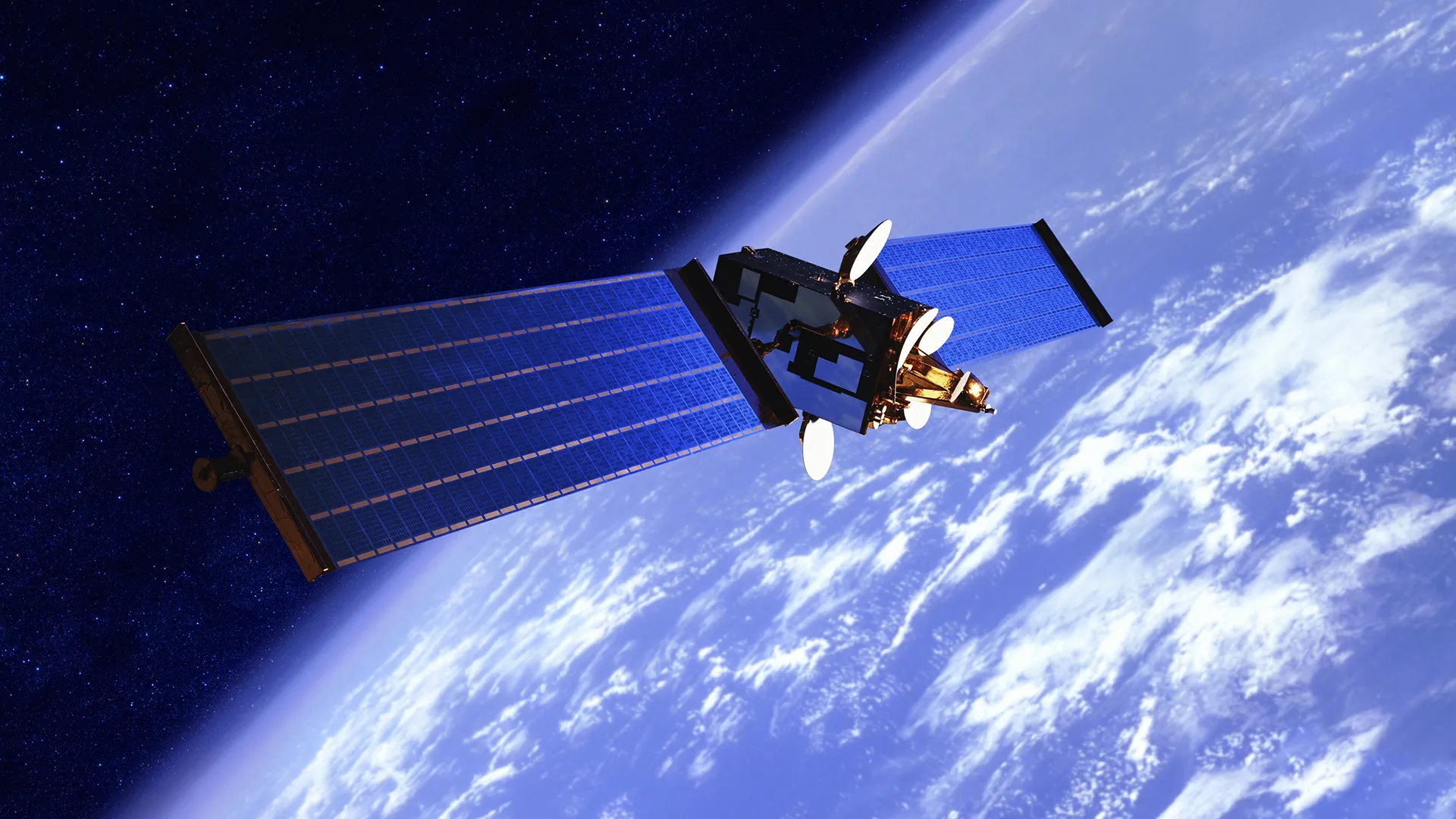
- America has finally admitted that its weapons are already operating in orbit
- Orbital jammers remain one possible explanation for America's undisclosed systems
- Kinetic weapons could create dangerous debris across already crowded orbital regions
The US has publicly acknowledged for the first time that it operates weapons in orbit, a declaration made during a defense conference near Washington.
No detail was offered about the systems' design, deployment date, testing record, or intended battlefield use.
That silence has left analysts to speculate about what the weapons actually are and how they might function.
No details provided
“We are not going to talk about the specifics of what we're doing, whether we've tested it, not tested it, or anything else,” said Troy Meink, Secretary of the Air Force.
The statement confirmed weapons exist in orbit while withholding almost every operational detail that would clarify their real capability.
“I would just say that the space environment is critical for military and economic security, and we need to make sure that the US can operate freely there,” Meink added.
The disclosure functioned more as a signal meant to unsettle rivals than as a genuine accounting of what the United States has actually built or deployed.
Space control, in military terms, spans a wide range of tools, including jammers, spoofers, lasers, and kinetic hardware.
Victoria Samson, chief director of space security at the Secure World Foundation, suggested orbital jammers likely match whatever system was referenced.
Kinetic weapons remain a less probable candidate given how much debris such an attack would generate for everyone in orbit.
That debris risk explains why American officials have long favoured non-destructive counterspace tools over ones capable of shattering a satellite outright.
Why Washington chose this moment
Russian and Chinese counterspace activity, much of it tied directly to ongoing conflicts, appears to have driven the timing of this admission.
Russian hackers disabled tens of thousands of modems tied to the Viasat network hours after the conflict in Ukraine started in 2022, crippling communications across parts of Europe.
Reports from February 2026 indicated two Russian satellites had likely intercepted signals from at least a dozen European spacecraft since that conflict began.
China's fleet exceeded 1,060 operational satellites by mid-2025, with hundreds dedicated to intelligence, surveillance, and reconnaissance work supporting its military planning.
A separate US assessment noted Russia launched a satellite in 2024 positioned near an American reconnaissance spacecraft, widely interpreted as counterspace testing.
With Russia and China, known rivals of the U.S., making strides, it is expected that the US will flex its muscles as a deterrent.
However, experts argue that the announcement does not carry enough weight to serve as warning to its rivals.
“It is too vague to have a meaningful deterrent value,” said Clayton Swope, deputy director of the Aerospace Security Project.
Effective deterrence, Swope argued, usually depends on adversaries understanding how and when a weapon might actually be used against them.
Neither Moscow nor Beijing has issued an immediate public response following the American disclosure.
Via Ars Technica

Follow TechRadar on Google News and add us as a preferred source to get our expert news, reviews, and opinion in your feeds.
