





- Laboratory-grown muscle tissue has been developed to improve robot dexterity and motion
- Researchers working at ETH Zurich have demonstrated tissue-based muscle actuators that flex
- The actuators enable small robots to jump and swim, as well as walk and grasp
Flesh-covered robots that can walk, jump, swim and move among us may be closer than we think. Researchers working out of ETH Zurich have been busy developing muscle actuators from centimeter-scale living tissue. These muscle actuators are the latest in a design program, and motion has been improved over 10 times compared with previous iterations.
In designing the biohybrid robots, the researchers have found that it isn’t all about the volume of muscle tissue. How the muscle and the bone (or in this case, an “artificial scaffold”) interact is also important.
Grown from mouse muscle cells, the results are being viewed as a new way of building robots.
Biohybrid muscle
The project is run from the ETH Zurich Soft Robotics Lab and is overseen by Professor Robert Katzschmann, who states that “We’re just beginning to build robots in a more natural way.” The research focuses on biohybrids, which basically refers to integrating biological materials like muscle tissue with artificial, man-made materials like electronics or mechanical scaffold.
Design of the robots has evolved through the research to the current state, where the muscle tissue is secured to the scaffold using grooves that the tissue can attach to. Meanwhile, the robots are currently limited to motion within a nutrient solution intended to feed the muscles and keep them “alive.”
An interesting result from the research is that not all muscle actuators behave in the same way. This “natural variability” that comes from using living tissue contrasts with what is achievable with manufactured components.
Flesh for cyborgs
Development of flesh muscles for robots has taken place over several years, with designs built on computer. Over what has been called an “iterative process” by co-lead author of the published study Aiste Balciunaite, the idea of “a fixed form for our muscle geometry” was eschewed in favor of designing “the whole thing from scratch on the computer.”
“With previous systems, you sometimes had to look under a microscope to see the flexing,” Balciunaite adds, highlighting how far the project has come.
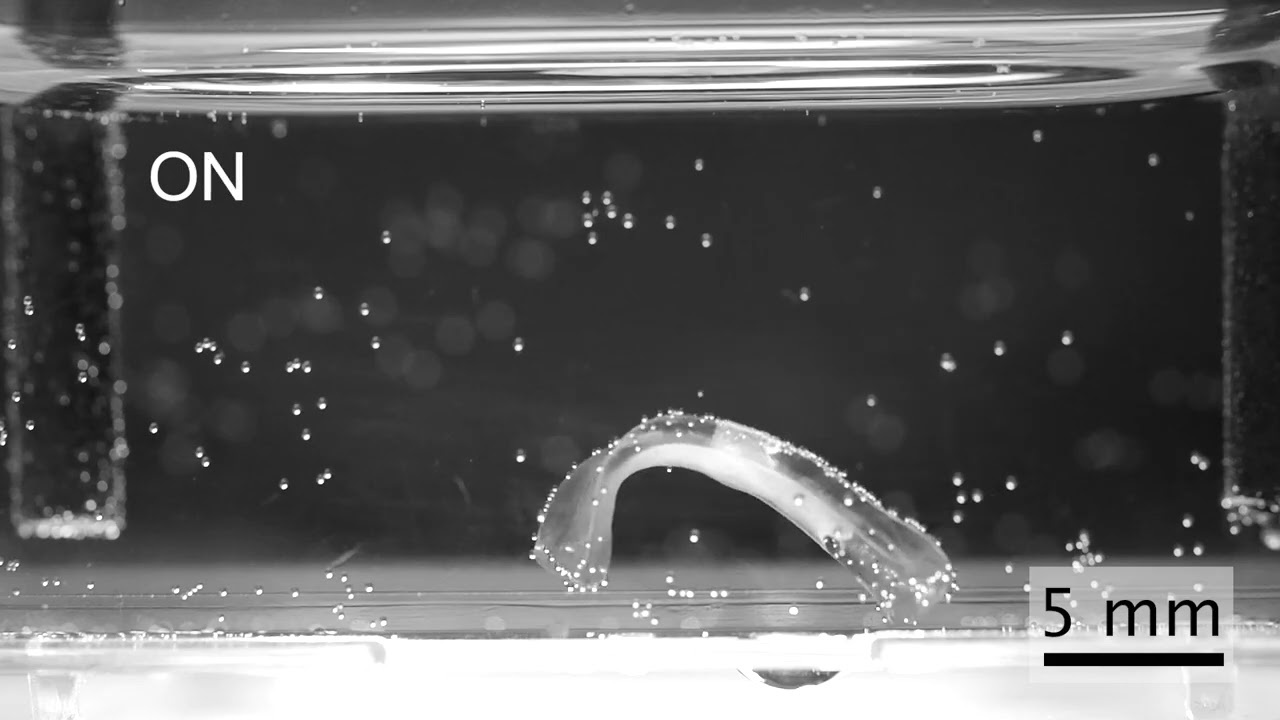
The video above demonstrates the range of movement that can be performed by the muscle actuators, with the activity now visible to the naked eye. Measuring over 1cm, the bioactuators can move and grasp, and are shown here swimming. Other biohybrid robots have been programmed to walk, managing to cover 6.2 millimeters a second.
Will these bio-attached structures develop into an army of time traveling, human-destroying cyborgs? Probably not, and as they have applications for exploration and medicine, we shouldn't be too concerned.

Follow TechRadar on Google News and add us as a preferred source to get our expert news, reviews, and opinion in your feeds.
