





Presented by

Your next coworker could be an AI agent – here's why that's nothing to be afraid of

The idea of an AI agent as your next coworker sounds unsettling for obvious reasons, suggesting something more autonomous, more capable, and a lot closer to your actual job than an AI chatbot.
But in Microsoft’s world, the near-term reality looks far less dramatic.
These agents are being built to handle the repetitive digital work that clogs up the day – chasing context, pulling together information, drafting routine content – enabling you to focus on what matters.
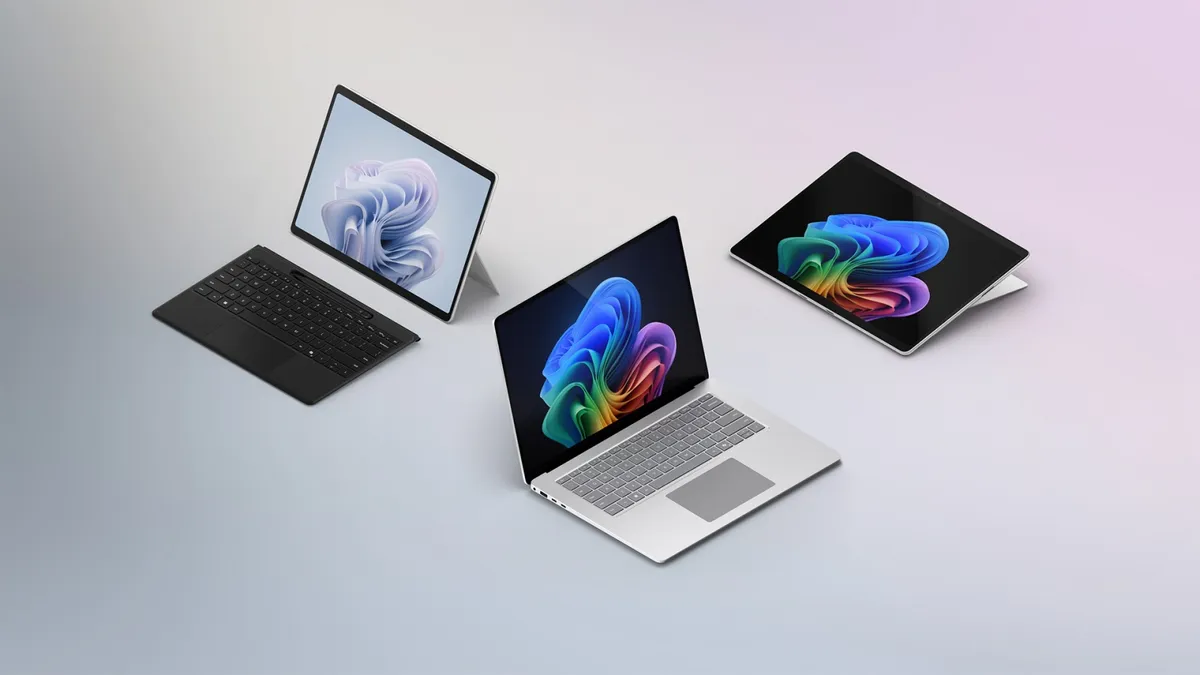
Meet your new AI coworker
In 2026, Microsoft is betting that the next step for workplace AI is not one all-purpose assistant, but a growing cast of narrower tools built for specific jobs.
Instead of asking a chatbot to help with everything, you might use one agent to prepare a meeting brief, another to pull together updates from documents and emails, and another to turn rough notes into something presentable.
The appeal is obvious: Most office work is not made up of big, creative breakthroughs from start to finish, but handovers, admin, follow-ups, half-finished drafts, and so on.
In practice, AI agents are being positioned less as replacements for workers and more as software specialists that sit inside Microsoft 365, ready to take on bits of process work that would otherwise eat into the day.
What is an "AI agent"?
The term gets thrown around loosely, which does not help.
In Microsoft’s ecosystem, an agent is best understood as a more focused kind of AI assistant. Copilot is the broad layer that sits across Microsoft 365 and responds to prompts in chat or inside apps.
Agents take that a step further and are designed around a specific task, role, or workflow, with access to the context and tools needed to carry it through.
The important point is that these tools are being shaped around jobs people already do, rather than arriving as some abstract new system to learn from scratch. An agent is effectively a digital worker, not something totally new.
Microsoft’s pitch is straightforward enough: give people software that can handle more of the legwork, in the same places they already work.

The first places you’ll actually see one
To be clear, most people are not going to meet AI agents through some dramatic new workplace platform.
Instead, they are going to run into them inside Microsoft 365, folded into software they already use every day, like Word, Excel, and PowerPoint.
Microsoft’s push here is mostly practical. Put agents where the files, meetings, messages, and half-finished tasks already live, and they become easier to slot into a normal working day.
Picture the kind of jobs that tend to drag on longer than they should, like turning notes into a draft, or sifting through a complex spreadsheet. These are the spaces where agents are likely to feel useful first.
Why AI agents could make work better
A lot of the fear around AI at work comes from the assumption that smarter software must leave less room for people. Microsoft is offering something more ordinary than that.
The pitch is built around the parts of the day that already feel thankless, and recent Microsoft 365 Copilot releases have leaned into exactly that territory, including Agent Builder in Copilot Chat for repetitive tasks.
Seen that way, the appeal is easy to understand. Plenty of modern office work is clogged with small jobs that still matter, but do not make much use of judgement, experience, or creativity.
There is also a more grounded point here: Most people do not need an AI to replace their role, they need better help getting through the backlog.
An agent that assembles the first draft of a meeting brief, surfaces the latest project context, or turns a messy set of notes into something usable is doing the kind of groundwork that often slows everything else down.
The real concerns behind the hype
People are right to be cautious, because workplace AI gets messy long before it gets futuristic. The most obvious risk is software that moves quickly, sounds convincing, and gets something important slightly wrong.
In a Microsoft setup, that could mean an agent pulling from the wrong files, surfacing stale context, or automating a task that still needed a human check.
Trust is the other big issue. Once software starts working across meetings, emails, documents, and business data, people need to know what it had permission to see, where its output came from, and so on.
There is a more human concern, too. Plenty of workplace tools promise efficiency and end up adding another layer of process, by which time it's too late to unwind the software's integration.
At the end of the day, agents will only win people over if they remove friction rather than create more checking, more noise, and more low-grade doubt.
Microsoft’s plan to keep agents in check
Microsoft is not asking companies to drop agents into the workplace blind; a big part of the pitch is control.
At product level, Microsoft is giving admins a fairly standard set of workplace software controls around agents: they can choose which agents are available, how they are deployed, who can access them, and how usage is managed through Microsoft 365 admin tools and Copilot Studio.
Microsoft 365 Copilot also splits agent access by product tier, with some agents available in Copilot Chat and others tied to licensed Copilot or pay-as-you-go access to work data and custom agents.
The Copilot Control System then adds the monitoring layer, covering security, governance, lifecycle controls, and reporting on adoption and impact.

What happens next
For most readers, the next stage of this shift will feel fairly ordinary, and maybe even a little 'boring'.
Microsoft is not dropping a single all-knowing agent into the office and asking everyone to hand over the keys.
Instead, the company is adding more specialised AI help to the software people already use, then pushing those tools a little further into everyday work.
Good work still depends on judgement, taste, context, and knowing when something is off, and those are things that AI agents cannot easily replicate.
Even so, the shape of the change is becoming easier to see.
The next coworker in a lot of offices will not be a new hire or a humanoid machine; it is likely to be a piece of software that quietly takes some of the grind out of the day.